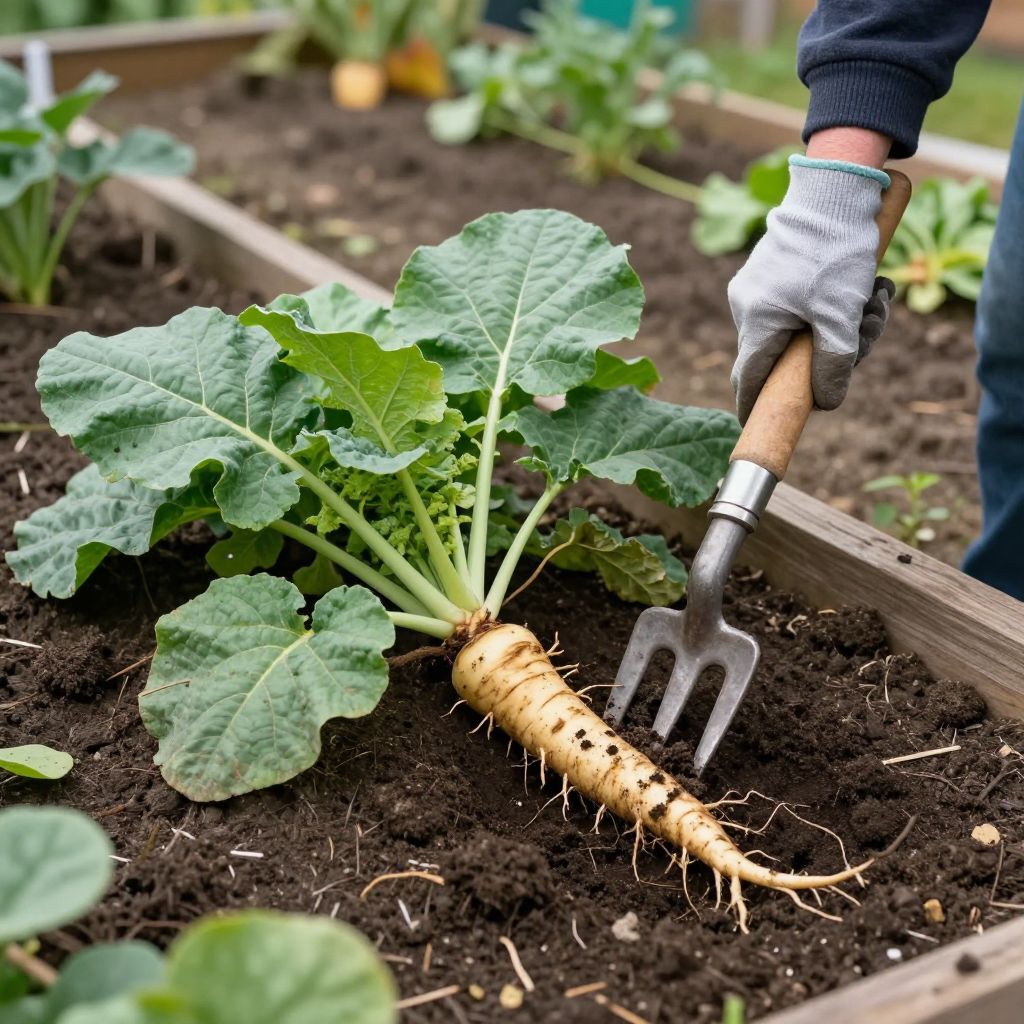
Wondering when to harvest horseradish? The short answer is that the roots are usually ready after one full growing season, but the best time to dig them is often in late fall or early spring, when the plant is dormant and the roots are at their most usable. Timing matters because flavor, size, and ease of digging all change through the year.
Horseradish is a tough perennial, but harvesting at the right moment helps you get the strongest roots without wasting effort. Below, you’ll find the signs that your plant is ready, how to dig it properly, and what to do if you want to leave some roots in the ground for next year.
When to harvest horseradish?
Harvest horseradish roots in late fall after the foliage dies back, or in very early spring before new growth starts. Roots can be dug after the first season, but many gardeners prefer waiting 10 to 12 months for better size and flavor. Cooler weather makes harvesting easier and often gives the roots a sharper taste.
How to tell horseradish is ready to dig
Horseradish (Armoracia rusticana) does not give you a dramatic “ripe” signal like fruit does, so you judge readiness by age, top growth, and root size. If the plant has had a full season in the ground, it is usually harvestable.
Good signs the roots are mature
- The plant has been growing for at least one season.
- Leaves have yellowed or died back in autumn.
- You want a larger, thicker main root for storage or replanting.
- The bed is crowded and the plant is spreading more than you want.
Why timing affects flavor
Horseradish flavor is strongest when the roots are dormant or nearly dormant. Warm-weather harvests can still work, but the roots may be less pungent and more fibrous. If you want the classic sharp heat, cool-season digging is usually the best choice.
Best seasons for harvesting horseradish
The ideal harvest window depends on your climate, but most home gardeners get the best results in late autumn or very early spring. In milder regions, you may be able to harvest throughout winter if the soil is workable and not frozen solid.
Late fall harvest
After frost and top dieback, the plant shifts energy into the roots. This is often the easiest time to dig because the foliage is gone and the roots are easier to locate. Fall-harvested roots also tend to store well.
Early spring harvest
Early spring is another excellent time, especially if you missed the fall window. Dig before the plant sends up fresh leaves, because once active growth starts, the roots are needed for new shoots and can be more difficult to divide cleanly.
Can you harvest in summer?
You can, but summer harvest is usually less ideal. The plant is actively growing, the roots may be tougher, and the flavor may be milder. Summer digging makes sense only if you need to control spread or want a small amount for immediate use.
How to harvest horseradish roots step by step
Harvesting horseradish is straightforward, but the roots are deep and stubborn. Use the right tools and dig generously so you do not snap the main root or leave too much behind.
- Water lightly a day or two before digging if the soil is very dry.
- Cut back the top growth to make access easier.
- Loosen the soil in a wide circle around the crown with a spade or garden fork.
- Dig deep enough to expose the long main root and side roots.
- Lift the plant carefully, keeping as many roots intact as possible.
- Shake off excess soil and separate usable roots from small pieces you want to replant.
Tools that make the job easier
- Garden fork for loosening soil without slicing roots.
- Spade or digging shovel for lifting larger clumps.
- Pruners for trimming tops and side roots.
- Gloves if you have sensitive skin or are working in rough soil.
How much of the plant should you harvest?
You do not have to remove every root. In fact, many gardeners deliberately leave a few root pieces in the ground to regrow next season. Horseradish spreads aggressively, so even a small piece can produce a new plant.
If you want horseradish to come back
Leave a few pencil-thick root sections in place or replant healthy side roots. This is the easiest way to maintain a patch without buying new plants. Just know that horseradish can become invasive in some gardens, so plan the planting spot carefully.
If you want to remove it completely
Dig deeply and be thorough. Horseradish can regrow from small root fragments, so complete removal may take more than one season. Rechecking the area for regrowth is important if you are clearing the bed.
Soil, moisture, and growing conditions that affect harvest
Horseradish grows best in loose, fertile soil with good drainage. Heavy clay or compacted ground makes harvesting harder and can leave roots short or forked. If your soil is dense, improve it before planting with compost and careful cultivation.
What soil conditions help root development
- Deep, loose soil for long straight roots.
- Moderate fertility rather than overly rich nitrogen-heavy feeding.
- Consistent moisture during active growth.
- Good drainage so roots do not rot or become misshapen.
Too much nitrogen can encourage leafy growth at the expense of root size. If your plant has lush tops but small roots, the soil may be too rich or too wet.
How to store horseradish after harvesting
Freshly dug roots dry out quickly, so handle them promptly. If you are not using them right away, store them in a cool, humid place to preserve quality.
Short-term storage
- Brush off soil, but do not wash until needed.
- Wrap roots in slightly damp paper or peat-free material if appropriate for your storage setup.
- Keep them in the refrigerator or another cool place.
- Check regularly for shriveling or rot.
What to avoid
Do not leave harvested roots sitting in warm air for long periods. They lose moisture quickly, and the flavor can fade. Also avoid storing damaged roots with cuts or bruises if you want them to keep well.
Common harvesting mistakes
Most horseradish harvest problems come from digging too early, too shallowly, or too carelessly. A few simple adjustments can save a lot of frustration.
- Harvesting too young: first-year roots are usable, but often smaller than expected.
- Digging too close: this can snap the main root and leave pieces behind.
- Ignoring regrowth: small root fragments can become new plants.
- Letting roots dry out: freshness drops quickly after digging.
- Harvesting in frozen ground: this makes lifting difficult and can damage the roots.
What if your horseradish is flowering or sending up lots of leaves?
Flower stalks usually mean the plant is mature and actively growing. That does not prevent harvest, but it does suggest the plant is established. If the patch is getting crowded or out of control, harvest and divide it sooner rather than later.
If the leaves are very vigorous but the roots seem small, give the plant another season in loose, well-drained soil. Horseradish often improves with time, especially when it has room to expand underground.
Practical tips for better harvests next year
If you are planting horseradish with future harvests in mind, a little planning goes a long way. The better the growing conditions, the easier the harvest.
- Choose a permanent spot where spreading will not be a problem.
- Plant in loose soil that is easy to dig later.
- Keep the area weeded so roots have less competition.
- Water during dry spells, especially while roots are forming.
- Harvest in cool weather for easier digging and stronger flavor.
When to harvest horseradish if you only want a small amount
If you need just a little horseradish, you do not have to dig the entire plant. You can carefully remove one side root or a section of the main root and leave the rest in place. This is useful when you want to keep the plant established for future harvests.
For the best balance of flavor and plant health, take only what you need and avoid stripping the root system completely unless you intend to restart the patch.
Conclusion: the best time to dig horseradish
The best time to harvest horseradish is usually late fall or very early spring, once the plant has had at least one season to develop. Dig carefully, store the roots cool, and leave some pieces behind if you want the plant to regrow. If you are planning a harvest now, check the soil, choose a cool day, and start by loosening the ground well beyond the crown.
If you want to improve your root crops overall, you may also find it helpful to read more about growing root vegetables in the home garden and how to prepare soil for deep, healthy roots.