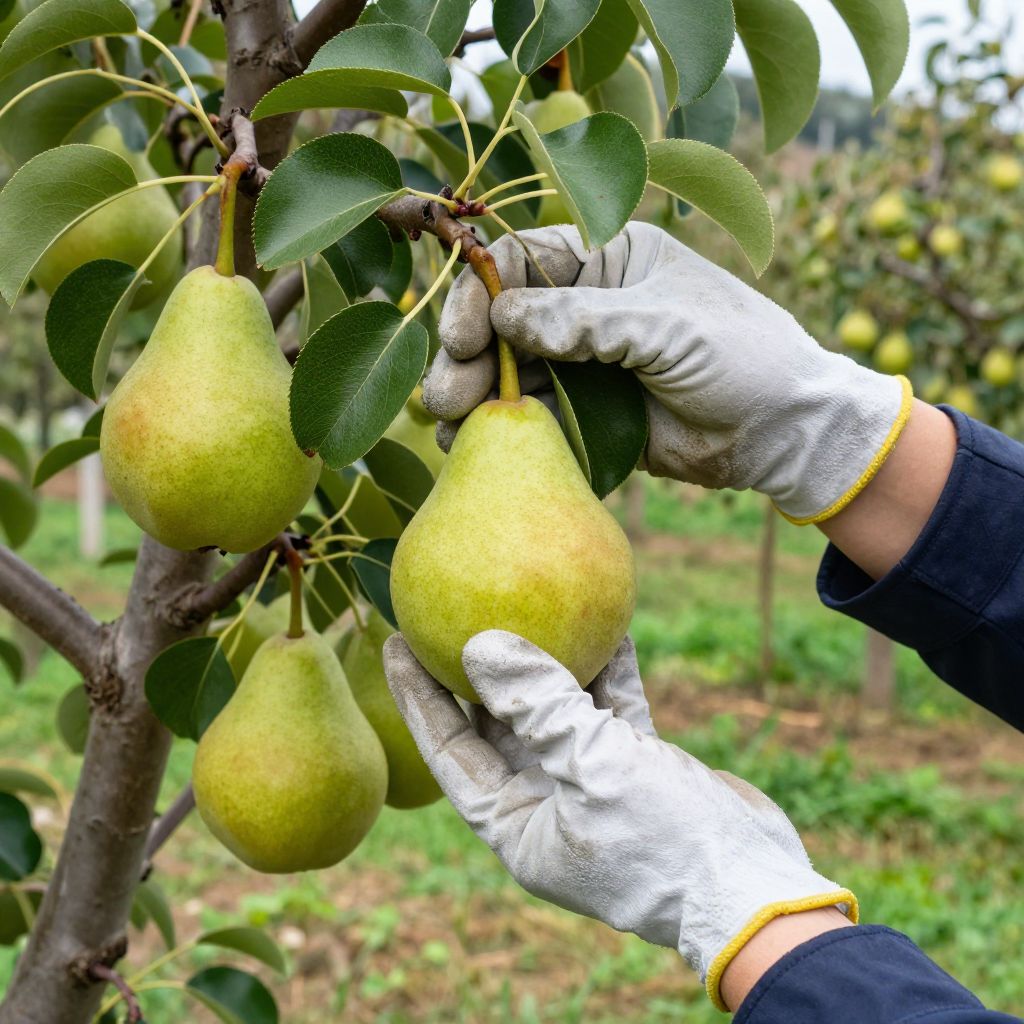
Wondering when to pick pears so they’re sweet, juicy, and not rock-hard? The timing matters more than many gardeners expect, because pears are usually harvested before they fully soften on the tree. Pick them too early and they stay starchy; too late and they can turn mushy or drop suddenly.
The good news is that pear harvest is easy to judge once you know what to look for. With a few simple checks for maturity, color, and stem behavior, you can harvest at the right stage and let the fruit finish ripening indoors for the best flavor and texture.
When To Pick Pears?
Pick pears when they are mature but still firm, usually before they become fully soft on the tree. Most pears are ready when the background color lightens, the fruit tilts easily from the branch, and the seeds have darkened. Then ripen them indoors at room temperature for the best eating quality.
How to Tell Pears Are Ready for Harvest
Pears do not ripen the same way apples do. Many varieties are harvested while still firm, then finished off the tree to develop sweetness and aroma.
Key signs of maturity
- Background color changes from deep green to a lighter green, yellow-green, or yellow, depending on the variety.
- The fruit feels firm but not rock-hard.
- The pear comes away with a gentle upward lift or twist, rather than needing to be yanked.
- Seeds inside are usually brown or darkening.
- The flesh near the stem may feel slightly less rigid than earlier in the season.
If you are unsure, harvest one pear and test-ripen it indoors for a few days. If it softens evenly and tastes sweet, the rest are likely ready or close.
Don’t wait for tree-soft pears on most varieties
Many common pears, including European pears such as Bartlett and Bosc, are best picked firm and ripened later indoors. If you leave them until they feel soft on the tree, the inside may already be overripe or grainy.
Best Seasonal Timing for Pear Harvest
Harvest time depends on your climate, your tree’s age, and the variety. In many temperate regions, pears are picked from late summer into fall, but the exact window can vary by several weeks.
What affects harvest timing
- Variety: Early, midseason, and late pears all ripen at different times.
- Weather: A cool summer can delay ripening; a hot season can speed it up.
- Tree location: Sunny, sheltered trees often ripen sooner than those in cooler or shaded spots.
- Crop load: Heavy crops may mature more slowly and unevenly.
Because local conditions matter so much, check your tree every few days as harvest season approaches. Once the first pears begin to loosen and change color, the rest may follow quickly.
How to Harvest Pears Without Damaging the Fruit
Handle pears gently. Bruising can shorten storage life and affect flavor, even if the damage is not obvious right away.
- Choose a dry day if possible.
- Hold the pear in your hand and lift it upward.
- Give it a slight twist if needed.
- Pick only fruit that releases easily.
- Place pears in a shallow container, not a deep bucket where they can be crushed.
Do not pull hard on the stem. If the fruit resists, leave it for a few more days and test again.
Use the right handling for storage pears
If you plan to store pears, keep them as clean and unbruised as possible. Even small scratches can lead to faster decay in storage.
Ripening Pears Indoors After Picking
Most pears improve after harvest. Set them at room temperature and check them daily. Depending on the variety and maturity at picking, they may take several days to a couple of weeks to soften and develop flavor.
Simple indoor ripening method
- Place pears in a single layer on a counter or tray.
- Keep them out of direct sun and away from heat vents.
- Check firmness daily near the stem and shoulder.
- Once they yield slightly to gentle pressure, refrigerate them if you are not eating them right away.
You can speed ripening by placing pears in a paper bag with a ripe banana or apple, but check often. Ethylene gas can move the process along quickly, and pears can go from firm to overripe faster than expected.
What Happens If You Pick Pears Too Early or Too Late?
Timing mistakes are common, especially with first-time pear growers. The plant itself may look healthy, but the fruit quality can still suffer if harvest is off.
Picked too early
- Fruit stays starchy or bland.
- Pears may soften unevenly.
- Texture can remain gritty or dry.
Picked too late
- Fruit may become soft at the core before the outside feels ripe.
- Pears can drop and bruise on the ground.
- Storage life is usually shorter.
If you miss the ideal window, use the fruit quickly. Very ripe pears are still useful for fresh eating if they are not damaged, but they will not store well.
Growing Conditions That Affect Pear Ripening
Healthy trees produce better fruit and more predictable harvests. Pear trees need full sun, well-drained soil, and enough space for air movement and light penetration.
Sunlight and site
Give pears a location with at least 6 to 8 hours of sun if possible. Better light helps the fruit color up and ripen more evenly.
Soil and drainage
Pears prefer fertile soil that drains well. Waterlogged roots can weaken the tree and reduce fruit quality, while very dry soil can lead to small fruit and uneven maturity.
Watering
Water young trees regularly during establishment and during dry spells, but avoid keeping the root zone constantly wet. Mature trees usually need less frequent watering, though fruiting trees still benefit from steady moisture during dry weather.
Mulch can help conserve moisture and moderate soil temperature. Keep mulch a few inches away from the trunk to prevent rot and pest problems.
Pruning and Thinning for Better Harvest Timing
Pruning affects how much light reaches the fruit and how evenly pears mature. A crowded canopy can delay ripening and make harvest harder.
Why pruning helps
- Improves air circulation.
- Lets sunlight reach fruiting wood.
- Reduces disease pressure.
- Makes it easier to see when fruit is ready.
Thin out crossing, crowded, or damaged branches during the dormant season or at the appropriate time for your region. If the tree carries too many pears, thinning some fruit earlier in the season can improve size and ripening consistency.
Common Pear Pests and Diseases That Can Affect Harvest
Healthy fruit is easier to judge and store. Pests and diseases can distort ripening, reduce fruit quality, or cause fruit drop before harvest.
Problems to watch for
- Codling moth: Can tunnel into fruit, making it unfit for storage.
- Pear scab: Causes dark, rough spots on leaves and fruit.
- Fire blight: Can blacken shoots and damage the tree severely.
- Bird damage: Pecked fruit may ripen unevenly or rot faster.
Inspect fruit regularly as harvest nears. Remove damaged pears promptly so they do not attract insects or spread rot.
How to Store Pears After Picking
Storage depends on ripeness at harvest. Firmer pears can often be kept longer than already-soft fruit.
Short-term storage
Keep unripe pears in a cool, dry place until they begin to soften. Once ripe, move them to the refrigerator to slow further ripening.
Longer storage tips
- Store only sound, unbruised fruit.
- Keep pears separate from vegetables that are sensitive to ethylene if possible.
- Check stored fruit regularly and remove any that begin to soften too much or show rot.
Different varieties store differently, so use your own observations from one season to the next. A pear that keeps well in your climate may not behave the same way in another.
Quick Harvest Checklist for Pears
- Check for a lighter background color.
- Lift the fruit gently; it should release with little effort.
- Test one pear indoors before harvesting the whole tree.
- Pick in dry weather when possible.
- Handle fruit carefully to avoid bruising.
- Let pears finish ripening indoors at room temperature.
Conclusion
The best answer to when to pick pears is: harvest them when they are mature, still firm, and easy to lift from the branch, then let them ripen indoors. Check your tree every few days during harvest season, and adjust your timing based on your variety and local weather. If you want to improve next year’s crop, note when your pears ripened this season and compare that with how they tasted after indoor ripening.
For more fruit-growing help, you may also want to read about fruit tree pruning basics and managing common orchard pests.