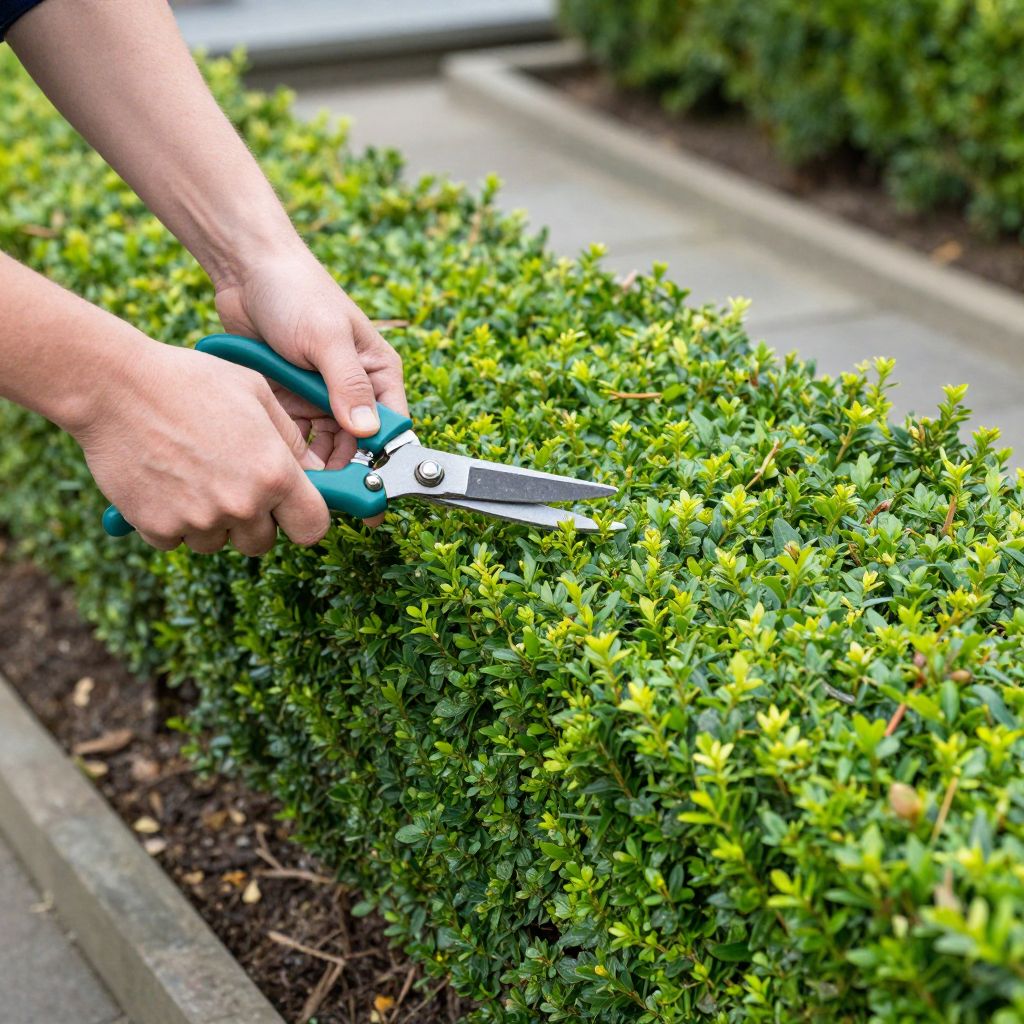
If you’re wondering when to trim boxwoods, the best answer is usually after the first flush of growth in late spring or early summer. That timing lets you shape the plant without removing tender new growth too early, and it gives boxwoods time to recover before cold weather arrives.
Boxwoods are forgiving, but the timing and style of pruning matter. Trim them too early, too late, or too hard, and you can end up with thin growth, winter damage, or an awkward shape that takes a long time to fix.
When to trim boxwoods?
The best time to trim boxwoods is usually in late spring to early summer, after the first growth flush has finished. A light second trim can be done in mid- to late summer if needed. Avoid heavy pruning in late fall or during extreme heat, drought, or freezing weather.
Best timing for boxwood pruning
Late spring to early summer: the ideal window
For most boxwoods, this is the safest and most effective time to prune. New growth has hardened off enough to shape cleanly, and the plant still has plenty of time to produce fresh growth before winter.
This timing works especially well if you want a formal hedge, rounded mound, or crisp edging. It also reduces the chance of cutting off soft new shoots that have not finished extending.
Mid- to late summer: only for light touch-ups
You can do a small corrective trim later in summer if the shrub looks uneven or if a hedge has grown beyond its outline. Keep it light. The goal is to refine the shape, not to force a major reset.
In warmer climates, avoid pruning so late that new growth is encouraged right before a heat wave or dry spell. In cooler regions, stop pruning early enough for the plant to harden before frost.
When not to trim boxwoods
- Late fall: fresh growth may be damaged by early freezes.
- Winter: pruning is usually unnecessary and can expose stems to cold injury.
- Early spring before growth starts: you may remove buds that would have filled the plant out.
- During drought or heat stress: pruning adds stress when the shrub is already struggling.
How often should you trim boxwoods?
Most boxwoods need only one or two light trims per year. Formal hedges may need more frequent shaping than informal shrubs, but boxwoods generally respond best to small, regular cuts rather than severe pruning all at once.
If you let a boxwood get too large, you can reduce it gradually over several seasons. Cutting it back hard in one year may leave bare stems and patchy regrowth, especially on older plants.
How to trim boxwoods the right way
Tools you’ll need
- Hand pruners for small branches and detail work
- Hedge shears for shaping larger hedges
- Loppers for thicker stems if needed
- Gloves and eye protection
- A clean tarp or bucket for clippings
Sharp, clean tools make smoother cuts and reduce tearing. Wipe blades before and after use, especially if you are pruning several shrubs or any plant showing disease symptoms.
Step-by-step trimming method
- Inspect the shrub and remove dead, broken, or diseased branches first.
- Step back and decide on the final shape before cutting.
- Trim lightly from the outside, shortening only the newest growth.
- Keep the base slightly wider than the top so light reaches the lower branches.
- Make small, even cuts rather than deep cuts into old wood.
- Check the plant from different angles as you go to keep the shape balanced.
Important: boxwoods often do not push new growth well from bare old wood. If you cut too far back into leafless stems, those areas may stay thin or empty.
How much should you remove?
For routine shaping, remove only a few inches of soft new growth. If you are correcting an overgrown shrub, reduce it gradually over time instead of removing a large portion at once. A light, repeated trim is usually safer than a dramatic haircut.
Pruning boxwoods for different purposes
Formal hedges
Formal boxwood hedges benefit from regular light trimming to keep edges crisp and dense. Trim after each main flush of growth, but avoid shearing so often that you remove all fresh foliage.
For a neat look, keep the top narrower than the bottom. This simple taper helps sunlight reach the lower branches and prevents the hedge from becoming bare at the base.
Informal shrubs and foundation plantings
If your boxwoods are used as rounded landscape shrubs, prune less often and let the natural form show. A few selective cuts can maintain size without making the plant look overly clipped.
Older, overgrown boxwoods
Older shrubs can be renovated, but patience is important. Start by removing dead wood and thinning crowded branches. Then reduce size little by little over one or more seasons, depending on how much growth you need to remove.
If an old boxwood has become woody and sparse inside, pruning alone may not restore it fully. Sometimes the best long-term fix is gradual renewal pruning combined with better light, mulch, and consistent moisture.
Seasonal conditions that affect pruning success
Sunlight and airflow
Boxwoods grow best in partial shade to full sun, depending on your climate. Good light helps the shrub stay dense, but too much shade can make it leggy and thin. Good airflow also helps foliage dry faster after rain, which can reduce disease pressure.
Soil, drainage, and moisture
Boxwoods prefer well-drained soil that stays evenly moist but not soggy. Poor drainage can weaken roots and make the plant less able to recover from pruning. If your soil stays wet after rain, improve drainage before relying on pruning to fix the shrub’s appearance.
Mulch helps conserve moisture and protect roots, but keep it a few inches away from the trunk. A thick mulch pile against the stem can trap moisture and invite problems.
Common pruning mistakes to avoid
- Shearing too hard into old wood: this can leave permanent bare spots.
- Pruning at the wrong season: late fall cuts may be damaged by cold.
- Making the top wider than the base: the lower branches may thin out.
- Removing too much at once: the plant may struggle to regrow evenly.
- Using dull tools: ragged cuts heal more slowly.
What to watch for after trimming
Normal recovery
After a light trim, boxwoods should hold their shape and begin producing new growth from the outer stems. Healthy plants usually recover without special treatment beyond normal watering and mulch.
Signs the plant is stressed
- Leaves turning bronze or yellow after pruning
- Patchy dieback on cut branches
- Wilting during hot, dry weather
- Thin growth that does not fill in over time
If you see stress, check watering first. Boxwoods under drought stress need deep, infrequent watering rather than frequent light sprinkling. If the plant is in heavy shade, compacted soil, or waterlogged ground, those issues may be part of the problem too.
Can you trim boxwoods in spring, summer, or fall?
Yes, but the timing should match the plant’s growth cycle and your climate. Spring and early summer are best for most trimming. Summer touch-ups are fine if they are light. Fall pruning should be minimal and finished early enough that the shrub can harden before cold weather.
If you live in a region with very hot summers, trim earlier in the season. If your area has early frosts, finish pruning well before the first expected freeze. Local weather matters more than the calendar alone.
Quick boxwood pruning checklist
- Trim after the first flush of growth, usually late spring to early summer.
- Use sharp, clean tools.
- Make light cuts rather than severe cuts.
- Keep the shrub slightly wider at the base.
- Avoid pruning during drought, extreme heat, or late fall.
- Watch for bare wood and thin growth, and correct gradually.
Conclusion
If you want the simplest rule for when to trim boxwoods, remember this: prune lightly after spring growth finishes, then touch up only as needed through summer. That approach keeps the shrub dense, healthy, and easier to shape. Before you cut, step back, check the weather, and make only the smallest trim needed to improve the form.
For more practical shrub care, you may also want to read about how to prune evergreen hedges and mulching around landscape shrubs to keep your boxwoods looking their best.