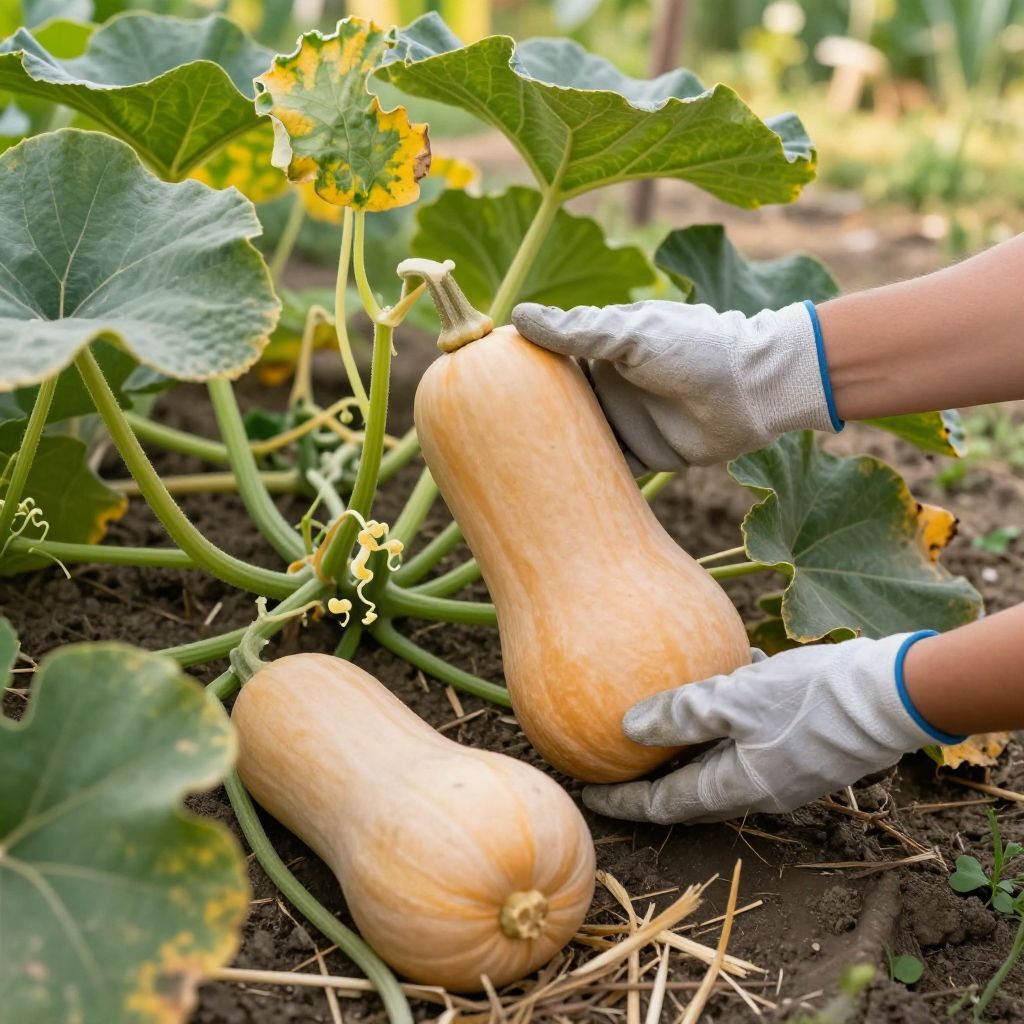
Wondering when to pick butternut squash so it tastes sweet, stores well, and doesn’t get damaged by frost? The right harvest time depends on maturity, weather, and how well the rind has cured on the vine. Pick too early and the squash may be bland or soft; wait too long and cold, wet weather can shorten storage life.
With a few simple checks, you can harvest at the ideal stage and avoid common mistakes. The key is to look at the plant, the fruit skin, and the season together—not the calendar alone.
When to pick butternut squash?
Pick butternut squash when the fruit is fully mature: the skin is hard, the rind is deep tan, and the stem is dry and corky. The squash should resist a thumbnail test, and the vine often begins to yellow and decline. Harvest before hard frost, because cold damage can reduce storage quality.
How to tell butternut squash is ready
Butternut squash does not ripen much after harvest, so maturity matters. Use several signs together rather than relying on just one.
1. Check the skin color
Most butternut squash are ready when they turn a uniform tan or buff color. A little green can remain near the stem on some fruits, but the skin should no longer look glossy or immature.
2. Test the rind hardness
Press your thumbnail into the skin. If it resists firmly and does not puncture easily, the squash is likely mature. A soft or easily dented rind usually means it needs more time on the vine.
3. Look at the stem
The stem should be dry, firm, and corky. A green, flexible stem often means the squash is still actively growing. A mature stem also helps the fruit store better after harvest.
4. Observe the vine
As the squash ripens, the vine often starts to yellow, dry back, or slow its growth. That is a helpful sign, but not a guarantee. Sometimes vines decline from disease before the fruit is fully mature, so check the fruit itself carefully.
5. Compare fruit size to the variety
Butternut squash should reach the expected size for the variety you planted. If you do not know the cultivar, use the color, skin hardness, and stem condition as your main guides instead of size alone.
Seasonal timing for harvest
In many gardens, butternut squash is harvested in late summer through fall, often about 80 to 120 days after planting, depending on the variety and growing conditions. Cooler climates usually finish earlier, while warm regions may allow a longer harvest window.
Why the calendar is only a guide
Weather, soil fertility, watering, and sunlight all affect how quickly squash matures. A cool, cloudy season can delay ripening, while hot weather and strong growth can speed it up. Always check the fruit directly before picking.
Watch the first frost
Butternut squash is not frost-tolerant. If frost is forecast and the fruit is close to mature, harvest it before temperatures drop. Even a light frost can damage the rind or shorten storage life.
How to harvest butternut squash correctly
Harvesting carefully helps prevent bruising and improves storage. Use clean, sharp tools and handle each squash gently.
- Choose a dry day if possible.
- Inspect the squash for color, rind hardness, and stem dryness.
- Cut the fruit from the vine with pruners or a sharp knife.
- Leave 2 to 4 inches of stem attached if you can.
- Set the squash down gently rather than tossing it into a basket.
Do not twist or pull the fruit off the vine. That can tear the stem or damage the rind, which makes storage problems more likely.
Why the stem matters
A short stem “handle” helps protect the squash from rot. If the stem breaks off, the fruit can still be eaten, but it usually will not store as well as one with an intact stem.
What if you pick butternut squash too early?
Early-picked squash may have pale flesh, weaker flavor, and a shorter storage life. The skin may be too soft, which makes bruising and rot more likely. If you must harvest early because of frost or disease, cure the squash and use it sooner rather than expecting long storage.
Can butternut squash ripen off the vine?
Not much. Once harvested, butternut squash may improve slightly in color or dry a bit, but it does not truly ripen like a tomato. If the fruit is immature, it is best used relatively soon instead of stored for months.
Curing butternut squash after harvest
Curing is one of the most useful steps for improving storage life. It helps the skin harden and minor surface scratches dry over.
Simple curing method
- Place harvested squash in a warm, dry, well-ventilated spot.
- Keep them out of direct rain and away from frost.
- Turn them gently if needed so all sides dry evenly.
- Allow several days to a couple of weeks, depending on conditions.
After curing, store squash in a cool, dry place with good airflow. Avoid damp basements, sealed plastic bags, and places where fruit may touch each other tightly.
Growing conditions that help squash mature on time
If your squash is not ready when you expect it, growing conditions may be the reason. Healthy plants produce better fruit and ripen more reliably.
Sunlight
Butternut squash grows best in full sun. Less light can slow flowering and fruit development, which pushes harvest later into the season.
Soil and compost
Use fertile, well-drained soil enriched with compost. Squash roots dislike waterlogged ground, and poor drainage can weaken plants or encourage disease. Compost improves soil structure and supports steady growth without making the soil muddy.
Watering
Water deeply when the soil begins to dry, especially during flowering and fruit fill. Irregular watering can stress the plant and affect fruit quality. Try to water at the base of the plant rather than soaking the leaves, which helps reduce disease pressure.
Spacing and airflow
Good spacing helps leaves dry faster after rain or watering. Better airflow can reduce powdery mildew and other leaf problems that may shorten the plant’s productive season.
Common problems that affect harvest timing
Sometimes the issue is not the fruit itself, but a problem in the plant’s growth cycle. Catching these early can help you decide whether to wait or harvest.
Powdery mildew
This common fungal disease can cause leaves to decline early. The fruit may still mature, but the plant may stop feeding it efficiently. If mildew is severe and frost is near, harvest any squash that is close to ready.
Vine borers and other pests
In some areas, squash vine borers can damage stems and cause sudden wilting. If the vine collapses, check the fruit immediately. If the squash is nearly mature, harvest it. If it is small and immature, it may not finish properly.
Wet weather and rot
Prolonged wet conditions can stain the rind or lead to soft spots. Pick mature squash promptly in rainy weather so they do not sit on damp soil longer than necessary.
Storing harvested butternut squash
Once cured, store squash in a cool location with moderate humidity and good air movement. Check them regularly and remove any fruit that develops soft spots, mold, or damage.
Signs storage is going wrong
- Soft or sunken areas on the rind
- Sticky or moldy stem ends
- Bad odors
- Rapid shriveling
Use damaged squash first. Even a small bruise can spread during storage, especially if the fruit was harvested without a stem or handled roughly.
Quick checklist before you pick
- Skin is deep tan or buff
- Rind is hard and resists a thumbnail
- Stem is dry and corky
- Fruit has reached expected size
- Hard frost is not imminent, or you are harvesting before it arrives
Final thoughts
The best time to pick butternut squash is when the fruit is fully mature, the skin is hard, and the stem has dried down. If you check the rind, color, and stem together, you can harvest at the right moment and improve both flavor and storage life. Walk out to your patch today and test one squash carefully.
If you want to keep improving your harvests, you may also enjoy reading more about how to grow winter squash successfully and common vegetable garden pests and diseases.