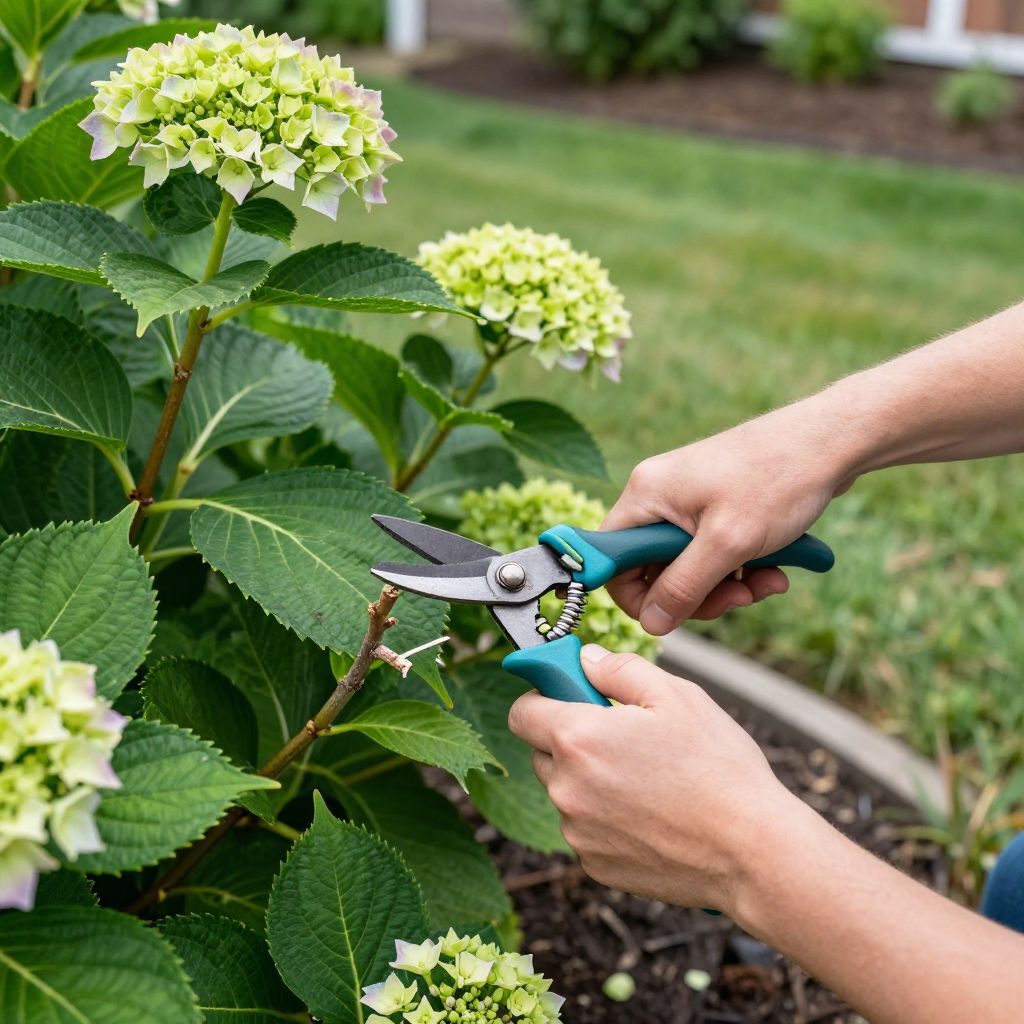
Wondering when to trim hydrangea bushes without losing next season’s flowers? The right timing depends on the type of hydrangea you grow, because some bloom on old wood and others on new wood. A well-timed trim can improve shape, remove dead stems, and encourage healthier growth.
The key is to identify your hydrangea first, then prune with a light hand. If you cut at the wrong time, you may remove the buds that would have become flowers, so timing matters more than heavy pruning.
When to trim hydrangea bushes?
Trim hydrangea bushes based on how they bloom: old-wood bloomers are best pruned right after flowering, while new-wood bloomers can be cut back in late winter or early spring before growth starts. If you are unsure which type you have, limit pruning to dead, damaged, or crossing stems until you can identify it.
Know your hydrangea type before you prune
Not all hydrangeas should be trimmed the same way. The biggest pruning mistake is assuming every hydrangea can be cut back hard in winter.
Hydrangeas that bloom on old wood
These set flower buds on stems that grew the previous season. If you prune them too late in winter or early spring, you can remove the buds before they open.
- Bigleaf hydrangea (Hydrangea macrophylla)
- Mountain hydrangea (Hydrangea serrata)
- Oakleaf hydrangea (Hydrangea quercifolia)
Hydrangeas that bloom on new wood
These form flowers on the current season’s growth, so pruning before spring growth is usually safe and often helpful.
- Panicle hydrangea (Hydrangea paniculata)
- Smooth hydrangea (Hydrangea arborescens)
Best timing by season
Seasonal timing depends on bloom type, climate, and plant health. Use the following guide as a starting point, then adjust for your local weather and how your shrub grows.
Late winter to early spring
This is the best time to prune new-wood hydrangeas before active growth begins. In many gardens, that means late winter through early spring, once the worst cold has passed but before buds swell.
For old-wood bloomers, avoid major pruning at this time unless you are only removing dead wood or lightly shaping the plant.
Right after flowering
For old-wood hydrangeas, prune soon after the blooms fade. That gives the shrub time to grow new stems and set next year’s flower buds before fall.
If you wait too long, you may cut into the next season’s flower buds. A light trim after bloom is usually enough.
Summer
Summer is a good time to remove spent flower heads, damaged stems, or branches that are rubbing against each other. Keep it light, especially on old-wood types.
Fall
Try to avoid major pruning in fall. Late-season cuts can stimulate tender new growth that may be damaged by cold weather, and on old-wood types you may also reduce next year’s bloom.
How to trim hydrangea bushes correctly
Good pruning is more about restraint than heavy cutting. Start with the least aggressive approach and only remove what the plant truly needs.
- Remove dead, broken, or diseased stems first. Cut back to healthy wood or to the base if the stem is dead all the way through.
- Thin out crowded growth. If the center is congested, remove a few of the oldest stems at the base to improve airflow and light.
- Shape lightly. Shorten overlong stems just above a healthy pair of buds or a strong side branch.
- Deadhead spent flowers if needed. On many hydrangeas, you can snip off faded blooms to tidy the plant without changing its structure.
- Step back and reassess. Stop before the shrub looks overcut. Hydrangeas usually look best with a natural, rounded form.
How much should you remove?
For most home gardens, a light annual trim is enough. On old-wood hydrangeas, remove only dead wood and a few stems for shape. On new-wood types, you can cut stems back more strongly, but avoid removing so much that the plant loses its natural framework.
Rule of thumb: if you are unsure, prune less rather than more.
What to do if you do not know the hydrangea type
Many gardeners inherit a landscape shrub and are not sure which hydrangea they have. In that case, use a cautious approach until you can identify it by leaf shape, bloom time, and stem growth.
- Do not hard-prune in late winter.
- Wait until after flowering if it blooms early in the season.
- Remove only dead or damaged stems in doubt.
- Take photos of the leaves, stems, and blooms to compare with local nursery advice.
If the hydrangea blooms in summer on fresh growth, it is more likely a new-wood type. If it blooms early in the season on stems that were already there last year, treat it as an old-wood type.
Tools and technique for clean cuts
Clean tools make cleaner cuts and reduce stress on the shrub. Use sharp bypass pruners for most stems, loppers for thicker canes, and a pruning saw for very old or woody stems.
- Disinfect tools if you are cutting diseased wood.
- Make cuts just above a healthy bud or branch junction.
- Cut at a slight angle so water does not sit on the wound.
- Avoid tearing stems, which can happen with dull blades.
When to use renewal pruning
Older hydrangeas that have become woody or crowded may benefit from renewal pruning. This means removing a few of the oldest stems at the base over time, rather than cutting the whole shrub to the ground.
This approach is especially useful for shrubs that are healthy but overgrown. It helps preserve blooms while encouraging fresh stems from the base.
Common pruning mistakes to avoid
Hydrangeas are forgiving, but a few mistakes can reduce flowering or weaken the plant. The most common problems are easy to prevent once you know what to watch for.
- Cutting old-wood hydrangeas too late and removing flower buds.
- Shearing the shrub into a ball, which can leave a dense outer shell and weak interior growth.
- Pruning too hard every year, which can stress the plant and reduce bloom quality.
- Ignoring dead stems, which can invite disease or make the shrub look neglected.
- Pruning in the wrong season for your hydrangea type.
How pruning affects blooms
Hydrangea flowers are tied closely to stem age. That is why timing matters so much. If you prune old-wood types at the wrong time, you may still get healthy foliage but very few flowers.
New-wood types are more flexible, but even they bloom best when the plant is not cut back excessively. A balanced shrub with strong stems usually flowers more reliably than one that is constantly hard-pruned.
Aftercare following pruning
After trimming, help the shrub recover with steady care rather than extra fertilizer or heavy watering. Hydrangeas generally do best in evenly moist, well-drained soil and with consistent mulch around the root zone.
- Water deeply if the soil is dry, especially after a major trim.
- Refresh mulch to help hold moisture and moderate soil temperature.
- Watch for new shoots and remove any dead stubs later if needed.
- Do not overfertilize just because you pruned; too much nitrogen can produce leafy growth with fewer flowers.
Special situations: damaged, neglected, or overgrown shrubs
Sometimes a hydrangea needs more than a simple seasonal trim. Storm damage, winter dieback, or years of neglect can change how you prune.
Winter damage
If stems die back from cold, wait until spring to see what is truly alive before cutting. Dead wood often becomes obvious once buds begin to swell.
Overgrown plants
For a large, tangled shrub, spread pruning over two or three seasons if possible. Removing too much at once can shock the plant and reduce flowering.
Plants with poor bloom
If your hydrangea has lots of leaves but few flowers, the issue may be pruning time, too much shade, or excessive nitrogen. Check the pruning schedule first before assuming the plant needs a harder cut.
Growing conditions that support better pruning results
Pruning works best when the plant is already growing in suitable conditions. Hydrangeas generally prefer rich soil, good drainage, and morning sun with some afternoon protection in hotter climates.
Plants growing in deep shade may stretch and produce fewer blooms. Plants in very hot sun may need more moisture and mulch to stay vigorous after pruning.
- Improve soil with compost if it is poor or compacted.
- Make sure water drains away from the crown.
- Mulch to conserve moisture, but keep mulch a few inches away from stems.
- Choose a location that matches the hydrangea type and your climate.
Quick pruning checklist
If you want a simple way to remember the basics, use this checklist before you cut.
- Identify whether your hydrangea blooms on old wood or new wood.
- Prune at the correct season for that type.
- Remove dead, damaged, and crossing stems first.
- Keep cuts clean and moderate.
- Stop before you remove too much of the plant.
Conclusion
The best answer to when to trim hydrangea bushes is simple: prune old-wood types after flowering and new-wood types in late winter or early spring. If you are unsure, keep pruning light and focus on dead or damaged stems. Identify your hydrangea this season, then make one careful, well-timed trim.
For more practical garden care, you may also want to read about how to prune flowering shrubs without losing blooms and improving garden soil for healthier shrubs.