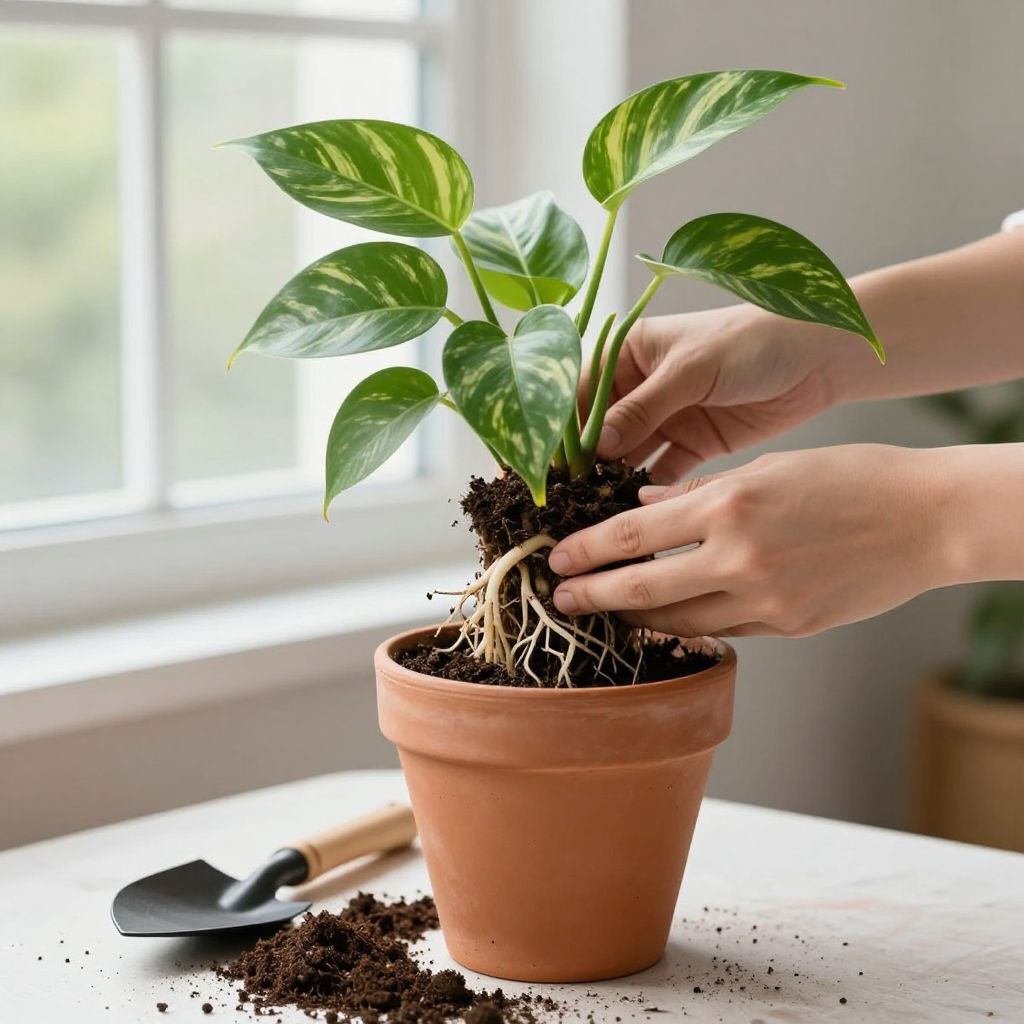
Wondering when to repot pothos? The best time is usually in spring or early summer, when the plant is actively growing and can recover quickly from root disturbance. That said, a pothos can be repotted any time of year if it is rootbound, drying out too fast, or showing stress from an exhausted potting mix.
Knowing the right timing helps you avoid setbacks like drooping, stalled growth, or root rot. Below, you’ll learn how to tell when your pothos needs a larger pot, what season works best, and how to repot it without shocking the plant.
When to repot pothos?
Repot pothos when roots fill the pot, water runs through too quickly, growth slows despite good care, or the plant becomes top-heavy and unstable. Spring is the ideal season because longer days and warmer temperatures support new root growth, but an obviously rootbound plant should be repotted right away rather than waiting.
Signs your pothos needs repotting
Pothos (Epipremnum aureum) is forgiving, but it does give clear signals when it has outgrown its container. Look for a few of these signs together before moving up a pot size.
- Roots circling the pot or poking out of drainage holes
- Water rushing through the pot very quickly
- Soil drying out much faster than it used to
- Leaves looking smaller than usual
- Slow growth during the active growing season
- The plant tipping over from top-heavy vines
- Potting mix breaking down, compacting, or smelling stale
If you see only one mild sign, such as a few roots at the drainage holes, you may be able to wait a little longer. If the plant is rootbound and the mix is exhausted, repotting is the better choice.
How to check without disturbing the plant too much
Gently slide the plant from its pot if possible. Healthy pothos roots are usually white to light tan and firm. If the root ball is a tight mass with very little loose soil left, it is time to repot.
Best season for repotting pothos
Spring is the best time to repot pothos because the plant is entering its fastest growth period. Early summer also works well in most climates. During these months, pothos usually adapts faster to a new pot and fresh mix.
Why spring works best
- Longer daylight encourages new root and leaf growth
- Warmer temperatures reduce transplant stress
- The plant can recover before slower autumn and winter growth
Can you repot pothos in fall or winter?
Yes, if the plant is clearly rootbound or the soil has become too compacted. Just expect slower recovery. In low-light months, avoid overwatering after repotting, because the plant will use less water and the roots may stay wet longer.
If your home stays warm and bright year-round, indoor pothos can often be repotted outside the traditional spring window. The key is to match the timing to the plant’s growth, not just the calendar.
How often should pothos be repotted?
Most pothos plants need repotting every 1 to 2 years, though fast-growing plants in bright light may need it sooner. Very large or slower-growing plants can sometimes stay in the same pot longer if they still have room and the potting mix remains healthy.
Do not repot just because the plant has been in the same container for a year. Check the roots and soil condition first.
What size pot should you choose?
Move pothos up only one pot size at a time. A container that is about 1 to 2 inches wider in diameter than the current pot is usually enough for a houseplant. A pot that is too large holds excess moisture and can increase the risk of root rot.
- Choose a pot with drainage holes
- Use a stable pot if the vines are long and heavy
- Avoid oversized decorative pots without drainage unless you use an inner nursery pot
Best soil for repotting pothos
Pothos does best in a loose, well-draining potting mix that still holds a little moisture. A standard indoor potting soil is usually fine if it is airy. If your mix feels dense, improve it with perlite or orchid bark to increase drainage.
Simple mix qualities to look for
- Light and fluffy texture
- Good drainage without becoming bone-dry too fast
- Enough organic matter to support root growth
Avoid heavy garden soil in pots. It compacts easily and can suffocate indoor roots.
How to repot pothos step by step
Repotting pothos is straightforward if you work gently and keep the root ball intact as much as possible.
- Water the plant lightly a day before repotting if the soil is very dry.
- Prepare the new pot with fresh, moist but not soggy potting mix.
- Remove the pothos from its old pot and loosen any tightly circling roots.
- Trim only dead, mushy, or badly damaged roots if needed.
- Set the plant at the same depth it was growing before.
- Fill around the root ball with fresh mix and press lightly to remove large air pockets.
- Water thoroughly until excess drains out.
- Empty any saucer so the roots do not sit in water.
After repotting, place the plant in bright, indirect light and let it settle in. A little droop for a day or two is normal, but severe wilting usually means the plant is too dry, too wet, or was disturbed too much.
How to care for pothos after repotting
Post-repot care matters as much as the repotting itself. The goal is to reduce stress while the roots explore the new soil.
- Water carefully: keep the mix lightly moist at first, but never soggy.
- Hold off on fertilizer for about 4 to 6 weeks unless the plant is actively growing and clearly recovering well.
- Keep it in bright, indirect light rather than harsh direct sun.
- Avoid moving it repeatedly while it adjusts.
If the leaves yellow after repotting, check the moisture level before assuming the plant needs more water. Yellowing is often caused by overwatering, especially in a larger pot.
Common mistakes to avoid
Most pothos repotting problems come from trying to “help” too much. A few simple mistakes can slow recovery.
- Using a pot that is too large
- Repotting into heavy, poorly draining soil
- Watering on a fixed schedule instead of checking the mix
- Breaking up the roots too aggressively
- Repotting during low light and then overwatering
- Forgetting drainage holes
Remember: pothos prefers a slightly snug pot over a huge one. Too much extra soil around the roots stays wet too long and can lead to rot.
What if your pothos is rootbound but you do not want a bigger pot?
If you want to keep the same pot size, you can refresh the top layer of soil and trim the roots lightly, but this is only a temporary solution. For a very crowded plant, a better option is to repot into a slightly larger container or divide the plant into smaller sections.
Another option is to prune the vines and propagate healthy cuttings. This reduces the plant’s top growth and can make it easier to manage in the same space.
Can you propagate pothos while repotting?
Yes. Repotting is a good time to take cuttings if the plant has long, healthy vines. Use clean scissors and cut just below a node, then root the cuttings in water or a moist potting mix.
Propagation is especially useful if the plant has become leggy or if you want to make the pot look fuller after repotting.
Troubleshooting after repotting
Leaves are drooping
Check whether the plant is too dry or the roots were damaged. A newly repotted pothos may droop briefly, but it should perk up once the moisture is corrected and the plant settles.
Leaves are turning yellow
Yellowing often points to overwatering, especially if the new pot is larger than needed. Let the top inch or two of mix dry before watering again.
Growth has stalled
Some pause in growth is normal after repotting. If the plant remains healthy, give it time and brighter indirect light.
Soil stays wet too long
This usually means the mix is too dense, the pot is too large, or the plant is getting too little light. Improve drainage and adjust watering habits.
Final tips for healthy pothos growth
The best time to repot pothos is when the plant shows clear signs of being rootbound, ideally in spring or early summer. Use a pot only slightly larger than the old one, choose a well-draining mix, and water based on soil moisture rather than habit.
If you want to keep your plant thriving, check the roots now and repot only when it truly needs the extra space. For more practical houseplant guidance, you may also find this houseplant soil guide and indoor plant care basics helpful.