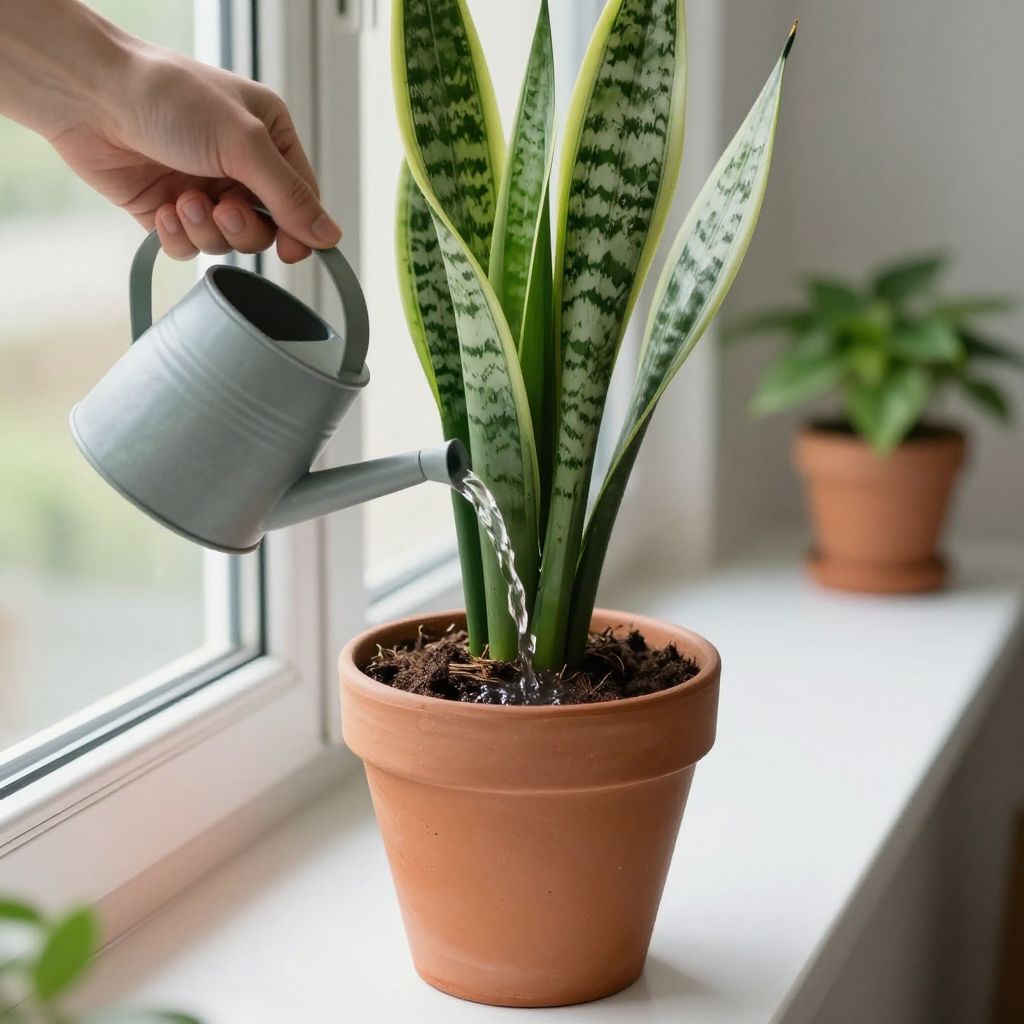
Wondering when to water snake plant so you do not overdo it? The short answer is: water only when the potting mix has dried out completely, then water thoroughly and let excess drain away. Snake plants store water in their thick leaves, so they usually need far less moisture than most houseplants.
The exact timing changes with season, light, pot size, soil, and whether the plant is indoors or outdoors. Instead of following a fixed calendar, use soil dryness and plant condition to decide when it is time.
When to water snake plant?
Water a snake plant (Dracaena trifasciata, formerly Sansevieria) only after the potting mix has dried out all the way through. In most homes this means every 2 to 6 weeks, with less frequent watering in winter and more in bright, warm conditions. Always check the soil first rather than watering by schedule.
How to tell when a snake plant needs water
The best watering cue is dry soil, not a calendar reminder. Snake plants are drought-tolerant, and their roots rot quickly if they sit in damp mix for too long.
Simple checks before watering
- Finger test: push a finger 2 to 3 inches into the soil. If it feels dry all the way down, it is usually time to water.
- Pot weight: a dry pot feels noticeably lighter than a freshly watered one.
- Soil probe or chopstick: insert it into the mix and check whether soil clings to it.
- Leaf look and feel: slightly wrinkled, softer, or curling leaves can signal thirst, but this usually appears after the soil has been dry for a while.
Do not rely on the top inch alone. Snake plants can still have moisture deeper in the pot, especially in larger containers.
Seasonal watering guide
Snake plant watering changes with light and temperature. Growth slows in cool, low-light months, so the plant uses less water. In brighter, warmer weather, it dries faster and may need watering a bit more often.
Spring and summer
During active growth, check the soil more often. A snake plant in bright light, a warm room, or a porous terracotta pot may dry out faster than one in a dim corner or plastic pot.
- Check every 1 to 2 weeks.
- Water when the mix is fully dry, not just surface dry.
- If the plant is outdoors in warm weather, monitor after rain because containers can stay wet longer than you expect.
Fall and winter
In cooler, darker months, snake plants need much less water. Overwatering is most common in winter because the soil dries slowly and roots absorb less moisture.
- Check every 2 to 4 weeks, sometimes longer in low light.
- Wait for complete dryness before watering.
- Reduce watering even more if the room is cool or humid.
How to water a snake plant correctly
When it is time to water, give the plant a thorough drink, then let the pot drain completely. A light sprinkle is usually not enough to reach the roots evenly.
- Check that the pot has drainage holes.
- Water slowly around the base until water runs out of the bottom.
- Empty the saucer after a few minutes.
- Do not let the pot sit in standing water.
If your snake plant is in a decorative cachepot, remove the inner pot before watering so excess water can escape freely.
How much water is enough?
There is no exact amount that fits every pot. The right amount is enough to moisten the root zone evenly and produce drainage at the bottom. Small pots need less water than large ones, and gritty mixes dry faster than peat-heavy mixes.
Best soil and potting mix for watering success
Good drainage is just as important as timing. A snake plant in dense, water-retentive soil stays wet too long, even if you water sparingly.
- Use a fast-draining houseplant mix.
- Choose a pot with drainage holes.
- Consider terracotta if you tend to overwater, since it helps the mix dry faster.
- Avoid oversized pots, which hold excess moisture around the roots.
If the soil stays wet for many days after watering, repot into a faster-draining mix. A healthy snake plant should not have soggy roots.
Signs you are watering too much or too little
Overwatering symptoms
- Yellowing leaves, especially near the base
- Soft, mushy, or collapsing leaves
- Musty soil smell
- Brown, wet-looking spots
- Roots that are black, soft, or rotten
Overwatering is the most common snake plant problem. If you suspect it, stop watering immediately and let the soil dry out. If the plant is badly affected, inspect the roots and repot into fresh, dry mix.
Underwatering symptoms
- Wrinkled or slightly shriveled leaves
- Leaves curling inward
- Very dry, compacted potting mix
- Slower growth than usual
Underwatered snake plants usually recover well once watered properly, as long as the roots are still healthy.
Indoor vs. outdoor watering needs
Most snake plants are grown indoors, where light and temperature are more stable. Outdoor plants dry faster in heat and wind, but they also face rain, which can make overwatering more likely if drainage is poor.
Indoor plants
Indoors, the main factors are light, room temperature, pot size, and humidity. A plant near a bright window may need water sooner than one in a shaded room.
Outdoor plants
Outdoors, protect snake plants from prolonged rain and cold, wet soil. They do best in sheltered spots with excellent drainage. If your climate is cool or rainy, container growing is often safer than planting directly in the ground.
Common watering mistakes to avoid
- Watering on a fixed weekly schedule without checking the soil.
- Leaving water in a saucer or cachepot.
- Using a pot with no drainage holes.
- Keeping the plant in heavy, compacted soil.
- Watering lightly and frequently instead of soaking and drying.
- Ignoring slower drying in winter.
Snake plants prefer a dry-down cycle. They are far more likely to suffer from too much moisture than from a slightly delayed watering.
What to do if the plant has been overwatered
If you catch overwatering early, you may be able to save the plant with quick action. The goal is to remove excess moisture and prevent root rot from spreading.
- Stop watering right away.
- Take the plant out of its pot if the soil is soggy or smells sour.
- Inspect the roots and trim away soft, black, or mushy sections with clean scissors.
- Repot in dry, well-draining mix and a clean pot with drainage holes.
- Wait to water again until the soil is fully dry after repotting.
If most of the root system is damaged, recovery may be slow. Healthy leaves or sections can sometimes be propagated if the base has rotted.
How light and temperature affect watering
More light usually means faster growth and faster drying. Warm rooms dry soil more quickly, while cool conditions slow both evaporation and root activity.
- Bright light: check the soil more often.
- Low light: water less frequently.
- Warm temperatures: soil dries faster.
- Cool temperatures: soil stays wet longer.
If your snake plant is far from a window, it may need much less water than one sitting in bright indirect light.
Practical watering routine for beginners
A simple routine works best: check, wait, water deeply, and drain. This prevents the two biggest mistakes, which are watering too soon and leaving the roots wet.
- Check the soil every 1 to 2 weeks during active growth.
- In winter, check less often but still test before watering.
- Water only when the mix is dry throughout the pot.
- Empty any runoff after watering.
- Adjust based on your home’s light, temperature, and pot size.
Conclusion
When to water snake plant comes down to one rule: wait until the soil is completely dry, then water thoroughly and let it drain. If you check the pot instead of following a strict schedule, you will avoid most problems and keep the plant healthy for years.
For more houseplant care guidance, you may also want to read related watering and drainage tips for indoor plants before your next repotting or cleanup session.