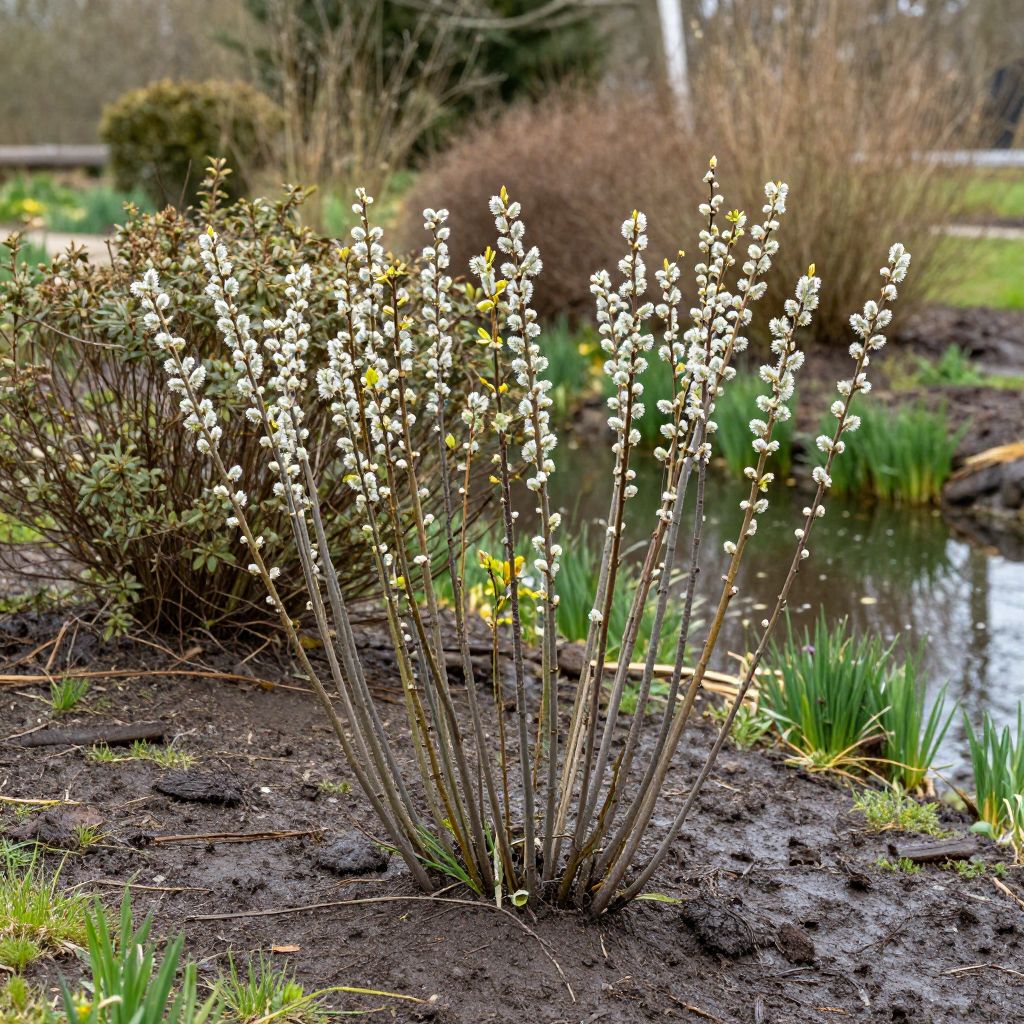
Where do pussy willows grow best, and how can you tell if your yard is a good fit? These shrubs are adaptable, but they thrive when you match them to the right moisture, light, and space. If you choose the wrong spot, they can become weak, sparse, or overly large.
Pussy willows are usually grown for their soft spring catkins and fast, shrubby growth. The key is understanding that they naturally prefer damp ground and plenty of sun, so your planting location matters as much as the plant itself.
Where do pussy willows grow?
Pussy willows grow best in full sun to partial shade and in moist, well-drained soil. In nature, many species grow along stream banks, pond edges, wet meadows, and other low, damp places. In a home garden, they do well where the soil stays evenly moist but not waterlogged for long periods.
Best locations for pussy willows
If you are deciding where to plant pussy willows, think “moist but not swampy.” They are ideal for spots that stay naturally damp after rain, but they still need oxygen around the roots.
Good planting sites
- Near a rain garden or swale
- Along the edge of a pond or stream, if allowed and stable
- In low areas of the yard that do not dry out quickly
- In a border where you can water consistently during dry spells
- As a screen or informal hedge in a spacious landscape
Sites to avoid
- Hot, dry slopes with fast-draining soil
- Small foundation beds too close to buildings
- Areas with standing water that never drains
- Tight spaces where pruning would be difficult
- Places under dense tree shade
Best rule of thumb: if grass struggles because the soil dries out too fast, pussy willows may also struggle unless you can irrigate regularly.
What growing conditions do pussy willows need?
Pussy willows are not fussy about rich soil, but they do need the right balance of moisture and light. If you give them a suitable site from the start, they are much easier to maintain.
Sunlight
Most pussy willows flower best in full sun, meaning at least 6 hours of direct light daily. They can tolerate partial shade, especially in hot climates, but too much shade usually means fewer catkins and thinner growth.
Soil
They prefer loamy soil with plenty of organic matter, but they can adapt to clay or sandy soil if moisture is managed well. Soil should hold water long enough for roots to use it, yet still drain after rain.
Moisture
These shrubs like consistently moist conditions, especially while they are getting established. Dry soil can reduce growth and catkin production, while soggy, airless soil can cause root stress.
Space
Many pussy willows become large shrubs or small trees over time. Give them room to spread, and plan for annual pruning if you want a compact plant.
How to plant pussy willows in the right place
Planting location is the biggest factor in success. A good site can make a pussy willow easy to grow; a poor one can turn it into a constant watering project.
- Choose a moist site. Look for a place that stays damp after rain but does not remain flooded.
- Check the light. Aim for at least half a day of direct sun, with more sun usually giving better flowering.
- Improve the soil if needed. Mix in compost to help sandy soil hold moisture or to loosen heavy soil slightly.
- Dig a wide planting hole. Make it about as deep as the root ball and wider than the container or root spread.
- Water thoroughly after planting. Soak the root zone so the soil settles around the roots.
- Mulch lightly. Add 2 to 3 inches of mulch, keeping it a few inches away from the stems.
If your soil drains too quickly, compost and mulch help, but they will not replace regular watering in a dry site. If your soil stays soggy for days, choose a different location rather than trying to “fix” it with amendments alone.
Can pussy willows grow in containers?
Yes, but containers are a short-term or small-space option, not the easiest long-term setup. Pussy willows need a large pot, steady moisture, and more frequent care than they do in the ground.
Container basics
- Use a large pot with drainage holes
- Choose a moisture-retentive potting mix, not a very fast-draining cactus mix
- Water whenever the top layer of mix begins to dry
- Move the container where it gets strong sun
- Expect faster drying in wind and heat
Container-grown pussy willows often need more pruning to stay manageable. They are best for patios, decks, and small gardens where you can monitor moisture closely.
How to care for pussy willows after planting
Once established, pussy willows are fairly low-maintenance, but they still benefit from a little routine care. The goal is to keep them vigorous without letting them become overgrown or stressed.
Watering
Water deeply during dry periods, especially in the first year. Mature plants are more tolerant, but they still perform best when the soil does not dry out for long stretches.
In hot weather, check the soil a few inches below the surface. If it feels dry there, water slowly and thoroughly at the base of the plant.
Mulching
A 2- to 3-inch mulch layer helps conserve moisture and keeps roots cooler. Use shredded bark, leaf mold, or another organic mulch, but keep mulch away from direct contact with the stems.
Feeding
Most pussy willows do not need heavy fertilizing. If growth is weak and soil is poor, a light top-dressing of compost in spring is usually enough. Too much nitrogen can create lots of leafy growth with fewer catkins.
Pruning pussy willows for better growth and catkins
Pruning is one of the most useful maintenance tasks for pussy willows. It helps control size, encourages fresh stems, and can improve the display of catkins on new growth.
When to prune
The best time is usually after flowering, before the plant puts too much energy into old stems. In many gardens, this means pruning in late spring. Avoid heavy pruning right before the bloom season if you want to enjoy the catkins.
How to prune
- Remove dead, damaged, or crossing stems first
- Cut back older stems to encourage new shoots
- Thin crowded growth to improve airflow
- Use clean, sharp pruners or loppers
If you want a shrub with more catkins at eye level, regular pruning helps keep new growth coming from the base. If you never prune, many species become leggy and less attractive over time.
Common problems and how to fix them
Few or no catkins
This usually means the plant is too shady, too dry, or has been pruned at the wrong time. Move it to a sunnier site if possible, keep the soil evenly moist, and prune after flowering rather than before.
Leaves wilting in summer
Wilting often points to drought stress. Water deeply, mulch the root zone, and check whether nearby trees or paving are competing for moisture.
Yellowing leaves
Yellow leaves can come from poor drainage, drought, or root stress. Check the soil first. If it stays wet for long periods, the site may be too soggy. If it dries too fast, increase watering and mulch.
Pests
Pussy willows can attract aphids, scale, or caterpillars. Most minor infestations can be managed by pruning out heavily affected stems, hosing off pests, or encouraging beneficial insects. Severe infestations usually happen on stressed plants.
Diseases
Fungal leaf spots and cankers are more likely in crowded, poorly ventilated shrubs. Prune for airflow, avoid overhead watering when possible, and remove diseased debris from the garden.
How to propagate pussy willows
Pussy willows are often propagated from cuttings because they root readily in the right conditions. This is a simple way to start new plants if you already have a healthy shrub.
- Take a healthy stem cutting from dormant or actively growing wood, depending on your climate and plant type.
- Remove lower leaves if present.
- Place the cutting in moist soil or water, keeping it in bright light without harsh heat.
- Keep the medium evenly moist until roots develop.
- Transplant once the cutting has a strong root system.
Because rooting success depends on local conditions and plant vigor, it is wise to start several cuttings rather than relying on just one.
Are pussy willows right for your garden?
Pussy willows are a good choice if you have room, sunlight, and a site that holds moisture without staying flooded. They are especially useful in naturalistic landscapes, wildlife-friendly gardens, and damp borders where many other shrubs struggle.
If your yard is dry, very small, or heavily shaded, you may need to choose a different plant or be prepared for extra watering and pruning. The right location makes all the difference.
If you want to keep learning about shrub care and spring-flowering plants, you may also enjoy reading about how to prune flowering shrubs and choosing the best plants for moist soil.