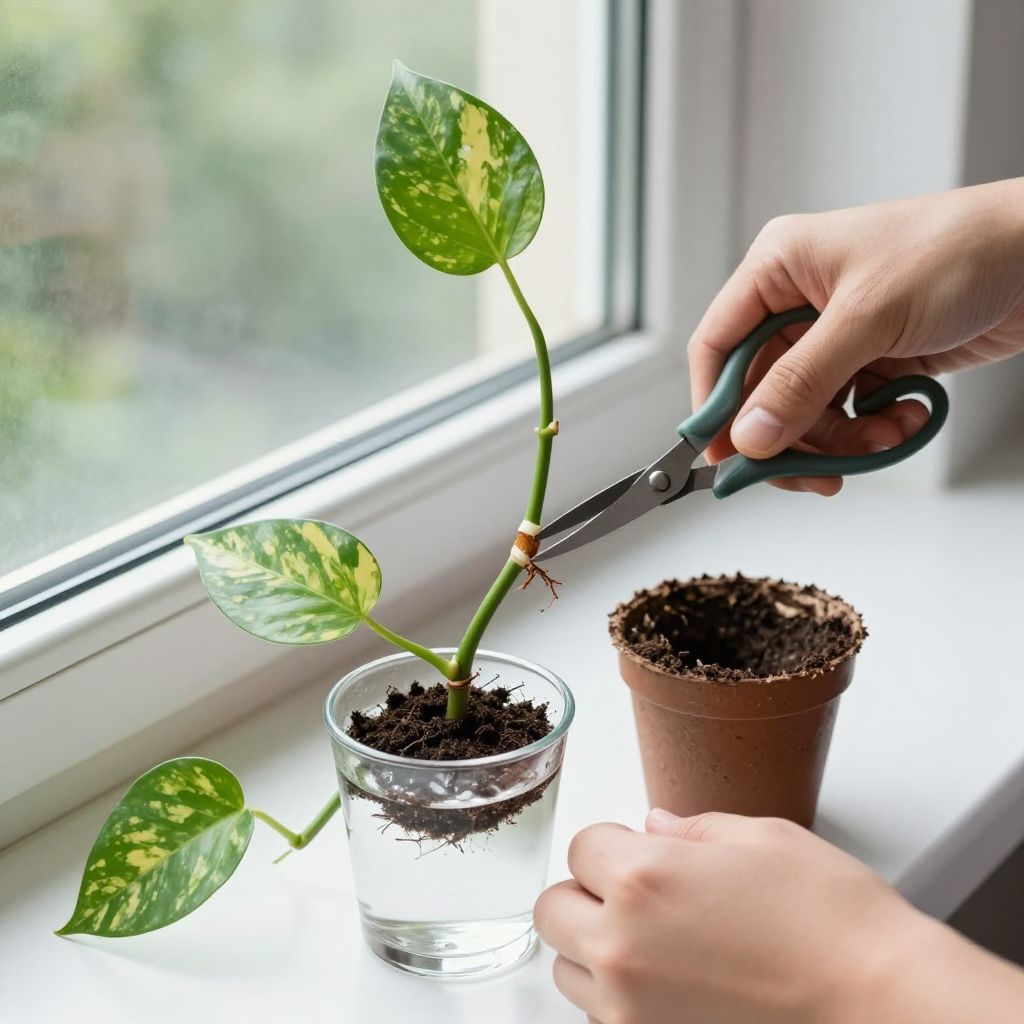
Wondering where to cut pothos to propagate? The best place is just below a node, the small bump on the vine where leaves and aerial roots grow. That node is what produces new roots, so a cutting without one usually won’t root well. With the right cut and a little moisture, pothos is one of the easiest houseplants to multiply.
You can root pothos cuttings in water, sphagnum moss, or a light potting mix. The key is choosing healthy stems, making clean cuts, and giving the cuttings warm, bright indirect light while they form roots.
Where to cut pothos to propagate?
Cut just below a node on a healthy vine, ideally 1/4 to 1/2 inch beneath it. Each cutting should include at least one node and one leaf, though two nodes often gives better rooting. Avoid cutting only between leaves, because that section usually cannot produce roots on its own.
Understand pothos nodes before you cut
Pothos (Epipremnum aureum) grows along trailing vines with repeating leaf stems and nodes. The node is the most important part of propagation because it contains the growth tissue that makes roots and new shoots.
What a node looks like
- A small bump or joint on the vine
- A point where a leaf attaches
- Sometimes a tiny brown nub or aerial root begins there
When you inspect a vine, look for the slightly thicker sections between leaves. Those are the spots to target for cuttings.
Where not to cut
- Do not cut only a leaf stem without a node
- Do not take a cutting from a damaged, yellowing, or mushy section
- Do not leave the cut too far above the node, since extra stem can rot in wet propagation setups
How to take a pothos cutting step by step
Propagation is easiest when you work with a long, healthy vine and clean tools. A sharp pair of scissors or pruners helps prevent crushing the stem.
- Choose a healthy vine with several leaves and visible nodes.
- Find a node near the end of the vine or along a section you want to shorten.
- Make a clean cut just below the node.
- Trim the cutting into sections, each with at least one node and one leaf.
- Remove any leaves that would sit below the water line or under the rooting medium.
If you are making multiple cuttings, keep track of which end is the bottom. Roots form from the node end, not the leaf tip.
How many nodes should each cutting have?
One node is often enough to root pothos, but two nodes can improve your odds, especially if the vine is thin or the plant is recovering from stress. Shorter cuttings root faster, while slightly longer cuttings are a little more forgiving if you are new to propagation.
Best places on the plant to take cuttings
Not every vine section is equally useful. The best cuttings come from vigorous stems with good leaf color and active growth. If your pothos is leggy, propagation is also a good way to rejuvenate the mother plant.
Top choices for cuttings
- Tip growth with several leaves and visible nodes
- Long trailing vines that can be divided into multiple sections
- Stems with aerial roots, which often root quickly
Vines with aerial roots are especially convenient because those root initials are already started. Still, a healthy node matters more than the presence of a long aerial root.
Cutting near the base vs. farther out
You can cut near the base of an overgrown plant to encourage new branching, or take cuttings from the middle and tip sections to root separately. If the plant is sparse at the base, leaving a few nodes on the mother plant can help it regrow fuller.
How to root pothos cuttings successfully
Once you know where to cut pothos to propagate, the next step is choosing a rooting method. Water is the simplest for beginners, but moss or potting mix can produce stronger roots for transplanting.
Rooting in water
Place the node end in a clean jar of room-temperature water, with the node submerged and the leaves kept above the waterline. Change the water every 5 to 7 days, or sooner if it turns cloudy.
- Use bright, indirect light
- Keep the jar warm, not hot
- Watch for roots emerging from the node in a few weeks, depending on conditions
Water-rooted cuttings are easy to monitor, but roots formed in water can be more delicate when moved to soil. Transition them gently.
Rooting in sphagnum moss or a light mix
For a more soil-ready root system, place the node into damp sphagnum moss or a loose, airy propagation mix. The medium should feel evenly moist, not soggy.
- Use a container with drainage holes if possible
- Keep humidity moderate to high
- Check moisture often so the node never dries out completely
This method is useful if you want to pot up the cutting later with less shock than water propagation sometimes causes.
What conditions help pothos cuttings root faster?
Pothos roots best in warm temperatures, bright indirect light, and steady moisture. The plant is adaptable, but propagation goes more smoothly when conditions are stable.
Light
Give cuttings bright, indirect light. A spot near an east-facing window or a few feet back from a sunny window usually works well. Direct sun can overheat the cutting or scorch the leaves.
Temperature
Average indoor room temperatures are usually fine. Avoid cold windowsills, drafty doors, and hot vents, since temperature swings can slow rooting.
Moisture
Keep the rooting medium lightly moist, not waterlogged. Too much water can lead to rot, especially if the cutting has only one node and few leaves.
How to pot up rooted pothos cuttings
Move cuttings to soil after roots are several inches long and have begun to branch. A small pot with drainage holes and a well-draining houseplant mix is usually best.
- Fill the pot with a light, airy potting mix.
- Make a small hole and place the rooted cutting in it.
- Cover the roots gently and firm the mix lightly.
- Water thoroughly, then let excess drain away.
- Keep the soil slightly moist for the first week or two.
After transplanting, protect the cutting from harsh sun and let it settle in gradually. New growth is a better sign than frequent watering.
Common propagation mistakes to avoid
Most pothos propagation problems come from cutting in the wrong place or keeping the cutting too wet. A few small adjustments can prevent failure.
- Missing the node: no node usually means no roots
- Using dirty tools: can spread rot or disease
- Leaving leaves underwater: causes decay
- Too much direct sun: stresses the cutting
- Water that is never changed: increases rot risk
- Potting up too soon: roots may be too short to support the plant
If your cutting turns yellow or mushy
Remove any rotting tissue right away. If the stem is still firm, recut below a healthy node with a clean blade and restart in fresh water or medium. If the entire cutting has softened, discard it and take a new one from a healthy vine.
If roots are slow to appear
Check the basics: Is the node submerged or in contact with moist medium? Is the plant getting enough indirect light? Is the room warm enough? Slow rooting is common in cooler seasons or low-light homes.
When is the best time to propagate pothos?
You can propagate pothos indoors any time of year, but cuttings usually root faster when the plant is actively growing and indoor light is stronger. In cooler months, rooting may take longer, so patience matters more than the calendar.
If your pothos is outdoors in a warm climate, bring cuttings inside before temperatures drop. Pothos is sensitive to cold and does best in sheltered, stable conditions.
How to keep the mother plant healthy after cutting
Pruning for propagation can also shape the original plant. When you remove a vine, new growth often starts from nodes below the cut, helping the plant look fuller over time.
- Leave enough foliage on the mother plant to keep it growing
- Trim just above a node if you want the vine to branch
- Rotate the pot occasionally so growth stays even
- Wipe dusty leaves so the plant can photosynthesize efficiently
If the plant is very long and bare, take several cuttings rather than removing one huge section. That gives you more chances for success and helps the mother plant recover better.
Quick answer: the best cutting points for pothos propagation
The best place to cut pothos is just below a healthy node, ideally on a vine with several leaves and visible aerial root bumps. Aim for cuttings with at least one node, keep leaves out of water or soil, and root them in bright indirect light for the best results.
If you want more help with indoor vine plants and potting care, you may also find useful guidance on houseplant care basics and indoor plant propagation tips.