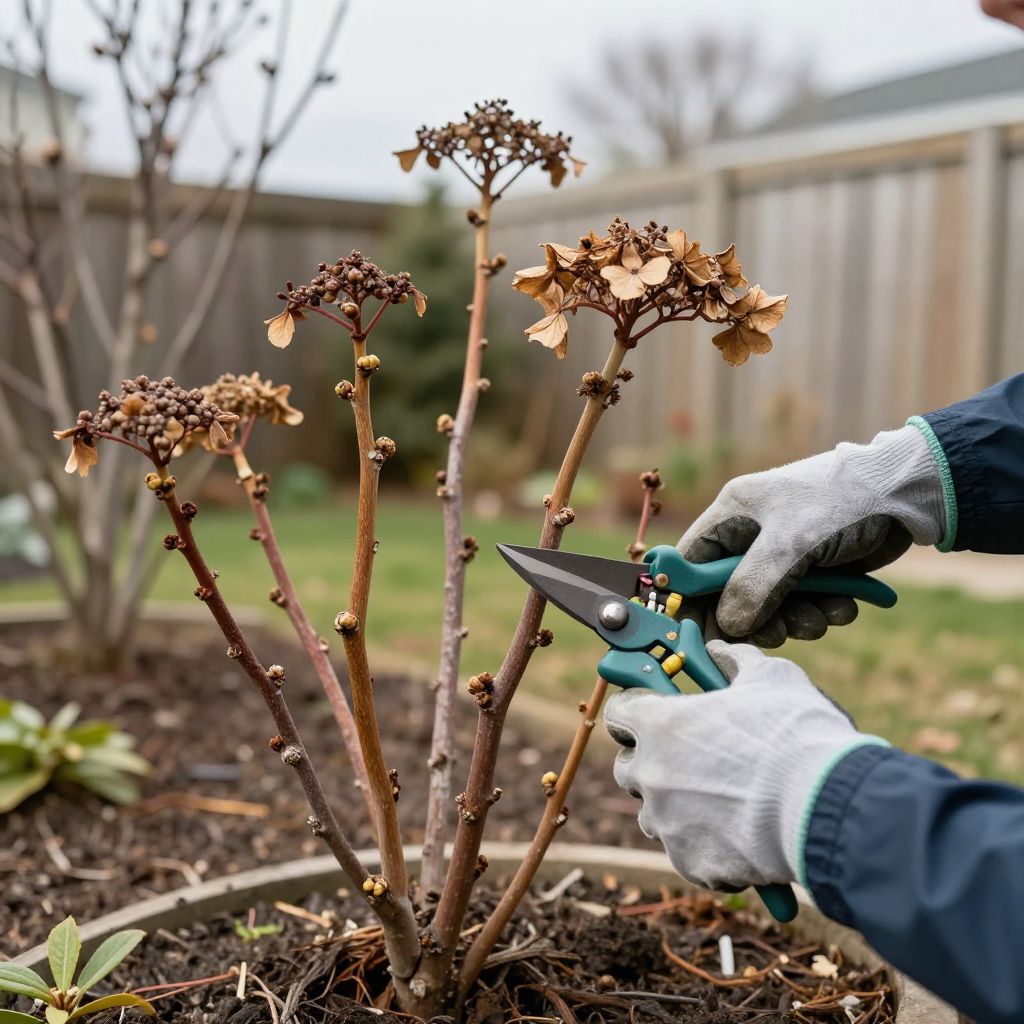
If you’re wondering when to prune hydrangea, the short answer is: it depends on the type you grow. Some hydrangeas bloom on old wood and should be pruned right after flowering, while others bloom on new wood and are best cut back in late winter or early spring.
Getting the timing wrong can mean fewer flowers, but the good news is that hydrangeas are forgiving once you know what kind you have. With a little identification and the right pruning approach, you can keep plants healthy, shapely, and blooming well.
When to prune hydrangea?
The best time to prune hydrangea depends on whether it flowers on old wood or new wood. Prune old-wood hydrangeas soon after they finish blooming, and prune new-wood hydrangeas in late winter or early spring before new growth starts. If you are unsure, limit pruning to dead wood and spent blooms until you can identify the plant.
Know your hydrangea type before you cut
Hydrangeas are not all pruned the same way. The most important step is figuring out which type you have, because that tells you when the flower buds form.
Hydrangeas that bloom on old wood
These set next year’s flower buds on stems that grew the previous season. If you prune them too late, you may remove the buds and lose blooms.
- Bigleaf hydrangea (Hydrangea macrophylla)
- Oakleaf hydrangea (Hydrangea quercifolia)
- Mountain hydrangea (Hydrangea serrata)
- Many climbing hydrangeas also flower on old wood
Hydrangeas that bloom on new wood
These form flowers on the current season’s growth, so you can prune them before spring growth begins without sacrificing blooms.
- Panicle hydrangea (Hydrangea paniculata)
- Smooth hydrangea (Hydrangea arborescens)
The best pruning time by hydrangea type
Old-wood bloomers: prune just after flowering
For bigleaf, oakleaf, and mountain hydrangeas, the safest time to prune is right after the flowers fade, usually in summer. That gives the plant time to grow new stems and set buds for next year.
In most climates, avoid major pruning in fall, winter, or early spring unless you are removing dead, damaged, or crossing stems. Those seasons are when next year’s flower buds are already present.
New-wood bloomers: prune in late winter or early spring
Panicle and smooth hydrangeas can be cut back while they are dormant, before buds swell. This is often the easiest time to shape the plant, thin crowded stems, and encourage strong new growth.
If you live in a colder region, wait until the worst of winter has passed. In milder climates, late winter is usually ideal.
How to prune hydrangea without losing flowers
Pruning hydrangeas does not usually mean hard cutting every year. In many cases, light, selective pruning is better than a severe haircut.
- Remove dead, damaged, or diseased stems first. Cut them back to healthy wood or to the base.
- Deadhead spent flowers if needed. On old-wood types, cut only the faded bloom head and a small section of stem below it.
- Thin crowded stems. Remove a few of the oldest canes at the base to improve air flow and light.
- Shape lightly. Shorten overly long stems only where necessary to keep the shrub balanced.
- Step back and check the shape. Hydrangeas look best when they keep a natural, rounded form.
How much to cut
As a general rule, avoid removing more than about one-third of the plant in a single season unless you are rejuvenating an overgrown hydrangea. Heavy pruning on old-wood bloomers can reduce flowering for a year.
What to do if you don’t know what kind of hydrangea you have
If the plant came with no label, the safest approach is to prune conservatively until you identify it. Many gardeners accidentally remove flower buds by pruning at the wrong time.
- Watch when it blooms: early summer blooms often suggest old wood.
- Look at the flower shape and leaf form.
- Check whether the plant blooms on new shoots or on older stems.
- If unsure, wait to prune until after flowering, or only remove dead wood.
Tip: If your hydrangea blooms reliably every year and you’re not sure of the type, the “least pruning possible” approach is usually the safest choice.
Seasonal pruning tips that help hydrangeas bloom better
Spring
Spring is a good time to inspect winter damage, especially in colder regions. Remove stems that are clearly dead, but avoid aggressive pruning on old-wood bloomers until after they flower.
Summer
After flowering, old-wood hydrangeas can be lightly shaped. This is also a good time to deadhead if you want a tidier plant, though some gardeners leave dried flower heads for winter interest.
Fall
Fall is usually not the best time for major pruning. New cuts can encourage tender growth that may be damaged by frost, and on old-wood types you may remove next year’s buds.
Winter
In late winter, prune new-wood hydrangeas before growth begins. For old-wood types, limit winter work to removing broken stems or obvious dead wood.
Common pruning mistakes to avoid
Hydrangeas are easy to damage with the wrong timing, but most mistakes are simple to prevent.
- Pruning at the wrong season. This is the biggest reason hydrangeas fail to bloom.
- Shearing into a tight ball. This can remove buds and create dense growth with fewer flowers.
- Cutting all stems to the ground. Only some hydrangeas tolerate this well, and even then it should be done thoughtfully.
- Ignoring dead or diseased wood. Always remove damaged stems first.
- Using dull tools. Ragged cuts heal poorly and can invite disease.
Tools and technique for clean cuts
Use clean, sharp bypass pruners for most stems. Loppers help with thicker canes, and a pruning saw may be needed for older woody stems.
- Sanitize tools if you are cutting diseased wood.
- Make cuts just above a healthy bud or at the base of a stem.
- Cut at a slight angle so water does not sit on the wound.
- Wear gloves if the stems are woody or the plant is large.
What if your hydrangea is overgrown?
An overgrown hydrangea does not always need drastic pruning. Start by removing dead wood and a few of the oldest stems at the base to open the plant up.
If the shrub is very large, you may need to renovate it over two or three seasons instead of all at once. That is especially important for old-wood bloomers, which can skip flowering after severe pruning.
Pruning and overall hydrangea health
Good pruning works best when the plant is already growing in the right conditions. Hydrangeas generally prefer evenly moist, well-drained soil and a site with morning sun and afternoon shade in hotter climates.
Stress from drought, poor drainage, or too much shade can reduce flowering and make pruning less effective. Healthy plants recover faster from cuts and produce stronger stems for next season.
Watch for these problems after pruning
- No flowers: often caused by pruning old-wood hydrangeas at the wrong time.
- Weak, floppy growth: may mean the plant needs more light or less fertilizer.
- Brown stem dieback: remove dead sections and check for winter injury.
- Leaf spots or mildew: improve air circulation and avoid wetting the foliage when watering.
Quick pruning guide by bloom type
- Bigleaf, oakleaf, mountain hydrangeas: prune after flowering; keep cuts light.
- Panicle hydrangeas: prune in late winter or early spring.
- Smooth hydrangeas: prune in late winter or early spring.
- Unknown type: prune minimally until you identify it.
Conclusion
When to prune hydrangea comes down to bloom type and timing. If your plant flowers on old wood, prune after blooming; if it flowers on new wood, prune in late winter or early spring. Start with dead wood, keep cuts light, and let the plant’s natural shape guide you.
If you want to keep improving your shrub care, it can also help to read more about how to care for hydrangeas in the garden and how to identify different hydrangea types before making your next cut.