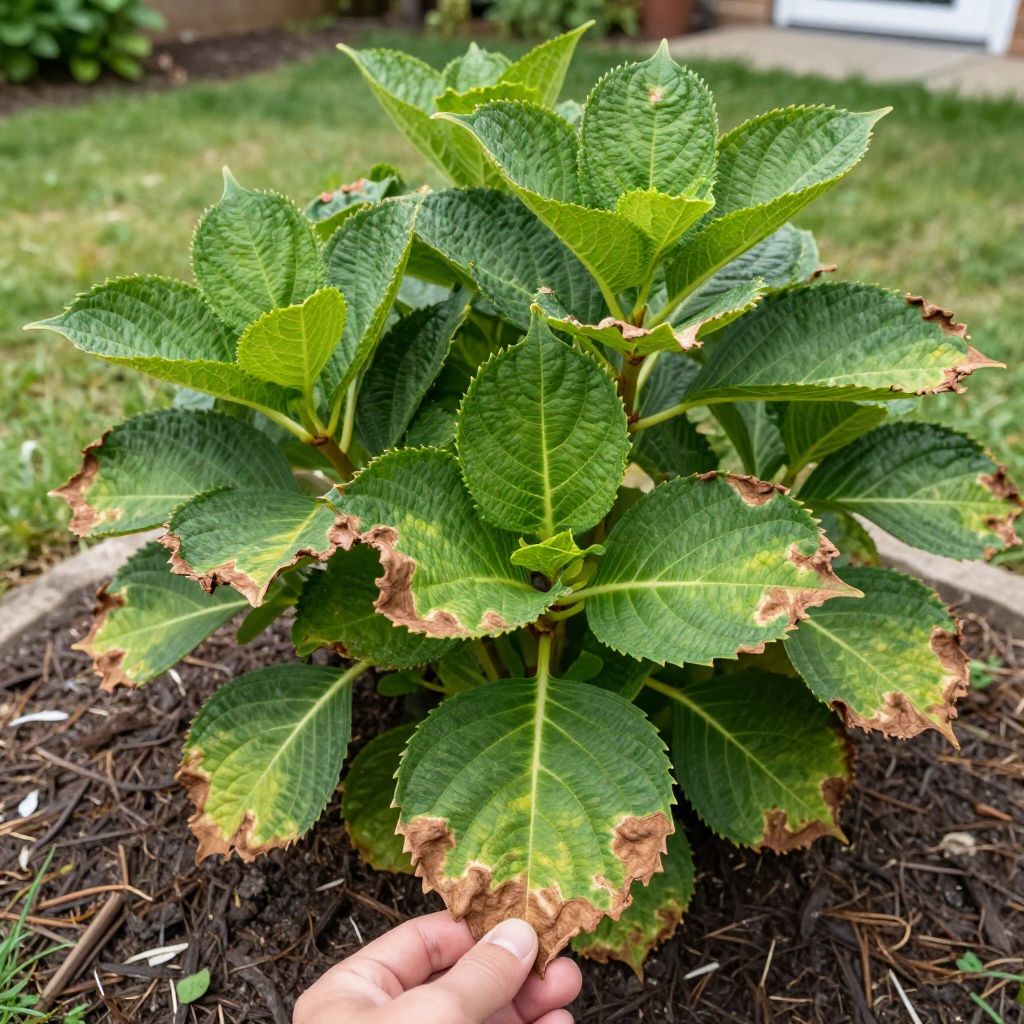
Why are my hydrangea leaves turning brown? Brown leaves are usually a sign that something in the plant’s growing conditions is off, not that the hydrangea is doomed. The most common causes are water stress, too much sun, root problems, fertilizer burn, frost damage, or leaf diseases.
The good news is that brown hydrangea leaves are often fixable once you identify the pattern. By checking the leaf edges, soil moisture, sun exposure, and recent care, you can usually narrow down the cause and make a practical correction before more damage appears.
Why are my hydrangea leaves turning brown?
Hydrangea leaves turn brown most often because the plant is stressed by inconsistent watering, hot afternoon sun, poor drainage, cold snaps, or disease. Look closely at where the browning starts: crispy edges, scattered spots, or whole-leaf browning each point to a different cause. Matching the symptom to the cause is the fastest way to fix it.
Check the browning pattern first
Before you treat anything, inspect the leaves and the plant’s location. The pattern tells you a lot about what is happening.
What the damage looks like
- Crispy brown edges or tips often point to drought stress, wind scorch, salt injury, or fertilizer burn.
- Brown patches between green tissue can happen after sun scorch or from disease.
- Small spots that enlarge may indicate leaf spot diseases.
- Whole leaves browning and dropping can follow severe water stress, root damage, or frost.
- New growth browning first may suggest cold injury, root issues, or chemical damage.
Look at the whole plant, not just the leaf
Check whether the plant is wilting, whether the soil is dry or soggy, and whether the browning is worse on the sunny side. Also note whether the problem started after pruning, fertilizing, a heat wave, or a late frost.
Water stress is one of the most common causes
Hydrangeas need steady moisture, especially during warm weather and while they are establishing. If the soil dries out too much, the leaves often turn brown at the edges and feel papery or crunchy.
How to tell if watering is the problem
- The top few inches of soil feel dry.
- The plant droops in the afternoon and recovers at night only to worsen later.
- Brown edges appear after hot, windy days.
- Container-grown hydrangeas dry out much faster than in-ground plants.
What to do
- Water deeply so moisture reaches the root zone, not just the surface.
- Check soil 2 to 3 inches down before watering again.
- Add 2 to 3 inches of organic mulch around the base, keeping it a few inches away from the stems.
- For pots, make sure excess water can drain freely and never let the container sit in a saucer of water for long.
Important: Hydrangeas dislike extremes. Repeatedly soaking the soil and then letting it dry hard can be just as damaging as underwatering.
Too much sun can scorch hydrangea leaves
Many hydrangeas grow best with morning sun and afternoon shade, especially in hot climates. If they receive strong afternoon sun, the leaves may brown, curl, or look bleached and tired.
Signs of sun scorch
- Browning is worse on the side facing the hottest sun.
- Leaves may look faded before they turn brown.
- The plant may wilt even when the soil is not very dry.
- Damage appears after a sudden heat wave or after nearby shade was removed.
How to correct it
If the plant is in a pot, move it to a spot with bright shade during the hottest part of the day. For in-ground hydrangeas, use nearby shrubs, a fence, or a shade cloth to reduce afternoon exposure if relocation is not possible.
If you are planting a new hydrangea, choose a site that gets morning sun and protection from harsh late-day heat. In cooler regions, some varieties tolerate more sun, but local climate still matters.
Poor drainage can damage the roots
Hydrangeas need moist soil, but they do not like sitting in waterlogged ground. When roots stay too wet, they cannot function properly, and the leaves may turn brown, yellow, or drop prematurely.
How to spot drainage trouble
- The soil stays wet for days after rain or watering.
- The plant looks weak even though the ground is damp.
- Lower leaves yellow before turning brown.
- The site feels heavy, sticky, or compacted.
What helps
- Stop watering until the top layer of soil begins to dry slightly.
- Improve the soil with compost if the planting bed is heavy, but do not bury the crown deeper.
- Check that the plant is not sitting in a low spot where water collects.
- For containers, confirm that drainage holes are open and unobstructed.
If the roots have been in saturated soil for a long time, the plant may need to be moved to a better-drained location. Hydrangeas can recover from brief wet spells, but chronic soggy soil is a serious problem.
Fertilizer burn and salt buildup can brown the leaf edges
Too much fertilizer, especially a fast-release product, can burn hydrangea roots and cause brown margins or tips. Salt buildup from repeated feeding or hard irrigation water can create similar symptoms.
Clues that fertilizer is the issue
- Brown edges appear soon after feeding.
- Leaf tips look burned while the rest of the plant still seems fairly healthy.
- White crust may appear on the soil surface of container plants.
- The plant was recently fertilized more heavily than usual.
How to respond
Stop fertilizing for now. If the plant is in a pot, flush the container thoroughly with water and let it drain well. For in-ground plants, water deeply over several sessions to help move excess salts below the root zone, provided the soil drains reasonably well.
Going forward, use fertilizer only when the plant truly needs it and follow the product label. Overfeeding often causes more harm than underfeeding in hydrangeas.
Cold snaps and frost can brown tender growth
Late spring frost or an unexpected cold spell can blacken or brown young leaves and buds. This is especially common on hydrangeas that leaf out early or are planted in exposed sites.
What frost damage looks like
- New leaves turn brown or black soon after a cold night.
- Damage is worse on outer growth or the top of the plant.
- Older leaves may stay green while tender new growth fails.
What to do after frost
Wait before pruning. Damaged tissue can look worse than it is, and some buds may still recover. Once the weather stabilizes, trim only clearly dead tissue. If your area has unpredictable spring cold, protect vulnerable plants with a breathable cover on frosty nights and remove it in the morning.
Leaf spot diseases can create brown blotches
Several fungal and bacterial diseases can cause spots or blotches on hydrangea leaves. These problems are more likely in humid weather, crowded plantings, or where water sits on the foliage for long periods.
Common signs of disease
- Round or irregular brown spots with darker borders.
- Spots that merge into larger dead areas.
- Premature leaf drop, especially on lower leaves.
- Repeated problems in wet, shaded, or crowded conditions.
How to reduce disease pressure
- Remove badly spotted leaves from the plant and from the ground.
- Water at the base instead of overhead when possible.
- Improve air circulation by spacing plants properly and thinning surrounding growth if needed.
- Avoid working among wet plants, which can spread disease.
If disease keeps returning, take a close look at the planting site. A hydrangea that stays damp and crowded is much more likely to develop repeated leaf problems than one with good airflow and morning sun.
Pests and physical damage can also brown leaves
Insect feeding is less common than watering or sun issues, but it can still leave leaves looking brown, ragged, or stippled. Wind, hail, and mechanical injury can also bruise foliage and create brown patches.
What to inspect
- The undersides of leaves for insects or webbing.
- Chewed edges or holes from feeding pests.
- Leaves rubbed by a fence, wall, or nearby plant.
- Damage after storms or strong wind.
Practical fixes
Remove badly damaged leaves if they are mostly dead, but avoid stripping the plant. If you find pests, identify them before treating. Many hydrangea pest problems are minor and can be managed by washing insects off with a strong stream of water or by improving plant health and airflow.
How to troubleshoot brown hydrangea leaves step by step
If you are not sure what is causing the problem, use this simple process to narrow it down.
- Check the soil. Is it bone dry, evenly moist, or soggy?
- Look at the browning pattern. Edges, spots, whole leaves, or new growth?
- Review recent weather. Heat, frost, wind, or heavy rain can all matter.
- Think back to recent care. Fertilizer, pruning, transplanting, or container changes can trigger stress.
- Inspect the site. Is the plant getting too much afternoon sun or too little airflow?
This method helps you avoid guessing. Hydrangea leaf browning often has more than one contributing factor, so solving the main stress first is usually the best approach.
How to help hydrangeas recover
Once you identify the likely cause, focus on steady care rather than quick fixes. Hydrangeas respond best to consistent conditions.
- Water deeply when the top layer of soil begins to dry, especially during heat.
- Mulch to conserve moisture and moderate soil temperature.
- Provide afternoon shade in hot climates.
- Avoid heavy fertilizing unless a soil test or clear deficiency suggests it.
- Remove only dead or badly damaged leaves and stems.
- Keep the base of the plant clear so air can move around it.
Do not expect brown tissue to turn green again. The goal is to stop the stress, protect healthy growth, and let new leaves emerge in better conditions.
When to be concerned
Brown leaves are often cosmetic, but they can signal a bigger issue if the whole plant is declining. Pay closer attention if you notice wilting that does not improve with watering, widespread browning on new growth, stems dying back, or a plant that keeps worsening despite better care.
If the hydrangea is in a container and declines quickly, root problems are often the first thing to check. If it is planted in the ground, drainage, sun exposure, and watering consistency are usually the most useful places to start.
Conclusion
If you are asking why are my hydrangea leaves turning brown, start with the simplest causes: soil moisture, sun exposure, and recent weather or fertilizer changes. Most problems can be corrected with better watering, improved drainage, and a more suitable site. Check the plant today, make one adjustment, and watch for healthier new growth.
For more help keeping your shrubs healthy, you may also want to read about hydrangea care basics and how to mulch garden beds correctly.