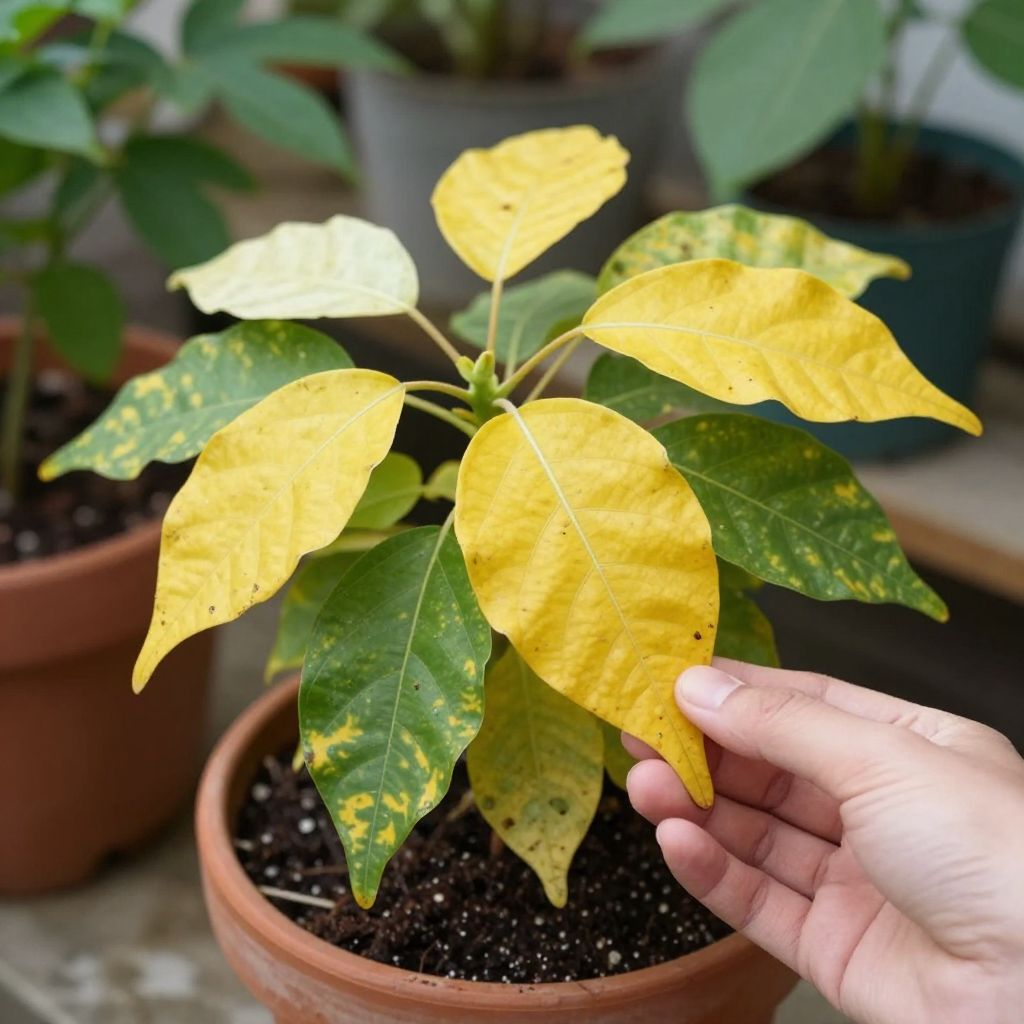
Why are the leaves on my plant turning yellow? It’s one of the most common plant problems, and the answer is usually linked to watering, light, nutrients, temperature, or pests. Yellow leaves are a symptom, not a diagnosis, so the trick is to look at where the yellowing starts and what has changed recently.
In many cases, you can fix the issue quickly once you narrow down the cause. A few careful checks of the soil, roots, light, and foliage will tell you whether your plant needs less water, better drainage, more light, or treatment for a pest or disease problem.
Why are the leaves on my plant turning yellow?
Yellow leaves usually mean the plant is under stress. The most common causes are overwatering, underwatering, poor drainage, low light, nutrient imbalance, temperature stress, root damage, pests, or natural aging of older leaves. The pattern of yellowing matters: whole leaves, edges, veins, or lower leaves can point to different problems.
Start with the most common cause: watering problems
For most houseplants and many garden plants, watering issues are the first thing to check. Too much water is often more damaging than too little because it reduces oxygen around the roots and can lead to root rot.
Signs of overwatering
- Leaves turn yellow and may feel soft or limp
- Soil stays wet for days or smells sour
- Lower leaves yellow first and drop off
- The plant looks wilted even though the soil is damp
Signs of underwatering
- Leaves yellow, then dry, crisp, or curled
- Soil pulls away from the pot or feels very dry
- The plant droops and perks up briefly after watering
- Leaf tips and edges may brown as well as yellow
Check the soil before watering again. Stick your finger 1 to 2 inches into the potting mix, or 2 to 4 inches for larger containers. If it feels moist, wait. If it is dry at that depth, water thoroughly and let excess drain away.
How to fix watering issues
- Empty saucers and cachepots so roots are not sitting in water.
- Make sure containers have drainage holes.
- Water deeply, then allow the top layer of soil to dry according to the plant’s needs.
- If soil is constantly wet, repot into a freer-draining mix.
- If soil is bone dry and compacted, water slowly so it can absorb evenly.
Could poor drainage be the real problem?
Yes. Even if you are watering carefully, heavy soil or a pot without drainage can trap moisture around the roots. Outdoor plants in clay soil may also suffer if water pools after rain or irrigation.
Roots need both water and air. When soil stays saturated, roots struggle to function, and yellowing often follows.
What to look for
- Water sits on the surface or drains very slowly
- Roots are brown, mushy, or smell bad
- Plants in containers dry unevenly or stay wet for too long
- Garden beds have compacted, sticky soil
Practical fixes
- Use a potting mix suited to the plant, not garden soil in containers.
- Raise beds or improve heavy soil with organic matter over time.
- Repot root-bound plants into slightly larger containers only when needed.
- For badly affected plants, trim rotten roots and repot into fresh mix.
Is your plant getting the right amount of light?
Low light is a frequent cause of yellowing, especially indoors. When a plant cannot photosynthesize well enough, leaves may fade from deep green to pale green and then yellow, often starting on the lower or inner leaves.
Too much direct sun can also cause stress in some plants, but that usually shows up as bleached patches, scorch marks, or crispy edges rather than uniform yellowing.
How to tell if light is the issue
- New growth is weak, stretched, or sparse
- Lower leaves yellow and drop while the top looks thin
- The plant leans toward a window or light source
- Seasonal changes reduce available light indoors
What to do
- Move indoor plants closer to a bright window if their species prefers it.
- Rotate pots every week or two so growth stays even.
- Outdoors, check whether nearby trees, fences, or structures are shading the plant more than before.
- If a plant is receiving harsh afternoon sun and showing scorch, give it filtered light or partial shade.
Could yellow leaves mean a nutrient problem?
Sometimes, yes. Nutrient deficiencies can cause yellowing, but they are less common than watering or light problems. The most useful clue is whether the yellowing appears on older leaves, newer leaves, or between the veins.
Common nutrient patterns
- Nitrogen deficiency: older leaves yellow first, often evenly across the leaf.
- Iron deficiency: newer leaves yellow while veins may stay greener.
- Magnesium deficiency: older leaves may yellow between the veins.
Before fertilizing, make sure the plant is actually growing actively. A stressed plant with poor roots cannot use fertilizer well, and extra feeding can make the problem worse.
How to correct nutrient issues
- Confirm the plant is in suitable soil and receiving enough light and water.
- Use a balanced fertilizer only if the plant is actively growing and the label matches the plant type.
- For containers, leaching from frequent watering can wash nutrients out faster, so feeding may be needed more often than in garden soil.
- If the plant is in poor or exhausted soil, refresh the top layer or repot with a quality mix.
Are pests causing the yellowing?
Yes. Sap-sucking insects can drain a plant and leave leaves stippled, faded, or yellow. Indoors, common pests include spider mites, aphids, mealybugs, and scale. Outdoors, whiteflies and aphids are frequent troublemakers on many ornamentals and vegetables.
Look closely at the leaves
- Tiny dots, speckling, or a dusty look
- Sticky residue on leaves or surfaces below the plant
- Curled, distorted, or shiny leaves
- Fine webbing, especially on the undersides of leaves
What helps
- Inspect both sides of leaves and stems regularly.
- Rinse pests off with a strong spray of water when appropriate.
- Remove heavily infested leaves if the plant can handle it.
- Use insecticidal soap or horticultural oil according to the product label and the plant’s tolerance.
Always test any spray on a small section first. Some plants are sensitive, especially in hot weather or strong sun.
Could disease or root rot be involved?
Diseases can cause yellowing, but they often come with other symptoms such as spots, wilting, mold, soft stems, or sudden decline. Root rot is especially common when plants stay too wet for too long.
Warning signs
- Yellow leaves plus black, brown, or mushy roots
- Fungal spots, halos, or blotches on foliage
- Wilting even when soil is moist
- Stem dieback or collapse
If you suspect disease, remove badly affected material, improve airflow, and avoid overhead watering where possible. For severe root rot, the plant may need repotting into fresh medium after damaged roots are trimmed away.
Is yellowing ever normal?
Yes. Older leaves naturally yellow and drop as part of the plant’s life cycle, especially on many houseplants, shrubs, and seasonal annuals. If only the oldest, lowest leaves are yellowing while the rest of the plant looks healthy, it may simply be normal aging.
Seasonal changes can also trigger yellowing outdoors. Cooler temperatures, shorter days, and dormancy often cause leaves to fade and drop on deciduous plants. That is normal if it happens at the right time of year.
How to diagnose yellow leaves step by step
- Check the soil moisture. Decide whether the plant is too wet or too dry.
- Look at the drainage. Make sure water can move through the pot or soil.
- Assess the light. Ask whether the plant has recently been moved or shaded.
- Inspect the leaves closely. Look for pests, spots, or distortion.
- Consider the pattern. Older leaves, newer leaves, or all leaves tell different stories.
- Review recent changes. Repotting, fertilizing, temperature swings, or pruning can all stress a plant.
Common mistakes to avoid
- Watering on a fixed schedule without checking the soil
- Using a pot without drainage holes
- Adding more fertilizer when the roots are already stressed
- Moving a plant suddenly from low light to intense sun
- Ignoring pests on the undersides of leaves
- Removing too many leaves at once before finding the cause
When should you remove yellow leaves?
Remove leaves that are fully yellow, dead, or diseased, especially if they are touching the soil or crowding the plant. If a leaf is only partly yellow, it may still help the plant a little while you correct the underlying issue.
Use clean, sharp pruners or scissors. For houseplants, wiping the blades between cuts helps reduce the spread of pests or disease.
Final thoughts
When you ask, “Why are the leaves on my plant turning yellow,” the answer is usually found by checking water, drainage, light, and pests first. Start with the simplest clues, then adjust one thing at a time so you can see what helps.
If you want to keep troubleshooting plant care, you may also find it useful to read about how to tell if a plant is overwatered or underwatered and how to identify common houseplant pests.