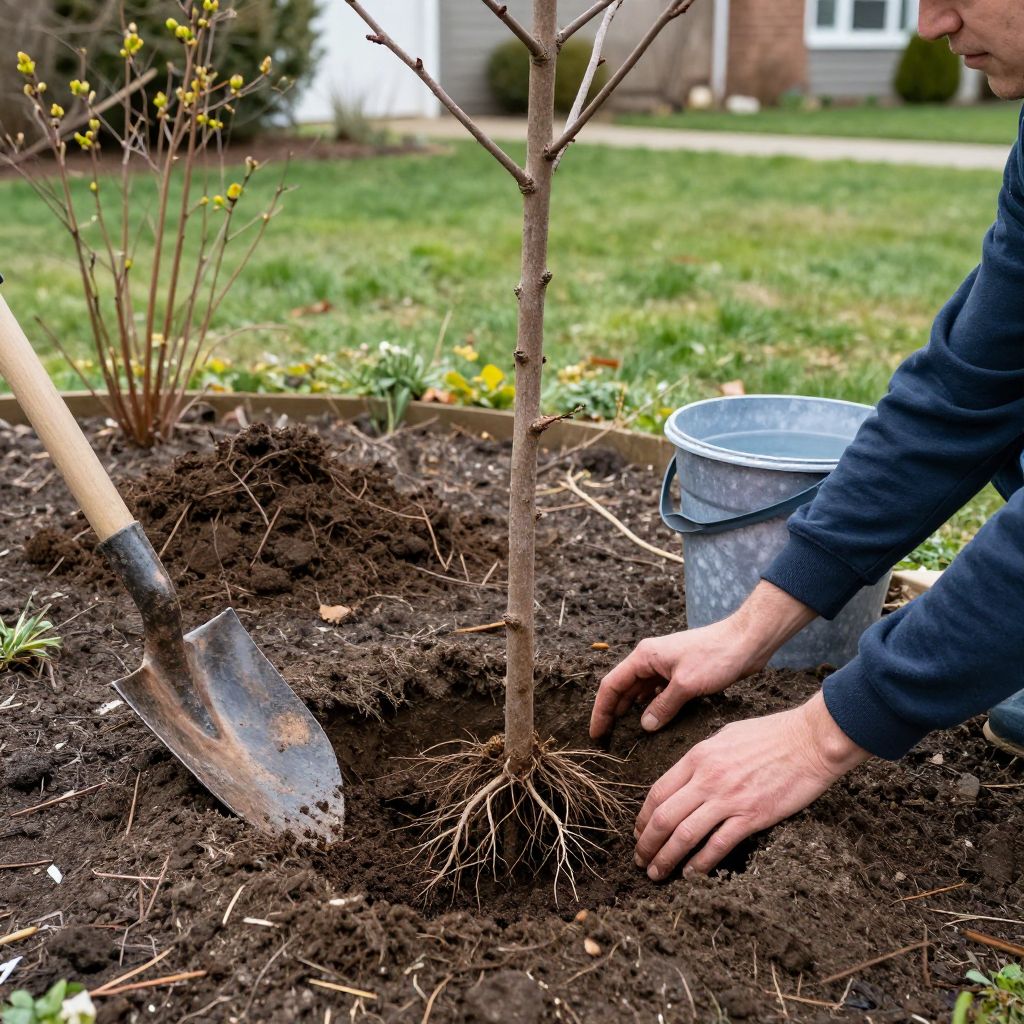
Wondering when to plant trees so they settle in quickly and grow well? The best time depends on the tree type, your climate, and whether you’re planting bare-root, container-grown, or balled-and-burlapped stock. In general, cooler weather is easier on newly planted trees because roots can establish without the stress of extreme heat.
If you choose the right planting window and give the tree good soil, water, and aftercare, you’ll improve its chances of long-term success. The goal is not just to get a tree in the ground, but to help it root deeply and adapt to its new site.
When to plant trees?
The best time to plant trees is usually in early spring or fall, when temperatures are mild and soil moisture is more reliable. In cold climates, spring is often safest for tender trees, while in many regions fall planting works very well because roots can grow before summer heat arrives.
Why timing matters for tree planting
Newly planted trees need time to build roots before they face heat, drought, or freezing conditions. If you plant at the wrong time, the tree may struggle to establish, drop leaves, or suffer transplant shock.
Root growth is the priority during the first season. Above-ground growth is important too, but a tree with a weak root system is much more vulnerable to stress, pests, and disease.
Best planting windows by season
- Fall: Often the best time in many areas, especially for deciduous trees. Soil is still warm, air is cooler, and rainfall may help reduce watering needs.
- Early spring: A strong choice for cold climates and for trees that need a full warm season to establish before winter.
- Summer: Usually the hardest time to plant because heat increases water stress. It can work if you can water consistently and avoid planting during a heat wave.
- Winter: Not ideal in frozen ground, but in mild climates or when planting dormant bare-root trees, late winter can be suitable.
Deciduous vs. evergreen trees
Deciduous trees, which lose their leaves in fall, are often easier to plant while dormant in autumn or early spring. Evergreens can be more sensitive to winter wind and dry soil, so spring planting is often safer in colder regions.
That said, local climate matters more than the calendar. A mild autumn in one region may be better for planting than a cool spring in another.
How to choose the right planting time for your climate
Use your local frost dates, rainfall patterns, and summer heat to guide the decision. The best planting time is when the tree has several weeks of moderate weather ahead, giving roots time to grow without extreme stress.
- Plant after the worst heat has passed in late summer or early fall, if your region has long, mild autumns.
- Plant in early spring after the soil can be worked, but before hot weather arrives.
- Avoid planting when the ground is waterlogged, frozen, or baked hard and dry.
- If you live in a very hot climate, fall planting is often better than spring because roots can establish through the cooler months.
If you are unsure, ask your local extension office, nursery, or experienced gardeners in your area which planting season works best for your specific tree species.
What kind of tree are you planting?
Different tree forms handle transplanting differently. The planting window for a container-grown tree may be broader than for a bare-root tree, while balled-and-burlapped trees need careful handling to avoid root damage.
Bare-root trees
Bare-root trees are usually planted while dormant, typically in late winter to early spring or in fall where climates allow. They establish quickly if planted promptly and kept moist, but they should not sit exposed to air for long.
Container-grown trees
Container-grown trees can often be planted over a wider season because the root ball stays intact. Even so, cool, mild weather is still best, and summer planting requires extra watering attention.
Balled-and-burlapped trees
These trees are often larger and more expensive, and they are best planted during cooler weather. Handle the root ball carefully, and make sure the burlap, wire, or twine is removed or adjusted as needed so roots can spread.
How to plant a tree the right way
Good planting technique matters as much as timing. A tree planted too deep, in compacted soil, or with poor watering habits may struggle even if you planted it in the perfect season.
- Choose the site carefully. Match the tree to the available sunlight, mature size, and soil drainage.
- Dig a wide hole. Make it about 2 to 3 times as wide as the root ball, but no deeper than the root ball height.
- Check the root flare. The trunk should widen at the base and sit slightly above the surrounding soil, not buried below it.
- Set the tree level. Place it straight and backfill with the original soil unless your soil is extremely poor.
- Water thoroughly. Soak the root zone after planting to settle the soil and remove air pockets.
- Mulch correctly. Apply 2 to 4 inches of mulch in a wide ring, keeping it a few inches away from the trunk.
Soil and drainage basics
Most trees do best in soil that drains well but still holds some moisture. If water sits in the planting hole for hours after rain, the site may be too poorly drained for many tree species.
If your soil is heavy clay, avoid making the hole like a “bathtub” with smooth sides. Roughen the edges and plant slightly high if drainage is slow. In very sandy soil, mulch and organic matter can help conserve moisture.
Watering after planting
Newly planted trees need consistent moisture, especially during the first one to two growing seasons. The root ball should stay evenly moist, but not soggy.
A good rule is to water deeply whenever the top few inches of soil begin to dry, adjusting for rainfall, soil type, and temperature. Trees planted in hot, windy weather will need more frequent attention than trees planted in cool, damp conditions.
Signs of too little water
- Wilting or drooping leaves
- Leaf scorch or browning at the edges
- Premature leaf drop
- Dry, crumbly soil around the root zone
Signs of too much water
- Yellowing leaves
- Soft, sour-smelling soil
- Poor growth
- Roots that stay constantly wet
Deep, infrequent watering is usually better than frequent shallow watering because it encourages roots to grow outward and downward.
Sunlight, spacing, and site selection
Before planting, check how much sun the tree needs. Some trees need full sun for strong growth, while others tolerate partial shade. Planting a sun-loving tree in too much shade can lead to weak structure and sparse growth.
Also think ahead to the mature size of the tree. A small sapling may look harmless now, but it can eventually crowd buildings, fences, driveways, and overhead wires if you do not allow enough space.
- Keep trees away from structures based on mature spread, not current size.
- Avoid planting too close to sidewalks, septic systems, or utility lines.
- Choose a site with enough room for roots and canopy growth.
Common mistakes to avoid
Many tree problems begin at planting. Avoiding a few common mistakes can make a big difference in survival and growth.
- Planting too deep: One of the most common and damaging errors.
- Leaving mulch against the trunk: This can trap moisture and encourage rot.
- Overfertilizing at planting: Fertilizer is not a fix for poor planting or bad soil structure.
- Ignoring drainage: A tree that sits in wet soil may decline even if it was planted at the right time.
- Skipping staking when needed: Only stake if the tree is unstable in wind; remove supports after establishment.
- Letting the root ball dry out: Especially important for bare-root trees and container trees in warm weather.
Pruning and early maintenance
After planting, limit pruning to damaged, broken, or crossing branches unless a specific structural correction is needed. The tree needs leaves to make energy and roots to establish, so heavy pruning can slow recovery.
Check the tree regularly during the first year for pests, disease symptoms, or signs of stress. Early problems are easier to correct than advanced decline.
When to prune newly planted trees
Light pruning is usually best done after planting only if necessary. For larger shaping or structural pruning, wait until the tree is established or follow the seasonal pruning needs of that species.
How to tell if your tree is establishing well
A healthy newly planted tree should hold its leaves or needles reasonably well, show steady but not excessive growth, and resist gentle movement in the soil as roots anchor it.
Do not expect dramatic top growth immediately. In the first season, root development is the main success marker. If the tree looks stable and is not showing severe stress, it is likely settling in.
Good signs
- Leaves remain firm and appropriately colored
- New growth appears in season
- Soil stays evenly moist, not soggy
- The tree stands upright without shifting
Warning signs
- Persistent wilting even with watering
- Leaf scorch or dieback
- Trunk damage, girdling ties, or buried root flare
- Fungal growth or foul-smelling soil around the base
Final planting tip: focus on roots first
If you remember one thing about when to plant trees, make it this: choose a cool, workable season that gives roots time to grow before heat or hard frost arrives. Then plant at the correct depth, mulch properly, and water consistently through the first establishment period.
For more help identifying the right tree for your yard, you may also find this guide useful: what type of tree is this?