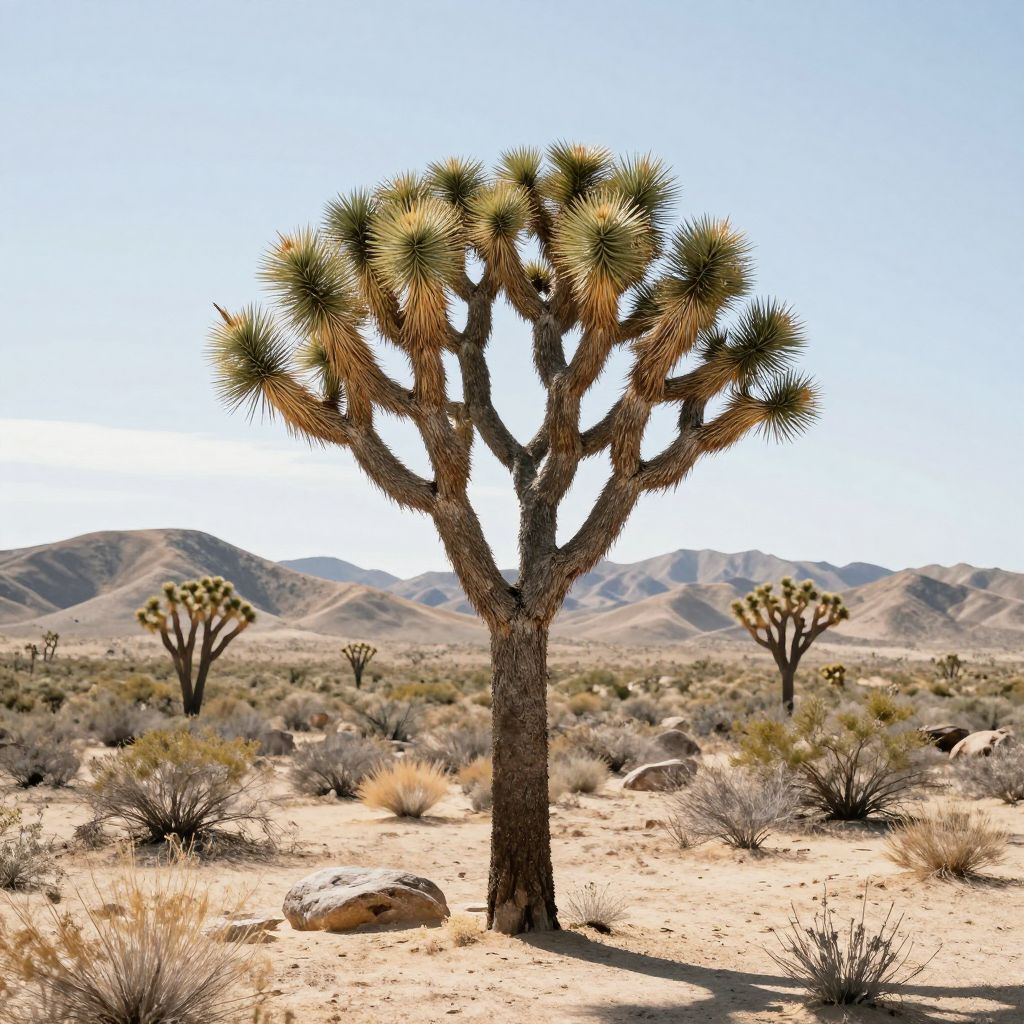
Wondering where do Joshua trees grow and whether you can grow one in your own landscape? Joshua trees are striking desert plants that need very specific conditions to thrive, so the answer depends on climate, soil, drainage, and sunlight.
If you live outside their native desert range, success is possible only if you can closely match those conditions. In the right setting, Yucca brevifolia can be a dramatic, low-water specimen plant with a very distinctive silhouette.
Where do Joshua trees grow?
Joshua trees grow naturally in the Mojave Desert of the southwestern United States, especially in California, Nevada, Utah, and Arizona at desert elevations where summers are hot, winters are cool, and rainfall is low. They prefer open, sunny sites with fast-draining, rocky or sandy soil and very little summer moisture.
Native habitat and best growing regions
Joshua trees are most at home in high desert and desert transition zones, not in humid or rainy climates. In the landscape, they do best where winter temperatures can dip cool enough to support desert dormancy, but where soil drains quickly after rare rain events.
Typical natural conditions
- Sunlight: Full sun for most of the day
- Soil: Sandy, gravelly, rocky, or otherwise fast-draining
- Moisture: Low rainfall and infrequent irrigation
- Climate: Hot, dry summers and cool, relatively dry winters
- Exposure: Open slopes, desert flats, and well-ventilated sites
In home gardens, the biggest challenge is not heat but excess water. A Joshua tree can tolerate drought far better than soggy soil, and prolonged wet conditions often lead to decline.
Can you grow a Joshua tree at home?
Yes, but only if your site is dry, sunny, and very well drained. Joshua trees are poor choices for humid regions, clay soil, or gardens that need frequent irrigation. If you can’t provide desert-like drainage and low humidity, a container or rock garden may be a better option than planting in the ground.
Good garden settings
- Dry inland climates with low rainfall
- Rock gardens with raised, gritty soil
- Large containers in arid areas
- Sloped sites where water runs off quickly
Poor garden settings
- Heavy clay soil
- Low spots where water collects
- Lawns or irrigated beds
- Humid coastal gardens
How to plant Joshua trees successfully
If you’re planting a Joshua tree, the most important goal is drainage. Even a healthy young plant can fail if the root zone stays wet, so prepare the site carefully before planting.
- Choose a full-sun location. Avoid shade from buildings, fences, or trees.
- Test drainage. After watering or rain, the planting area should dry quickly and never stay muddy.
- Improve the planting area only if needed. In clay soil, build a raised mound or berm rather than digging a deep hole.
- Use gritty soil. Mix in coarse sand, gravel, or decomposed granite if your native soil is too dense.
- Set the plant at the same depth it was growing before. Do not bury the crown.
- Mulch lightly with rock, not organic mulch. Keep mulch away from the trunk to reduce rot risk.
A raised planting area is often the safest option. Elevating the root zone a few inches to a foot can help shed extra water and reduce the chance of root rot.
Soil, drainage, and water needs
Joshua trees need lean, mineral soil with excellent drainage. Rich, compost-heavy soil can hold too much moisture and encourage weak growth, so avoid over-amending the planting hole with organic matter.
Best soil traits
- Loose and gritty
- Fast draining
- Low in organic matter
- Not compacted
Watering guidance
Newly planted Joshua trees may need occasional deep watering during establishment, but only when the soil has dried out. Once established, they should be watered sparingly, if at all, depending on local rainfall and soil type.
- Water only when the root zone is dry several inches down.
- Use deep, infrequent watering rather than frequent light sprinkling.
- Stop supplemental watering during wet or cool periods if the soil stays moist.
- Never let irrigation from lawns or nearby beds reach the trunk regularly.
If you garden in a region with summer monsoons or frequent rain, a Joshua tree may struggle even in a perfect soil mix. In those climates, drainage and airflow matter as much as sunlight.
Sunlight, temperature, and seasonal care
Joshua trees need strong sun to maintain compact, healthy growth. They are not shade plants, and low light can make them weak, stretched, and more vulnerable to disease.
Seasonal considerations
- Spring: Check drainage and remove any debris that traps moisture around the base.
- Summer: Water only if the plant is showing signs of drought stress and the soil is dry.
- Fall: Reduce watering as temperatures cool and growth slows.
- Winter: Keep the root zone dry; cold and wet soil is especially risky.
In colder desert regions, young plants may need protection from unusual freezes, but mature Joshua trees are adapted to seasonal temperature swings. The main winter danger is often wet soil, not cold alone.
Pruning and maintenance
Joshua trees need very little pruning. In most cases, you should leave the plant alone and only remove material that is clearly dead, broken, or hazardous.
What to do
- Remove dead or damaged branches with clean, sharp tools.
- Trim carefully to avoid tearing the bark or trunk tissue.
- Keep the base clear of weeds and debris.
- Inspect regularly for signs of rot or pest damage.
What to avoid
- Heavy pruning or topping
- Cutting into healthy green tissue without reason
- Letting mulch pile against the trunk
- Using high-nitrogen fertilizer to force growth
Joshua trees are naturally slow-growing, so forcing lush growth usually creates more problems than benefits.
Common problems when growing Joshua trees
Most Joshua tree problems come from too much water, poor drainage, or planting in the wrong climate. Catching these issues early can sometimes save the plant.
Signs of trouble
- Yellowing or soft tissue: May indicate overwatering or root stress
- Blackened or mushy base: Often a sign of rot
- Stunted growth: Can result from too little sun or poor root conditions
- Leaf browning at the tips: May reflect drought stress, cold damage, or root problems
Practical fixes
- Reduce irrigation immediately if the soil stays damp.
- Improve drainage with a raised bed or mound if water pools.
- Move container-grown plants to a brighter, drier location.
- Check for compacted soil around the root zone.
Pests are usually less of a concern than site conditions, but stressed plants can attract problems. A healthy Joshua tree in the right location is far less likely to need intervention.
Propagation and starting new plants
Joshua trees are not typically grown from cuttings in home gardens, and propagation can be slow and uncertain. Seed propagation is possible, but young plants develop slowly and need very careful moisture management.
If you try seed propagation
- Use a sterile, fast-draining medium.
- Keep moisture light, not soggy.
- Provide warm temperatures and bright light.
- Be patient; seedlings grow slowly.
Because the plant is slow to establish and sensitive to overwatering, many gardeners are better off purchasing a healthy nursery-grown specimen from a reputable source rather than starting from seed.
Best landscaping uses
Joshua trees make striking focal points in desert landscapes, xeriscapes, and large rock gardens. They work best where their sculptural form can be seen clearly and where surrounding plants have similar low-water needs.
Good companion plants
- Other drought-tolerant desert plants
- Native grasses adapted to dry conditions
- Rocky groundcovers that do not need frequent irrigation
- Succulents suited to your climate
Avoid placing them near thirsty shrubs, turf, or sprinkler zones. Mixed water needs are one of the most common reasons desert plants decline in home landscapes.
Quick checklist before you plant
- Do you have full sun?
- Does water drain quickly after rain or irrigation?
- Is the soil sandy, rocky, or easy to amend with grit?
- Can you avoid routine watering once the plant is established?
- Is your climate dry enough for a desert species?
If you can answer yes to most of these, your site may be suitable. If not, a Joshua tree will likely struggle no matter how carefully you plant it.
So, where do Joshua trees grow best? In hot, dry, open desert landscapes with excellent drainage and very little extra water. If you want to learn more about identifying unusual landscape plants before you buy one, see what type of tree is this?