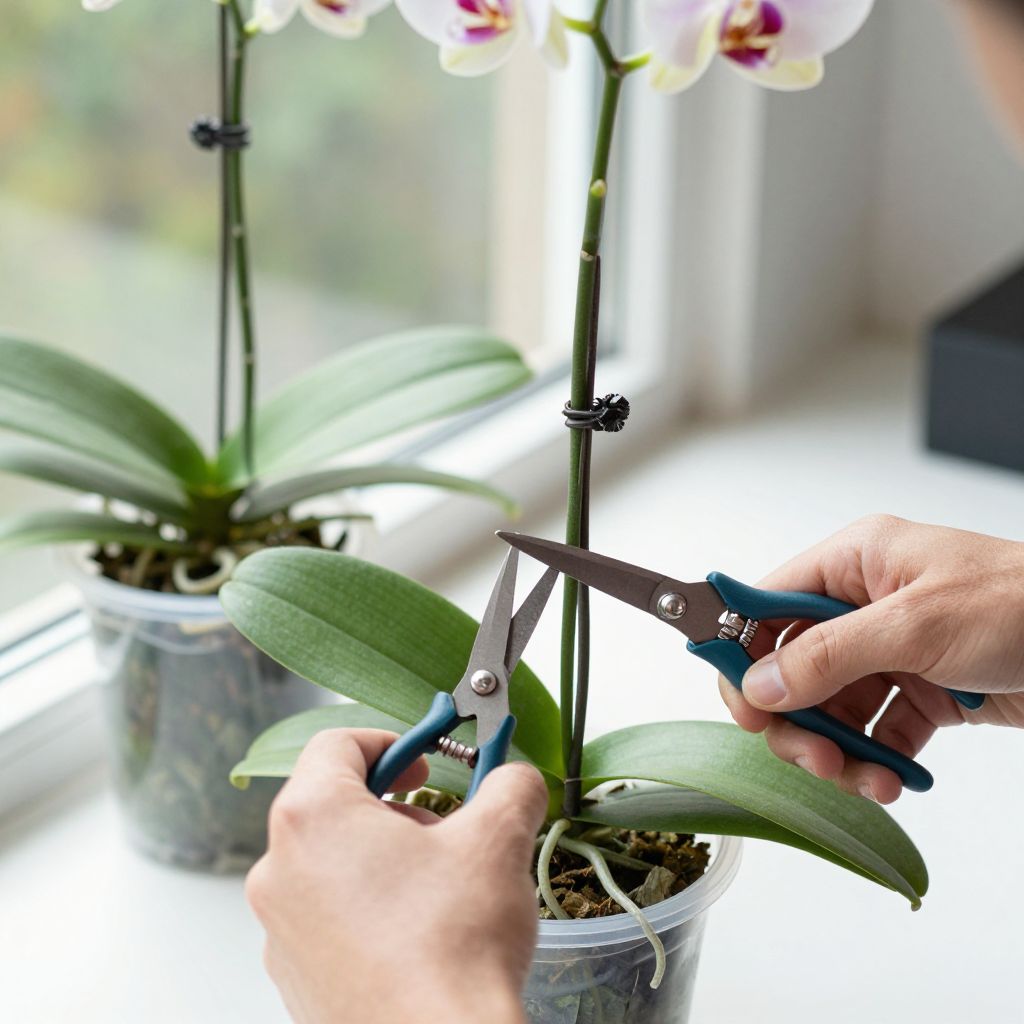
Wondering where to cut orchid stem after flowers fall off? The right cut depends on whether the flower spike is still green, partly brown, or fully dried out. For many common moth orchids (Phalaenopsis), you can either trim above a node to encourage a possible side spike or remove the stem at the base if it has turned brown.
Make the cut with clean, sharp tools and let the plant guide you. A healthy orchid can rebloom from the same spike, but only if the stem is still alive and the plant has enough energy to support it.
Where to cut orchid stem after flowers fall off?
If the orchid flower stem is still green, cut it about 1/4 inch above a node, usually the second or third node up from the base. If the stem is brown and dry, cut it off near the base, leaving about 1 inch above the crown. Green spikes may rebloom; dead spikes will not.
How to tell whether the orchid spike is alive
Before you cut, inspect the stem carefully. A living spike is usually green, firm, and slightly plump. A dead spike turns yellow, tan, or brown and feels dry and brittle.
Green spike vs. brown spike
- Green spike: Can sometimes produce a side branch and a second flush of blooms.
- Partly yellowing spike: Often declining; you can trim back to green tissue if there is any left.
- Brown, crispy spike: Dead tissue that should be removed at the base.
Not all orchids behave the same way. This advice is especially useful for Phalaenopsis, the most common “moth orchid” sold as a houseplant. Some other orchids bloom on different growth patterns and should not be pruned the same way.
How to cut a moth orchid flower spike correctly
Use sterilized scissors, pruners, or a razor blade to make a clean cut. A neat cut reduces stress and lowers the chance of rot entering the stem.
Step-by-step pruning guide
- Wait until the last flower has dropped and the spike is no longer producing buds.
- Check the spike from top to bottom for green, yellow, or brown tissue.
- If it is green, locate a healthy node below the faded flower section.
- Cut about 1/4 inch above the node you want to keep.
- If it is brown and dry, cut the spike off about 1 inch above the base.
- Discard the removed stem if it is diseased or mushy.
Important: Do not cut into the crown or leaves. The crown is the center point where the leaves meet, and damage there can seriously weaken or kill the plant.
Should you cut above a node or remove the whole stem?
Both approaches can be correct. The best choice depends on the orchid’s condition and your goal. Cutting above a node may encourage a side branch and faster rebloom, while removing the whole spike helps the plant rest and direct energy into roots and leaves.
When to leave part of the spike
- The spike is green and firm.
- The plant has healthy roots and at least a few strong leaves.
- You want a chance at a quicker, smaller rebloom.
When to cut the spike to the base
- The spike is brown, yellow, or hollow-looking.
- The plant is weak, recently repotted, or recovering from stress.
- You want the orchid to focus on root and leaf growth.
Many growers prefer to remove the entire spike after flowering if the plant looks tired. That is often the safer choice for a weak orchid, because reblooming from an old spike can drain energy.
Best tools and hygiene for orchid pruning
Clean tools matter more than fancy tools. Orchids are prone to rot if cuts are ragged or contaminated, especially in humid indoor conditions.
- Sharp scissors, snips, or pruning shears
- Rubbing alcohol or a disinfecting wipe
- Paper towel or clean cloth
- Optional: gloves if you prefer cleaner handling
Wipe the blades before and after cutting. If you are pruning more than one orchid, disinfect between plants to avoid spreading disease.
What to do after cutting the orchid stem
After pruning, keep the plant in steady, bright conditions and avoid overwatering. The orchid needs time to recover and rebuild energy for the next bloom cycle.
Immediate aftercare
- Keep the orchid in bright, indirect light.
- Water only when the potting mix is nearly dry and roots look silvery rather than green.
- Do not let water sit in the crown or leaf joints.
- Resume normal feeding only if the plant is actively growing and healthy.
If your orchid is in bark mix, drainage should be excellent. If the pot stays wet too long, roots can decline and the plant may not rebloom well, even if the spike was cut correctly.
Common mistakes to avoid
Most orchid pruning problems come from cutting too much, too little, or cutting at the wrong time. A careful look at the spike and the plant’s overall health prevents most issues.
- Cutting a green spike at the base every time: This is not wrong, but it may eliminate a possible side bloom on a healthy plant.
- Leaving a dead spike attached: Brown, dry stems won’t rebloom and can become messy or harbor problems.
- Using dull or dirty tools: Ragged cuts heal poorly.
- Cutting into the crown: This can damage the growth point.
- Overwatering after pruning: The plant needs stable moisture, not soggy roots.
How orchid care affects reblooming
Pruning is only one part of getting orchids to flower again. Light, temperature, root health, and watering habits all influence whether the plant has enough energy to bloom.
Light
Most moth orchids do best in bright, indirect light. A spot near an east window or filtered south or west light often works well indoors. Too little light can prevent reblooming, while harsh direct sun can scorch leaves.
Temperature
Many Phalaenopsis orchids respond to slightly cooler nights after a period of active growth. In many homes, a modest drop at night may help trigger flower spikes, but avoid cold drafts and sudden temperature swings.
Water and roots
Healthy roots are essential. Firm, green or silvery roots are a good sign; mushy, brown roots indicate trouble. If the potting mix has broken down and stays soggy, repotting may be more important than pruning.
Should you repot after the flowers fall off?
Sometimes, yes. If the potting mix is decomposing, the roots are crowded, or the orchid is unstable in the pot, repotting after flowering is a sensible next step. For many home growers, this is a good time to inspect the roots without disturbing blooms.
Signs repotting may be needed
- Potting mix smells sour or stays wet too long.
- Roots are growing out of the pot in large numbers.
- The plant wobbles in the container.
- Roots look black, mushy, or shriveled.
Use an orchid-appropriate mix, usually bark-based, with plenty of air spaces. Regular houseplant soil is usually too dense for epiphytic orchids like moth orchids.
What about other types of orchids?
Not every orchid should be pruned the same way. The “cut above a node” method is mainly for moth orchids. Other orchids may bloom from canes or pseudobulbs and need different care after flowering.
General rule for unfamiliar orchids
- If the flower stem is green and the plant is known to rebloom from old spikes, you may trim selectively.
- If you are unsure, remove only dead tissue and leave healthy growth intact.
- When in doubt, identify the orchid type before making major cuts.
This is especially important if you grow orchids outdoors in warm climates or keep several types indoors together. A cautious approach protects the plant while you learn its growth habit.
Quick troubleshooting after pruning
If your orchid seems slow to recover, check the basics before assuming the pruning was wrong. Most issues are environmental or root-related rather than caused by the cut itself.
- Leaves wrinkled: Roots may be damaged or the plant may be too dry.
- Yellowing leaves: Could be natural aging, but also check light, watering, and root health.
- No new spike: The plant may need more light, time, or a stronger root system.
- Blackened cut end: Remove any rotting tissue with a clean tool and improve airflow.
Conclusion: the safest cut for your orchid
When deciding where to cut orchid stem after flowers fall off, look first at the spike’s color and firmness. Cut green spikes about 1/4 inch above a node if the plant is healthy, or remove brown, dead spikes near the base. Then keep the orchid in bright indirect light, with careful watering and good drainage.
If you want to improve your orchid care further, it can help to read more about repotting and root health so you can support the next bloom cycle with confidence.