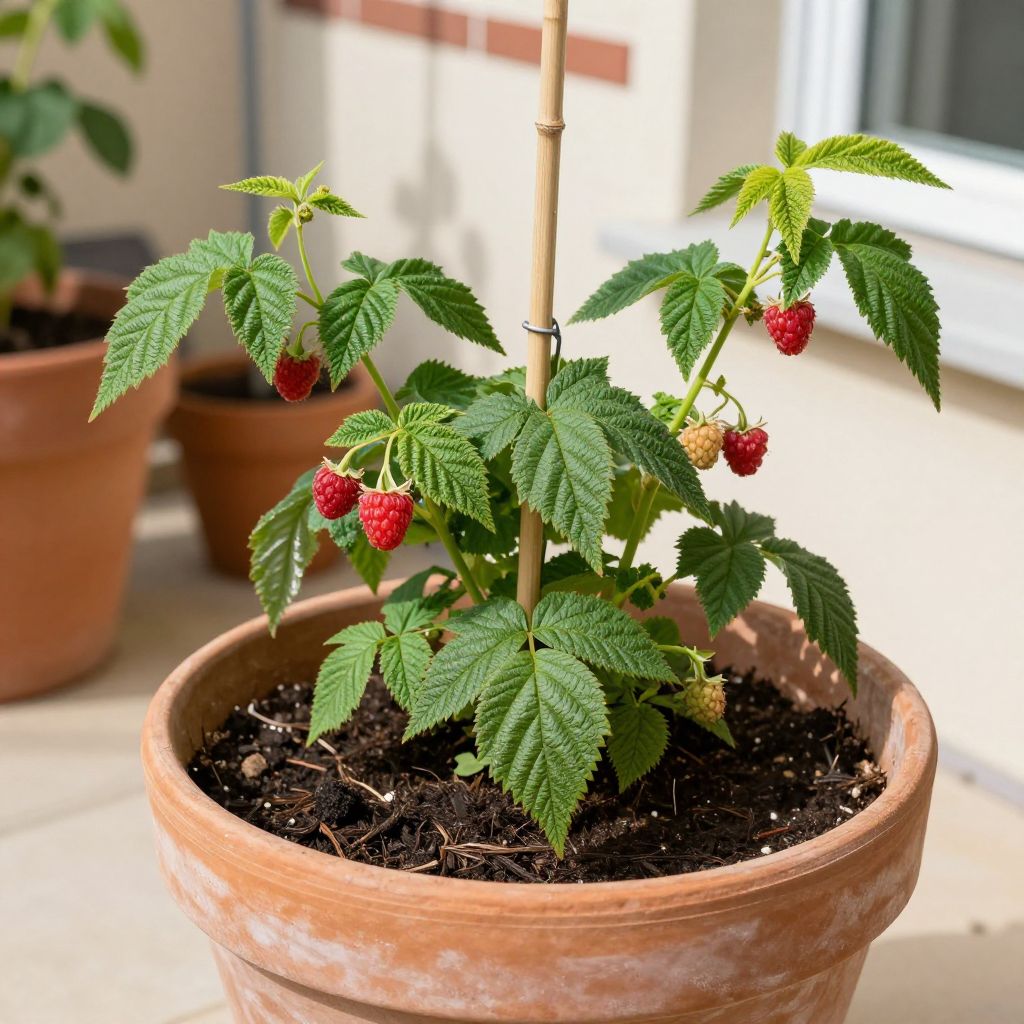
Can you grow raspberries in a pot? Yes—if you choose a compact variety, use a large container, and keep up with watering, feeding, and pruning. Potted raspberries can produce a worthwhile crop on patios, balconies, and small yards, but they need more attention than in-ground plants because containers dry out and warm up faster.
The key is giving the roots enough room, strong support, and consistent moisture without waterlogging the compost. With the right setup, container-grown raspberries can be productive, tidy, and easier to manage than a sprawling patch in the ground.
Can You Grow Raspberries In A Pot?
Yes, raspberries grow well in pots when the container is large, deep, and well drained. Choose a compact or patio-friendly raspberry, use rich but free-draining compost, and place the pot in full sun. The main challenge is keeping the roots evenly moist and pruning correctly to suit the type you grow.
Choosing the Right Raspberry for a Container
Not every raspberry is equally suited to pot culture. Upright, compact, or dwarf types are usually easier to manage than vigorous canes that spread aggressively.
Best plant types for pots
- Summer-fruiting raspberries produce on canes that grew the previous year.
- Autumn-fruiting raspberries fruit on new canes and are often simpler for beginners to prune.
- Compact or patio varieties are often the best fit for containers because they stay more manageable.
If you are unsure which type to buy, look for a raspberry described as suitable for containers or small gardens. That usually means a more restrained growth habit and easier maintenance in a pot.
What Size Pot Do Raspberries Need?
Raspberries need a generously sized container because their roots spread and dry out quickly in small pots. A larger pot also helps support tall canes and improves fruiting stability.
Good container guidelines
- Minimum size: about 40–50 cm wide and deep for one plant.
- Better size: a pot or half-barrel around 60 cm or more across for stronger growth.
- Drainage: several large drainage holes are essential.
Terracotta, resin, timber, and frost-resistant ceramic containers can all work, but make sure the pot will not tip once the canes are tall and loaded with fruit. A heavy container is often more practical outdoors in windy spots.
Best Soil and Compost for Pot-Grown Raspberries
Raspberries prefer fertile, moisture-retentive soil that still drains well. In a pot, that balance matters even more because soggy compost can cause root problems while a light mix can dry out too fast.
Use a rich, free-draining mix
- High-quality peat-free multi-purpose compost
- Added loam-based compost if available, for better structure
- A handful of grit or coarse horticultural sand if drainage is poor
- Well-rotted compost or leaf mould to improve moisture retention
Do not use heavy garden soil alone in a container. It compacts easily, drains badly, and can suffocate the roots. A good potting mix should feel open, crumbly, and able to hold moisture without becoming sticky.
How to Plant Raspberries in a Pot
Planting is straightforward, but getting the depth and support right from the start will save trouble later. Raspberries establish best when planted in a pot that already has a framework for the canes.
- Place crocks or mesh over the drainage holes if needed to stop compost washing out.
- Fill the pot partly with compost and mix in organic matter if your base compost is lean.
- Set the plant at the same depth it was growing in its nursery pot.
- Backfill, firm gently, and water thoroughly to settle the compost.
- Add a cane or support frame early, before the plant becomes crowded.
If you are planting bare-root raspberries, soak the roots briefly first if they seem dry, then spread them out in the pot and firm the compost around them. Keep newly planted canes evenly moist while they establish.
Sunlight, Position, and Temperature
For the best crop, raspberries need a bright, sunny position. More sun usually means better flowering, stronger canes, and sweeter fruit, though very hot climates may benefit from a little afternoon shade.
Ideal placement
- Full sun for most climates and the best fruiting
- A sheltered spot protected from strong wind
- Good air circulation to help reduce fungal disease
In colder regions, pots are more exposed to frost than garden soil, so roots can suffer if containers are left unprotected. In winter, move pots to a sheltered wall, wrap the container, or raise it slightly off cold paving to improve drainage and reduce freeze damage.
Watering Potted Raspberries
Watering is one of the most important parts of container raspberry care. Pots dry out much faster than garden beds, especially in warm weather, windy conditions, or during fruiting.
How to water well
- Water deeply until moisture runs from the drainage holes.
- Check the compost with your finger rather than watering on a fixed schedule.
- Keep the compost evenly moist, especially when the canes are flowering and fruiting.
- Reduce watering slightly in cool, wet weather, but never let the pot dry out completely.
Uneven watering can cause small fruit, poor yields, and stressed plants. A mulch of compost, leaf mould, or fine bark on the surface can help slow evaporation, but leave a little space around the cane base to reduce rot risk.
Feeding Raspberries in Containers
Potted raspberries need regular nutrients because watering leaches food from the compost over time. A hungry plant may produce fewer canes and a lighter crop.
Simple feeding approach
- Mix in slow-release organic matter at planting if possible.
- Feed during the growing season with a balanced fertiliser suitable for fruiting plants, following the product label.
- Switch to a feed that supports flowering and fruiting if the plant looks leafy but unproductive.
Avoid overfeeding with high-nitrogen fertiliser, which can encourage soft, leafy growth at the expense of fruit. If the plant is in fresh compost and growing strongly, it may need less feeding at first than an older, depleted container.
Pruning Raspberries in a Pot
Pruning depends on whether your raspberry fruits in summer or autumn. Correct pruning keeps the plant productive, improves airflow, and stops the pot from becoming overcrowded.
Summer-fruiting raspberries
- After harvest, cut out the canes that fruited at ground level.
- Keep the strongest new canes for next year’s crop.
- Thin crowded growth so air and light can reach the plant.
Autumn-fruiting raspberries
- In late winter or early spring, cut all canes down close to the base.
- New canes will grow and fruit later in the season.
If you are not sure which type you have, check the plant label or nursery information before pruning. Cutting at the wrong time can remove the wood that would have produced fruit.
Supporting the Canes
Raspberry canes can bend under the weight of fruit, especially in a pot where the root system is more confined. Support keeps the plant upright and makes picking easier.
Useful support options
- A stout cane or bamboo stake tied loosely to the main stems
- A small trellis fixed inside or behind the pot
- Two vertical posts with horizontal twine for tying canes in place
Use soft ties and leave room for stem movement. Tight ties can damage canes as they thicken. Good support also helps reduce the chance of fruit touching damp compost, which can encourage rot.
Common Problems and How to Fix Them
Container raspberries are usually manageable, but a few issues show up more often in pots than in the ground. Catching them early makes a big difference.
Small fruit or poor cropping
- Often caused by too little sun, inconsistent watering, or overcrowding.
- Move the pot to a sunnier position if possible.
- Thin canes and keep the compost evenly moist.
Yellowing leaves
- May indicate poor nutrition, waterlogging, or an exhausted compost mix.
- Check drainage first, then feed appropriately.
- Refresh the top layer of compost or repot if the container is old and rootbound.
Wilting despite watering
- Roots may be cramped, damaged, or sitting in soggy compost.
- Make sure the pot drains freely and is not standing in water.
- Repot into a larger container if roots are tightly packed.
Pests and diseases
- Aphids can cluster on soft new growth and spread weakness or distortion.
- Birds often take ripening berries before you do.
- Grey mould can affect fruit in damp, crowded conditions.
- Raspberry cane diseases are more likely in stressed or poorly ventilated plants.
To reduce problems, keep the plant open and airy, remove dead or weak canes, and avoid wetting the foliage late in the day. Netting may be needed if birds are a regular problem where you garden.
Repotting and Long-Term Maintenance
Raspberries in pots do not stay happy forever in the same compost. Over time, roots fill the container and nutrients decline, so occasional repotting or top-dressing is important.
When to refresh the container
- When the plant becomes rootbound
- When water runs straight through with little absorption
- When growth weakens despite feeding
You can often improve an established plant by lifting it, trimming away a little congested root growth if needed, and replanting into fresh compost in the same or a larger pot. If the plant is too large to move, replace the top layer of compost each season and feed more carefully.
Harvesting Raspberries from a Pot
Pick raspberries when they come away easily with a gentle tug and have full color and aroma. Harvesting regularly encourages you to catch fruit at peak ripeness and prevents overripe berries from rotting on the plant.
Harvesting tips
- Pick in cool weather if possible for firmer fruit.
- Use shallow containers so berries are not crushed.
- Check the plant every day or two during peak ripening.
Raspberries do not ripen much after picking, so wait until they are fully colored and release easily. Handle them gently because container-grown fruit can be just as delicate as fruit from the garden.
Final Thoughts
Can you grow raspberries in a pot? Absolutely—and with the right container, compost, and care, you can enjoy a productive plant even in a small space. Start with a suitable variety, give it full sun, keep the moisture steady, and prune according to the fruiting type.
If you want to plan your container fruit garden further, it may help to read more about container gardening basics and pruning fruit canes correctly.