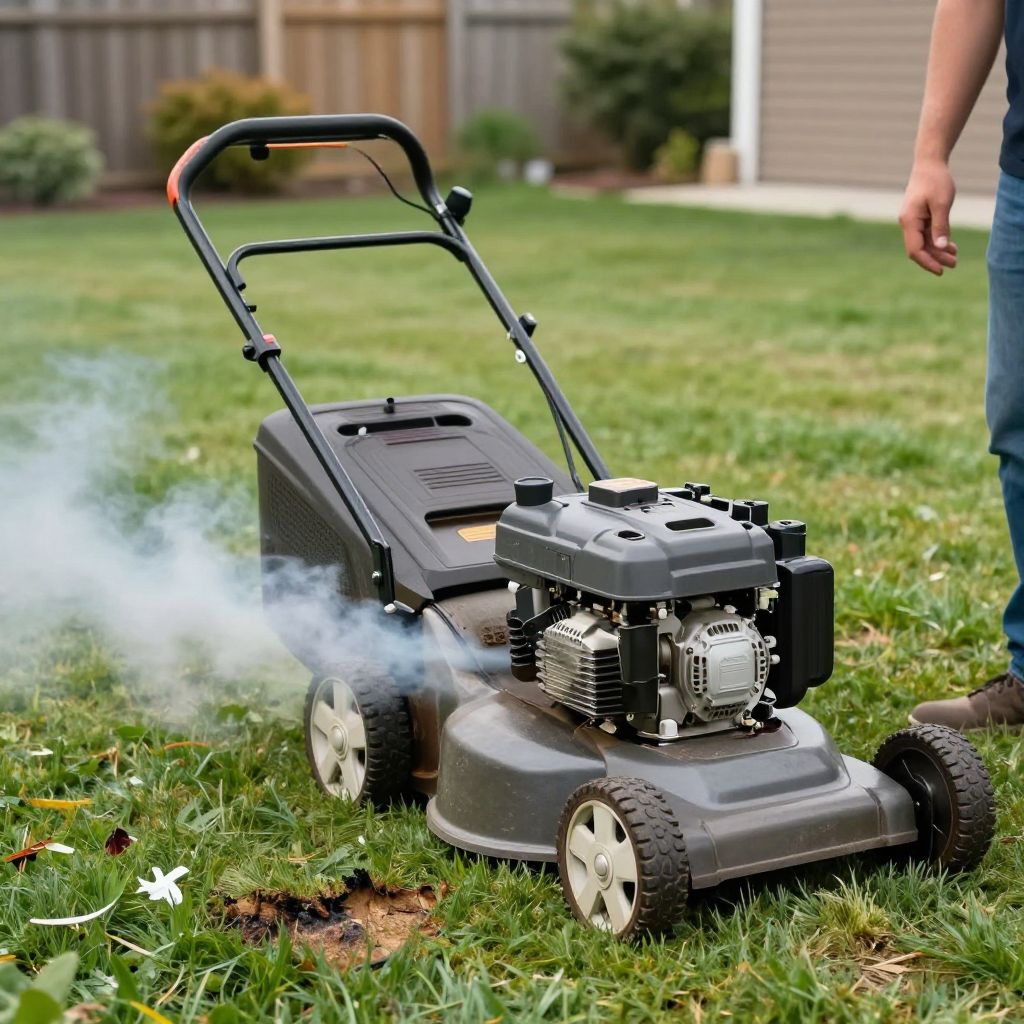
Why is my lawn mower smoking? In most cases, smoke means oil, fuel, or overheating is getting into a place it shouldn’t. The good news is that many causes are simple to identify and fix before they turn into expensive engine damage.
The key is to stop mowing, let the machine cool, and check the basics in a safe order. A little white smoke after a tip-over or a recent oil change can be harmless, but blue, black, or persistent smoke usually points to a maintenance problem that needs attention.
Why is my lawn mower smoking?
Most lawn mower smoke comes from too much oil, spilled oil on hot engine parts, dirty air filters, stale fuel, or an overheating engine. The color of the smoke helps narrow it down: white often means oil burn-off, blue means oil is entering the combustion chamber, and black usually means the engine is running too rich.
What the smoke color can tell you
White smoke
White smoke is often the least alarming. If you recently tipped the mower on its side, changed the oil, or overfilled the crankcase, oil may have entered the cylinder or spilled onto the muffler and engine housing.
If the smoke clears after a few minutes of running, the mower may simply be burning off residue. If it keeps smoking, check the oil level and look for leaks.
Blue smoke
Blue smoke usually means the engine is burning oil. This can happen if the mower was overfilled, used on a steep slope, has worn piston rings, a damaged valve seal, or a blocked crankcase breather.
Blue smoke that continues after correcting the oil level is a sign to inspect the engine more closely.
Black smoke
Black smoke points to too much fuel and not enough air. A clogged air filter, stuck choke, dirty carburetor, or incorrect carburetor adjustment can cause the engine to run rich and smoke heavily.
Black smoke is often paired with rough running, poor acceleration, or fuel smell.
Common causes of a smoking lawn mower and how to fix them
1. The mower was tipped the wrong way
One of the most common reasons for why is my lawn mower smoking is oil moving into the wrong part of the engine after the mower was tilted. This is especially common after blade cleaning, deck maintenance, or transport.
What to do:
- Turn the mower off and let it cool completely.
- Check the owner’s manual for the correct tipping direction.
- Wipe away any oil on the engine, muffler, and deck.
- Restart the mower and let it run for several minutes outdoors.
If the smoke fades, the problem was likely temporary. If it returns, inspect the oil level and air filter.
2. The engine oil is overfilled
Too much oil is a frequent cause of smoking, especially in small engines. Excess oil can be pushed into the combustion chamber or into the breather system, where it burns and creates persistent smoke.
What to do:
- Park the mower on level ground.
- Remove the dipstick and check the oil level.
- If it is above the full mark, drain a small amount of oil.
- Recheck the level until it sits at the proper mark.
Use the oil type recommended for your mower model. If you are unsure, check the manual or a reliable parts guide before adding more.
3. Oil spilled on the engine or muffler
Sometimes the smoke is not coming from inside the engine at all. A recent oil change, filter replacement, or refueling spill can leave oil on hot surfaces, where it burns off and smokes.
What to do:
- Turn the mower off and allow it to cool.
- Use a rag to wipe visible oil from the engine and muffler area.
- Clean up any oil on the deck and surrounding surfaces.
- Run the mower outdoors and watch whether the smoke stops.
A small amount of smoke after a spill is common. Heavy smoke that continues suggests a deeper issue.
4. The air filter is clogged
A dirty air filter can restrict airflow, causing the engine to run too rich. That can create black smoke, rough idling, and poor cutting performance.
What to do:
- Remove the air filter and inspect it.
- If it is paper and heavily dirty, replace it.
- If it is foam and washable, clean it according to the manual and let it dry fully before reinstalling.
- Make sure the filter housing is seated properly.
Check the filter more often during dusty mowing conditions, such as dry summers or after mowing sandy soil.
5. The choke is stuck or used incorrectly
If the choke stays partly closed after startup, the engine gets too much fuel and too little air. That can produce black smoke and make the mower run unevenly.
What to do:
- Move the choke control back to the normal running position after the engine starts.
- Check that the linkage moves freely.
- Look for dirt or debris around the carburetor and control cables.
If the choke is sticking mechanically, it may need cleaning or adjustment.
6. Stale fuel or carburetor problems
Old fuel can gum up the carburetor and affect the fuel-air mixture. This often leads to hard starting, rough running, and smoke. Ethanol-blended fuel can also degrade faster if the mower sits unused for long periods.
What to do:
- Drain old fuel if it has been sitting for months.
- Refill with fresh fuel appropriate for small engines.
- Inspect the carburetor for varnish, blockage, or sticking parts.
- Use a fuel stabilizer if the mower will be stored for a while, following the product label.
If cleaning the fuel system does not solve the smoke, the carburetor may need professional service.
7. The mower is overheating
Overheating can cause oil to burn off and create smoke. Grass clippings packed around the engine, a dull blade that strains the motor, or low oil can all contribute.
What to do:
- Stop mowing and let the engine cool.
- Clear grass clippings, dirt, and debris from the engine shroud and deck.
- Check oil level and condition.
- Sharpen or replace a dull blade if the mower is laboring.
In hot weather, avoid pushing the mower too hard through very tall or wet grass. That extra load can raise engine temperature quickly.
8. Internal engine wear
If the mower still smokes after you have checked oil, fuel, airflow, and cleanliness, the engine may have worn internal parts. Worn piston rings, valve seals, or a damaged cylinder can allow oil into the combustion chamber.
Signs of internal wear include:
- Persistent blue smoke
- Oil consumption between checks
- Loss of power
- Excessive exhaust residue
- Hard starting even after maintenance
This usually requires a mechanic or engine rebuild, especially on older mowers.
What to do right away if your mower starts smoking
- Turn it off immediately if the smoke is heavy or the mower sounds unusual.
- Let the engine cool before touching hot parts.
- Check the oil level on level ground.
- Inspect the air filter and choke position.
- Look for spilled oil or fuel around the engine and muffler.
- Clear grass clippings and debris from the deck and engine area.
- Restart only if the smoke appears minor and the mower seems safe to run.
If you smell burning plastic, see flames, or notice fuel leaking, do not restart the mower. Move it away from dry grass and have it repaired.
How to prevent lawn mower smoking in the future
Follow proper maintenance habits
- Check oil before each mowing session or at regular intervals during the season.
- Change oil according to the mower manual or after heavy seasonal use.
- Keep the air filter clean.
- Use fresh fuel and store it properly.
- Clean grass buildup from the deck and engine area after mowing.
Use the mower correctly
- Do not tip the mower more than necessary, and always tip it the correct way.
- Do not mow very wet grass if you can avoid it.
- Do not force the mower through grass that is too tall for one pass.
- Let the engine warm up briefly before heavy cutting.
These habits reduce strain on the engine and help prevent smoke caused by overheating, oil migration, and airflow problems.
When to call for repair
Seek professional help if the mower keeps smoking after you have corrected the oil level, cleaned the air filter, and removed spilled residue. You should also get service if the smoke is thick and continuous, the engine loses power, or the mower burns oil every time you use it.
For older machines, repair may be worthwhile if the mower is otherwise in good shape. For very worn engines, replacement can be more practical than repeated fixes.
Conclusion
If you are wondering why is my lawn mower smoking, start with the simplest checks: oil level, tipped position, air filter, fuel freshness, and debris buildup. Most smoke problems can be traced to one of those issues, and many are easy to correct before they damage the engine.
If you want to keep troubleshooting your mower, you may also find it helpful to read about what kind of oil a lawn mower takes so you can refill it correctly and avoid overfilling.