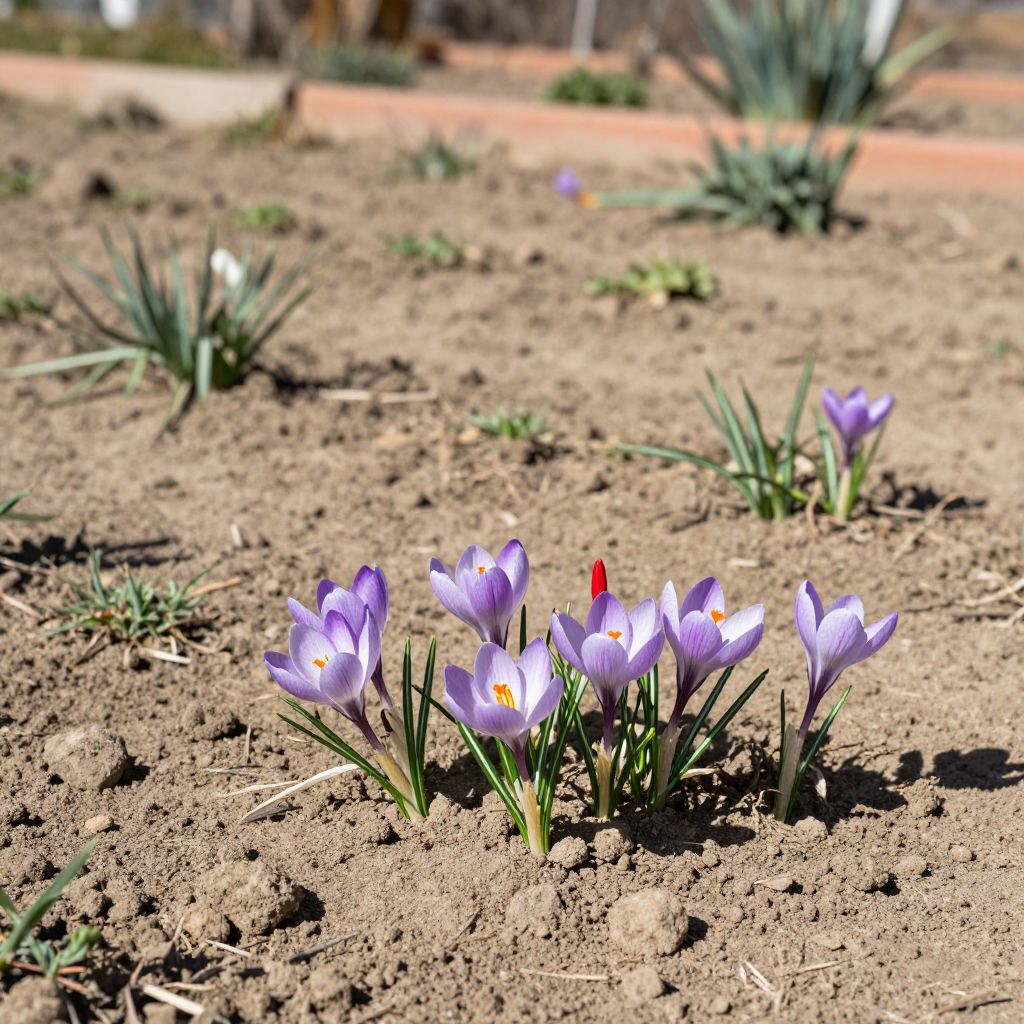
Where does saffron grow best? If you want to grow this valuable spice crocus successfully, the answer is simple: in a sunny, dry spot with very well-drained soil. Saffron crocus (Crocus sativus) does not like soggy ground, heavy shade, or summer-wet conditions.
With the right site, it can do well in garden beds, raised beds, rock gardens, and containers. The key is to copy the plant’s natural preference for hot, dry summers and cool, moderately moist growing periods.
Where does saffron grow?
Saffron grows best in regions with warm, dry summers and cool to mild autumns, especially where the soil drains quickly. It thrives outdoors in full sun, in loose fertile soil, and in places that stay relatively dry when the corms are dormant. In wet climates, raised beds or containers often work better than open ground.
Best climates and garden locations for saffron
Saffron crocus is suited to climates that do not stay wet for long periods during summer dormancy. It can be grown in many temperate regions if the planting site is chosen carefully.
Ideal outdoor conditions
- Sunlight: Full sun is best, though light afternoon shade is acceptable in very hot climates.
- Soil drainage: Excellent drainage is essential. Waterlogged soil can rot the corms.
- Air circulation: A breezy site helps reduce fungal problems.
- Summer dryness: Dormant corms prefer dry soil in summer.
Good places to plant saffron
- Raised beds with gritty, free-draining soil
- South- or west-facing borders in sunny gardens
- Rock gardens and gravel gardens
- Large containers with drainage holes
- Sloping beds where excess water runs off
Places to avoid
- Heavy clay that stays wet after rain
- Low spots where water collects
- Deep shade under trees or buildings
- Lawns or beds with frequent irrigation
- Cold, wet sites with poor airflow
What kind of soil does saffron need?
Saffron grows best in loose, fertile soil that drains fast and does not compact easily. A sandy loam is ideal, but many gardeners can improve ordinary soil by adding compost and grit. The goal is a bed that holds enough moisture for growth, then dries out instead of staying soggy.
Soil preparation tips
- Remove weeds and stones from the planting area.
- Loosen the soil to improve root growth and drainage.
- Mix in compost if the soil is poor, but do not overdo it.
- If soil is heavy, add horticultural grit or coarse sand to improve texture.
- Consider a raised bed if drainage is still slow.
Important: Avoid rich, wet soil amended with too much manure. That can encourage rot instead of healthy flowering.
Can saffron grow in pots or containers?
Yes, saffron grows very well in containers, and pots are often the easiest option if your garden soil is heavy or wet. Containers let you control drainage, move plants to a dry spot, and protect corms from excessive rainfall.
Container growing basics
- Use a pot with several drainage holes.
- Choose a container deep enough for root growth and corm coverage.
- Fill it with a free-draining mix, not standard heavy potting soil alone.
- Place the pot in full sun.
- Keep it on the drier side during summer dormancy.
Container-grown saffron is especially useful if you live in a rainy climate, have limited space, or want to keep a closer eye on watering and harvest timing.
How to plant saffron corms
Saffron is grown from corms, not seeds. Planting healthy corms in the right place is the most important step for success.
Step-by-step planting guide
- Choose a sunny, well-drained site or a container.
- Prepare loose soil with good drainage.
- Plant corms with the pointed end facing up.
- Set them at a depth of roughly 3 to 4 inches, or about 2 to 3 times the corm’s height, unless your local conditions call for slightly deeper planting in very exposed sites.
- Space them a few inches apart so they can multiply over time.
- Water lightly after planting if the soil is dry, then avoid overwatering.
Planting depth can vary a little with climate and soil type. In colder or windier sites, slightly deeper planting may help protect corms; in wet soil, avoid planting too deep because that can slow drainage around the base.
Watering and seasonal care
Saffron needs moisture at the right time, but not too much. It usually grows and flowers in the cooler part of the season, then goes dormant as temperatures rise.
When to water
- After planting, water lightly if the soil is dry.
- During active growth, keep the soil evenly moist but never saturated.
- Reduce watering once foliage starts to yellow and die back.
- Keep dormant corms dry in summer whenever possible.
A common mistake is watering saffron like a typical border perennial. Too much summer water is one of the fastest ways to lose corms.
Feeding saffron
Saffron does not need heavy feeding. A modest amount of compost at planting time is usually enough in average garden soil. If your soil is poor, a light top-dressing of compost in the growing season can help, but avoid strong, high-nitrogen feeding that pushes leafy growth instead of flowers.
How much sun does saffron need?
Saffron flowers best in full sun. At least 6 hours of direct sunlight is a good target in many gardens, though the exact amount depends on your climate. In very hot regions, a little afternoon shade can help prevent stress, but too much shade usually means fewer flowers.
Signs the site is too shady
- Long, weak leaves
- Few or no flowers
- Slow corm multiplication
- Soil that stays damp too long
Common pests and diseases
Saffron is fairly low-maintenance, but poor drainage and overcrowding can lead to problems. Most issues are easier to prevent than to cure.
Watch for these problems
- Rot: Usually caused by wet soil or poor drainage.
- Rodents: They may dig up corms in some gardens.
- Slugs and snails: More likely in damp conditions.
- Fungal issues: Often linked to crowded planting or stagnant air.
Prevention tips
- Plant only in well-drained soil.
- Do not overwater, especially in warm weather.
- Remove dead foliage once it has fully faded.
- Lift and divide crowded corms if flowering declines.
- Use containers or raised beds in wet gardens.
Harvesting saffron
The saffron spice comes from the red stigmas inside each flower. Flowers open in autumn in many climates, and the harvest window is short, so check plants often during bloom.
How to harvest
- Pick flowers on the day they open, ideally in the morning.
- Gently remove the red stigmas from each flower.
- Handle them carefully so they stay clean and intact.
- Dry them promptly in a clean, airy place.
Because each flower produces only a small amount, even a modest planting can be worthwhile for home gardeners. The best results come from healthy corms grown in the right location, not from forcing plants in unsuitable soil.
Propagation and long-term care
Saffron crocus naturally multiplies by forming new corms. Over time, clumps can become crowded, which may reduce flowering if they are not divided.
When to divide corms
If flowering drops off after a few seasons, or if the bed becomes congested, lift and separate the corms during dormancy when the foliage has died back. Replant the healthiest corms in fresh, well-prepared soil.
Maintenance checklist
- Keep the bed weed-free.
- Avoid compacting the soil.
- Let foliage die back naturally.
- Divide overcrowded clumps when needed.
- Refresh poor soil with compost and drainage material.
Best answer for gardeners in difficult climates
If your area is wet, humid, or has heavy clay soil, saffron can still grow, but the planting method matters more than ever. Use raised beds, gravelly soil, or containers, and place them in the sunniest, driest part of your garden. Good drainage is more important than rich soil or frequent watering.
Final thoughts
So, where does saffron grow best? In a sunny, dry, well-drained spot where the corms can grow in cool weather and rest in dry weather. If your garden soil is heavy, improve it or switch to raised beds or pots for a much better chance of success.
Start by choosing the driest sunny location you have, then plant a few healthy corms and watch how they perform through the season. If you want to keep building your saffron bed, look for more guidance on raised bed gardening and container gardening.