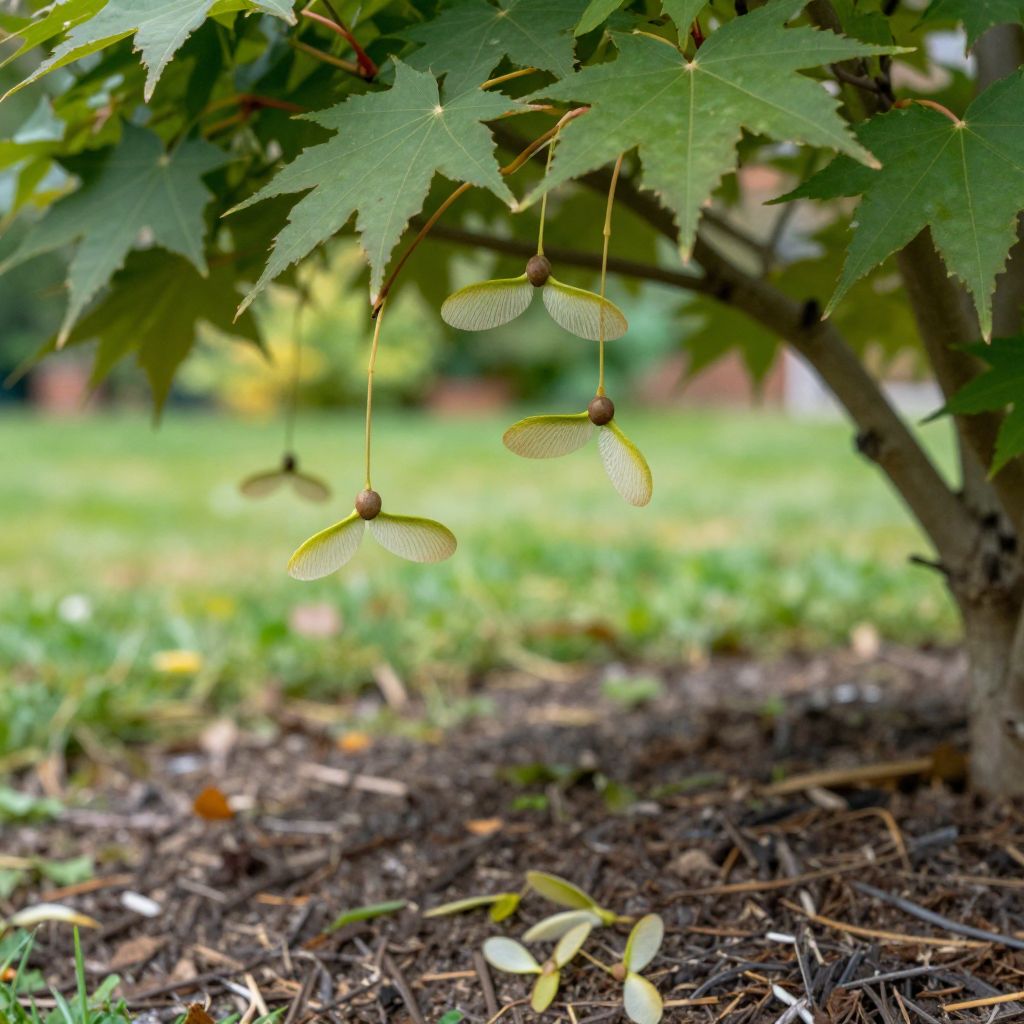
Seeing those spinning “helicopter” seeds on the ground and wondering what tree they came from? You’re usually looking at seeds from maples, though a few other trees also make winged seeds that twirl through the air.
If you want to identify the tree, understand how it grows, or decide whether to keep or remove seedlings, the good news is that helicopter seeds are easy to recognize once you know what to look for.
What trees have helicopter seeds?
The best-known helicopter seeds come from maples (Acer species). Their paired winged seeds, called samaras, spin as they fall and help the tree spread. Other trees with similar winged seeds include ashes, elms, and some pines, but maple is the most common source in home landscapes.
Which trees make helicopter seeds?
Maples are the classic example
Maples produce the familiar paired samaras that look like tiny propellers. Depending on the species, the wings may hang in pairs at a wide angle or nearly straight across from each other.
- Red maple (Acer rubrum)
- Silver maple (Acer saccharinum)
- Norway maple (Acer platanoides)
- Sugar maple (Acer saccharum)
- Japanese maple (Acer palmatum)
Other trees with winged seeds
Not every spinning seed is from a maple. Some common landscape trees and woodland trees also use wings to disperse seed by wind.
- Ash (Fraxinus species) — single-winged seeds, often called keys
- Elm (Ulmus species) — flat, roundish winged seeds
- Birch (Betula species) — tiny winged seeds, usually not as obvious as maple samaras
- Pines and some other conifers — winged seeds, though they do not usually look like classic helicopter seeds
How to tell a maple from other winged-seed trees
If you are trying to identify a tree in your yard, the seed shape is only one clue. Look at the leaves, bark, and overall form too.
Quick identification tips
- Check the seed pair: Maple seeds usually come in pairs joined at one end.
- Look at the wings: Maple samaras are flat and papery, with each seed attached to a wing.
- Examine the leaves: Maple leaves are typically lobed and arranged opposite each other on the twig.
- Notice the fall pattern: Seed clusters may hang on the tree before dropping in spring, summer, or fall depending on the species.
- Compare the bark and shape: Mature maples often have a rounded canopy and bark that changes with age from smooth to furrowed.
When do helicopter seeds appear?
Timing depends on the tree species and your climate. Some maples release seeds in late spring or early summer, while others drop them in autumn. Weather matters too: dry, windy conditions help the seeds travel farther.
If you notice a heavy seed drop, that does not always mean the tree is unhealthy. Many trees have natural “mast” years when they produce more seed than usual.
Should you worry about helicopter seeds in the garden?
Usually, no. In most gardens, helicopter seeds are more of a cleanup issue than a plant health problem. The main concern is unwanted seedlings sprouting in lawns, borders, gutters, and pots.
Common garden effects
- Seedlings popping up in mulch or lawn edges
- Clogged gutters or drains after heavy seed fall
- Dense self-seeding under mature maples
- Competition with nearby young plants for light and moisture
How to manage maple seedlings and seed drop
If you do not want more trees, the best approach is early removal. Small seedlings are easy to pull when the soil is damp and roots are shallow.
Practical cleanup steps
- Remove seedlings early: Pull them when they are only a few inches tall.
- Use mulch wisely: A 2- to 3-inch layer of mulch can make it easier to spot and remove sprouts, but keep mulch away from trunks.
- Rake or blow seed clusters: Clear them from patios, paths, and gutters before they collect in piles.
- Mow regularly: Lawn mowing helps prevent many seedlings from establishing.
- Inspect containers: Helicopter seeds can germinate in pots if they land on moist potting mix.
When to dig instead of pull
If a seedling has developed a stronger taproot, use a hand fork or narrow trowel to loosen the soil before lifting. Pulling too hard can break the stem and leave the root behind.
Can you grow a maple from helicopter seeds?
Yes, many maples can be grown from seed, but success varies by species and seed freshness. Some seeds need a cold period outdoors or in the refrigerator to germinate well, while others sprout more readily after natural winter weather.
Basic seed-starting approach
- Collect mature seeds when they are dry and fully formed.
- Store them briefly in a cool, dry place if needed, but do not let them dry out for too long if the species prefers fresh seed.
- For species that need cold stratification, give them a cold, moist period based on the tree type and your local climate.
- Sow in a free-draining seed-starting mix.
- Keep the mix evenly moist, not waterlogged.
- Place the container where it gets the light and temperature conditions suited to the species.
Important: If you are unsure which maple species you have, do not assume every seed needs the same treatment. Germination requirements differ, and local nursery guidance is often the most reliable source for your area.
Best growing conditions for maples in the landscape
If your helicopter seeds are coming from a maple you want to keep, focus on the tree’s overall health. Healthy trees produce better canopy growth and are less prone to stress-related problems.
Soil and drainage
Most maples prefer soil that holds moisture but drains well. Waterlogged ground can stress roots, while very dry, compacted soil can reduce vigor.
- Add compost to poor soil to improve structure, but avoid burying the root flare.
- Prevent standing water around the trunk.
- Use mulch to moderate soil temperature and conserve moisture.
Sunlight
Many maples grow best in full sun to partial shade, though some species tolerate more shade than others. Too little light can reduce growth and make the tree leggy, while intense afternoon sun may stress young trees in hot climates.
Watering
Young maples need consistent moisture while they establish. Mature trees are more resilient, but prolonged drought can reduce seed production and increase stress.
- Water deeply rather than giving frequent shallow sprinklings.
- Check soil moisture before watering; the top few inches should guide your decision.
- Adjust for rainfall, heat, soil type, and tree age.
Pruning and maintenance tips
Prune maples carefully and only when needed. Heavy pruning can cause weak growth, stress the tree, and create unnecessary wounds.
Good pruning habits
- Remove dead, damaged, or crossing branches first.
- Prune to improve structure while the tree is young.
- Use clean, sharp tools to make smooth cuts.
- Avoid removing too much canopy in one season.
If you are pruning a mature maple near the time it naturally produces seeds, remember that seed drop is normal and not a reason for drastic cutting.
Pests and diseases that can affect maple seed production
In many cases, a healthy maple will produce seeds without trouble. However, stress from pests, disease, drought, or root damage can change how much seed the tree makes.
Watch for these signs
- Early leaf drop or scorched leaves
- Dieback in small branches
- Sticky residue, distorted leaves, or visible insects
- Fungal leaf spots or cankers on stems
If you notice these symptoms, identify the problem before treating it. Good watering, proper mulching, and reducing root disturbance often help more than quick fixes.
Common mistakes to avoid
- Assuming every helicopter seed is from a maple. Ash and elm seeds can look similar at a glance.
- Leaving seedlings too long. Small sprouts are much easier to remove than established saplings.
- Overwatering container seedlings. Wet, stagnant mix can rot young roots.
- Pruning heavily to stop seed drop. This usually does not solve the problem and may harm the tree.
- Ignoring tree location. A maple planted too close to paving, gutters, or foundations can create more maintenance than it is worth.
When to call a professional
Consider a certified arborist if a large maple is dropping unusually heavy seed along with dead branches, cracking bark, leaning growth, or signs of root damage. A professional can tell whether the tree is simply in a productive year or whether it needs care.
Conclusion
If you’re asking what trees have helicopter seeds, the short answer is usually maples, though ash, elm, and a few other trees also make winged seeds. Identify the tree by its leaves, seed shape, and growth habit, then manage seedlings early and keep the parent tree healthy with proper watering, mulch, and light pruning.
For more help identifying a mystery tree in your yard, you may also find this guide useful: what type of tree is this?