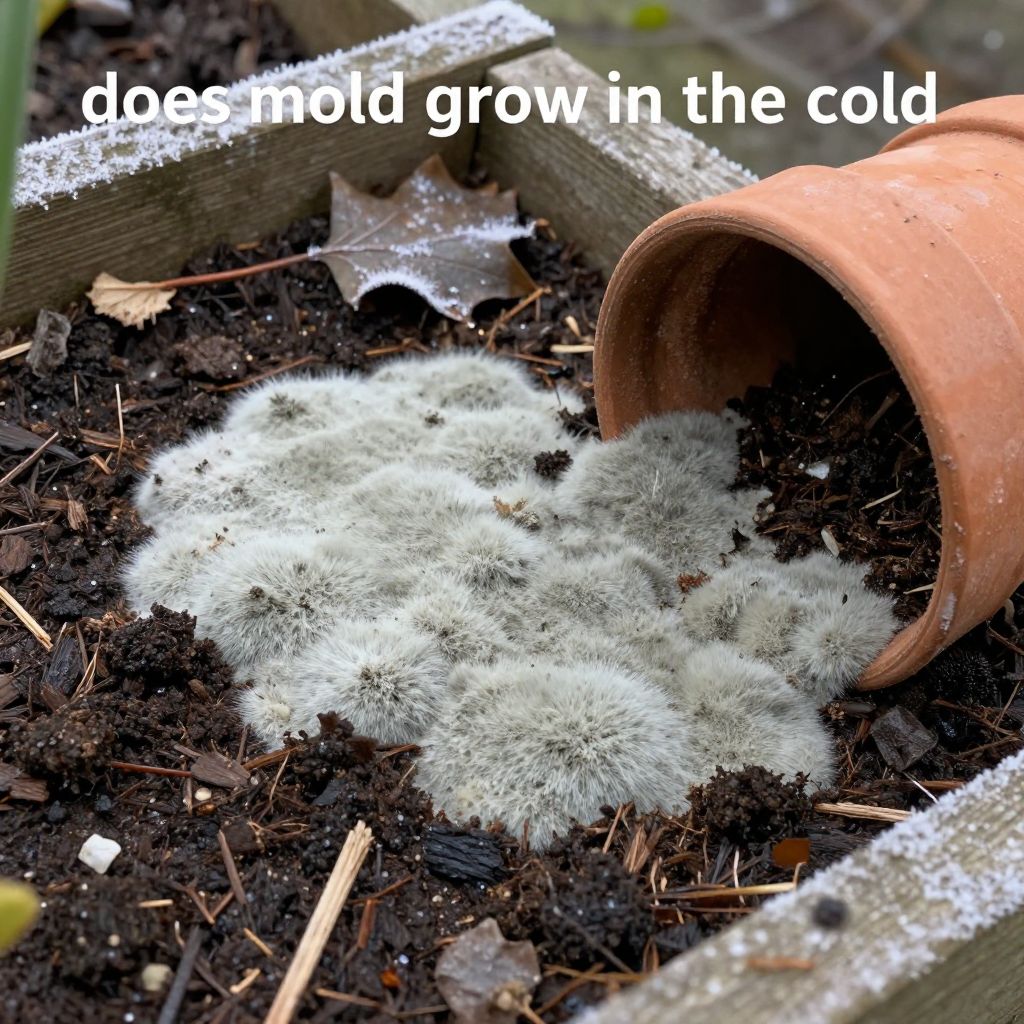
Does mold grow in the cold? If you’re seeing fuzzy growth on soil, mulch, compost, or stored bulbs during chilly weather, the short answer is yes—mold can still grow when temperatures are low. Cold usually slows it down, but it does not stop mold completely, especially in damp, poorly ventilated, or organic-rich spots.
For gardeners, the real question is not just whether mold survives cold weather, but what conditions let it spread. Understanding moisture, airflow, drainage, and sanitation will help you decide when mold is harmless, when it signals a problem, and how to prevent it in beds, containers, compost, and indoor growing areas.
Does mold grow in the cold?
Yes, mold can grow in cold conditions if there is enough moisture and organic material. Most molds slow down as temperatures drop, but many remain active in cool soil, damp mulch, unheated greenhouses, garages, and indoor plant areas. Cold alone does not kill mold; dryness, airflow, and sanitation matter more.
Why mold still appears in cold weather
Mold is a fungus, and fungi are often more tolerant of cool, damp conditions than many gardeners expect. In winter or early spring, you may notice mold on potting mix, compost, fallen leaves, wood mulch, seed-starting trays, or stored plant material.
The main reasons are simple:
- Moisture lingers longer because evaporation is slower in cold weather.
- Air circulation is often reduced in greenhouses, sheds, basements, and covered beds.
- Organic matter is abundant in compost, mulch, and potting mixes, which gives mold food.
- Sunlight is weaker in winter, so surfaces dry more slowly.
In many cases, the mold you see is a sign that conditions are too wet, not that the cold itself is causing damage.
Where gardeners most often see mold in cold conditions
1. Potting soil and seed-starting mix
White or gray fuzz on the surface of containers is common in cool, damp indoor spaces. It often appears when seedlings are overwatered or when trays stay covered too long without ventilation.
2. Compost piles
Cold weather slows decomposition, but mold can still develop on the outer layers of a compost pile, especially if the pile is too wet or packed too tightly. This is often normal fungal activity, though a sour smell can mean the pile is too anaerobic.
3. Mulch and leaf litter
Wood chips, bark, and leaves may develop fungal growth during cool, wet periods. Some of this is harmless decomposition, but thick mulch against stems can encourage rot and disease.
4. Stored bulbs, tubers, and roots
If storage is too humid or poorly ventilated, mold can develop on dahlias, gladiolus, onions, or other stored plant material. Cold storage helps only if the space is also dry enough and airy enough.
5. Indoor plants in winter
Houseplants often suffer from low light, cool windowsills, and overwatering. Mold on the soil surface is a common warning sign that the pot is staying wet too long.
Is all mold in the cold a problem?
No. Some mold is simply part of natural decomposition, especially in compost and mulch. In those settings, fungal growth can be beneficial because it helps break down organic matter. The concern is when mold appears on living plants, seedlings, or stored plant parts where it can lead to rot or disease.
Use this quick rule:
- Usually harmless: small patches on compost, mulch, or old potting mix.
- Potentially harmful: mold on stems, leaves, bulbs, roots, or seedlings.
- Needs action: mold with a bad smell, spreading rot, or collapsing plant tissue.
How to prevent mold in cold weather
Improve drainage first
Cold, wet soil is one of the biggest mold triggers in the garden. If water sits around roots, fungi have an easy opportunity to spread.
- Plant in raised beds or mounded rows if your soil stays soggy.
- Mix in compost only if it is fully finished and crumbly.
- Avoid compacting soil by walking on beds when wet.
- Make sure containers have open drainage holes.
Water less often, but more thoughtfully
Plants usually use less water in cold weather because growth slows. Overwatering is one of the fastest ways to encourage mold indoors and outdoors.
- Check soil before watering by feeling the top 1 to 2 inches.
- Water early in the day so excess moisture can dry before nightfall.
- For containers, empty saucers after watering.
- In winter, reduce watering for dormant or slow-growing plants unless the soil is clearly drying out.
Increase airflow
Stagnant air keeps surfaces damp. Good airflow helps leaves, soil, and mulch dry faster, which makes mold less likely.
- Space plants so leaves do not stay crowded and wet.
- Open vents in greenhouses or cold frames on mild days.
- Use a small fan for indoor seedlings if the space is still and humid.
- Do not seal plants too tightly under covers for long periods.
Keep mulch and debris away from stems
Mulch is useful in cold weather because it insulates roots, but it should not touch plant crowns or trunks. Piling organic material directly against stems traps moisture and can lead to rot.
- Leave a small gap around the base of perennials, shrubs, and young trees.
- Remove fallen leaves from around crowns if they stay wet and matted.
- Refresh mulch only as needed; too much can hold excess moisture.
How to handle mold on soil, compost, or containers
On potting soil
If you see a light fuzzy layer on the surface, scrape off the top 1/2 to 1 inch of affected soil and replace it with fresh, dry potting mix. Then let the pot dry a little more between waterings and improve light and airflow.
If the plant is small or the mold keeps returning, repot into clean containers with fresh mix. Wash the old pot with hot soapy water before reusing it.
On compost
Mold in compost is usually not a problem unless the pile is excessively wet or foul-smelling. Turn the pile to add air, mix in dry brown materials such as shredded leaves or cardboard, and cover it so rain does not soak it repeatedly.
A healthy compost pile should feel like a wrung-out sponge, not a soaked mat.
On mulch
Fungal growth on mulch is often part of decomposition. If it is only on the surface and not harming plants, you may leave it alone. If mulch is packed against stems or staying soggy for long periods, pull it back and let the area dry.
How to protect seedlings and indoor plants
Seedlings are especially vulnerable because they grow in warm, humid, low-airflow conditions that mold loves. Cold weather often pushes gardeners indoors, where overwatering becomes the main issue.
- Use clean trays and fresh seed-starting mix.
- Water from the bottom when possible to keep the surface drier.
- Remove humidity domes once seeds have sprouted, or vent them daily.
- Give seedlings strong light so they grow steadily and dry faster.
- Thin crowded seedlings to improve air movement.
For houseplants, avoid watering on a fixed schedule. Instead, check each pot individually, since cold windows and low light can slow drying dramatically.
Cold-weather mold mistakes to avoid
- Do not assume cold will solve the problem. Mold often survives cool temperatures if moisture remains high.
- Do not overcorrect with constant watering. Wet soil is more dangerous than slightly dry soil for many plants in winter.
- Do not bury stems or crowns in mulch. This traps moisture and invites rot.
- Do not leave dead leaves and debris piled around plants. Decaying material can harbor fungi and pests.
- Do not ignore bad smells. A sour or rotten odor often points to poor drainage or anaerobic conditions.
When mold means a plant may be in trouble
Some mold is cosmetic, but certain signs suggest a deeper issue. Watch for soft stems, blackened roots, collapsing seedlings, mushy bulbs, or leaves that yellow and drop quickly. These symptoms often mean the plant is suffering from rot or a disease encouraged by excess moisture.
If a plant is badly affected, remove the damaged parts, improve drainage, and consider repotting or replacing the plant if the root system is compromised. Always clean tools after cutting into diseased tissue to avoid spreading problems.
Seasonal tips for preventing mold outdoors
In cool seasons, the best prevention is to manage moisture before it becomes a problem. Outdoor mold is more likely after long stretches of rain, snowmelt, or repeated freeze-thaw cycles that keep soil wet.
- Rake away soggy leaves from beds and pathways.
- Keep compost covered but not sealed airtight.
- Check that downspouts and drainage channels move water away from planting areas.
- Prune only when appropriate for the plant and season, since open wounds can be vulnerable in wet weather.
- Use breathable covers rather than plastic sheeting that traps condensation.
Bottom line
So, does mold grow in the cold? Yes, it can—but cold weather usually slows mold rather than stopping it. If you control moisture, improve airflow, and keep organic material from staying soggy, you can prevent most cold-weather mold problems in the garden.
If you want to dig deeper into winter plant care, you may also find it helpful to read about how to protect plants from frost and composting in cold weather.