Wondering when to apply crabgrass preventer so it actually works? Timing matters more than the product itself, because crabgrass preventers only stop seeds from sprouting. If you apply them too early, too late, or after you’ve already missed the germination window, results can be disappointing.
The good news is that you can time it well by watching soil temperature and local seasonal cues. With a little planning, you can protect your lawn before crabgrass gets started and avoid wasting time, money, and effort.
When to apply crabgrass preventer?
Apply crabgrass preventer in early spring before crabgrass seeds germinate, when soil temperatures at about 2 inches deep reach roughly 55°F for several days in a row. In many regions that means just before forsythia blooms or as soil begins to warm, but local weather matters more than the calendar.
Why timing matters so much
Crabgrass preventers are pre-emergent herbicides. They form a barrier in the top layer of soil that stops crabgrass seedlings from emerging.
That means they do not kill crabgrass that is already visible. If you see plants sprouting, you’ve likely missed the ideal timing for a preventer and should switch to a post-emergent control plan instead.
The soil temperature rule
The most reliable timing guide is soil temperature, not the date on the calendar. Crabgrass usually begins germinating when soil temperatures stay around 55°F for several days.
- Cool spring climates: application may be later than you expect.
- Warm spring climates: application may need to happen earlier.
- Shaded or north-facing lawns: soil may warm more slowly than sunny areas.
If you want to be precise, check local soil temperature reports or use a soil thermometer. Measure in the lawn, not on a patio or driveway.
Best seasonal window for crabgrass preventer
In most areas, the best time is early to mid-spring, before crabgrass germination begins. In some southern regions, that can mean late winter. In colder northern regions, it may be mid-spring.
Use local cues, not just the calendar
Phenology, or plant-based timing cues, can help when you don’t have a soil thermometer. A common rule of thumb is to apply around the time forsythia starts blooming. This is not perfect everywhere, but it is often a useful sign that soil is warming.
Other clues include:
- consistent daytime warmth after winter
- lawns beginning active growth
- soil that no longer feels cold and soggy for long periods
If your area gets a long, cool spring, don’t rush. Crabgrass won’t germinate until the soil is ready, so applying too early can shorten how long the barrier lasts when you actually need it.
How to apply crabgrass preventer correctly
Even good timing can fail if the product is applied unevenly or watered in incorrectly. Read the label carefully, because application methods vary by product type and lawn grass species.
- Mow and clean up debris before application so product reaches the soil surface evenly.
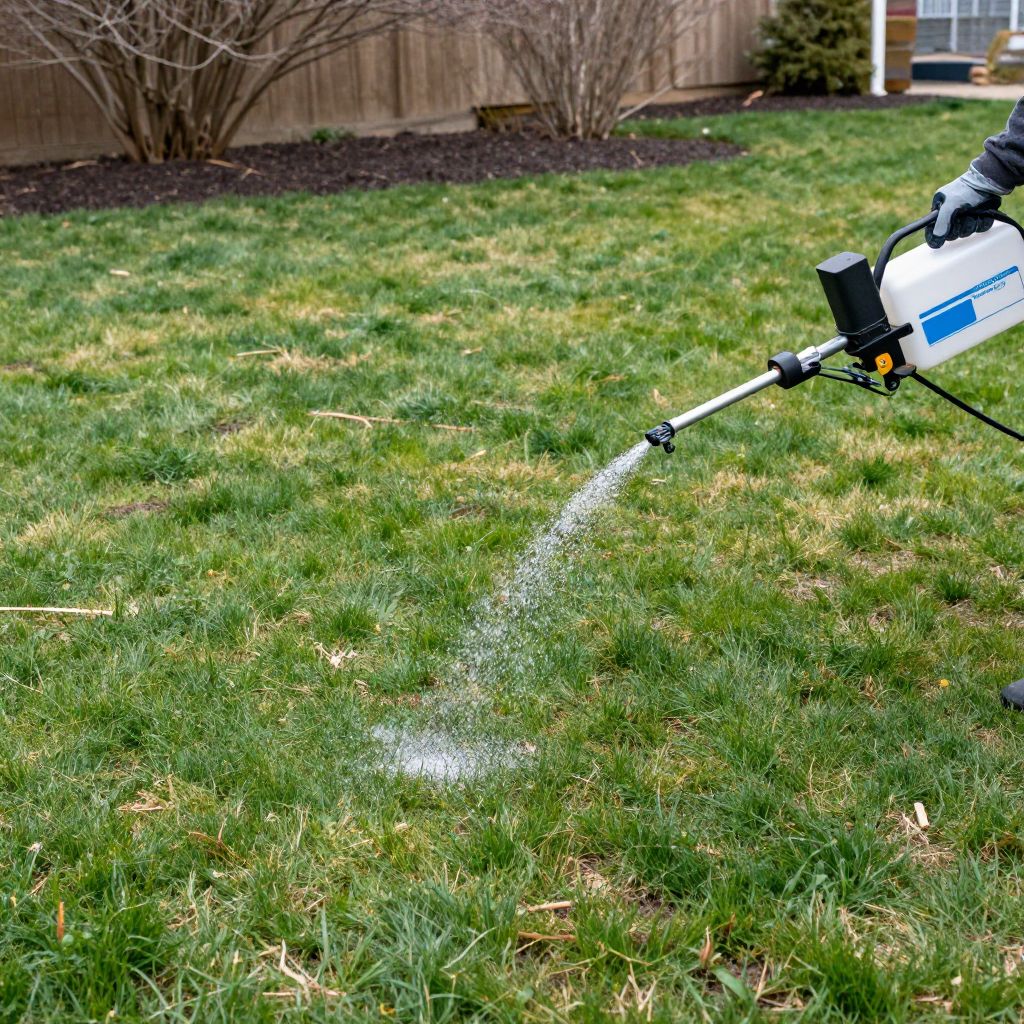
- Apply evenly with a spreader if the product is granular, or spray uniformly if it is a liquid formulation.
- Water it in if the label requires it. Many pre-emergents need light irrigation to activate and settle into the soil.
- Avoid disturbing the soil afterward, since raking, aerating, or heavy dethatching can break the barrier.
Granular products are often easier for beginners to distribute evenly over a lawn. Liquid products can work well too, but coverage must be consistent.
Common application mistakes to avoid
- Applying after crabgrass has already germinated
- Skipping the label directions for watering in
- Using too little product and leaving gaps
- Applying unevenly, which creates weak spots
- Core aerating or aggressively dethatching right after treatment
How long crabgrass preventer lasts
Most pre-emergent crabgrass preventers do not last the entire season forever; their effectiveness gradually declines. Some products offer several weeks of control, while others provide longer protection depending on formulation, weather, and soil conditions.
Heavy rain, frequent irrigation, mowing, and soil disturbance can shorten performance. That’s why timing and label instructions matter so much.
Can you reapply later?
Sometimes a second application is appropriate, but only if the product label allows it. A split application can help in areas with a long crabgrass germination window, but applying extra product without checking the label can damage turf or violate use instructions.
If you’re unsure, choose one well-timed application rather than guessing at repeated treatments.
What if crabgrass is already growing?
If crabgrass is already visible, a preventer will not remove it. At that point, you need to focus on controlling existing plants and preventing new ones next season.
Options for existing crabgrass
- Hand pull small patches when the soil is moist and roots come out easily.
- Spot-treat with a post-emergent herbicide labeled for crabgrass and your turf type.
- Improve lawn density so crabgrass has fewer open spaces to invade.
Large infestations often signal thin turf, compacted soil, poor mowing habits, or bare patches. Fixing those conditions is just as important as herbicide use.
How lawn care affects crabgrass pressure
Crabgrass thrives in thin, stressed, or bare lawns. The best long-term prevention is a healthy turf that shades the soil and reduces open germination sites.
Helpful lawn habits
- Mow at the correct height for your grass type so the lawn can shade the soil.
- Water deeply but infrequently when needed, rather than keeping the surface constantly damp.
- Fill bare spots with seed or sod at the proper time for your grass type.
- Reduce compaction with aeration when appropriate, but not right after applying pre-emergent.
- Improve soil health with compost or topdressing only when it won’t disturb the herbicide barrier.
A dense lawn is one of the best defenses against crabgrass because it leaves fewer chances for seeds to establish.
Special situations to consider
New lawns from seed
If you are seeding a new lawn, be careful: many crabgrass preventers also block desirable grass seed from germinating. In that case, you usually need to choose between weed prevention and seeding, or use a product specifically labeled as safe for new seedings.
Always check the label before overseeding, repairing bare spots, or starting a lawn from seed.
Overseeding existing lawns
Overseeding and pre-emergent weed control often conflict. If you plan to overseed in spring, a standard crabgrass preventer may prevent the new grass seed from sprouting as well.
In that case, you may need to delay the preventer, use a different strategy, or seed at a time of year that better fits your lawn and climate.
Mulched beds and non-lawn areas
Crabgrass preventer is usually discussed for lawns, but some products are also used in landscape beds if the label allows it. Do not assume a lawn product is safe for flower beds, vegetable areas, or around ornamental plants.
Always confirm the site listed on the label before applying anywhere outside the lawn.
Quick timing checklist
If you want a simple way to decide when to apply crabgrass preventer, use this checklist:
- Check soil temperature, not just the date.
- Apply before crabgrass germination begins.
- Use local plant cues like forsythia as a backup sign.
- Read the label for watering and reapplication instructions.
- Avoid aerating, dethatching, or disturbing the soil afterward.
If crabgrass is already visible, switch from prevention to control and plan earlier next year.
Conclusion: the best time is before germination
The safest answer to when to apply crabgrass preventer is: early spring, before crabgrass seeds sprout, when soil temperatures reach about 55°F. Use your local climate, soil temperature, and lawn conditions to fine-tune the timing.
For the best results, apply evenly, water in as directed, and keep your lawn dense and healthy so crabgrass has fewer places to start. If you want to improve your overall lawn care routine, it also helps to review mowing, overseeding, and soil management before next season.