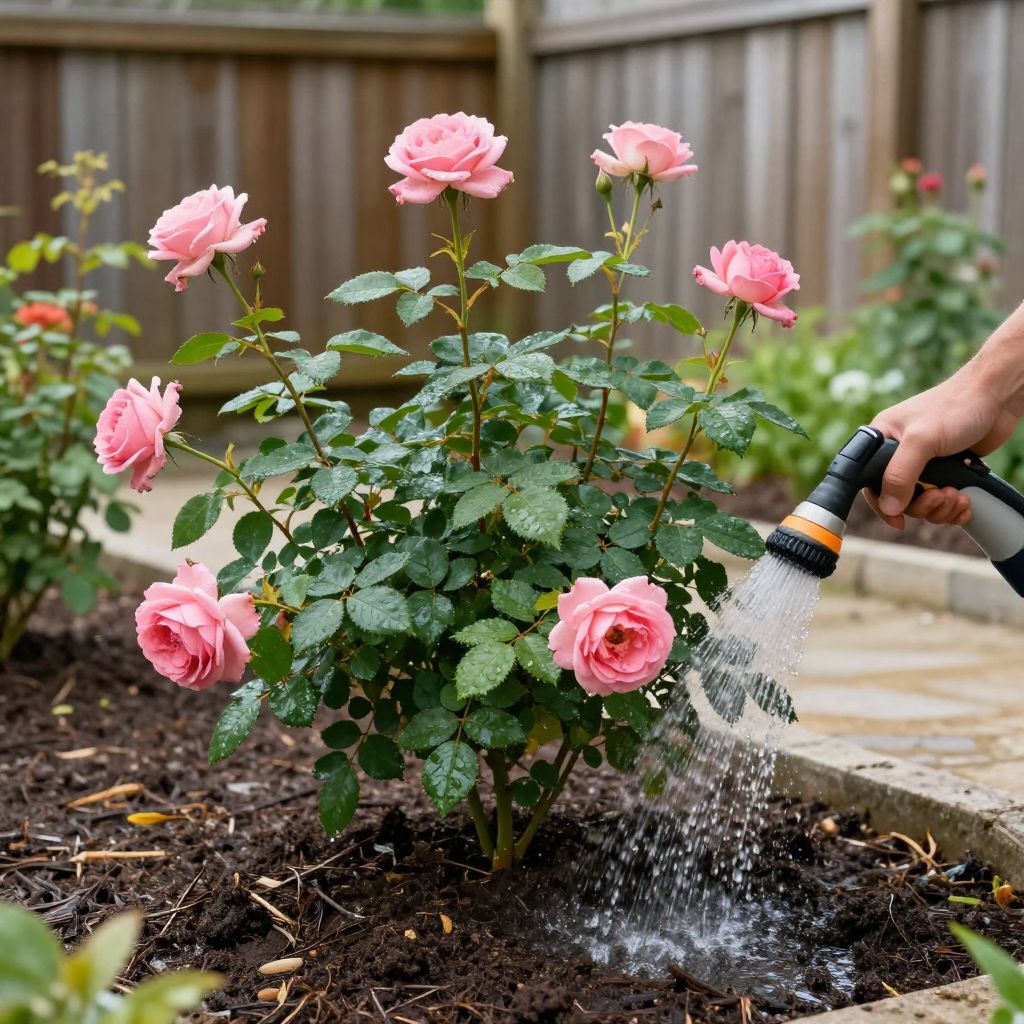
Do roses need a lot of water? Not usually—but they do need deep, consistent moisture, especially while they’re getting established and during hot, dry weather. The goal is not frequent light sprinkles, but watering that reaches the root zone and then allows the soil surface to dry a little between soakings.
If you’ve ever seen roses with drooping leaves, smaller blooms, or crispy petal edges, water stress may be part of the problem. The right amount depends on your soil, climate, container size, sun exposure, and how mature the plant is.
Do roses need a lot of water?
Roses do not need constant watering, but they do best with regular deep watering that keeps the root zone evenly moist, not soggy. Newly planted roses need more frequent watering than established plants. In most gardens, roses perform best when you water thoroughly, then wait until the top layer of soil starts to dry before watering again.
How much water roses actually need
There is no single schedule that works everywhere, because weather and soil change the answer. A rose in sandy soil in full sun will dry out much faster than one in loamy soil with afternoon shade.
As a general rule, roses prefer about 1 inch of water per week from rain or irrigation during active growth, but that is only a starting point. In hot, windy, or very dry conditions, they may need more. In cool or rainy periods, they may need much less.
What “deep watering” means
Deep watering means soaking the soil so moisture reaches 8 to 12 inches down, where many rose roots are active. A quick splash at the surface encourages shallow roots, which makes the plant more dependent on frequent watering and more vulnerable to heat stress.
Instead of watering a little every day, water less often but more thoroughly. This helps roses develop stronger roots and better drought tolerance.
How often to water roses
Rather than following a rigid calendar, check the soil before watering. Push a finger into the soil about 2 inches deep near the base of the plant. If it feels dry at that depth, it is usually time to water.
- Newly planted roses: Water more often until roots establish, especially during the first growing season.
- Established roses in the ground: Water deeply when the soil begins to dry below the surface.
- Container roses: Check more often, since pots dry out much faster than garden beds.
- During heat waves: Expect to water more frequently, especially in full sun or windy locations.
If your soil stays damp for days after watering, reduce frequency. Roses dislike waterlogged roots nearly as much as drought.
Best watering methods for roses
Water at the base, not overhead
Try to keep water off the leaves and flowers whenever possible. Wet foliage can encourage fungal diseases such as black spot and powdery mildew, especially in humid weather or when watering late in the day.
Use a watering can, soaker hose, drip irrigation, or a hose set to a gentle trickle at the soil line. These methods deliver water where it is needed most.
Water early in the day
Morning watering is usually best. It gives the plant time to absorb moisture before the day heats up and helps leaves dry quickly if they get splashed.
Evening watering can be acceptable in very hot climates if the soil is dry, but avoid leaving foliage wet overnight when disease pressure is high.
Signs your roses need more water
Roses often show stress before severe wilting occurs. Look for a combination of symptoms rather than one sign alone.
- Leaves look limp or droop in the afternoon
- New growth is smaller than usual
- Flower buds fail to open or drop early
- Leaf edges turn brown and dry
- Soil feels dry several inches down
Keep in mind that some drooping on very hot afternoons can be temporary. Check the soil before watering heavily, because overwatering can create its own set of problems.
Signs you may be overwatering roses
Too much water can be just as harmful as too little. Roses need oxygen around their roots, and saturated soil can suffocate them.
- Yellowing leaves, especially lower leaves
- Soft, weak growth
- Persistent wet soil or standing water
- Root rot or decline despite regular watering
- Fungal issues that worsen in damp conditions
If the soil stays muddy, improve drainage before adding more water. In many cases, the problem is not the amount of water alone, but how long the soil remains wet.
Soil, mulch, and drainage matter as much as watering
Roses grow best in soil that holds moisture but drains well. Rich loam is ideal, but many gardens can be improved with compost and mulch.
Work organic matter such as compost into the planting area before planting, if possible. This helps the soil retain moisture without becoming compacted. After planting, apply 2 to 3 inches of mulch around the base of the plant, keeping it a few inches away from the stems.
Why mulch helps
- Slows evaporation
- Keeps roots cooler
- Reduces watering frequency
- Helps suppress weeds that compete for moisture
Avoid piling mulch directly against the canes. That can trap moisture and invite rot or pest problems.
Watering newly planted roses
New roses need extra attention because their roots have not yet spread deeply into the surrounding soil. For the first several weeks after planting, monitor moisture closely and do not let the root ball dry out completely.
- Water thoroughly at planting time.
- Check the soil every few days, or more often in hot weather.
- Water when the top 1 to 2 inches of soil feel dry.
- Keep the soil evenly moist, not saturated.
- Gradually reduce watering as the plant establishes.
Container-grown roses in nursery pots may dry out faster than bare-root plants after planting, so watch them closely during the first season.
Watering established roses
Once roses are established, they usually become more forgiving, but they still bloom best with steady moisture. Deep roots can help them handle short dry spells, yet prolonged drought can reduce flower size and overall vigor.
In many gardens, a thorough soak once or twice a week during dry weather is better than frequent shallow watering. Adjust based on rainfall, soil type, and temperature.
Container roses need more frequent watering
Roses grown in pots dry out much faster than roses planted in the ground. Sun, wind, and the limited soil volume in a container all speed up moisture loss.
Check container roses daily during warm weather. Water until excess moisture drains from the bottom of the pot, then empty any saucer so the roots are not left sitting in water.
Choose a pot with drainage holes and use a high-quality potting mix that drains well but still holds some moisture. Small pots dry out quickly, so larger containers are usually easier to manage.
Seasonal watering tips
Spring
As new growth starts, roses need consistent moisture to support leaf and stem development. Rain may be enough in some climates, but do not assume spring moisture will last.
Summer
This is the season when watering matters most. Hot sun, dry wind, and active blooming can quickly deplete soil moisture. Mulch and deep watering are especially helpful now.
Fall
As temperatures cool, roses usually need less water. Continue watering if the weather is dry, but avoid keeping the soil constantly wet as growth slows.
Winter
In mild climates, roses may need occasional watering during dry spells. In colder climates, dormant roses need much less water, but newly planted shrubs may still need attention if winter is dry and the ground is not frozen.
Common watering mistakes to avoid
- Watering a little every day instead of soaking deeply
- Letting the hose run on the leaves instead of the soil
- Ignoring drainage in heavy clay soil
- Using the same schedule year-round without checking weather
- Allowing potted roses to dry out completely
- Overwatering because the leaves look droopy in afternoon heat
One of the biggest mistakes is confusing heat stress with drought stress. If the plant perks up in the evening, it may be responding to temperature, not necessarily needing more water.
Troubleshooting rose watering problems
If the soil dries too fast
Add mulch, improve the soil with compost, and check whether the rose is planted in a very exposed spot. In containers, move the pot where it gets morning sun and some afternoon protection if possible.
If the soil stays wet too long
Reduce watering, loosen compacted soil carefully, and make sure drainage holes are open. In heavy clay, planting on a slight mound or raised bed can help roots avoid sitting in water.
If blooms are small or sparse
Inconsistent watering can reduce flowering. Try to keep moisture steady during bud formation and bloom. Also check sunlight, pruning, and overall plant health, since water is only one part of rose care.
Do roses need more water in full sun?
Usually yes, at least compared with roses in partial shade. Full sun helps roses bloom well, but it also increases evaporation from soil and leaves. A rose in six or more hours of sun may need more frequent watering than one in a cooler, shadier location.
That said, roses grown in too much shade may stay damp longer and be more prone to disease. Aim for a bright site with good air movement, then water according to soil moisture rather than sun alone.
Simple watering routine you can follow
- Check the soil 2 inches down before watering.
- If it feels dry, water slowly at the base of the plant.
- Soak the soil deeply rather than giving a quick splash.
- Mulch around the plant to slow evaporation.
- Recheck after a few days, especially in hot weather or containers.
This routine works better than guessing by the calendar. It keeps roses evenly watered without wasting water or creating soggy roots.
Conclusion
So, do roses need a lot of water? They need enough water to keep the root zone evenly moist, but not so much that the soil stays wet all the time. Deep watering, good drainage, and mulch will do more for healthy roses than frequent shallow watering ever will.
If you want to improve your rose care next, check the soil before watering and adjust your routine to your climate, pot size, and season. For more practical rose-growing help, you may also enjoy reading about how to prune roses correctly and using compost to improve garden soil.