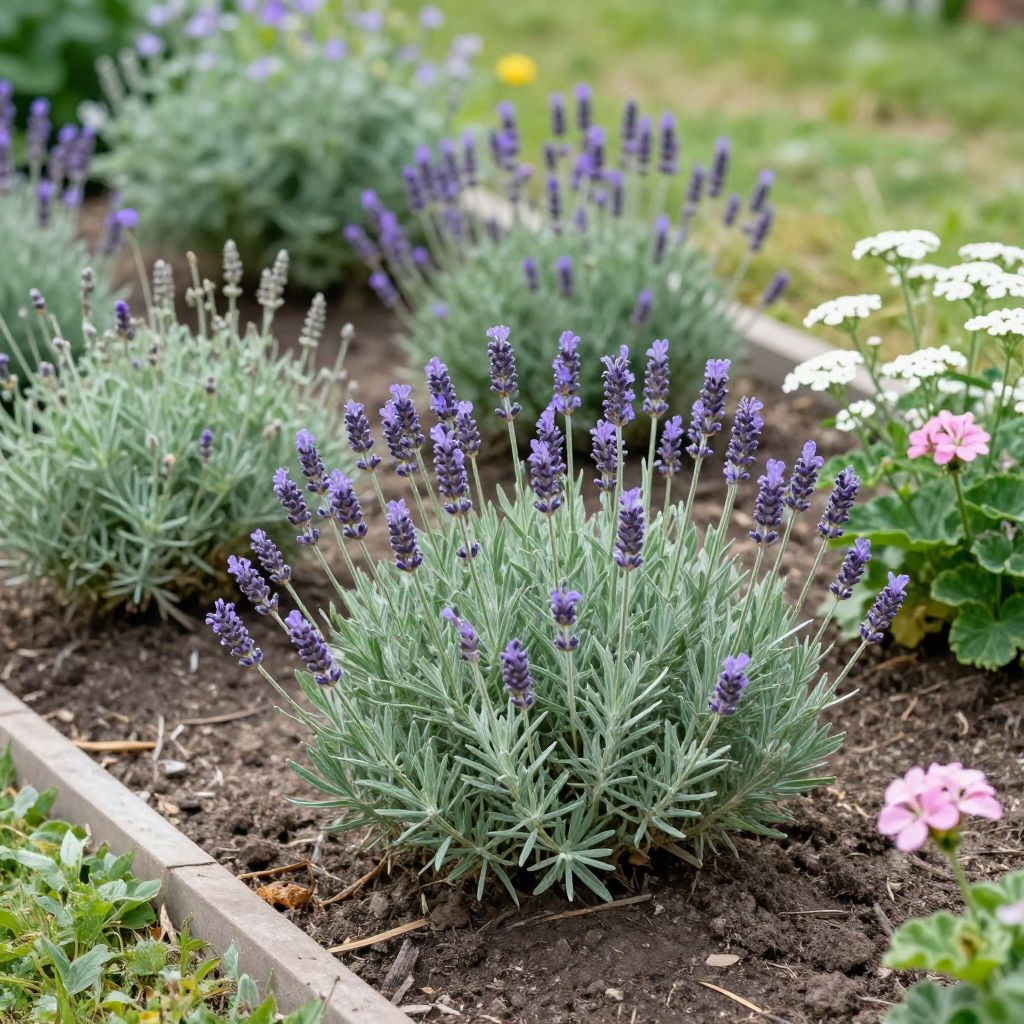
Trying to decide what to plant with lavender in a border? The best companions are plants that like the same sunny, well-drained conditions and won’t crowd lavender’s airy shape. Good choices soften the silvery foliage, extend flowering interest, and help the border feel cohesive rather than busy.
The key is to match lavender’s needs first, then choose plants that contrast in texture and bloom time. Think drought-tolerant perennials, low shrubs, and ornamental grasses that enjoy leaner soil and plenty of light.
What to plant with lavender in a border?
Plant lavender with sun-loving, drought-tolerant companions such as catmint, salvia, thyme, rosemary, yarrow, coreopsis, ornamental grasses, and compact roses. These plants share lavender’s preference for sharp drainage and open spacing, while their different heights, textures, and flower colors create a border that looks full without becoming crowded.
Why lavender needs the right companions
Lavender is not a plant that likes rich, damp, or overcrowded borders. It performs best in full sun, free-draining soil, and a site with good air movement.
When you choose companions, you are not just picking pretty flowers. You are building a planting scheme that supports healthy growth and reduces the chance of rot, mildew, and weak, leggy stems.
What lavender dislikes in a border
- Heavy, water-retentive soil
- Shade from larger shrubs or trees
- Plants that need frequent watering
- Dense planting that traps humidity
- Rich compost-heavy soil that encourages soft growth
Best plants to grow with lavender
Choose plants that enjoy similar conditions and add contrast in form, color, or flowering season. Below are reliable border companions that usually work well alongside lavender in many gardens.
Catmint (Nepeta)
Catmint is one of the easiest companions for lavender. Its soft, mounded habit and long flowering season echo lavender’s relaxed look, while the blue-purple flowers blend naturally with many lavender varieties.
Use it in front of or beside lavender to soften the edge of a border. Trim it lightly after the first flush of flowers if it starts to sprawl.
Salvia (Salvia nemorosa and related garden salvias)
Perennial salvias pair well with lavender because they love sun and drainage and bring upright flower spikes that contrast with lavender’s rounded mounds. Purple, blue, pink, or white forms can extend the color palette without clashing.
Give salvias enough space so their stems do not lean into the lavender. Good airflow matters for both plants.
Thyme (Thymus)
Low-growing thyme works well at the front of a border or along a path edge. It fills gaps, suppresses weeds, and thrives in the same gritty, sunny conditions as lavender.
Choose creeping or mat-forming types for edging. Avoid letting thyme grow so thickly that it shades the lavender’s base.
Rosemary (Salvia rosmarinus)
Rosemary is a strong Mediterranean-style partner for lavender in warmer, drier gardens. Its needle-like foliage contrasts beautifully with lavender’s soft gray leaves.
Use rosemary where it has room to mature, because it can become woody and wide. In smaller borders, compact forms are easier to manage.
Yarrow (Achillea)
Yarrow adds flat-topped flower clusters and ferny foliage, which create a different texture from lavender’s narrow spikes. It is a good choice if you want a more relaxed, naturalistic border.
It copes well with dry soil, but in very fertile ground it may flop. Keep conditions lean for the best shape.
Coreopsis
Coreopsis brings a cheerful, long-flowering note to a sunny border. Its daisy-like flowers work especially well if you want a warmer color contrast against purple or blue lavender.
Choose a compact variety so it does not overwhelm the lavender or collapse over the planting line.
Ornamental grasses
Small to medium ornamental grasses can be excellent companions because they add movement and fine texture. They also help the border look attractive outside the lavender bloom period.
Pick grasses that suit your climate and do not become too large for the space. The goal is to frame lavender, not hide it.
Compact roses
Some compact shrub roses can work with lavender if the border is sunny and well drained. The combination is classic, but it only succeeds when the roses are not too vigorous and the soil is not overly rich.
Leave enough room for both plants to mature. Roses usually need a little more feeding and watering than lavender, so place them where you can manage both without soaking the lavender roots.
How to design a lavender border planting
A good lavender border looks layered, airy, and repeated rather than crowded with many unrelated plants. Repetition of a few compatible species usually looks more polished than mixing too many different forms.
Simple design formula
- Use lavender as a mid-border or edging anchor.
- Place taller plants behind it, such as compact salvias or grasses.
- Use low growers in front, such as thyme or small catmint.
- Repeat the same plants in groups for a calmer look.
- Keep enough open soil or gravel visible to emphasize the planting style.
Spacing matters
Lavender needs space for air to move around the stems. If you plant it too close to vigorous neighbors, the center can stay damp and the plant may become woody or short-lived.
Avoid the temptation to fill every gap on planting day. Small plants often look sparse at first, but they usually fill in well if given the right conditions.
Soil and site preparation for lavender companions
Before planting, check whether your border drains well after rain. Lavender and its best companions prefer soil that does not stay wet for long.
Improving drainage
- Work in grit or coarse sand if your soil is heavy and sticky.
- Avoid overloading the bed with rich compost.
- Raise the planting area slightly if drainage is poor.
- Consider a gravel mulch in very dry, sunny sites.
If your soil is naturally fertile, resist the urge to make it richer. Lavender often grows better in moderately poor soil than in lush, heavily amended ground.
Best light conditions
Most good lavender companions need full sun to flower well. Aim for a site that gets at least six hours of direct light, though more is usually better in cooler climates.
In hotter regions, a little afternoon relief can help some companion plants, but lavender itself still needs strong light and open exposure.
How to plant lavender with other border plants
Planting well is just as important as plant choice. A careful start helps the border settle quickly and reduces the chance of root problems later.
- Prepare the bed by removing weeds and loosening the soil.
- Check drainage by watering the area and seeing how quickly it soaks in.
- Set lavender where it will not be shaded by taller plants.
- Place companions around it with room for mature spread.
- Water in lightly after planting, then avoid keeping the soil constantly wet.
- Mulch with gravel or a light, open mulch rather than thick, moisture-holding material.
Do not bury lavender too deeply. Keep the crown at soil level so moisture does not collect around the stems.
Watering and feeding in a mixed border
One common mistake is treating all border plants the same. Lavender usually needs less water and less feeding than many of its companions.
How to water without harming lavender
Water new plants regularly while they establish, but let the top layer of soil dry between waterings. Once established, lavender prefers infrequent, deep watering rather than frequent light sprinkling.
If you are growing lavender beside roses or other thirstier plants, water at the base of those plants and avoid soaking the lavender crown whenever possible.
Feeding tips
Lavender generally does not need rich feeding. Too much nitrogen can produce soft growth and fewer flowers.
Companion plants may need more nourishment, so use targeted feeding rather than blanket feeding the whole border. This is especially helpful where lavender shares space with roses or more vigorous perennials.
Seasonal care for a lavender border
A mixed border changes through the year, so the maintenance rhythm matters. The aim is to keep lavender healthy while allowing companion plants to do their job.
Spring
Check for winter damage, remove dead stems, and lightly tidy around the base of lavender. This is also a good time to divide or reposition nearby perennials if the border is becoming crowded.
Summer
Deadhead companion plants as needed and keep an eye on watering during dry spells. Lavender flowers can be harvested as they open, which may encourage a tidier display and provide stems for drying.
Autumn
Reduce heavy pruning late in the season, especially in colder areas. Remove fallen leaves and debris from around the base of plants to improve airflow and reduce disease risk.
Winter
In wet climates, winter drainage is often more important than cold. Make sure the border does not sit in water, and avoid thick mulch piled against lavender stems.
Common problems and how to fix them
Most lavender border failures come from mismatched plants or poor drainage, not from the lavender itself. If the planting looks tired, check the growing conditions first.
Lavender is turning woody and sparse
This often happens when plants are too shaded, overwatered, or pruned incorrectly. Move or thin nearby plants if they are crowding the lavender, and prune lightly after flowering rather than cutting into old bare wood.
Companion plants are smothering lavender
Fast growers like some salvias, catmint, or grasses can expand quickly. Cut them back, divide them, or replace them with smaller forms if they are closing in on the lavender.
The border stays wet after rain
Lavender will struggle in persistently damp soil. Improve drainage, raise the bed, or move lavender to a better-drained position within the border if possible.
Leaves are yellowing or stems are dying back
Check for waterlogging first. Poor drainage is a common cause of decline. Also look for overcrowding, low light, or winter damage.
Pruning and maintenance for a tidy look
Lavender looks best when it is trimmed regularly enough to stay compact, but not so hard that it is cut back into old wood. Light annual pruning after flowering is usually safer than severe cutting.
For companion plants, follow their own needs. Catmint, salvia, and yarrow often benefit from deadheading or a light cutback to encourage a second flush and keep the border neat.
Tools that help
- Hand pruners for trimming lavender and perennials
- Border fork for loosening compacted soil
- Gravel or mulch rake for tidying the surface
- Watering can or hose with a gentle flow for targeted watering
Good combinations to try
If you want a simple starting point, use one of these proven border combinations and adjust for your climate and soil:
- Lavender + catmint + thyme for a low, soft, pollinator-friendly border
- Lavender + salvia + ornamental grass for vertical contrast and long season interest
- Lavender + yarrow + coreopsis for a bright, informal summer border
- Lavender + compact rose + thyme for a classic, fragrant look in a sunny bed
Conclusion
The best answer to what to plant with lavender in a border is simple: choose sun-loving, drought-tolerant plants that want the same sharp drainage and open space. Start with a few reliable companions, keep the planting airy, and avoid overwatering or overfeeding. If you are planning a new border, sketch the mature sizes first so your lavender stays healthy and visible for years to come.
If you are refining a sunny planting scheme, you may also enjoy reading about how to design a drought-tolerant border and the best plants for a low-maintenance gravel garden.