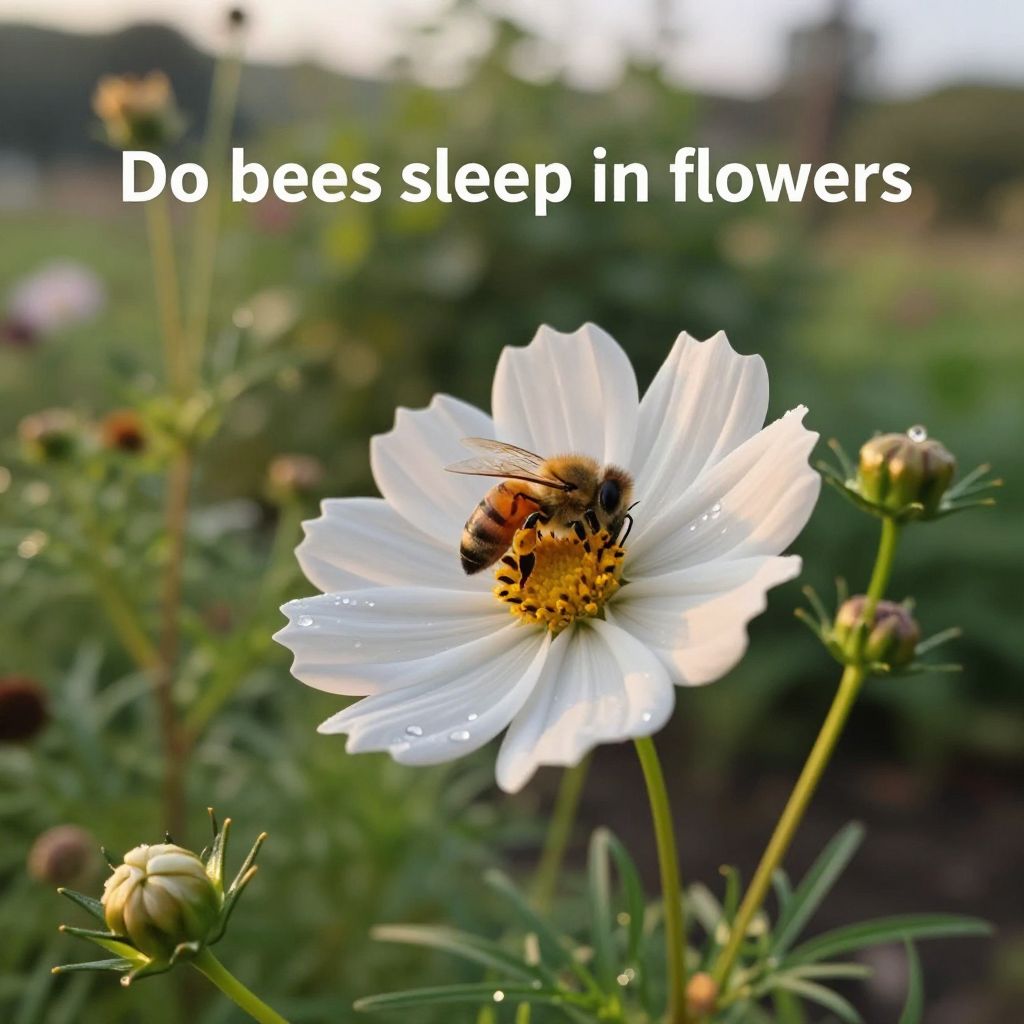
Do bees sleep in flowers? Yes, sometimes they do. Bees may rest overnight or during cool, wet, or windy weather by clinging to blossoms, tucking into petals, or settling inside flower heads where they’re sheltered from predators and the elements.
For gardeners, this is usually a sign of a healthy, bee-friendly planting. If you want to support pollinators, the best approach is to grow a steady mix of nectar- and pollen-rich flowers that bloom across the season and provide safe resting spots.
Do bees sleep in flowers?
Yes. Many bees, especially solitary bees and some bumble bees, rest in flowers when they need shelter, warmth, or a safe place to pause. They are not “sleeping” like mammals, but they do become inactive for periods, often overnight or during poor weather, while staying attached to blossoms.
Why bees rest in flowers
Flowers can act like a small shelter. Dense blooms, tubular blossoms, and flower clusters may protect bees from rain, wind, and temperature drops while still giving them easy access to nectar and pollen.
Common reasons you may see it
- Nighttime rest: Some bees remain in flowers until morning.
- Cool temperatures: Bees become sluggish when it’s too chilly to fly well.
- Weather protection: Blooms can shield bees from rain or wind.
- Energy conservation: When nectar is abundant, resting in place can be efficient.
This behavior is normal and usually harmless. If the bee is still, it may simply be resting rather than injured.
What kinds of flowers attract resting bees?
Bees are more likely to linger in flowers that are open, accessible, and rich in nectar or pollen. Simple, single flowers are often better than heavily double blooms because the food is easier to reach.
Good flower traits for bee habitat
- Open centers with visible pollen
- Clusters of small flowers, such as umbels or spikes
- Long bloom periods
- Varied flower shapes for different bee sizes
- Continuous flowering from spring through fall
Examples many gardeners use for pollinators include lavender, salvia, coneflower, bee balm, asters, sunflowers, and native wildflowers suited to your region. Local native plants are often the best choice because they match local bee species and climate.
How to grow a bee-friendly garden that supports this behavior
If you want bees to visit and safely rest in your garden, focus on plant diversity, bloom succession, and low-disturbance care. A healthy pollinator planting is less about one “perfect” flower and more about steady food and shelter through the season.
1. Choose the right site
Most flowering plants that attract bees need full sun to light shade, though some woodland species prefer more shade. Match the plant to your site rather than forcing sun-loving flowers into deep shade.
- Full sun: best for many nectar flowers and herbs
- Well-drained soil: important for lavender, catmint, and many prairie flowers
- Moist, richer soil: useful for bee balm, some asters, and woodland natives
2. Improve the soil without overdoing it
Most garden flowers do best in soil that drains well and contains some organic matter. Work in compost before planting if your soil is poor, compacted, or sandy.
- Mix compost into the top layer of soil for better structure.
- Avoid heavy, repeated fertilizer use, which can push leafy growth instead of flowers.
- If drainage is poor, consider raised beds or mounded planting areas.
3. Plant in groups
Bees find clustered flowers more easily than scattered single plants. Massing the same species together also makes it easier for a resting bee to move from bloom to bloom without wasting energy.
- Plant in drifts or clumps rather than one plant here and there.
- Combine early, midseason, and late bloomers.
- Include plants with different flower shapes and heights.
4. Keep blooms coming through the season
A garden that flowers only briefly won’t support bees for long. Aim for a sequence of bloom times so bees can feed and rest from spring into fall.
- Spring: early bulbs, native shrubs, and cool-season flowers
- Summer: herbs, coneflowers, salvia, and coreopsis
- Fall: asters, goldenrod, late salvias, and sedum
Care tips that help bees and flowers at the same time
Good plant care improves bloom quality, which in turn supports pollinators. Healthy flowers produce more nectar and pollen, while stressed plants often bloom less or decline faster.
Water thoughtfully
Water deeply when the soil begins to dry, especially for newly planted flowers. Established plants usually need less frequent watering, but the exact timing depends on your soil, weather, and plant type.
- Water at the base of plants when possible.
- Use mulch to slow evaporation and reduce soil splash.
- Avoid keeping soil soggy, especially around plants that dislike wet feet.
Mulch with care
A thin layer of organic mulch can help retain moisture and suppress weeds, but don’t bury plant crowns or smother bare ground areas where ground-nesting bees may live.
- Keep mulch a few inches away from stems.
- Use a moderate layer, not a thick blanket.
- Leave some open soil in the garden for native ground bees.
Prune and deadhead gently
Deadheading can extend bloom on many ornamentals, but avoid cutting everything back at once if bees are still using the flowers. Some seed heads also feed birds later in the season.
- Remove spent blooms selectively.
- Leave some flowers to mature into seed if appropriate.
- Delay major cleanup until you’re sure pollinators are finished using the plant.
How to tell if a bee is resting or in trouble
A still bee in a flower is often just resting, but it helps to look closely before assuming it’s fine. Cool weather, evening light, or a bee tucked deep in petals usually points to normal behavior.
Likely resting
- Bee is attached to the flower and looks relaxed
- It responds slowly when the weather is cool
- It flies away when warmed by the sun
Possible problem
- Bee is on the ground and unable to move
- Bee appears wet, injured, or trapped
- Many bees are suddenly affected after a spray application
If you suspect pesticide exposure, stop using the product and avoid disturbing the area. Keep in mind that many bees are simply inactive during cool mornings and will recover once temperatures rise.
Common mistakes that reduce bee activity in the garden
Some well-meaning garden habits can make flowers less useful to bees or interrupt their rest. Small changes in care can make a big difference.
- Choosing double flowers only: Many have less accessible nectar and pollen.
- Using broad-spectrum pesticides: These can harm bees directly or indirectly.
- Overfertilizing: This often produces lush leaves with fewer blooms.
- Removing all bare soil: Some bees nest in the ground.
- Cutting back too early: You may remove shelter and late-season food.
Pests, diseases, and garden health
Healthy flowers are more attractive to bees, so it’s worth keeping an eye on common plant problems. Stress from pests or disease can shorten bloom time and reduce nectar production.
Watch for these issues
- Aphids on tender growth
- Powdery mildew on crowded or poorly ventilated plants
- Root rot in soggy soil
- Spider mites during hot, dry spells
Use the least disruptive control that works. Often, improving spacing, airflow, watering habits, and soil drainage is enough to reduce problems without harming pollinators.
Indoor vs. outdoor flowers for bees
Outdoor gardens are where bees normally rest in flowers. Indoor plants may attract bees only if they are moved outside or placed in a greenhouse or sunroom with access to pollinators.
If you grow flowering plants indoors, remember that bees usually won’t be present unless they can enter the space. For pollinator support, outdoor planting is the better choice.
Practical ways to make your garden more bee-friendly
These simple steps help create a garden where bees can feed, rest, and move safely from plant to plant.
- Plant a mix of native and well-adapted flowering species.
- Choose flowers with different bloom times.
- Avoid pesticides whenever possible, especially during bloom.
- Leave some bare soil and undisturbed corners.
- Provide water nearby, such as a shallow dish with stones for landing.
- Let some flowers go to seed if they still support wildlife.
Conclusion
So, do bees sleep in flowers? Yes, they often rest there when conditions are right, and that’s a good sign your garden is offering food and shelter. To support them, grow a mix of open, nectar-rich blooms, avoid harsh sprays, and keep flowering plants healthy with good soil, drainage, and steady seasonal care.
If you’d like to build a stronger pollinator garden, consider reading more about how to grow native wildflowers and best plants for bees in the home landscape.