Where should you plant asparagus so it thrives for years? The best spot is a sunny, well-drained bed with deep, loose soil and room for the crowns to spread out. Asparagus is a long-lived perennial, so the planting site matters more than almost anything else you do at the start.
Choose the wrong location and you may end up with weak spears, root rot, or a bed that is hard to maintain. Choose well, and you can enjoy productive harvests for many seasons with relatively simple care.
Where To Plant Asparagus?
Plant asparagus in a full-sun location with fertile, well-drained soil that stays workable and does not flood after rain. A permanent garden bed is best, because asparagus can produce for many years. Give it space, avoid shade and competition from tree roots, and prepare the soil deeply before planting.
What makes a good asparagus planting site?
Asparagus grows from a crown and develops a deep root system, so it needs a location that supports long-term growth. The ideal site is sunny, open, and easy to keep weed-free.
Sunlight
Asparagus performs best in full sun, which usually means at least 6 to 8 hours of direct light each day. More sun generally means stronger spears and better energy storage in the roots.
A little light shade may be tolerated in some climates, but heavy shade usually leads to thin spears and weaker crowns. Avoid planting near tall shrubs, fences that cast long shadows, or buildings that block morning sun.
Drainage
Drainage is one of the most important factors when deciding where to plant asparagus. Crowns sitting in soggy soil are much more likely to rot or decline over time.
Pick a site where water drains within a few hours after rain. If your garden soil is heavy clay, consider a raised bed or a broad raised mound to keep the crowns above wet soil.
Soil depth and texture
Asparagus roots need room to grow deeply. Loose, crumbly soil makes it easier for spears to emerge and for roots to expand.
A sandy loam or well-amended garden loam is ideal. Very rocky soil can make spear emergence difficult, and compacted soil can restrict root growth. Before planting, loosen the bed deeply and remove stones, roots, and persistent weeds.
Soil fertility and pH
Asparagus prefers moderately fertile soil with plenty of organic matter. It does not need rich, heavily manured soil right at planting, but it does benefit from compost worked into the bed before planting.
A slightly acidic to neutral pH is usually suitable. If you are unsure about your soil, a soil test is the most reliable way to learn what the bed needs before you commit a long-lived crop there.
Best places in the garden for asparagus beds
Because asparagus stays in place for years, choose a spot that will not be disturbed by future projects. Think of it as a permanent crop bed rather than a temporary vegetable row.
Good location options
- A dedicated vegetable bed with full sun
- A raised bed with excellent drainage
- A long border or side bed that will not be shaded later
- A spot with easy access for weeding, mulching, and harvesting
Locations to avoid
- Low spots where water collects after rain
- Areas shaded by trees, sheds, or tall crops
- Soil packed with perennial weeds such as bindweed or couch grass
- Places where you may need to dig or re-landscape soon
- Areas close to aggressive tree roots that compete for moisture and nutrients
How to prepare the planting area
Good site preparation is worth the effort because asparagus can remain productive for a long time. The better you prepare the bed now, the easier future care becomes.
- Clear the area of weeds, especially perennial weeds with deep roots.
- Loosen the soil deeply, ideally to at least 12 to 18 inches if possible.
- Work in compost or well-rotted organic matter to improve structure.
- Level the bed so water drains evenly.
- Check that the site will not be shaded as nearby plants grow larger.
If your soil is very heavy, a raised bed can be a smart solution. It improves drainage and warms earlier in spring, which can help spear emergence in cooler climates.
Should you plant asparagus in raised beds?
Yes, raised beds can be an excellent choice for asparagus, especially if your native soil is clay-heavy, shallow, or poorly drained. They are also helpful if you want more control over soil quality.
Make sure the bed is deep enough for the roots and wide enough to support long-term growth. A shallow container is not suitable, but a deep, permanent raised bed can work very well if it receives full sun and regular moisture.
Raised bed advantages
- Better drainage
- Easier soil improvement
- Warmer soil in spring
- Less compaction from foot traffic
Raised bed cautions
- Soil may dry out faster in hot weather
- Edges can warm and dry unevenly
- You still need enough depth for root development
Can asparagus grow near other plants?
Asparagus can share space with some plants, but it does best when given its own bed or a clearly defined area. Since it is a perennial, you want to avoid crowding and repeated disturbance.
Good companions are usually low, non-competitive plants that do not block light or require frequent digging. Avoid planting it where aggressive spreaders or dense shrubs will compete for water and nutrients.
Keep these spacing ideas in mind
- Leave room for mature fern growth in summer
- Do not crowd crowns too tightly
- Keep the bed accessible for harvesting and weeding
- Avoid planting where annual crops will need frequent reworking of the soil
How much space does asparagus need?
Asparagus needs more room than many gardeners expect. Crowns spread and the ferny foliage grows tall in summer, so cramped planting leads to weak growth and difficult maintenance.
Follow the spacing guidance for the planting method you are using, and always leave enough room to walk around the bed without compacting the soil. Good airflow also helps reduce disease pressure.
Practical spacing tips
- Space crowns far enough apart for mature growth and easy harvest access
- Leave wider paths if you plan to mulch heavily
- Do not tuck asparagus into a narrow strip where it will be hard to weed
When is the best time to plant asparagus?
Planting time depends on your climate and the form of asparagus you buy, but the key is to plant when the soil is workable and not waterlogged. Cool weather is usually easier on new crowns than hot, dry conditions.
In many gardens, early spring is a common planting window. In milder regions, planting may also be possible at other suitable times if the soil conditions are right. Always adapt to local weather rather than using a fixed calendar date.
How to plant asparagus in the right spot
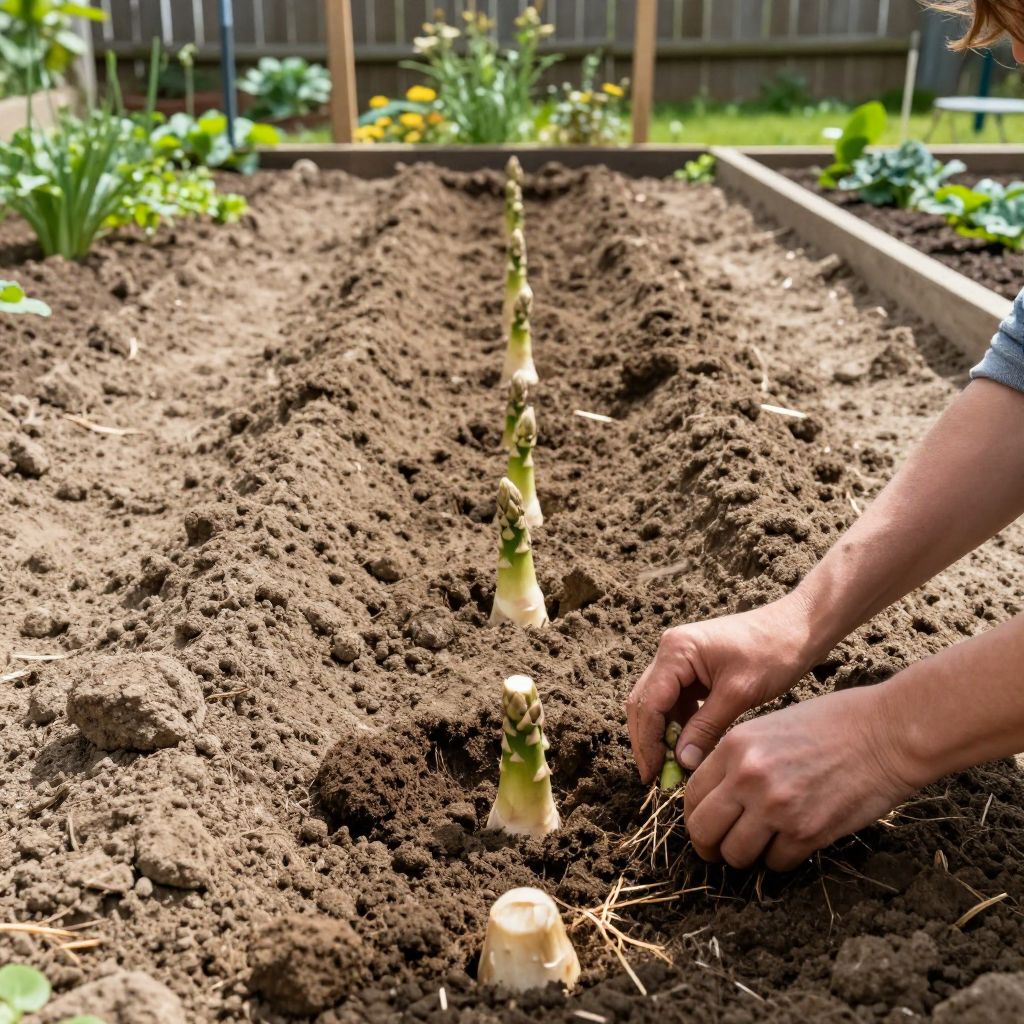
Once you have chosen the location, plant carefully so the crowns establish well. A thoughtful start makes the bed easier to manage later.
- Dig a trench or planting area in the prepared bed.
- Set the crowns in place with the roots spread out naturally.
- Cover them with a layer of soil, then add more as shoots grow, if your planting method calls for it.
- Water thoroughly after planting to settle the soil around the roots.
- Mulch lightly to help conserve moisture and suppress weeds.
Do not bury the crowns too deeply at the start, and do not let the soil dry out completely while they are establishing. At the same time, avoid waterlogged conditions that can damage the roots.
Common mistakes when choosing where to plant asparagus
Many asparagus problems begin with the wrong site. Avoiding a few common mistakes can save years of frustration.
- Planting in shade: weakens spear production and reduces vigor.
- Choosing poorly drained soil: increases the risk of crown rot.
- Using a weedy site: makes long-term maintenance much harder.
- Placing it where trees will grow larger: creates future shade and root competition.
- Planting in a temporary bed: asparagus prefers a permanent home.
Ongoing care after planting
The right location makes care much simpler, but asparagus still needs attention during establishment and in later seasons. Keep the bed weed-free, watered during dry spells, and mulched if that suits your climate.
Watering
Newly planted asparagus needs consistent moisture while roots establish, but the soil should never stay soggy. In established beds, water during extended dry periods, especially when spears are forming and fern growth is active.
Weeding and mulching
Weeds are a major competitor in asparagus beds, especially when plants are young. A mulch layer can help suppress weeds and moderate soil moisture, but keep mulch from smothering emerging spears.
Foliage management
Let the ferny tops grow after harvest so the plant can recharge its roots. Do not cut back healthy foliage too early, because that reduces the plant’s ability to build reserves for the next season.
Pests and diseases related to poor site choice
Some asparagus problems are more likely when the planting site is wrong. Wet soil, poor airflow, and overcrowding can all increase disease pressure.
- Root and crown rot: more common in wet, poorly drained soil.
- Fungal issues: can increase when plants are crowded and air circulation is poor.
- Weed competition: weakens young plants and makes the bed harder to maintain.
Good drainage, sun, spacing, and clean bed maintenance are the best preventive measures. If a bed repeatedly stays wet, it is usually better to improve drainage or move the planting than to keep fighting the problem.
Final tips for choosing the best asparagus location
If you are still deciding where to plant asparagus, choose the sunniest, best-drained, and most permanent spot you have. Prepare the soil well, keep the bed accessible, and think long term rather than just about the first season.
Before planting, walk your garden after rain and notice where water lingers, where shade falls, and where future trees or shrubs may interfere. That simple check can help you choose a bed that stays productive for years. For more planning help, you may also want to read about how to prepare garden soil and raised bed gardening.