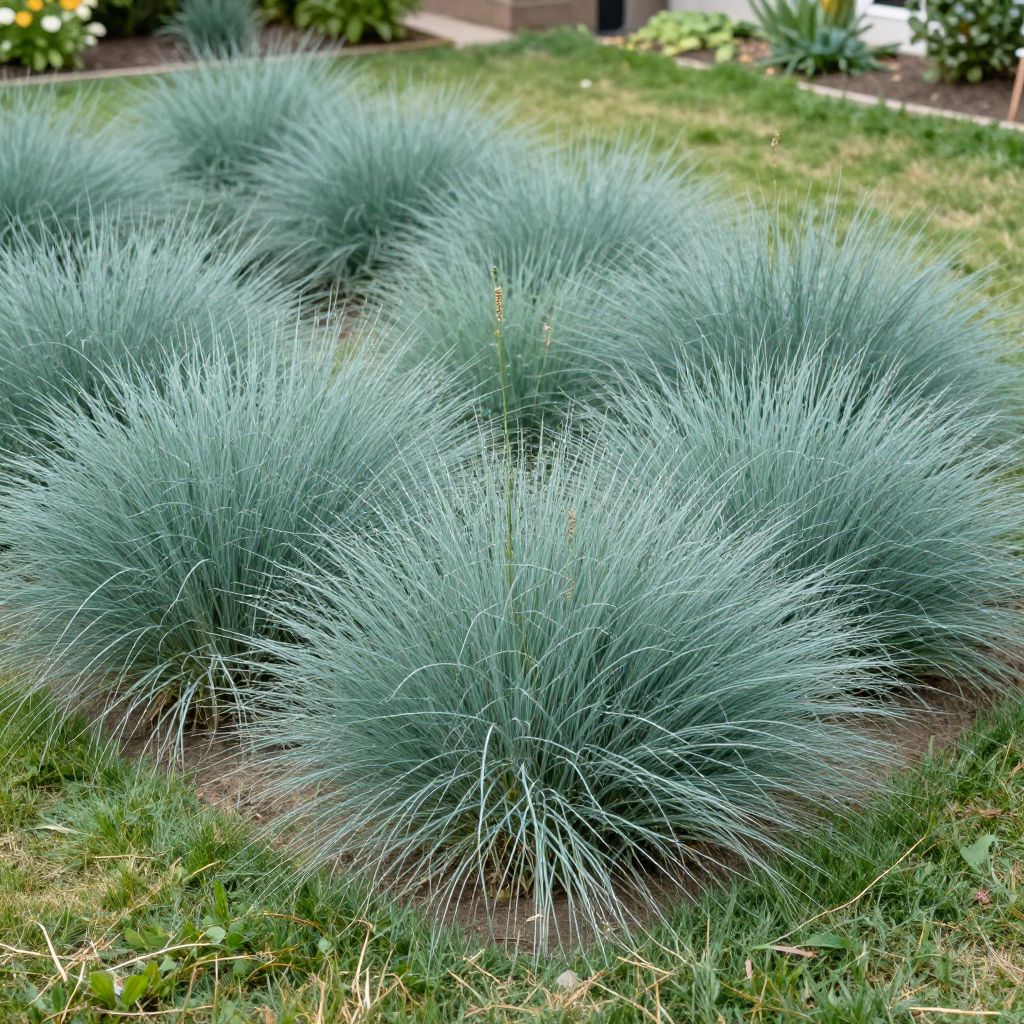
If you’re asking, “What does buffalo grass look like?” you’re probably trying to tell it apart from other lawn grasses or weeds. Buffalo grass has a soft, low-growing, gray-green to blue-green look, with fine blades and a spreading, mat-forming habit.
It’s a warm-season turf grass that stays relatively short, forms a dense lawn when healthy, and often looks less lush than high-input grasses. The exact appearance changes with climate, mowing height, watering, and whether you’re seeing a named cultivar or a native stand.
What does buffalo grass look like?
Buffalo grass usually looks like a low, fine-textured lawn with narrow blades, a soft gray-green color, and a creeping growth habit that fills in by stolons. It rarely forms a tall, upright turf. In dry weather it can look slightly tan or dormant, while healthy growth stays short and dense.
Key visual features of buffalo grass
Once you know the main traits, buffalo grass is easier to recognize in a lawn or prairie planting. Look for a combination of blade shape, color, growth pattern, and overall texture rather than relying on one feature alone.
1. Blade shape and texture
Buffalo grass has fine, narrow leaf blades that feel soft compared with many other turf grasses. The leaves are usually slender and delicate-looking, not broad or coarse.
That fine texture is one reason it’s valued for low-maintenance lawns. From a distance, it often looks smooth and even rather than shaggy.
2. Color
The color is commonly gray-green, blue-green, or muted green. In hot, dry conditions it may fade to a straw color or go dormant, especially if irrigation is limited.
Do not mistake seasonal color change for death. Buffalo grass often browns off in drought or cool weather and greens up again when temperatures and moisture improve.
3. Growth habit
Buffalo grass spreads by stolons, which are above-ground runners that creep across the soil. That gives it a mat-forming appearance and helps it knit together over time.
It usually stays low, often only a few inches tall if left unmown. If mowed, it tends to look like a short, tidy turf rather than a tall lawn.
4. Density and coverage
A healthy stand can look fairly dense, but it may still have a more open, airy appearance than high-water turf grasses. Thin patches are common in young plantings or stressed lawns.
In established areas, the runners help it fill in. In poor soil or heavy shade, however, it may look sparse and weak.
5. Seed heads
When buffalo grass produces seed heads, they are usually subtle and not very showy. The seed stalks are not the main ornamental feature, so most people identify the grass by its overall habit instead.
How to tell buffalo grass apart from similar grasses
Because several grasses share a low, fine texture, it helps to compare buffalo grass with common lookalikes. Growth habit, leaf width, and color are the most useful clues.
Buffalo grass vs. Bermuda grass
- Buffalo grass: softer, gray-green, and usually less aggressive-looking.
- Bermuda grass: often brighter green, finer in some forms, and more wiry or vigorous.
- Buffalo grass generally looks more muted and less “busy” than Bermuda grass.
Buffalo grass vs. zoysia
- Buffalo grass: softer, more open, and often paler in color.
- Zoysia: denser, stiffer, and usually darker green.
- Zoysia often feels more bristly underfoot than buffalo grass.
Buffalo grass vs. fescue
- Buffalo grass: warm-season, creeping, and low-growing.
- Fescue: generally cooler-season, clumpier, and taller.
- Fescue blades are often broader and the plant stands more upright.
Buffalo grass vs. weeds
Some weeds mimic buffalo grass at first glance, especially when young. Look for runners and a uniform turf pattern; weeds often grow in isolated clumps or have obvious differences in blade width, texture, or color.
If a patch seems uneven, check whether it’s actually a mix of grasses, weeds, or thin buffalo grass recovering from stress.
Growing conditions that affect how buffalo grass looks
Buffalo grass looks its best when it gets the conditions it prefers. If the site is off, the grass may appear thin, pale, weedy, or patchy.
Sunlight
Buffalo grass performs best in full sun. In too much shade, it stretches, thins out, and loses the compact look that makes it attractive.
If you’re evaluating a lawn, shaded areas under trees or beside buildings often look less like healthy buffalo grass and more like sparse turf with bare soil showing through.
Soil and drainage
This grass prefers well-drained soil. Heavy clay or constantly wet ground can make it look weak, patchy, or prone to disease.
Good drainage helps the lawn keep its fine texture and even color. In soggy spots, buffalo grass may struggle to spread and may be overtaken by weeds or moss-like growth.
Water
Buffalo grass is known for being drought tolerant, but that doesn’t mean it always looks the same under dry conditions. With little water, it may go dormant and turn tan.
With moderate moisture, it usually looks greener and fuller. Overwatering can encourage shallow roots, weeds, and a softer, less resilient lawn.
Mowing height
How you mow changes the look a lot. Left unmown, buffalo grass may appear slightly tufted and naturalized. Mown regularly, it becomes shorter, smoother, and more lawn-like.
Avoid cutting too low. Scalping can expose soil, weaken the stand, and make the grass look uneven for weeks.
How to identify buffalo grass in your yard
If you’re not sure whether your lawn is buffalo grass, use a simple field check. You don’t need special tools, just a close look and a few observations.
- Look at the color. Is it muted gray-green or blue-green rather than bright green?
- Check the blades. Are they fine and narrow, with a soft texture?
- Find the runners. Does it spread by creeping stolons across the soil?
- Watch the height. Does it stay naturally low and form a mat?
- Compare growth in different spots. Does it thin in shade or stay better in sunny, open areas?
If you still aren’t sure, compare it with a known turf sample or ask a local extension office, nursery, or lawn specialist. Regional conditions can change how the grass looks.
How to plant buffalo grass so it looks its best
Buffalo grass can be established from plugs, sod, or seed, depending on the variety and local availability. The method you choose affects how quickly the lawn fills in and how uniform it looks at first.
Site preparation
Start with a clean, level site and remove competing weeds before planting. Buffalo grass establishes more evenly when it isn’t fighting established turf or aggressive weeds.
- Loosen compacted soil if needed.
- Improve drainage in wet areas before planting.
- Work in compost only if your soil is very poor; don’t overdo it.
- Rake the surface smooth so runners can spread evenly.
Planting plugs or sod
Plugs and sod give a faster visual result than seed. They’re especially useful if you want the lawn to look uniform sooner.
Space plugs according to the growth rate of the cultivar and how quickly you want coverage. Closer spacing fills in faster but costs more upfront.
Seeding
Seeded plantings can look sparse at first. That’s normal. Buffalo grass often needs time to spread and knit together, so patience matters.
Keep the seedbed lightly moist during germination if conditions are suitable for your local climate. Avoid flooding the area, which can wash seed away or encourage crusting.
Care tips that keep buffalo grass attractive
Good maintenance is less about making buffalo grass lush and more about keeping it even, healthy, and free of stress. The right care preserves its neat, low look.
Watering
Water deeply but not constantly once the grass is established. The goal is to encourage roots to grow downward, not stay shallow at the surface.
During prolonged heat or drought, the lawn may need occasional watering to stay green. In cooler or wetter climates, it may need very little supplemental irrigation.
Mowing
Mow only as needed to maintain a tidy appearance. Because buffalo grass is naturally short, frequent mowing is usually unnecessary.
- Keep blades sharp for a clean cut.
- Never remove too much at once.
- Leave clippings on the lawn if they are light and evenly distributed.
Fertilizing
Buffalo grass generally does not need heavy feeding. Too much nitrogen can make it grow too fast, look weak, and invite weeds.
If your soil is poor, use a soil test to guide amendments rather than guessing. A balanced, modest approach usually works better than pushing for dark green color.
Weed control
A dense stand is the best defense against weeds. Thin patches invite crabgrass, broadleaf weeds, and other opportunistic plants.
Hand-pull weeds when possible, especially in young plantings. Be careful with herbicides, since some products can damage buffalo grass or be inappropriate for your region.
Common problems that change the look of buffalo grass
When buffalo grass looks off, the cause is often environmental rather than a serious disease. The appearance usually gives you clues about what’s wrong.
Patchy or thin areas
Patchiness can come from shade, poor drainage, foot traffic, low fertility, or competition from weeds. Buffalo grass is not the best choice for heavily worn play areas.
Fix the underlying issue first. Reseeding or plugging without correcting the cause usually gives disappointing results.
Yellowing or browning
Yellowing may indicate stress from drought, nutrient imbalance, compaction, or disease. Browning can be normal dormancy if temperatures are too cool or moisture is limited.
Check whether the grass is still alive by looking for green growth at the base or runners that remain firm rather than brittle.
Weedy, uneven appearance
Weeds can make buffalo grass look rough and inconsistent. This is most common in newly planted lawns or thin areas where the turf has not filled in yet.
Improve coverage by encouraging spread, reducing shade where possible, and keeping the lawn healthy enough to outcompete invaders.
Fungal issues
In wet, humid, or poorly drained sites, disease can make the turf look discolored or irregular. Avoid overwatering and improve airflow where possible.
If you suspect disease, identify the symptom pattern before treating. Not every brown patch is a fungus, and not every thinning area needs a spray.
When buffalo grass is a good choice
Buffalo grass is a strong option if you want a low-maintenance, drought-tolerant lawn with a softer, natural look. It works well in sunny areas where you want less mowing and less water use.
It may not be the best choice if you want a very dark, manicured lawn or if your yard has heavy shade, poor drainage, or lots of traffic. Matching the grass to the site is the easiest way to get a good-looking result.
Conclusion
If you remember one thing about what buffalo grass looks like, remember this: it’s a fine-textured, low-growing, gray-green grass that spreads by runners and often turns tan under stress or dormancy. Use blade texture, color, and growth habit together to identify it accurately.
Next, look closely at your lawn in full sun and shaded areas, then compare what you see with the features above. If you want more help choosing or caring for a low-water lawn, consider reading about buffalo grass care or warm-season grasses for home lawns.