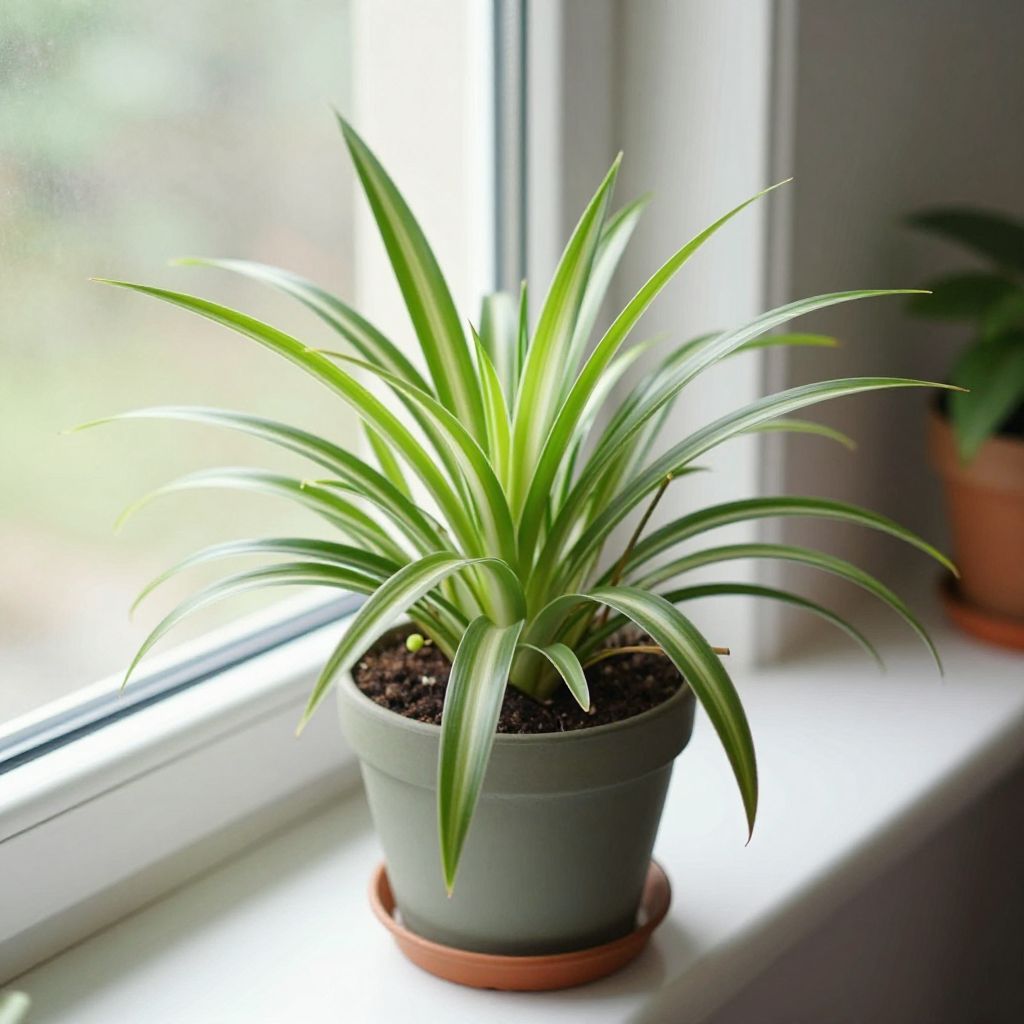
Do spider plants need a lot of light? Not really. Spider plants (Chlorophytum comosum) are adaptable houseplants that grow best in bright, indirect light, but they can also cope with lower light for a while. The key is giving enough light to support healthy growth without scorching the leaves.
If your spider plant looks pale, slow, or floppy, light may be part of the problem. The good news is that this is usually easy to fix with a better window position, a little rotation, and the right watering routine.
Do spider plants need a lot of light?
Spider plants do not need a lot of direct sun, but they do need moderate to bright indirect light to grow well. They tolerate lower light better than many houseplants, yet too little light leads to weak growth, fewer plantlets, and dull foliage. Bright filtered light is usually the sweet spot.
What kind of light is best for spider plants?
Spider plants thrive in bright, indirect light, such as near an east-facing window or a few feet back from a south- or west-facing window. They can also grow under fluorescent or LED grow lights. Direct afternoon sun can burn leaves, especially through glass.
Best indoor light conditions
- Bright indirect light: Ideal for steady growth and healthy variegation.
- Morning sun: Usually fine if it is gentle and brief.
- Low light: Survives, but growth slows and the plant may look less full.
- Harsh direct sun: Can bleach or scorch leaves.
How to tell if the light is right
Healthy spider plants usually have firm, arching leaves and steady new growth. If the plant is getting enough light, it should produce offsets, or “spiderettes,” during the growing season when other care needs are also met.
- Too little light: Leggy growth, fewer babies, smaller leaves, slower recovery after watering.
- Too much light: Tan or brown crispy patches, faded color, curled leaf tips, dry-looking foliage.
- Just right: Even color, moderate growth, and a fuller plant over time.
Can spider plants grow in low light?
Yes, spider plants can survive in lower light, which is one reason they are so popular indoors. But “survive” is not the same as “thrive.” In dim rooms, growth often becomes sparse, and variegated types may lose some of their bright striping.
What happens in low light
When light is too weak, the plant produces less energy for new leaves and offsets. You may also notice the soil staying wet longer because the plant uses water more slowly, which raises the risk of root rot if you keep watering on a fixed schedule.
If your home is naturally dim, place the plant as close as possible to a bright window without exposing it to hot direct rays. You can also supplement with a grow light for a few hours a day, especially in winter.
How much sun can a spider plant take?
Spider plants can handle some gentle sun, especially morning sun, but they are not full-sun plants. A little direct light can be helpful, yet strong midday or afternoon sun often causes damage. Outdoors, they do best in bright shade or filtered light.
Outdoor placement tips
- Use a shaded porch, patio, or under a tree canopy.
- Avoid placing them where reflected heat from walls or paving is intense.
- Bring them inside before cool nights or cold snaps if your climate is not suitable for year-round outdoor growth.
In outdoor containers, spider plants dry out faster than indoors, so light and watering are closely linked. More light usually means more water use, but the pot should still drain freely.
How to place a spider plant indoors
The easiest way to improve spider plant care is to match the plant with the right window and distance from the glass. Start by observing the light in your room at different times of day, because “bright” can mean very different things depending on season, window direction, and nearby trees or buildings.
- Choose a bright spot with indirect light.
- Keep the plant a little back from strong sun, especially in summer.
- Rotate the pot every one to two weeks so growth stays even.
- Watch the leaves for fading, scorch, or stretching.
- Adjust the position gradually rather than moving it from dim light to intense sun all at once.
Window direction guide
- East-facing window: Often ideal because it gives gentle morning light.
- South-facing window: Good if the plant is set back or filtered by a sheer curtain.
- West-facing window: Can work, but afternoon sun may be strong.
- North-facing window: May be too dim unless the room is very bright overall.
Why light affects spider plant growth
Light drives photosynthesis, which powers leaf production, root growth, and the formation of plantlets. If the plant has too little light, it conserves energy and slows down. If it has too much direct sun, the leaves can lose moisture faster than the roots can replace it.
That is why spider plant care is really about balance. A healthy plant needs light strong enough to fuel growth, but gentle enough to protect the foliage.
Common light-related problems and fixes
1. Brown leaf tips
Brown tips are common on spider plants and are not always caused by light alone. Dry air, inconsistent watering, mineral buildup from tap water, and excess fertilizer can all contribute. If the tips are crispy and the plant sits in strong sun, move it to gentler light first.
2. Pale or washed-out leaves
Very pale foliage can happen when the plant gets too much direct sun or too little nutrition. If the leaves look bleached or scorched, shift the plant to filtered light. If the plant is simply weak and slow, it may need brighter indirect light rather than less.
3. Long, floppy growth
Stretching toward the window is a classic sign of insufficient light. Move the plant closer to a brighter source and rotate it regularly. If the pot is overcrowded, repotting can also help the plant use light more efficiently.
4. Few or no spiderettes
Spider plants often produce more offsets when they are mature and receiving enough light. If yours never makes babies, it may be too dark, too young, or stressed by root crowding, inconsistent watering, or low temperatures.
How light works with watering and soil
Light does not act alone. A spider plant in bright light will usually use water faster than one in shade, so the same watering routine will not work everywhere. Always check the soil before watering instead of following a rigid schedule.
- Use a pot with drainage holes.
- Choose a loose, well-draining potting mix.
- Water when the top inch or so of soil feels dry, adjusting for your home’s light and temperature.
- Empty saucers so roots do not sit in water.
In lower light, soil stays moist longer, so overwatering becomes a bigger risk. In brighter light, the plant may need more frequent checks because the pot can dry out faster.
Seasonal light changes to watch for
Spider plants often need different care across the year because sunlight changes with the season. Winter light is weaker and shorter, while summer light can be much stronger, especially near glass.
Winter
Move the plant closer to the brightest window available, but keep it away from cold drafts. Since growth slows, water less often and avoid overfeeding.
Spring and summer
Growth usually picks up, and the plant may produce more offsets. If the sun becomes intense, use a sheer curtain or shift the pot back from the window to prevent leaf scorch.
Pruning and grooming for better light use
Pruning is simple but useful. Remove dead, brown, or badly damaged leaves so the plant can focus on healthy growth. If the plant has many offsets, you can trim some to reduce crowding and keep the mother plant from becoming overloaded.
Clean leaves gently with a damp cloth if dust builds up. Dust can reduce the amount of light the plant receives, especially in a bright room where the leaves should be making the most of available light.
Spider plant pests and diseases in poor light
Low light does not directly cause pests, but stressed plants are often more vulnerable. Spider mites, mealybugs, and scale can become more noticeable when a plant is weak or growing slowly. Overly wet soil in dim conditions can also lead to root rot.
- Inspect leaf joints and undersides for pests.
- Quarantine new plants before placing them near your spider plant.
- Let the soil dry appropriately between waterings.
- Remove badly infested or rotting growth promptly.
Quick care checklist for healthy light exposure
- Give bright, indirect light whenever possible.
- Avoid harsh midday sun through glass.
- Rotate the pot regularly.
- Adjust watering to match the light level.
- Watch for pale leaves, stretching, or scorch marks.
- Use a well-draining pot and airy potting mix.
Final thoughts
Spider plants do not need a lot of direct light, but they do need enough bright, indirect light to stay full, healthy, and productive. If your plant is struggling, start by improving its placement, then adjust watering to match the new conditions. A small change in light often makes a big difference.
If you want to keep improving your indoor plant care, you may also enjoy reading about how to repot houseplants without stressing them and simple ways to tell when a plant needs more or less water.