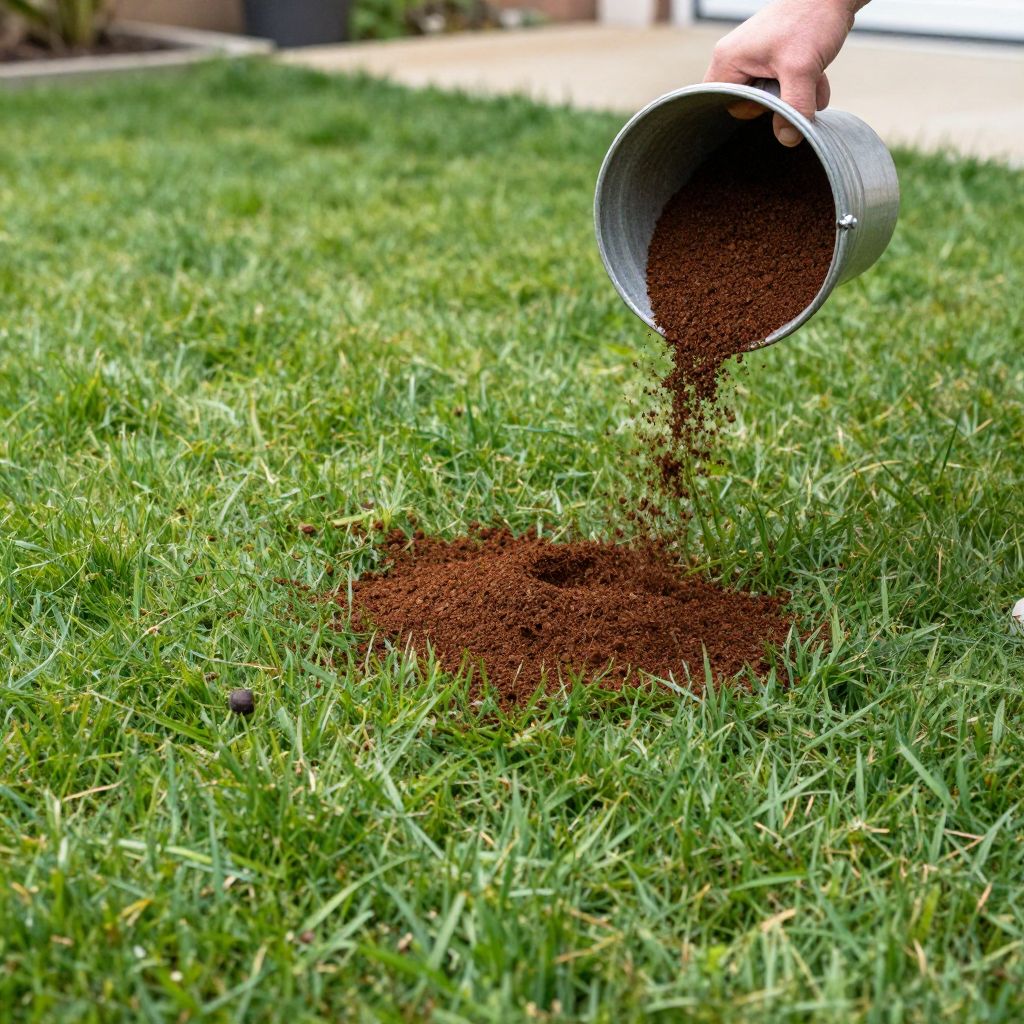
Are coffee grounds good for grass? In small amounts, yes—but they are not a complete lawn fertilizer and they can cause problems if you use them heavily. Coffee grounds can add a little organic matter to soil, but grass still needs balanced nutrition, good drainage, and proper mowing and watering to stay healthy.
The best way to use coffee grounds on a lawn is as a light soil amendment or compost ingredient, not as a thick topdressing. Used correctly, they can support soil life; used carelessly, they can compact, mat, or create patchy growth.
Are coffee grounds good for grass?
Coffee grounds can be helpful for grass when used sparingly and mixed into compost or soil, but they are not a stand-alone lawn feed. They contain some nitrogen and organic matter, yet they release nutrients slowly and unevenly. A thin application is fine; a thick layer can block air and water from reaching the roots.
What coffee grounds actually do in the lawn
Used coffee grounds are mostly organic residue from brewed coffee. They can improve soil structure over time, especially in poor or sandy soils, but they do not replace a proper lawn care routine.
Potential benefits
- Add organic matter to soil when incorporated lightly or composted.
- Support soil microbes that help break down organic material.
- May slightly improve moisture retention in very fast-draining soil.
Limits to keep in mind
- They are not a balanced fertilizer for turfgrass.
- Fresh, wet grounds can clump and form a crust on top of soil.
- Too much can interfere with airflow and water infiltration.
If your lawn is already compacted, thin, or struggling from shade, drought, or poor mowing habits, coffee grounds will not fix the underlying issue. Grass responds best to the basics: sunlight, correct mowing height, adequate watering, and the right soil conditions.
How to use coffee grounds on grass safely
If you want to use coffee grounds in the lawn, keep the layer very thin and spread them evenly. The safest method is to compost them first, then apply the finished compost as a topdressing or soil amendment.
Best ways to apply them
- Compost them first. Mix coffee grounds with dry browns like leaves, shredded paper, or straw.
- Use finished compost in a light topdressing over the lawn, especially after aeration.
- If applying directly, scatter only a very thin dusting and rake it in lightly.
- Water afterward so grounds do not sit on the surface in a mat.
What not to do
- Do not dump a thick pile of grounds in one spot.
- Do not leave wet grounds in a dense layer on the grass.
- Do not assume coffee grounds can replace lawn fertilizer.
- Do not use them as a quick fix for yellowing grass without checking other causes.
A good rule is to treat coffee grounds like a soil ingredient, not a lawn treatment. If you can still see the grass blades clearly after application, you are closer to a safe amount than if the surface looks covered or muddy.
When coffee grounds help more than they hurt
Coffee grounds are most useful when your lawn soil is low in organic matter and you are already improving it with aeration, compost, or overseeding. They can also be useful in home compost systems where lawn clippings and leaves are being recycled together.
Better situations for using them
- Lawns with thin, tired soil that need more organic matter over time.
- Yards where you already compost and can blend grounds into a balanced pile.
- Areas being renovated with aeration, compost topdressing, or overseeding.
Less suitable situations
- Heavy clay soil that already drains poorly.
- Shady lawns where grass is weak and slow-growing.
- Lawns with fungal issues, where surface moisture and poor airflow are already problems.
In very compacted soil, coffee grounds on the surface may make matters worse if they form a slick layer. In that case, core aeration and compost are usually better choices than direct ground application.
How much is too much?
There is no universal safe rate for every lawn, because soil type, rainfall, mowing, and turf species all matter. Still, the key principle is simple: use coffee grounds lightly. A thin, even scattering is safer than a visible blanket.
Practical guidance
- For direct use, think “dusting,” not “covering.”
- Blend grounds with other materials rather than applying them alone.
- If grounds clump when wet, break them up before spreading.
- Stop if the lawn surface starts to crust or water beads on top.
If you regularly brew coffee at home, save the grounds in a bucket and mix them into compost rather than applying them every day to the same lawn area. That approach is much less likely to cause uneven buildup.
Composting coffee grounds for better lawn care
Composting is the most reliable way to use coffee grounds for grass. In a compost pile, they become part of a balanced organic amendment that can later be spread thinly over the lawn.
Compost mix basics
- Combine coffee grounds with dry, carbon-rich materials such as dead leaves, cardboard, or straw.
- Keep the pile moist like a wrung-out sponge, not soggy.
- Turn the pile occasionally if you want faster breakdown.
Finished compost is easier to spread evenly than raw grounds. It also lowers the risk of surface matting and gives your lawn a gentler, more balanced nutrient boost.
Signs coffee grounds are helping or hurting your grass
Watch the lawn after application rather than assuming the grounds are working. Grass changes slowly, and problems usually show up in the surface condition before they show up in color.
Signs things are going well
- Grass stays evenly green without a crust on the soil surface.
- Water soaks in normally after rain or irrigation.
- The lawn looks no different at the surface, which is often a good sign with light applications.
Signs of trouble
- Dark, wet patches where grounds have clumped.
- Water running off instead of soaking in.
- Fungal-looking mats, sour smell, or a slimy surface layer.
- Uneven growth where one area was heavily treated and another was not.
If you see those trouble signs, rake up excess grounds, loosen the surface lightly, and water only as needed. If the area stays compacted, aeration may be more effective than adding more organic material on top.
Other lawn care factors that matter more than coffee grounds
Healthy grass depends on a few core practices that have a much bigger impact than used coffee grounds. If any of these are off, fix them first.
Sunlight
Most turf grasses need several hours of direct sun each day, though shade-tolerant varieties can handle less. If your lawn is thin because of tree cover or building shade, coffee grounds will not make up for too little light.
Watering
Water deeply and less often when conditions allow, rather than giving frequent shallow sprinklings. The right amount depends on weather, soil, and turf type, but grass generally performs better when roots are encouraged to grow downward.
Mowing
Keep mower blades sharp and avoid cutting too short. Scalping stresses grass and makes it harder for the lawn to recover, especially if the soil is already compacted or dry.
Soil and drainage
If your lawn stays soggy after rain, improving drainage is more important than adding coffee grounds. Aeration, grading, and organic matter are usually better long-term fixes than repeated surface applications.
Common mistakes to avoid
- Using coffee grounds as fertilizer only. They are an amendment, not a full feeding program.
- Applying thick layers that block air and water movement.
- Spreading grounds on already wet, compacted soil.
- Ignoring mowing height, shade, or drainage problems.
- Expecting immediate greening after one application.
Think of coffee grounds as one small part of a larger lawn care plan. They can support soil health over time, but they work best alongside compost, proper mowing, and sensible watering.
Bottom line: should you use coffee grounds on grass?
Yes, but only in moderation and preferably through composting. Coffee grounds can contribute organic matter and a little nitrogen, yet they are not a replacement for balanced lawn care. If you use them lightly and evenly, they can be a useful addition to your soil routine.
If you want the best result, compost your coffee grounds first, then topdress lightly after aeration or during routine lawn maintenance. For more practical lawn and soil care ideas, you may also want to read related gardening guides on composting and improving soil structure.