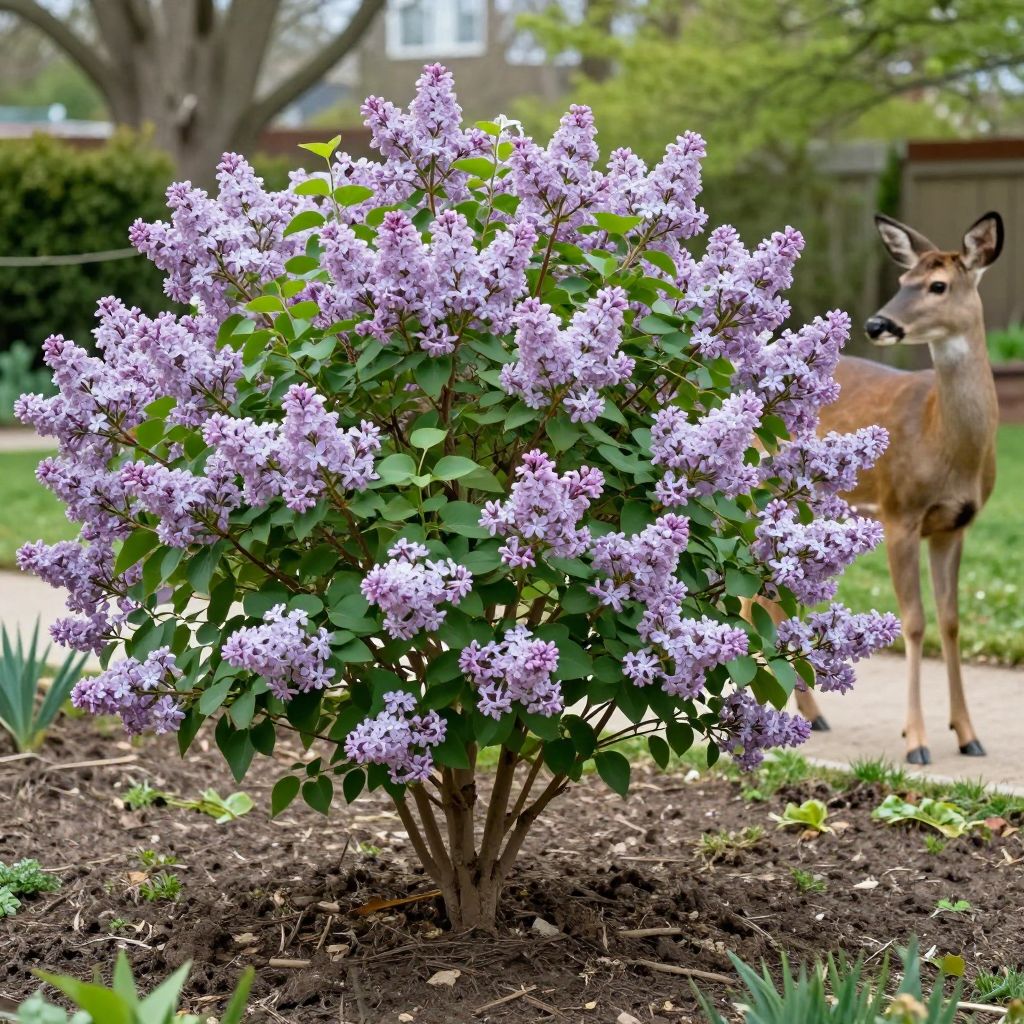
Are lilacs deer resistant? In many gardens, yes—lilacs are usually considered deer resistant rather than deer proof. Deer may browse them when food is scarce, but they typically prefer tastier plants and often leave mature lilacs alone.
If you want a fragrant shrub that stands a better chance in deer-prone areas, lilacs can be a smart choice. Success still depends on your local deer pressure, plant size, and how much other food is available nearby.
Are lilacs deer resistant?
Yes, lilacs are generally deer resistant because their leaves and stems are not among a deer’s favorite foods. That said, hungry deer can still nibble young shoots, buds, or new growth, especially in spring or during drought, so resistance is helpful but never guaranteed.
Why deer usually avoid lilacs
Deer tend to choose plants that are softer, sweeter, or easier to digest. Lilacs have woody stems, tougher foliage, and a fragrance that many gardeners love but deer usually ignore.
What makes lilacs less appealing
- Woody structure: Mature stems are not as tender as many deer favorites.
- Strong scent: Fragrance can make them less attractive to browsing animals.
- Less palatable foliage: Lilac leaves are usually not a first-choice snack.
When deer may still eat them
- In winter or early spring when food is limited
- On newly planted shrubs with soft, tender growth
- In areas with high deer populations and little natural forage
- When deer are young, curious, or under heavy pressure
How to grow lilacs so they stay healthy and less tempting
Healthy, vigorous lilacs are often better able to recover from occasional browsing. Give them the right growing conditions so they produce sturdy growth instead of weak, lush shoots that may be more attractive to deer.
Best growing conditions
- Sunlight: Full sun is best for strong bloom and compact growth.
- Soil: Well-drained soil is essential; lilacs dislike soggy roots.
- pH: Slightly alkaline to neutral soil is usually ideal.
- Airflow: Good air circulation helps reduce disease problems.
If your soil stays wet after rain, improve drainage before planting. Lilacs struggle in heavy, waterlogged ground, and stressed shrubs are more likely to develop weak growth and poor flowering.
Planting tips that help deer resistance
- Choose a sunny site away from dense shade and competing tree roots.
- Dig a wide planting hole, but do not bury the shrub too deeply.
- Backfill with native soil unless your soil is extremely poor.
- Water deeply after planting to settle the roots.
- Mulch lightly, keeping mulch a few inches away from the stems.
Avoid overfertilizing. Too much nitrogen can push soft, leafy growth that deer may browse more readily and can also reduce flowering.
How to protect lilacs from deer damage
Even deer-resistant plants may need protection, especially when they are young. The best strategy is to combine plant choice with physical barriers and smart garden placement.
Most effective protection methods
- Fencing: The most reliable solution in high-pressure areas.
- Individual plant cages: Useful for young shrubs or newly planted lilacs.
- Deer repellent products: Can help, but usually need reapplication after rain and new growth.
- Layered planting: Place lilacs near less palatable shrubs or within a mixed border.
Practical placement ideas
Plant lilacs closer to your home, patio, or a frequently used path where deer are less likely to linger. Avoid placing them right on the edge of open woods or along common deer travel routes if browsing pressure is high.
Caring for lilacs after deer browsing
If deer do browse your lilac, do not panic. Light damage is often cosmetic, but repeated browsing can reduce flowering and shape the shrub poorly over time.
What to do after damage
- Trim only broken or ragged stems if needed.
- Do not hard-prune immediately after browsing unless the shrub is badly damaged.
- Water during dry spells so the plant can recover.
- Watch for repeated browsing and add protection before new growth appears.
If deer have stripped a young shrub heavily, give it time to regrow before making major pruning cuts. Lilacs bloom on older wood, so cutting too much at the wrong time can reduce flowers for a season or more.
Pruning lilacs for better growth and fewer problems
Proper pruning keeps lilacs flowering well and helps maintain a strong framework. It also prevents overly dense growth, which can make the shrub harder to inspect for damage or disease.
When to prune
Prune lilacs soon after flowering, not in late summer or fall if you want blooms next year. Lilacs set next season’s flower buds on old wood, so late pruning can remove those buds.
Simple pruning priorities
- Remove dead, damaged, or crossing stems.
- Thin out a few of the oldest canes at the base on mature shrubs.
- Keep the center open for light and airflow.
- Avoid shearing lilacs into a tight hedge shape unless that is your intended design.
Common lilac problems in deer-prone gardens
Deer are only one part of lilac care. Stress from poor drainage, shade, or disease can make a shrub look weak and less resilient.
Diseases and issues to watch for
- Powdery mildew: More likely in crowded, shady, or poorly ventilated spots.
- Leaf spot: Often worsens when foliage stays wet for long periods.
- Poor flowering: Can result from too much shade, improper pruning, or excess nitrogen.
- Root stress: Common in compacted or waterlogged soil.
Healthy cultural care is your best defense. A lilac growing in full sun with decent drainage and moderate fertility is usually tougher, more floriferous, and easier to protect from browsing.
Are some lilacs more deer resistant than others?
Most common lilacs, including Syringa vulgaris, are generally considered deer resistant, but no lilac is completely immune. Deer pressure, plant age, and local food supply matter more than a perfect “deer-proof” label.
If you are choosing among lilacs, focus first on whether the shrub fits your climate, soil, and space. A well-sited lilac is more likely to thrive and less likely to suffer repeated stress that can attract browsing.
Best practices for gardeners in deer country
If deer are a regular problem where you live, think of lilacs as one part of a larger planting plan. Pair them with other deer-resistant shrubs and keep protection in place during the most vulnerable seasons.
Smart habits that help
- Inspect new growth regularly in spring.
- Protect young shrubs for at least the first couple of seasons.
- Use fencing or cages before browsing starts, not after.
- Choose sunny, well-drained sites so the shrub grows strongly.
- Keep mulch and competing weeds away from the base.
Conclusion
Lilacs are a good choice if you want a shrub that is usually deer resistant, fragrant, and reliable in the right conditions. They are not deer proof, but with good siting, proper pruning, and early protection, they can do well in many deer-prone gardens.
If you are planning a mixed border, you may also want to read more about what to feed deer so you can better understand their habits and choose plants they are less likely to browse.