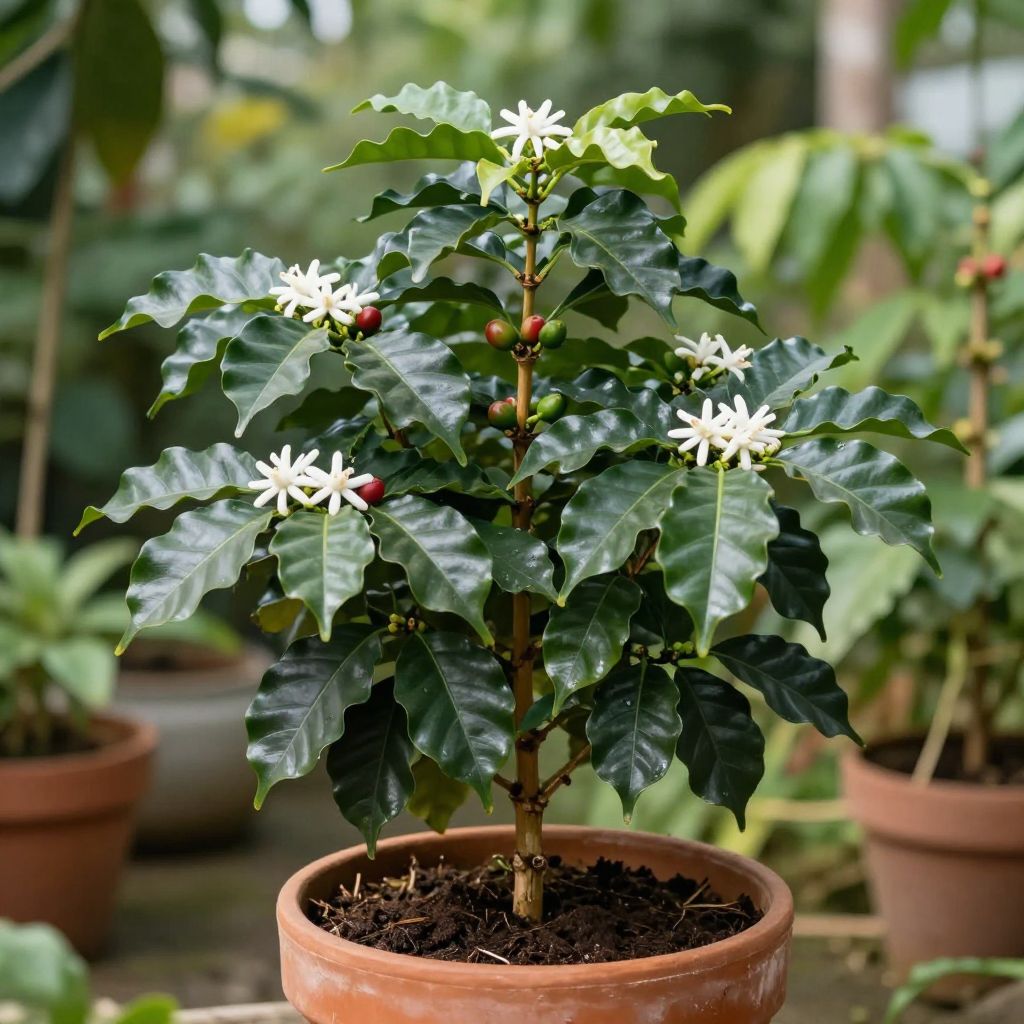
Are you wondering, “What does a coffee plant look like?” Coffee plants are attractive tropical shrubs or small trees with glossy, dark green leaves, pale fragrant flowers, and red berries that ripen into coffee cherries. They can be grown indoors or outdoors in warm climates, but their appearance changes with age, light, and pruning.
If you know what to look for, it’s easy to identify a healthy coffee plant and tell it apart from similar houseplants. Understanding its growth habit also helps you give it the right light, moisture, and soil so it stays lush instead of sparse or stressed.
What does a coffee plant look like?
A coffee plant, usually Coffea arabica or Coffea canephora, is a glossy evergreen shrub with opposite leaves, arching stems, and a dense, bushy form when young. Mature plants may reach several feet tall indoors or become small trees outdoors in frost-free climates. They produce white, jasmine-like flowers followed by green fruits that turn red when ripe.
How to identify a coffee plant by its main features
If you are trying to identify a coffee plant, focus on the leaves, stems, flowers, and fruit. The combination of shiny foliage, opposite leaf pairs, and clusters of white blooms is usually the clearest clue.
Leaves
- Shape: Oval to elliptic, with pointed tips and smooth edges.
- Texture: Leathery and glossy, often with a deep green sheen.
- Arrangement: Leaves grow in opposite pairs along the stem.
- Size: Commonly 4 to 8 inches long on healthy plants, though size varies with age and growing conditions.
Stems and growth habit
Young coffee plants usually grow as upright, slender shrubs with many side branches. With pruning, they become fuller and more compact; without pruning, they can stretch and look leggy, especially indoors in lower light.
Flowers
Coffee flowers are small, white, star-shaped, and highly fragrant. They often appear in clusters along the leaf nodes and may resemble jasmine blooms at a glance. Flowering is more likely on mature, well-grown plants that receive steady light and good care.
Fruit
After flowering, the plant forms green berries that gradually turn yellow, then red or deep crimson as they ripen. These “coffee cherries” usually contain two seeds, which are the coffee beans.
What a healthy coffee plant should look like indoors
Indoor coffee plants are usually sold as compact shrubs with several stems and dense foliage. A healthy plant should have firm, glossy leaves, even growth, and no major leaf drop. Some lower leaf loss is normal as the plant matures, but widespread yellowing or bare stems usually signals a care problem.
Signs of a healthy plant
- Rich green leaves with a slight shine
- New growth at the tips or along stems
- Stems that feel firm, not brittle
- No sticky residue, webbing, or visible pests
- Even branching instead of one long, weak stem
Signs of stress
- Yellow leaves from overwatering or poor drainage
- Crispy brown leaf edges from dry air or underwatering
- Long gaps between leaves from insufficient light
- Small, pale new leaves from nutrient issues or root stress
- Leaf drop after sudden temperature changes
Growing conditions that shape the plant’s appearance
How a coffee plant looks depends heavily on its growing conditions. In the right environment, it develops dense, layered foliage and a naturally elegant shape. In poor conditions, it becomes thin, dull, or patchy.
Light
Coffee plants prefer bright, indirect light. Indoors, a spot near an east- or west-facing window often works well if the sun is filtered. Too much direct sun can scorch the leaves, while too little light causes weak, stretched growth.
Temperature and humidity
Coffee plants like warm, stable conditions and dislike cold drafts. They also appreciate moderate to high humidity, which helps keep the leaves glossy and reduces brown tips. Dry indoor air can make the plant look tired even when watering is correct.
Soil and drainage
Use a rich, well-draining potting mix that holds some moisture without staying soggy. Coffee plants do best in soil that is slightly acidic to neutral and airy enough for roots to breathe. Good drainage is essential because waterlogged roots quickly lead to decline.
How to care for a coffee plant so it keeps its best shape
Good care does more than keep a coffee plant alive; it determines whether the plant looks full and healthy or sparse and stressed. The goal is steady growth, not rapid growth.
Watering
Water when the top inch or so of soil begins to dry, then water thoroughly and let excess drain away. Avoid keeping the pot constantly wet. Coffee plants prefer even moisture, but they do not like sitting in water.
Fertilizing
Feed lightly during active growth with a balanced houseplant fertilizer or one suited to foliage plants, following the label directions. Overfertilizing can burn roots and cause leaf tip damage, so less is usually better than more.
Pruning
Prune lightly to encourage branching and a fuller shape. Remove weak, damaged, or crossing stems, and pinch back long shoots if you want a bushier plant. Pruning is especially helpful indoors, where coffee plants can become tall and thin.
How to plant or repot a coffee plant
Repotting is one of the best ways to improve the look and health of a coffee plant, especially if it has become rootbound. Choose a container with drainage holes and move up only one pot size at a time.
- Water the plant lightly before repotting so the root ball is easier to handle.
- Prepare fresh, well-draining potting mix.
- Remove the plant gently and loosen circling roots if needed.
- Set it at the same planting depth it was growing before.
- Backfill with mix, water thoroughly, and let excess drain.
Avoid oversized pots. Too much extra soil stays wet too long and can damage roots.
Common pests and diseases that affect appearance
Several pests and diseases can change how a coffee plant looks, often before the problem becomes severe. Catching them early helps preserve the plant’s shape and foliage.
Common pests
- Spider mites: Fine webbing, stippled leaves, and a dull look, especially in dry air.
- Scale insects: Small brown or tan bumps on stems and leaf undersides.
- Mealybugs: White cottony clusters in leaf joints or on new growth.
- Aphids: Soft-bodied insects that cluster on tender tips and can distort growth.
Common disease or care issues
- Root rot: Yellowing, wilting, and a droopy appearance caused by soggy soil.
- Leaf spot: Dark patches or blemishes, often worsened by poor airflow or wet foliage.
- Nutrient imbalance: Pale leaves or weak growth, especially in older potting mix.
If you notice pests, isolate the plant and inspect leaf undersides and stems closely. A gentle wash, insecticidal soap, or horticultural oil may help, depending on the pest and the plant’s sensitivity. Always test on a small area first.
Can you grow a coffee plant outdoors?
In frost-free tropical or subtropical climates, coffee can be grown outdoors as a shrub or small understory tree. Outdoors, it often looks fuller and more natural than it does indoors, especially with filtered light and consistent moisture.
Best outdoor conditions
- Warm temperatures with no frost
- Partial shade or filtered sun
- Rich, moist, well-drained soil
- Protection from strong wind and harsh afternoon sun
If you live in a cooler climate, you can still grow coffee as a container plant and move it indoors before temperatures drop. Sudden cold can damage leaves and make the plant look limp or bronzed.
Propagation basics
Gardeners usually propagate coffee from seed or cuttings, though seed-grown plants take patience. A young coffee plant may not look like the mature version right away, so expect a compact seedling at first.
From seed
Use fresh seed if possible, because coffee seed loses viability over time. Keep the medium warm, lightly moist, and well drained. Germination can be slow and uneven, so do not discard the pot too quickly.
From cuttings
Stem cuttings can work if taken from healthy, semi-ripe growth. Use a clean tool, remove lower leaves, and place the cutting in a humid, warm environment with bright indirect light. Rooting success varies, so patience matters.
Why your coffee plant might not look right
Most appearance problems come from a few common causes. Before changing everything at once, look at the plant’s leaves, soil, and placement.
- Leggy growth: Move it to brighter indirect light and prune lightly.
- Yellow leaves: Check for overwatering, poor drainage, or rootbound roots.
- Brown leaf edges: Increase humidity and check for salt buildup from fertilizer or hard water.
- Leaf drop: Look for drafts, sudden temperature shifts, or a recent move.
- Small, pale leaves: Consider low light, depleted soil, or a need for repotting.
How to tell coffee apart from similar plants
Coffee plants are sometimes confused with other glossy tropical houseplants. The best clues are the opposite leaf arrangement, wavy but mostly smooth leaf margins, and the plant’s naturally upright, branching habit.
Compared with many ficus or citrus plants, coffee usually has a softer, more shrub-like shape and thinner stems when young. Its leaves are also often more noticeably glossy and slightly undulating along the edges.
Conclusion
Now that you know what a coffee plant looks like, you can identify one by its glossy opposite leaves, white fragrant flowers, and red ripening cherries. If you already grow one, check its light, drainage, and humidity this week, then prune lightly if it is getting leggy.
For more practical houseplant care, you may also want to read about indoor plant pruning basics and how to improve potting soil drainage.