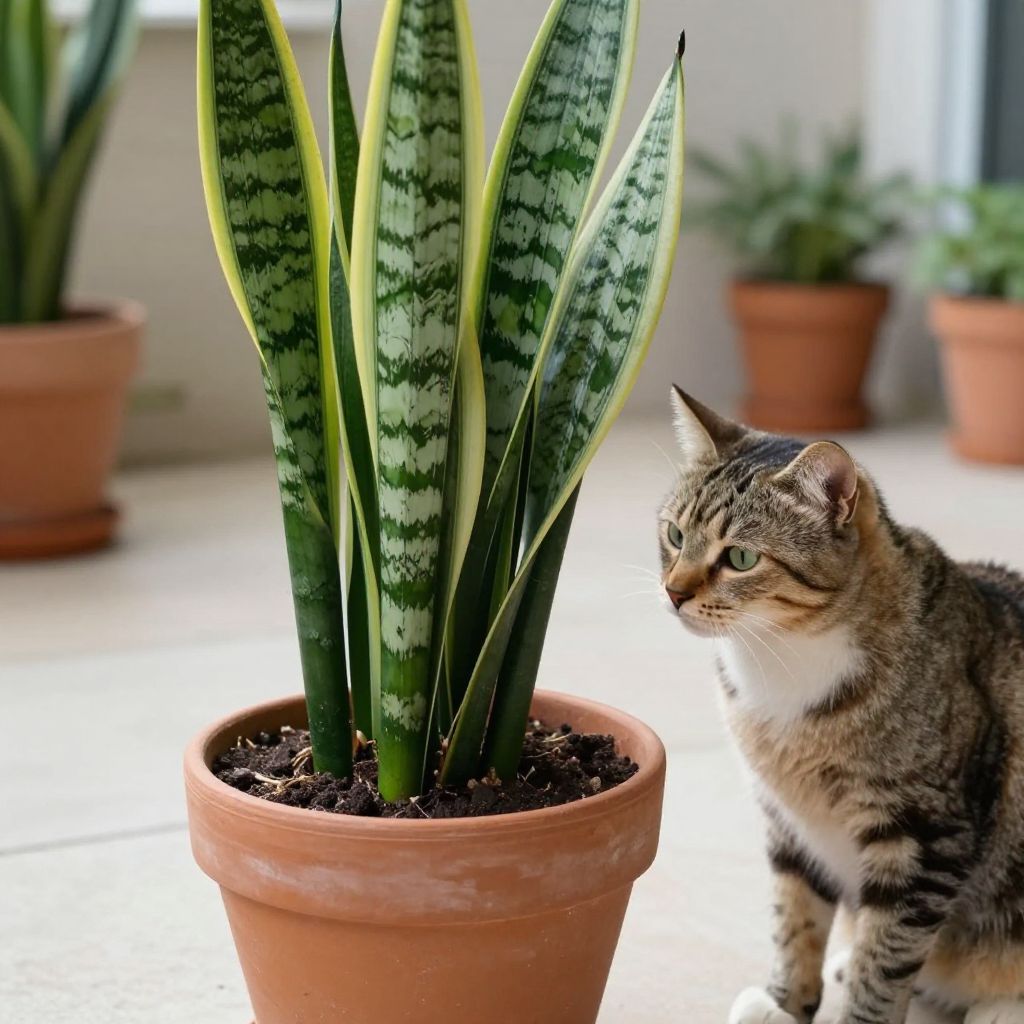
Are snake plants safe for cats? If you grow Sansevieria (now often classified as Dracaena trifasciata) indoors, this is an important question. Snake plants are popular because they are tough, low-light tolerant, and easy to maintain, but they are not considered cat-safe.
If your cat chews on the leaves, the plant can cause mouth irritation, drooling, vomiting, or diarrhea. The good news is that you can still enjoy snake plants if you place them carefully, manage access, and know what to do if your pet takes a bite.
Are snake plants safe for cats?
No. Snake plants are mildly toxic to cats and can cause gastrointestinal upset if chewed or swallowed. The plant contains compounds called saponins, which may lead to drooling, nausea, vomiting, and diarrhea. Most cases are not life-threatening, but any ingestion should be taken seriously.
Why snake plants are so popular with gardeners
Snake plants earn their place in homes and offices because they are forgiving houseplants. They handle low to bright indirect light, tolerate occasional missed waterings, and need very little fuss compared with many tropical plants.
That easy care is exactly why they are often recommended to beginners. But if you live with cats, you need to weigh convenience against safety before bringing one home or placing one within reach.
Common snake plant traits
- Thick, upright, sword-shaped leaves
- Slow growth indoors
- Preference for well-draining soil
- Low water needs
- Best grown in pots with drainage holes
What symptoms may appear if a cat eats snake plant?
Most cat reactions are digestive and usually start soon after chewing the plant. Watch for drooling, pawing at the mouth, vomiting, reduced appetite, and loose stool. Some cats may also seem temporarily lethargic or uncomfortable.
If your cat only mouthed the leaves, symptoms may be mild. If a large amount was eaten, or if your cat is young, elderly, or already unwell, contact your veterinarian promptly for advice.
When to call a vet
- Your cat is vomiting repeatedly
- Symptoms last more than a few hours
- Your cat won’t eat or drink
- You notice unusual weakness or behavior changes
- You suspect more than a small nibble was eaten
How to keep snake plants and cats in the same home
You do not necessarily have to throw out a snake plant if you have cats, but you do need to manage placement carefully. The safest option is to keep the plant completely out of reach, or choose a truly cat-safe plant instead.
Practical placement ideas
- Set the pot on a high shelf that your cat cannot jump to.
- Use a hanging planter only if the leaves won’t trail within reach.
- Place the plant in a closed room your cat does not enter.
- Use a plant stand with a stable, narrow footprint away from ledges.
- Group it with other decor only if the area is genuinely inaccessible.
Remember that some cats are persistent climbers. If your cat has a history of sampling houseplants, a high shelf may not be enough.
Better alternatives if you want a cat-friendly plant
- Spider plant (Chlorophytum comosum)
- Boston fern (Nephrolepis exaltata)
- Parlor palm (Chamaedorea elegans)
- Areca palm (Dypsis lutescens)
Snake plant care basics for healthy growth
Healthy plants are less likely to shed damaged leaves or attract attention from curious pets. Snake plants prefer a potting mix that drains quickly, a container with drainage holes, and watering only when the soil has dried out well.
Light
Snake plants grow best in bright, indirect light but can tolerate lower light. In very dim rooms, growth slows and the plant may become floppy or sparse over time.
A little morning sun is usually fine, but harsh direct afternoon sun can scorch the leaves, especially behind glass.
Soil and potting mix
Use a loose, fast-draining mix. A cactus or succulent blend works well, or you can improve regular indoor potting mix by adding perlite or pumice.
- Avoid heavy, compacted soil
- Choose a pot with a drainage hole
- Do not let the plant sit in standing water
Watering
Snake plants are more likely to suffer from overwatering than underwatering. Water only when the potting mix is dry several inches down, then soak thoroughly and let excess water drain away.
Exact timing depends on your home’s light, temperature, pot size, and season. In cooler or lower-light conditions, the plant may need water far less often than in a bright, warm room.
Temperature and humidity
Normal indoor temperatures suit snake plants well. They prefer average household humidity and do not need misting. Keep them away from cold drafts and from heating vents that dry the plant too quickly.
How to repot a snake plant safely
Repotting is useful when roots crowd the pot or the plant becomes top-heavy. It also gives you a chance to refresh the mix and check for root rot, which is common in overly wet soil.
Step-by-step repotting guide
- Choose a pot only 1 to 2 inches wider than the current one.
- Use fresh, well-draining potting mix.
- Gently lift the plant and inspect the roots.
- Trim any mushy, black, or foul-smelling roots with clean scissors.
- Set the plant at the same depth it was growing before.
- Water lightly after repotting, then wait until the soil dries before watering again.
Do not oversize the container. A pot that is too large holds extra moisture and increases the risk of root rot.
Pruning and maintenance tips
Snake plants need very little pruning, but you can remove yellow, damaged, or broken leaves at the base with clean pruners. This keeps the plant tidy and helps you spot problems early.
If a leaf is bent or scarred, you can trim it off completely rather than trying to repair it. New growth will emerge from the base over time.
Maintenance mistakes to avoid
- Overwatering on a fixed schedule
- Using a pot without drainage
- Letting the plant sit in a saucer of water
- Placing it where cats can chew the leaves
- Assuming low light means no care is needed
Common pests and diseases
Snake plants are generally resilient, but they can still develop problems. Indoors, the most common issues are mealybugs, spider mites, and fungal or bacterial rot caused by excessive moisture.
What to look for
- Mealybugs: white cottony clusters on leaves or in leaf joints
- Spider mites: fine webbing and stippled leaves
- Root rot: soft, yellowing, collapsing leaves and a sour smell from the soil
If pests appear, isolate the plant and treat it promptly. If rot is present, reduce watering immediately and remove damaged tissue if possible.
Propagation and plant division
Snake plants are easy to multiply by division, and this is often the best method if you want more plants. Division also helps reduce overcrowding in mature pots.
Simple division method
- Remove the plant from its pot.
- Gently separate the root clumps.
- Make sure each division has roots and several leaves.
- Pot each section in fresh, well-draining mix.
- Wait before watering heavily so any damaged roots can settle.
Leaf cuttings are possible too, but they take longer and do not always produce plants that look exactly like the parent if the plant is a variegated type.
What to do if your cat bites the plant
If you catch your cat chewing a snake plant, remove the plant from reach right away and check your cat’s mouth and behavior. Offer fresh water and monitor for vomiting, drooling, or stomach upset.
If symptoms develop, call your veterinarian or a pet poison helpline for guidance. Do not try home remedies unless a professional tells you to do so.
Quick response checklist
- Take the plant away
- Rinse the mouth only if your cat allows it safely
- Observe for digestive signs
- Contact a vet if symptoms appear or worsen
Final thoughts for cat owners
Snake plants are attractive, low-maintenance houseplants, but they are not safe for cats to eat. If you want to keep one, place it where your cat cannot reach it and grow it in a well-draining pot with careful watering. If your cat is a plant chewer, a cat-safe houseplant may be the better choice.
For more practical houseplant guidance, you may also want to read about houseplant care basics and cat-safe indoor plants.