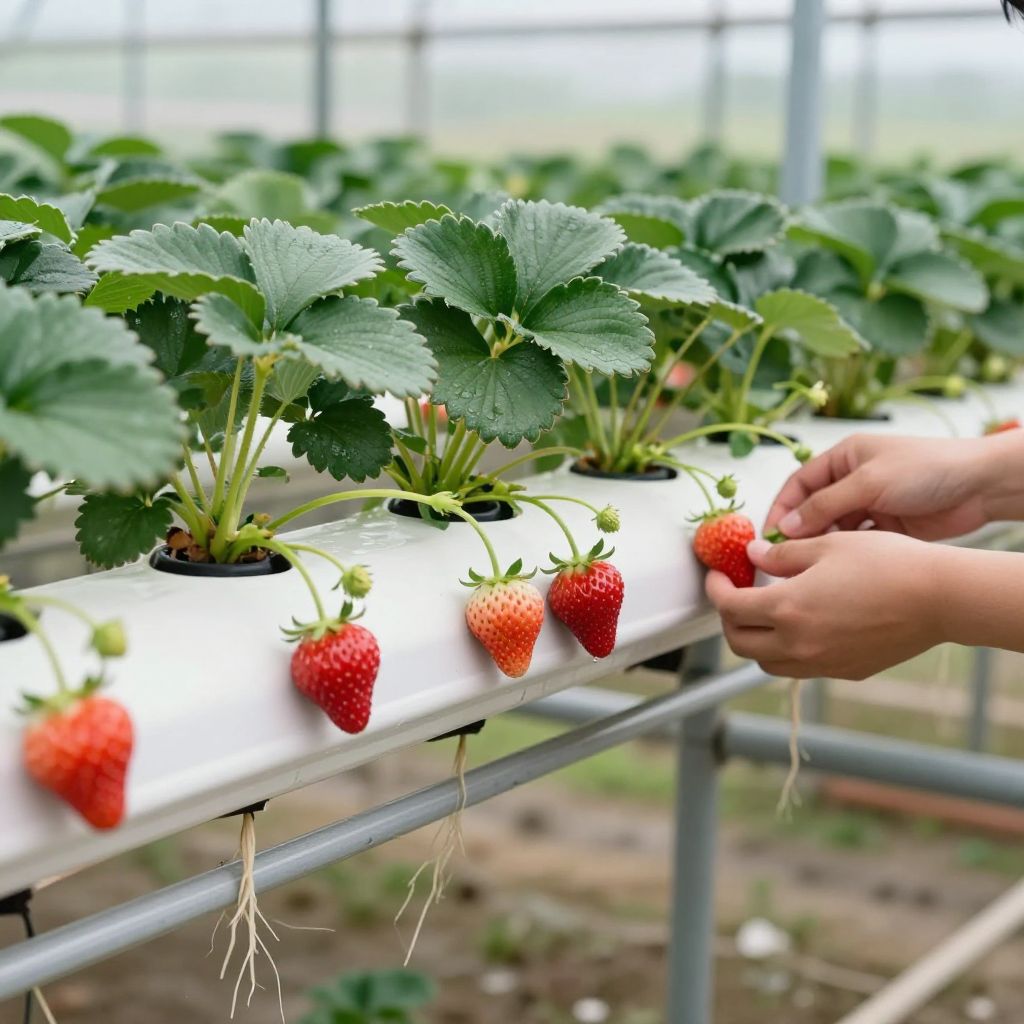
What are hydroponic strawberries, and are they worth growing at home? In simple terms, they are strawberry plants grown without soil, with their roots supported in water or an inert growing medium while a nutrient solution supplies what the plants need. This method can work indoors or in protected outdoor systems, and it often gives you cleaner fruit and easier control over moisture.
If you are deciding whether hydroponics is practical for strawberries, the answer depends on your space, light, and how closely you can manage water, nutrients, and airflow. Strawberries can do very well in a hydroponic setup when conditions are steady, but they still need the right variety, pollination, and regular maintenance to stay productive.
What are hydroponic strawberries?
Hydroponic strawberries are strawberry plants grown in a soilless system where roots receive water, oxygen, and dissolved nutrients directly. Instead of drawing food from garden soil, the plants grow in media such as coco coir, perlite, rockwool, or bare-root channels, making them easier to manage indoors or in controlled environments.
How hydroponic strawberry growing works
Strawberries are shallow-rooted plants, which makes them a good fit for hydroponic systems. The roots need constant access to moisture and oxygen, but they dislike soggy conditions, so the system must balance both carefully.
Common hydroponic systems for strawberries
- Nutrient film technique (NFT): A thin stream of nutrient solution flows past the roots.
- Drip systems: Nutrients are delivered to each plant through emitters.
- Ebb and flow: Roots are periodically flooded and then drained.
- Vertical towers: Useful for saving space, especially indoors or on patios.
For home growers, drip systems and vertical towers are often the easiest to manage. NFT can work well, but it is less forgiving if pumps fail or roots dry out.
What the roots need
- Moisture: Enough to prevent wilting, but never stagnant water.
- Oxygen: Root zones must breathe, so drainage and circulation matter.
- Nutrition: A balanced hydroponic fertilizer made for fruiting plants.
- Stability: Steady temperature, light, and pH help flowering and fruiting.
Are hydroponic strawberries different from soil-grown strawberries?
Yes, mainly in how they get water and nutrients. The plant itself is still a strawberry, usually Fragaria × ananassa for most garden strawberries, but hydroponic growing changes root conditions, pest pressure, and maintenance. You may see faster growth in a well-run system, but you also need more monitoring than in a typical garden bed.
Main differences to expect
- No soil pests: Fewer issues with some soil-borne diseases and weeds.
- More control: You can fine-tune nutrients, pH, and moisture.
- Higher attention needed: Pumps, lights, and nutrient levels must be checked regularly.
- Pollination still matters: Flowers need help indoors if insects are absent.
Best growing conditions for hydroponic strawberries
Strawberries need bright light, moderate temperatures, and good airflow whether they grow in soil or hydroponically. If you are growing indoors, you must replace what the sun would normally provide. Outdoors, you still need to protect the system from heat spikes, heavy rain, and freezing weather depending on your climate.
Light
Strawberries are sun-loving plants. Outdoors, they usually perform best in full sun, while indoor systems need strong grow lights placed close enough to prevent stretching but far enough to avoid leaf burn.
- Give outdoor plants as much direct sun as your site allows.
- Indoors, use full-spectrum grow lights and keep the photoperiod consistent.
- Rotate plants or towers if one side gets better light than the other.
Temperature and airflow
Moderate temperatures support flowering and fruit set better than extreme heat. Warm, stagnant air can encourage disease, so gentle circulation is important, especially in indoor setups or crowded vertical systems.
- Keep growing areas well ventilated.
- Avoid placing plants too close together.
- Reduce heat stress by shading or moving systems during hot spells if needed.
pH and nutrient balance
Hydroponic strawberries usually prefer a slightly acidic root zone. If pH drifts too high or too low, plants may show nutrient deficiencies even when fertilizer is present. Check your solution regularly and adjust gradually rather than making large corrections.
How to set up hydroponic strawberries at home
You do not need a commercial greenhouse to get started, but you do need a reliable system. The best setup is the one you can maintain consistently, because strawberries dislike sudden changes in water, light, or nutrition.
- Choose a system: Start with a simple drip or tower setup if you are new to hydroponics.
- Select healthy plants: Use disease-free transplants or runners from a trustworthy source.
- Pick a growing medium: Coco coir, perlite, or rockwool can support roots while allowing airflow.
- Mix nutrients: Use a hydroponic formula suited to fruiting crops, following the product label.
- Check pH: Keep the solution in a slightly acidic range appropriate for hydroponics.
- Provide light and airflow: Match the setup to indoor or outdoor conditions.
- Monitor daily: Watch for wilting, algae, clogged lines, or nutrient imbalance.
Choosing plants
Start with compact, productive strawberry plants that are known to perform well in containers or controlled systems. Day-neutral types are often favored in hydroponics because they can flower over a longer season, but plant performance still depends on your light and temperature conditions.
Using runners or transplants
Young transplants are usually easier for beginners than starting from seed. Runners can be propagated, but they should come from healthy stock plants and be rooted carefully before moving into the hydroponic system.
Watering and feeding hydroponic strawberries
In hydroponics, “watering” really means managing the nutrient solution. Strawberries need consistent moisture, but the roots should not sit in stagnant water. The right balance depends on your system type, plant size, and environmental conditions.
What to watch
- Water level: Keep the reservoir topped up as plants use solution.
- Solution strength: Too weak leads to pale growth; too strong can burn roots.
- pH drift: Test regularly, especially after topping off or changing solution.
- Reservoir cleanliness: Dirty water can invite disease and clog equipment.
If leaves look pale, growth slows, or fruiting drops, the issue may be nutrient imbalance rather than a lack of water. If leaf tips brown or roots look damaged, the solution may be too strong or poorly aerated.
Pollination, pruning, and maintenance
Hydroponic strawberries still need pollination to form well-shaped fruit. Outdoors, insects often do the job. Indoors, you may need to assist with a small brush, a gentle fan, or by lightly shaking flowering plants.
Pollination tips
- Gently brush across open flowers every few days.
- Use airflow to help move pollen between blossoms.
- Do not overwater or overheat plants, since stressed flowers may set poorly.
Pruning and cleanup
Remove dead leaves, old flower stalks, and damaged fruit to improve airflow and reduce disease pressure. If your goal is fruit production, trim excessive runners unless you want to propagate new plants.
- Cut away yellowing or diseased foliage promptly.
- Keep fruit off wet surfaces to reduce rot.
- Thin crowded growth if air movement becomes poor.
Common problems with hydroponic strawberries
Most issues in hydroponic strawberries come from environment or system management, not from the plant itself. The good news is that many problems are easier to diagnose than in soil because the root zone is more visible and the conditions are more controlled.
Root rot and poor oxygenation
Roots that stay wet without enough oxygen can turn brown and mushy. Improve drainage, increase aeration, and check for pump failures or clogged lines.
Nutrient deficiencies
Yellowing leaves, weak growth, or poor fruiting may point to an unbalanced nutrient solution or pH issues. Test before adding more fertilizer, because the problem may be availability rather than quantity.
Pests and diseases
Even hydroponic systems can attract aphids, spider mites, thrips, and fungal diseases. Inspect leaves regularly, especially undersides, and remove affected plant material quickly.
- Quarantine new plants before adding them to your system.
- Keep the area clean and free of dead plant debris.
- Avoid overcrowding, which traps moisture and pests.
Poor fruit shape or low yield
Misshapen berries often mean incomplete pollination. Small fruit size can come from low light, excessive heat, or nutrient imbalance. Fix the growing conditions first before assuming the plants are failing.
Propagation and replacing plants
Strawberries do not stay equally productive forever, even in hydroponics. Many home growers replace older plants periodically with fresh transplants or rooted runners to keep harvests strong.
- Root runners only from healthy, productive mother plants.
- Discard weak or diseased stock rather than trying to save it.
- Stagger replacements if you want continuous harvests.
Harvesting hydroponic strawberries
Pick berries when they are fully colored and fragrant, with no white or green shoulders unless the variety naturally stays paler. Harvest carefully by pinching or snipping the stem just above the berry so you do not damage nearby flowers or fruit.
Check plants often during peak fruiting, because ripe strawberries can spoil quickly in warm conditions. Frequent picking also encourages the plant to keep producing.
Is hydroponic strawberry growing right for you?
Hydroponic strawberries are a smart choice if you want a clean, space-efficient way to grow fruit and you are willing to monitor the system regularly. They are especially useful for balconies, patios, greenhouses, and indoor grow spaces where soil gardening is difficult.
If you are just starting out, begin with a small system, learn how your plants respond, and adjust one factor at a time. For more ideas on growing strawberries in controlled spaces, you may also find this guide helpful: can you grow strawberries indoors.