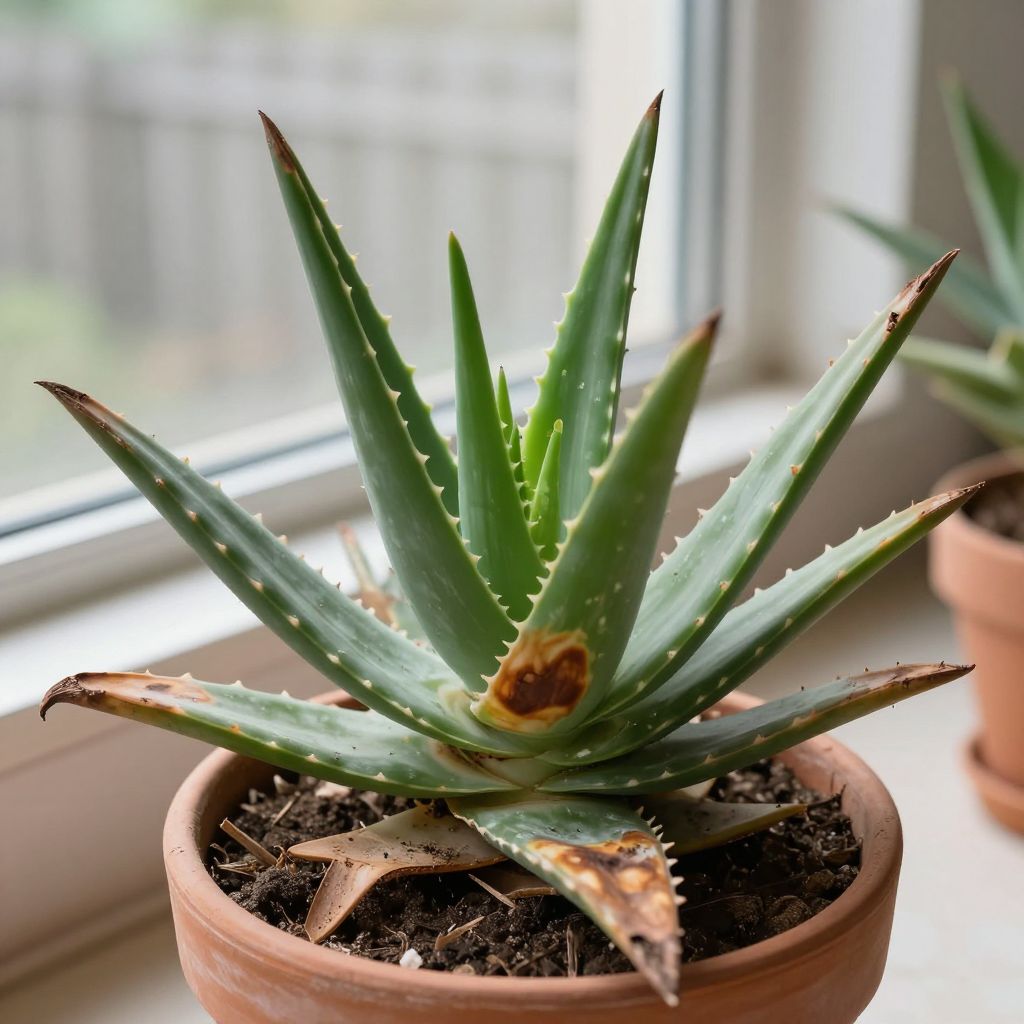
Why is my aloe plant turning brown? Brown aloe leaves usually mean the plant is stressed by too much water, too much sun, cold damage, poor drainage, or pests. The good news is that aloe vera and related aloes are tough succulents, and most brown spots or whole brown leaves can be corrected once you identify the cause.
The key is to look closely at the type of browning, the potting mix, and the plant’s location. A soft, mushy brown base points to rot, while dry, crispy browning often points to sun scorch or underwatering. Once you match the symptom to the cause, you can usually save the plant and prevent new damage.
Why is my aloe plant turning brown?
Aloe turns brown when its tissues are damaged by excess moisture, intense direct sun, cold exposure, poor soil drainage, or pests. The fix depends on whether the browning is soft and mushy, dry and crispy, spotty, or limited to the tips. Start by checking the roots, leaves, and growing conditions before changing anything.
Common causes of brown aloe leaves
1. Overwatering and root rot
This is the most common reason aloe plants turn brown indoors. Aloe stores water in its leaves, so it needs a dry-down period between waterings and a fast-draining mix.
If the soil stays wet for too long, the roots suffocate and rot. The leaves may turn yellow-brown, feel soft, and collapse near the base.
- Soil feels damp days after watering
- Leaves are soft, translucent, or mushy
- Lower leaves brown first
- The plant may smell sour or musty
What to do: Stop watering right away. Remove the plant from its pot, trim off black or mushy roots with clean scissors, and repot into a dry cactus or succulent mix in a pot with drainage holes.
2. Too much direct sun
Aloe likes bright light, but sudden exposure to harsh afternoon sun can scorch the leaves. Sunburn often shows up as tan, brown, or reddish patches on the side facing the light.
This is especially common if you move an indoor aloe outdoors too quickly, or if it sits in a very hot south- or west-facing window without any acclimation.
- Brown patches appear on the sun-facing side
- Damage looks dry, bleached, or papery
- Newer leaves may be affected first after a move
What to do: Move the plant to bright indirect light or filtered morning sun. If you want to grow aloe outdoors, acclimate it gradually over 7 to 14 days by increasing sun exposure a little at a time.
3. Cold damage
Aloe is not a fan of frost or prolonged cold, and chilled leaves often turn brown, translucent, or water-soaked before drying out. Even temperatures that are only a little too cool can stress a plant kept near a drafty window or outside too late in the season.
If the plant has been exposed to frost, the damage may not appear immediately. Browning can show up a few days later as the injured tissue collapses.
- Leaves feel soft after a cold night
- Damage appears after moving outdoors or near a draft
- Brown areas may look dark and watery at first
What to do: Move the plant to a warmer spot with stable temperatures. Remove badly damaged leaves only after you see whether the tissue dries out or continues to rot.
4. Poor drainage or the wrong soil
Even a careful watering routine can fail if the potting mix holds too much water. Dense garden soil, heavy potting soil, or a container without drainage can keep aloe roots wet for too long.
Aloe needs a gritty, airy mix that drains quickly. If water sits around the roots, browning often begins at the base and spreads upward.
- Water pools on the soil surface
- Pot feels heavy long after watering
- Leaves become limp or brown despite limited watering
What to do: Repot into a cactus/succulent mix, or amend a quality potting mix with coarse sand, pumice, or perlite for better drainage. Always use a pot with a drainage hole.
5. Underwatering or prolonged drought stress
Although aloe tolerates dry conditions, it can still brown if left bone-dry for too long, especially in small pots, hot rooms, or windy outdoor sites. The leaves may wrinkle, thin out, and turn brown at the tips or edges.
This kind of browning is usually dry and crisp rather than soft.
- Leaves look shriveled or flattened
- Brown tips or edges are dry and brittle
- The plant may stop producing healthy new growth
What to do: Water deeply, then let excess water drain away completely. After that, water only when the mix has dried out well. For indoor plants, check the pot rather than following a fixed schedule.
6. Natural aging of lower leaves
It is normal for the oldest bottom leaves to brown, dry, and die off as the plant grows upward. This is especially true if the plant is healthy overall and producing new leaves from the center.
Natural aging is usually slow and limited to one or two lower leaves at a time. The rest of the plant should look firm and green.
- Only the lowest leaves are affected
- New growth looks healthy
- Browning is gradual, not sudden
What to do: Trim off fully dead leaves close to the base with clean scissors or a knife. Do not remove leaves that are still partly green unless they are clearly rotting.
7. Pests and disease
Mealybugs and scale can weaken aloe by feeding on sap, while fungal or bacterial problems may follow if the plant stays wet. Pest damage often appears as discolored spots, sticky residue, or general decline rather than one obvious cause.
Check the leaf bases, undersides, and crevices where leaves overlap. Mealybugs look like white cottony clumps, while scale appears as small brown or tan bumps.
- Sticky leaves or nearby surfaces
- White fuzz or tiny bumps on stems and leaf joints
- Spreading brown or black lesions
What to do: Isolate the plant, remove visible pests with a cotton swab dipped in rubbing alcohol, and improve airflow and drainage. If rot is advanced, cut away affected tissue and discard badly infected plants to protect others.
How to diagnose the problem step by step
A few minutes of inspection can save you from treating the wrong issue. Use the plant’s appearance, potting mix, and location to narrow down the cause.
- Check the leaves. Soft and mushy suggests rot or cold damage; dry and crispy suggests sun scorch or drought.
- Feel the soil. Wet soil points to overwatering or poor drainage. Bone-dry soil points to drought stress.
- Inspect the roots if needed. Healthy roots are firm and pale. Rotten roots are dark, slimy, or hollow.
- Look at the light exposure. Sudden full sun can burn aloe, especially after a move outdoors.
- Check for pests. Look closely at leaf bases, undersides, and the crown.
If you find more than one issue, treat the most serious one first. For example, a plant in wet soil with brown leaves needs drainage correction before anything else.
How to fix a brown aloe plant
For overwatered aloe
- Stop watering immediately.
- Unpot the plant and inspect the roots.
- Trim away rotten roots and any black, mushy tissue.
- Let the plant air-dry for a few hours if the base is wet.
- Repot in a dry, well-draining succulent mix.
- Wait several days before watering again, unless the plant is severely dehydrated.
For sunburned aloe
- Move it out of harsh direct sun.
- Place it in bright, filtered light.
- Do not peel away damaged skin; let the plant decide what tissue to keep.
- Watch for new growth, which should emerge healthier if the light is corrected.
For cold-damaged aloe
- Bring the plant indoors or to a warmer protected area.
- Keep it away from cold windows, vents, and drafts.
- Remove only leaves that turn fully soft, black, or rotten.
- Hold off on watering until the soil dries and the plant stabilizes.
For underwatered aloe
- Water thoroughly until excess drains from the bottom.
- Empty any saucer so roots do not sit in water.
- Check the mix more often in hot weather or small pots.
- Adjust watering based on dryness, not the calendar.
How to prevent aloe leaves from turning brown again
Prevention is mostly about matching aloe’s natural habits. It wants bright light, infrequent deep watering, and very sharp drainage.
- Use a pot with drainage holes.
- Choose a gritty succulent mix.
- Let the soil dry well between waterings.
- Give bright light, but introduce direct sun gradually.
- Protect the plant from frost and cold drafts.
- Do not let water sit in the rosette or crown.
- Inspect regularly for mealybugs and scale.
For indoor aloe, a bright window with some protection from the hottest afternoon sun is often ideal. For outdoor aloe, drainage and climate matter even more, because rain, humidity, and cold snaps can quickly trigger browning.
Should you cut off brown aloe leaves?
Yes, but only when the leaf is fully dead or clearly rotting. If a leaf is still partly green and firm, it can still help the plant by storing energy.
Use clean, sharp scissors or a knife and cut near the base. If the browning is from rot, disinfect your tool between cuts so you do not spread disease.
When to worry
Some browning is minor, but certain signs mean the plant needs immediate attention. Act quickly if the base is collapsing, the center is turning black, or the whole plant is soft and foul-smelling.
If the crown is rotting, healthy leaves may not be enough to save the plant. In that case, inspect for any firm offsets or pups that can be separated and rooted after the damaged mother plant is discarded.
Conclusion
If you are asking, “Why is my aloe plant turning brown,” start by checking moisture, light, and temperature. Most problems come down to overwatering, sun scorch, or cold stress, and each one has a straightforward fix. Correct the growing conditions now, and your aloe can often recover with fresh, healthy new growth.
If you want to improve your succulent care routine, you may also find it helpful to read more about how to repot succulents and the best soil for cactus and succulent plants.