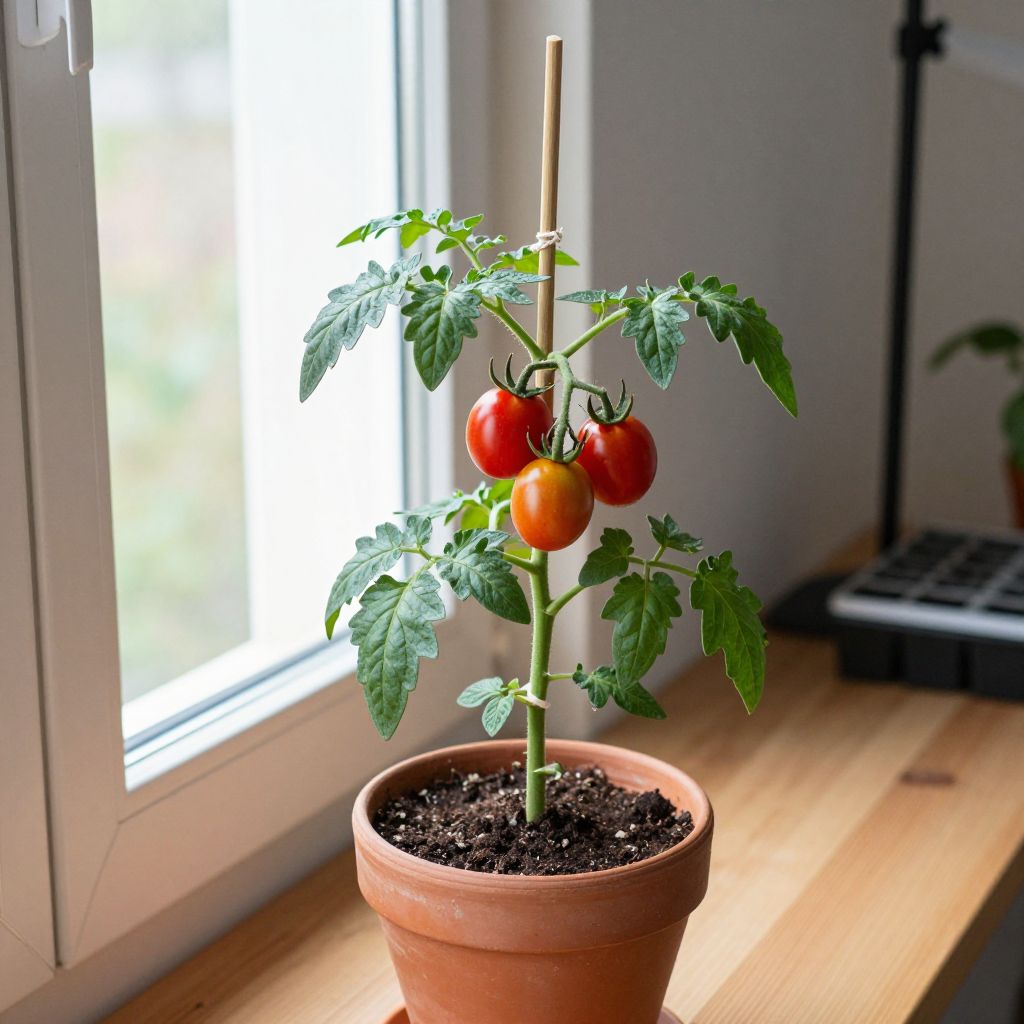
Can you grow tomatoes indoors? Yes, you can—if you give them strong light, warm temperatures, steady moisture, and enough root space. Indoor tomatoes are a little more demanding than many houseplants, but they can produce flowers and fruit when their basic needs are met.
The biggest challenge is light. Tomatoes are sun-loving plants, so success indoors depends on bright windows, supplemental grow lights, and careful watering and feeding rather than on hope alone.
Can you grow tomatoes indoors?
Yes, tomatoes can be grown indoors, but they need much more light than most indoor plants and usually do best in compact or dwarf varieties. For the best results, provide 6 to 8 hours of strong direct sun or 14 to 16 hours under grow lights, plus a large container, rich potting mix, and consistent care.
What tomatoes grow best indoors?
Choose varieties that stay compact, mature relatively quickly, and tolerate container life. Indeterminate tomatoes can be grown indoors, but they often become too large and unruly unless you have excellent light and space.
Good types to look for
- Dwarf or patio tomatoes
- Cherry tomatoes and other small-fruited types
- Compact bush tomatoes
- Micro tomatoes for very small spaces
Smaller-fruited tomatoes are usually easier indoors because they need less energy to ripen. Large slicing tomatoes can be grown, but they are more likely to struggle with insufficient light and limited root space.
Light: the most important indoor growing factor
Tomatoes need intense light to grow well, bloom, and set fruit. A bright south-facing window may help, but in many homes it is not enough on its own, especially in winter or in cloudy climates.
How much light do indoor tomatoes need?
- At least 6 to 8 hours of direct sun if using a window
- Or 14 to 16 hours a day under a quality grow light
- Keep lights close enough to be effective, but not so close that leaves scorch
If stems stretch, leaves pale, or flowering is weak, the plant is not getting enough light. Leggy growth is one of the clearest signs that indoor tomatoes need stronger light.
Best containers and potting mix
Tomatoes are heavy feeders and deep-rooted plants, so they need a roomy pot with excellent drainage. A small container quickly leads to dry soil, stunted growth, and poor fruiting.
Container size
- Use at least a 5-gallon container for one tomato plant
- Larger pots are better for bigger varieties
- Make sure the container has drainage holes
Soil and compost
Use a high-quality potting mix, not garden soil. Potting mix stays lighter and drains better indoors, which helps prevent root problems.
- Choose a mix labeled for containers or vegetables
- Blend in compost if the mix is low in organic matter
- Avoid heavy, compacted soil that holds too much water
Good drainage matters more indoors than many beginners realize. Water that sits in a saucer can lead to root rot, fungus gnats, and weak growth.
How to plant tomatoes indoors
You can start tomatoes from seed or transplant young seedlings into their final container. If you are starting from seed, begin with clean trays or small pots and transplant when the seedlings are sturdy enough to handle.
Step-by-step planting guide
- Fill the pot with moist potting mix.
- Set the seedling deeper than it was growing before, burying part of the stem if needed.
- Firm the mix gently around the roots.
- Water thoroughly until excess drains out.
- Place the plant in the brightest location available.
Tomatoes often root along buried stems, so planting them a little deeper can help build a stronger root system. Just keep leaves above the soil line.
Watering indoor tomatoes correctly
Indoor tomatoes need even moisture, but they should never sit in soggy soil. The goal is to keep the root zone consistently moist, not wet.
How to tell when to water
- Check the top 1 to 2 inches of soil
- Water when that layer feels dry
- Water deeply until excess drains from the bottom
Watering needs change with pot size, light level, temperature, and plant size. A plant under bright grow lights may dry out much faster than one on a cool windowsill.
Do not water on a fixed calendar alone. Instead, check the soil regularly and adjust to your indoor conditions.
Temperature and airflow
Tomatoes prefer warm conditions and steady airflow. Indoors, they often grow best in a room that stays comfortably warm during the day and does not get chilly at night.
Why airflow matters
Gentle air movement helps strengthen stems, reduces excess humidity around leaves, and lowers the risk of fungal disease. A small fan set on low nearby can help, as long as it does not blast the plant constantly.
Avoid placing tomatoes right next to cold windows in winter or near heating vents that dry them out. Sudden temperature swings can reduce flowering and fruit set.
Feeding indoor tomatoes
Container tomatoes use nutrients quickly because their roots are confined. Potting mix alone usually will not support a fruiting plant for long.
What to feed and when
- Use a balanced vegetable fertilizer or tomato fertilizer
- Follow the product label rather than guessing rates
- Feed more lightly when plants are small
- Increase feeding as flowering and fruiting begin, if the plant is growing well
Too much nitrogen can produce lots of leafy growth but few flowers. If your plant looks lush but refuses to bloom, the fertilizer balance may be part of the problem.
Pruning, staking, and supporting the plant
Even compact tomatoes need support indoors. A cage, stake, or trellis keeps stems upright, improves air movement, and makes watering and harvesting easier.
Simple pruning tips
- Remove damaged or yellowing lower leaves
- Tie stems loosely to support as they grow
- For larger indeterminate plants, pinch some side shoots if space is limited
Do not overprune a weak indoor plant. Leaves are the plant’s energy source, so leave enough healthy foliage to support growth and fruit ripening.
Pollination indoors
Tomatoes are self-pollinating, but indoor plants often need a little help because there is no wind or insect activity to shake the flowers.
How to help flowers set fruit
- Gently tap flower clusters every few days
- Use a small fan to create light air movement
- Brush flowers softly with a cotton swab or small paintbrush if needed
If flowers drop without forming fruit, the plant may be underlit, too hot, too cool, or stressed by irregular watering. Pollination is only one part of fruit set.
Common indoor tomato problems and fixes
Indoor tomatoes often fail for predictable reasons. The good news is that most problems can be corrected if you catch them early.
Leggy growth
Cause: not enough light.
Fix: move the plant to stronger light or add a grow light, and rotate the pot regularly so growth stays even.
Yellow leaves
Cause: overwatering, poor drainage, low nutrients, or older lower leaves naturally aging.
Fix: check the soil moisture, improve drainage, and feed appropriately if the plant is actively growing.
No flowers or no fruit
Cause: insufficient light, excess nitrogen, temperature stress, or poor pollination.
Fix: improve light, reduce overly leafy feeding, and assist pollination.
Blossom end rot
Cause: inconsistent watering and calcium uptake problems, often linked to stress rather than a simple lack of calcium in the soil.
Fix: water evenly, avoid letting the plant dry out too much, and keep the root zone stable.
Pests
Common indoor pests include aphids, whiteflies, spider mites, and fungus gnats.
- Inspect leaf undersides regularly
- Remove heavily infested leaves if needed
- Use insecticidal soap or another suitable indoor-safe control as directed on the label
- Let the soil surface dry slightly between waterings to discourage fungus gnats
Can you grow tomatoes indoors year-round?
Yes, if you can provide enough light and keep the plant healthy. Many gardeners grow tomatoes indoors in winter with grow lights, then continue with a new plant once the first one declines.
That said, indoor tomatoes are not always long-lived. Even with good care, productivity may slow over time, and starting fresh can sometimes be easier than trying to keep an older plant going indefinitely.
Harvesting indoor tomatoes
Harvest fruit when it reaches full color and feels slightly soft for its type. Pick regularly to encourage the plant to keep flowering and ripening new fruit.
Harvesting tips
- Use clean scissors or twist fruit gently from the stem
- Do not leave overripe fruit on the plant too long
- Remove any split or damaged fruit promptly
If fruit is slow to color, the plant may need more light or warmer temperatures. Some varieties ripen better indoors than others, so variety choice matters from the start.
Final tips for success
If you want to grow tomatoes indoors successfully, focus on the basics: strong light, a large draining pot, steady watering, and support for the stems. Start with a compact variety, watch the plant closely, and adjust care as conditions change.
For more container-growing ideas, you may also want to read about how to grow vegetables in containers and choosing the best grow lights for houseplants.