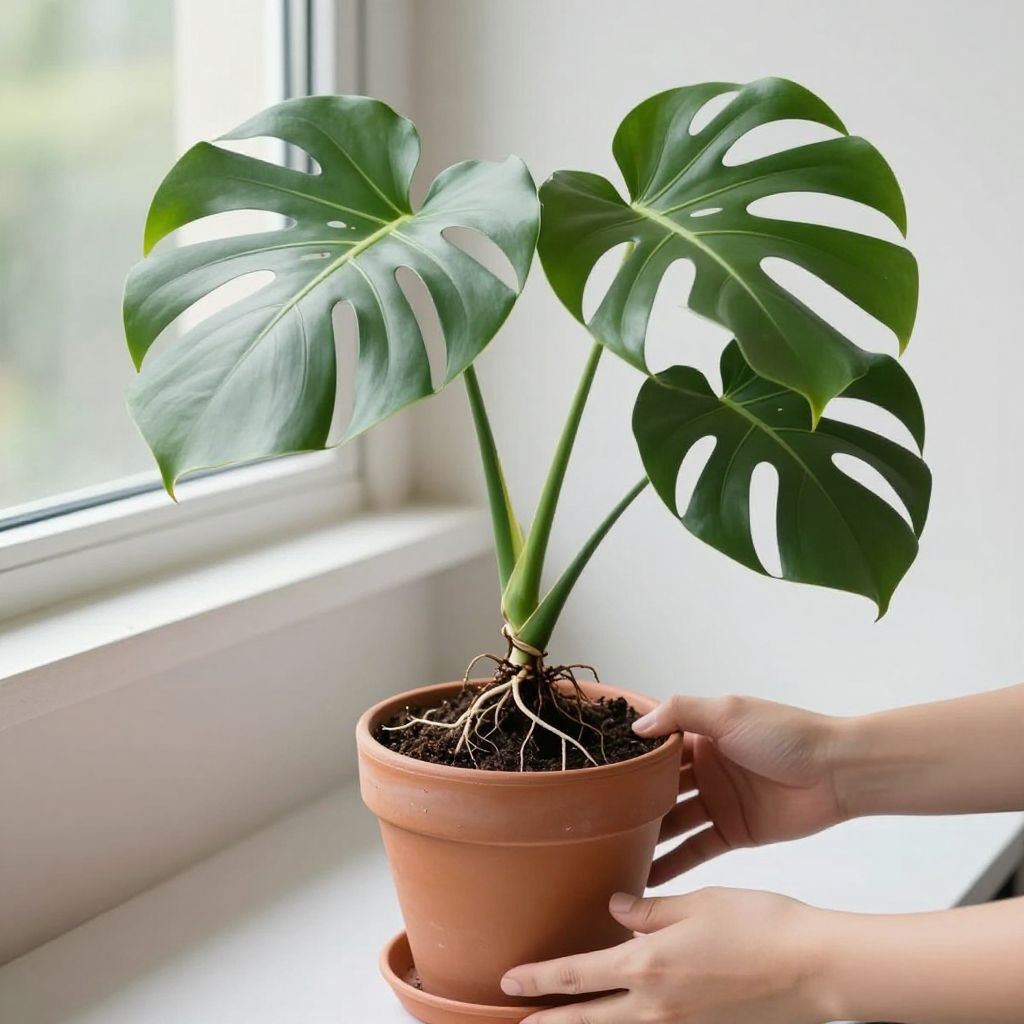
Wondering do Monsteras like to be root bound? In many cases, yes—slightly root bound Monsteras often grow well and may even put out more leaves and aerial roots. But there’s a limit: if the pot becomes too cramped, growth slows, watering becomes tricky, and the plant can decline.
The goal is not to keep a Monstera squeezed forever. It’s to give it enough room to stay healthy while avoiding an oversized pot that stays wet too long. The right balance depends on the plant’s size, your indoor conditions, and how quickly the mix dries out.
Do Monsteras Like to Be Root Bound?
Yes, Monsteras (especially Monstera deliciosa) usually tolerate being a little root bound, and many growers find they perform best when slightly snug in the pot. However, they do not like severe crowding. A mildly tight root system can encourage top growth, but a heavily packed pot restricts water uptake, airflow, and nutrient access.
How to Tell If Your Monstera Is Slightly Root Bound or Too Root Bound
A healthy Monstera can handle a bit of root crowding, but you need to know the difference between “comfortable” and “stressed.” Check the pot, the roots, and the plant’s behavior before deciding whether to repot.
Signs of a slightly root-bound Monstera
- Roots are visible at the drainage holes, but not overflowing heavily
- The plant dries out a little faster than before
- Growth is steady, though not explosive
- Leaves remain firm and healthy
- New leaves still emerge, even if more slowly
Signs your Monstera is too root bound
- Roots circle tightly around the root ball or emerge in thick mats
- Water runs straight through the pot or sits on top without soaking in well
- The plant wilts quickly after watering or between waterings
- Leaves yellow, brown at the edges, or stay smaller than usual
- Growth stalls for a long period, especially during active growing season
A quick pot check
- Slide the plant out of the pot if it comes out easily.
- Look for roots wrapping in circles or forming a dense shell.
- Check whether there is still some loose potting mix in the center.
- If the root ball is mostly roots with very little soil left, it is time to size up.
Why a Slightly Root-Bound Monstera Can Be Beneficial
Monsteras often do well when their roots have limited but not cramped space. A pot that is too large can hold excess moisture, especially indoors where light and airflow are lower than outdoors. That can increase the risk of root rot and slow down growth.
- Better moisture balance: A snug pot often dries evenly and reduces soggy soil.
- More stable growth: The plant may direct energy into leaves and stems instead of filling a huge pot with roots.
- Less risk of overpotting: Monsteras dislike sitting in wet soil for long periods.
That said, root crowding is only helpful up to a point. If the roots become severely compressed, the plant can’t take up enough water or nutrients, and the benefits disappear.
When to Repot a Monstera
Repot when the plant is clearly root bound, not just because it has been in the same pot for a year. The best time is usually during active growth, when the plant can recover faster. In many homes, that means spring or early summer, but your light, temperature, and indoor conditions matter more than the calendar.
Repot sooner if you notice
- Roots growing out of drainage holes in thick bundles
- Persistent wilting despite proper watering
- Soil drying out very quickly, sometimes within a day or two
- Top-heavy growth that makes the plant unstable
- Leaves becoming smaller or fewer new leaves appearing
Wait a little longer if
- The plant looks healthy and is still growing
- The pot is only modestly snug
- The mix still drains well and doesn’t stay waterlogged
- You recently repotted or moved the plant
How to Repot a Root-Bound Monstera the Right Way
If your Monstera has outgrown its container, repot it carefully. The aim is to move it into a pot only one size larger, refresh the soil, and avoid shocking the roots.
Choose the right pot
Select a pot with drainage holes that is about 2 to 5 cm (1 to 2 inches) wider than the current one. Avoid jumping to a dramatically larger container, because extra soil around the roots can stay wet too long.
Use an airy potting mix
Monsteras prefer a chunky, well-draining mix rather than dense garden soil. A good indoor mix usually includes ingredients that hold some moisture while leaving air pockets around the roots.
- High-quality potting mix
- Perlite or pumice for drainage
- Orchid bark or coco chips for structure
- A small amount of compost if you want added organic matter
The mix should feel loose and airy, not heavy and muddy. If it compacts tightly in your hand, it may hold too much water for a Monstera grown indoors.
Repotting steps
- Water the plant lightly a day before repotting if the soil is very dry.
- Remove the Monstera from its pot and gently loosen tightly circling roots.
- Trim only dead, black, or mushy roots if needed; avoid aggressive root pruning.
- Place fresh mix in the new pot and set the plant at the same depth it was growing before.
- Backfill with soil, firm lightly, and water thoroughly to settle the mix.
- Return the plant to bright, indirect light.
Do not bury the stem deeper than it was before. Monsteras can rot if the base sits too low in wet soil.
Indoor Care After Repotting
After repotting, give your Monstera a little recovery time. It may pause growth for a few weeks while roots adjust. That is normal if the plant otherwise looks healthy.
Watering after repotting
Water when the top layer of mix begins to dry, not on a fixed schedule. Newly repotted Monsteras often need less frequent watering at first because the roots are settling into fresh mix. Always check the pot with your finger before watering again.
Light and placement
Keep the plant in bright, indirect light. Too little light slows recovery and can make a root-bound plant look worse. Too much direct sun may scorch leaves, especially if the plant is already stressed.
Support and staking
As Monsteras mature, they often benefit from a moss pole, stake, or other support. A stable support can help the plant climb and reduce flopping, especially after repotting into a slightly larger pot.
Common Mistakes to Avoid
Many Monstera problems come from trying to “fix” root-bound growth too aggressively. A careful approach usually works better.
- Overpotting: Moving into a pot that is far too large can lead to soggy soil and root rot.
- Repotting too often: Monsteras do not need constant pot changes if they are still healthy.
- Using heavy soil: Dense mixes reduce airflow and hold too much water.
- Ignoring drainage: A decorative pot without drainage holes can trap excess moisture.
- Pulling roots apart roughly: Some loosening is fine, but tearing healthy roots can slow recovery.
What If You Want to Keep It in the Same Pot?
If your Monstera is only mildly root bound and still growing well, you can leave it in the same pot for a while longer. In that case, focus on maintenance rather than repotting.
- Refresh the top few centimeters of soil with fresh mix
- Check drainage holes for root congestion
- Watch how quickly the pot dries after watering
- Rotate the plant occasionally for even light exposure
- Prune weak, damaged, or crowded growth if needed
If the plant becomes unstable or starts drying out too fast, that is usually the sign to move it up one pot size.
Root-Bound Problems That Look Like Other Issues
Not every yellow leaf or drooping stem means the plant needs a bigger pot. Root-bound symptoms can overlap with other care issues, so look at the full picture.
Possible look-alikes
- Overwatering: Yellow leaves, soft stems, and soggy soil can mimic root stress
- Underwatering: Wilting and dry, crispy edges may happen if the plant is too dry
- Low light: Slow growth and smaller leaves may come from insufficient light, not just root crowding
- Pests: Spider mites, scale, or mealybugs can weaken the plant and reduce vigor
Before repotting, check soil moisture, light levels, and the undersides of leaves for pests. A healthy root system can still struggle if another care factor is off.
Can You Propagate a Root-Bound Monstera?
Yes, if your plant has healthy stems with nodes, you can propagate while repotting or pruning. This is a practical way to reduce size, refresh the parent plant, and create new plants.
Simple propagation approach
- Choose a healthy stem section with at least one node.
- Cut with clean, sharp pruners below the node.
- Root the cutting in water, moist sphagnum, or a suitable propagation medium.
- Keep it warm and in bright, indirect light.
Propagation is optional, not required. If your plant is only slightly root bound, repotting alone is usually enough.
Outdoor Monsteras and Root Bound Conditions
If you grow Monstera outdoors in a warm climate, the same basic rule applies: slightly snug is fine, severely cramped is not. Outdoor plants may dry faster because of heat, wind, and brighter light, so they can outgrow pots more quickly.
Check outdoor container plants more often during hot weather. A pot that is comfortable indoors may become root bound faster outside, especially in containers exposed to sun and airflow.
Bottom Line
So, do Monsteras like to be root bound? A little, yes. A slightly snug pot can support healthy growth, but severe root crowding will eventually cause stress. Watch the roots, the soil, and the plant’s growth pattern, then repot only when it truly needs more space.
If you want to learn more, it also helps to read about how to choose the right potting mix for indoor tropical plants and simple ways to support climbing houseplants with a moss pole.