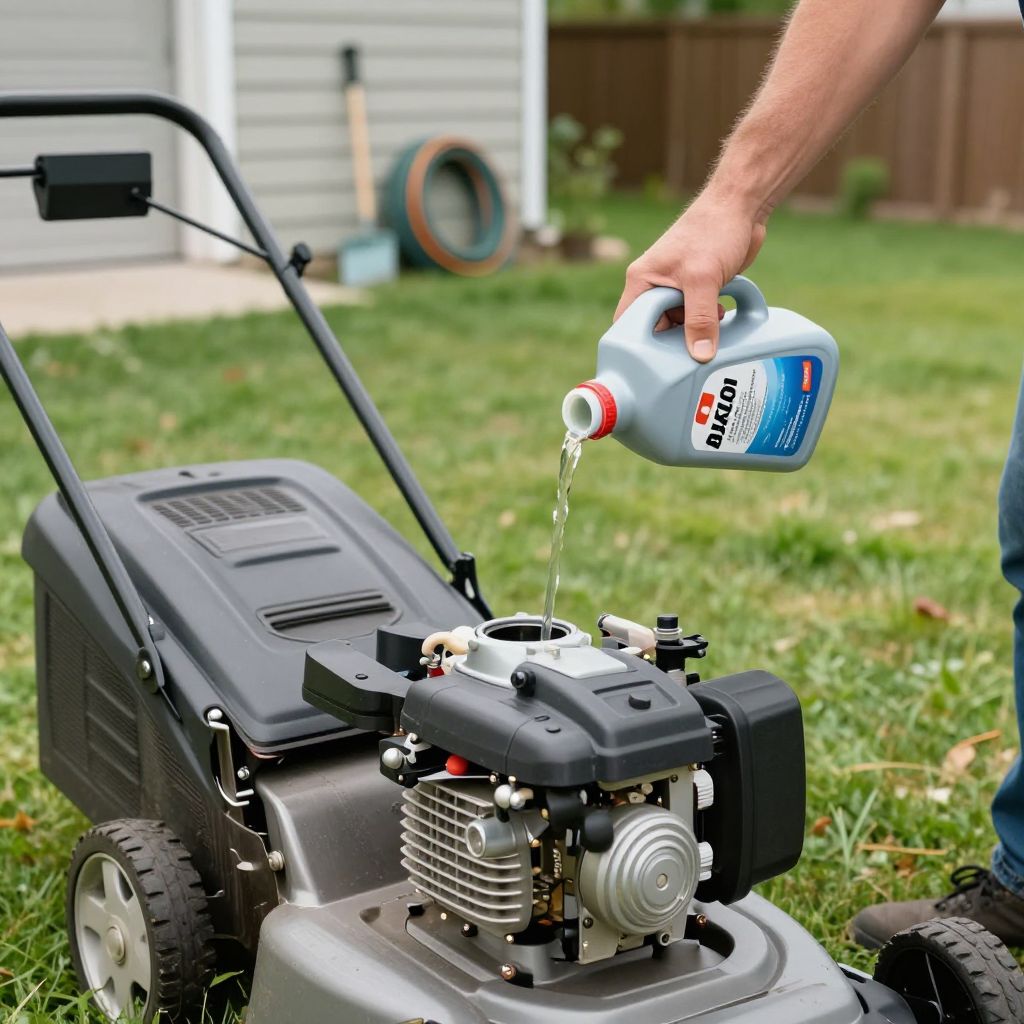
What type of oil for lawn mower should you use? The short answer is: check your mower’s manual first, then choose the oil grade the engine maker recommends, based on your climate and whether the engine is a 4-stroke or 2-stroke model.
Using the wrong oil can make starting harder, increase wear, and shorten engine life. The good news is that most modern walk-behind mowers and many riding mowers use straightforward oil choices, so once you know what to look for, maintenance is simple.
What type of oil for lawn mower should you use?
For most 4-stroke lawn mower engines, a high-quality detergent motor oil such as SAE 30, 10W-30, or 5W-30 is commonly recommended, depending on temperature. Always follow the owner’s manual first, because engine design, climate, and operating conditions determine the best viscosity and oil type.
Understand the difference between 4-stroke and 2-stroke mower engines
The first step is identifying your engine type, because the oil requirement is completely different.
4-stroke engines
Most push mowers, self-propelled mowers, and many riding mowers use a 4-stroke engine. These engines have a separate oil reservoir, and you add oil to the crankcase.
2-stroke engines
Some older or smaller equipment uses a 2-stroke engine. These engines do not have a separate oil sump; instead, oil is mixed with gasoline or used in a premix system according to the manufacturer’s instructions.
- Never put regular motor oil into a 2-stroke fuel tank unless the manual specifically says to mix it that way.
- Never run a 4-stroke mower on fuel-oil mix unless it was designed for it.
- If you are unsure, look for the oil fill cap and dipstick. A separate oil fill usually means a 4-stroke engine.
Which oil grades are commonly used in lawn mowers?
Common mower oils include SAE 30, 10W-30, and 5W-30. The right choice depends mainly on outdoor temperature. Thicker oil can protect well in warm weather, while lighter multigrade oil flows better during cooler starts.
SAE 30
SAE 30 is a classic choice for many small air-cooled engines in warm weather. It performs well when temperatures are consistently moderate to hot.
10W-30
10W-30 is a common multigrade oil that starts more easily in cooler conditions than SAE 30. It is often a practical choice for mowers used across changing spring and fall temperatures.
5W-30
5W-30 is often used in colder conditions because it flows better at startup. Some manufacturers also approve synthetic 5W-30 for a wider temperature range.
Synthetic oil
Synthetic oil can be a good option if your manual allows it. It often handles temperature swings well and may offer better stability during frequent mowing, but it should still match the engine’s viscosity recommendations.
- Use only oil approved by the mower manufacturer.
- For many small engines, detergent oil made for 4-stroke engines is the right category.
- If your manual lists several choices, pick the one that best fits your local temperatures.
How climate affects the best oil choice
Temperature matters because mower engines are air-cooled and work hard in open conditions. Oil that is too thick may make starting difficult in cool weather, while oil that is too thin for hot weather may not protect as well under load.
Cooler climates or early spring mowing
If you mow in cool mornings or in a region with mild to cold springs, a multigrade oil such as 10W-30 or 5W-30 may be easier on startup than SAE 30, if your manual allows it.
Hot climates and midsummer mowing
In consistently warm weather, SAE 30 is often a straightforward choice for many small engines. Some manuals also permit 10W-30 or synthetic oil in hot conditions, especially if the mower is used heavily.
Wide temperature swings
If your season changes quickly, a multigrade oil can be more practical than a single-grade oil. It helps the engine start more easily in cool weather while still providing protection when the engine heats up.
How to check the oil in a lawn mower
Checking the oil before each mowing session is one of the simplest ways to protect the engine. A low oil level can cause serious damage, especially on hot days or on sloped ground.
- Park the mower on level ground and turn it off.
- Let the engine cool for a few minutes.
- Remove the dipstick or oil cap as directed by the manual.
- Wipe it clean, reinsert it, then remove it again to read the level.
- Add oil slowly if needed, using small amounts at a time.
- Do not overfill. Too much oil can cause smoking, fouled spark plugs, and poor engine performance.
- Wipe up spills before starting the mower.
- Check the level more often if you mow frequently, on slopes, or in dusty conditions.
How to change lawn mower oil
Oil changes help remove dirt, combustion byproducts, and wear particles. Fresh oil is especially important after the first season of use or according to the service interval in the manual.
- Run the engine briefly so the oil warms slightly, then shut it off.
- Disconnect the spark plug wire for safety.
- Drain the oil into a suitable container, following the mower’s drain method.
- Replace the drain plug or close the drain system securely.
- Refill with the correct oil type and amount listed in the manual.
- Check the dipstick and top off only if needed.
Helpful oil-change reminders
- Change oil more often if the mower works in very dusty areas.
- Use a clean funnel to avoid contamination.
- Dispose of used oil at a recycling center or approved collection point.
Common mistakes to avoid
Most mower oil problems come from simple errors that are easy to prevent.
- Using car oil without checking the label — some automotive oils are fine, but not all are ideal for small air-cooled engines.
- Ignoring the manual — the manufacturer’s recommendation always comes first.
- Mixing up 2-stroke and 4-stroke engines — this is a common and costly mistake.
- Overfilling the crankcase — too much oil can cause smoking or engine flooding.
- Running with dirty oil too long — old oil loses its protective qualities and can increase wear.
Troubleshooting oil-related mower problems
If your mower is smoking, hard to start, or running roughly, the oil may be part of the issue.
White or blue smoke
This often points to too much oil, a mower tipped the wrong way during maintenance, or oil entering the combustion chamber. Check the level first and correct any overfill.
Hard starting
Oil that is too thick for the temperature can make starting harder, especially in cooler weather. Confirm that the oil grade matches the conditions and your manual.
Oil leaking or dripping
Check the drain plug, oil cap, and seals. Also make sure the mower was stored upright and not tipped in a way that allows oil to escape.
Dirty or milky oil
Very dirty oil may mean it is overdue for a change. Milky oil can suggest moisture contamination, which should be addressed before more mowing.
Seasonal oil care for better mower performance
Good mower maintenance changes with the season, just like garden care does.
- Spring: Check oil before the first mow and replace old oil if the mower sat unused all winter.
- Summer: Monitor oil more often during heavy mowing or hot weather.
- Fall: Keep the oil clean if you are mowing leaves or cutting damp grass.
- Storage: Change oil before long storage if the manufacturer recommends it, and store the mower clean and dry.
Quick guide: choosing the right oil
If you want a simple way to decide, use this checklist.
- Read the owner’s manual first.
- Confirm whether the engine is 4-stroke or 2-stroke.
- Match the oil viscosity to your local temperature range.
- Choose a reputable detergent oil for small engines if approved.
- Check the level regularly and change oil on schedule.
Final practical advice
The best answer to what type of oil for lawn mower is the one your mower’s manual specifies for your engine and climate. In many cases, that will be SAE 30, 10W-30, or 5W-30 for a 4-stroke mower, while 2-stroke engines need a proper fuel-oil mix instead.
If you are still unsure, inspect the engine label, note the model number, and compare it with the manual before adding anything. For more mower maintenance help, you may also find this guide useful: what kind of oil does a lawn mower take.