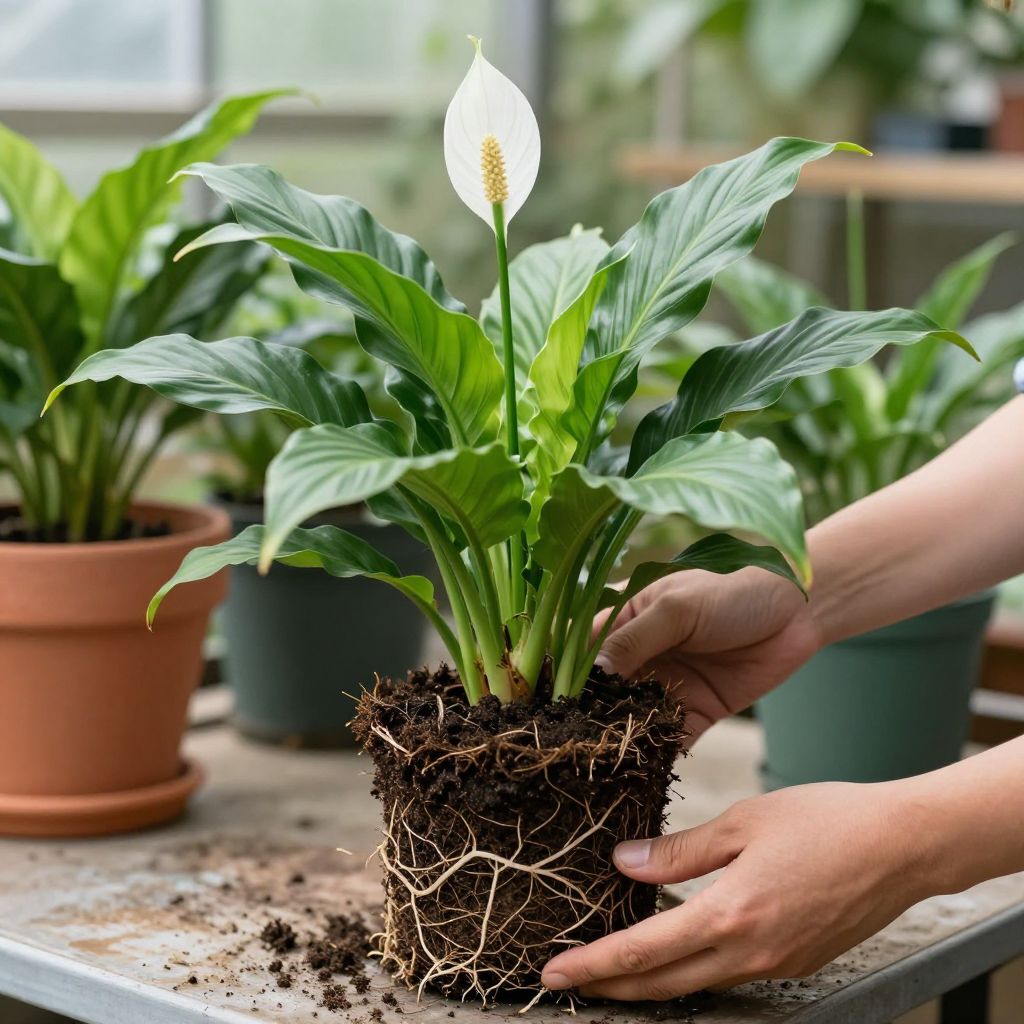
Do peace lilies like to be root bound? Yes, to a point. Spathiphyllum often grows and flowers best when its roots are slightly snug in the pot, but it should not be left cramped for too long. A mildly root-bound plant can bloom more readily, while an overpacked pot leads to stress, poor watering performance, and declining growth.
If your peace lily is pushing against the pot, the goal is not immediate panic repotting. Instead, check how crowded the roots are, how quickly the soil dries, and whether the plant is still growing well. A little root restriction can be helpful; severe crowding is not.
Do peace lilies like to be root bound?
Peace lilies do best when slightly root bound, meaning the roots fill the pot but still have enough room for water, air, and new growth. This mild snugness can encourage flowering in mature plants. Once roots circle tightly, push the plant upward, or block water from soaking in, it is time to repot.
How to tell when a peace lily is too root bound
A peace lily may tolerate a snug pot, but it will show clear signs when the root system has outgrown its container. Look for a combination of symptoms rather than one sign alone.
Common signs of a crowded root system
- Roots growing out of drainage holes
- Water running straight through the pot without soaking in
- Soil drying out very quickly after watering
- Leaves wilting soon after watering, or staying limp even when soil is moist
- The pot bulging, cracking, or becoming hard to remove
- Slow growth and fewer new leaves
- Smaller blooms or no blooms on a mature plant
What a healthy “slightly root-bound” plant looks like
- The plant still makes new leaves
- Water soaks into the mix normally
- Leaves stay firm between waterings
- The pot is full, but not packed solid with roots
Important: A peace lily that wilts because it is root bound can look similar to one that is underwatered. Check the root ball and soil moisture before you change your care routine.
Why a little root restriction can help flowering
Peace lilies are often grown for their glossy foliage and white spathes, and mature plants may bloom more reliably when the roots are somewhat confined. In a very large pot, the plant may spend more energy filling soil with roots than producing flowers.
That said, root restriction is not a flowering trick you want to push too far. A plant that is severely cramped may stop blooming altogether because it is under stress. The sweet spot is a pot that feels full, not suffocating.
Why overpotting can backfire
- Extra soil holds moisture longer than the roots can use
- Wet soil increases the risk of root rot
- The plant may focus on root growth instead of blooms
- Large pots can make watering inconsistent
When to repot a peace lily
Repot when the plant is clearly outgrowing its container, not just because it has been in the same pot for a year or two. Peace lilies often prefer being repotted only when necessary, and many indoor plants do fine when moved up one pot size at a time.
Best timing for repotting
For indoor plants, repot during active growth if possible, when the plant can recover more quickly. If your peace lily is stressed from heat, low light, cold drafts, or a recent move, wait until conditions are steadier.
Choose the right pot size
Move up only one size, usually about 1 to 2 inches wider in diameter for smaller plants, or a modest step up for larger specimens. A pot that is too large can hold excess moisture and slow the plant down.
How to repot a root-bound peace lily
Repotting is straightforward if you work gently and avoid damaging the roots. Peace lilies have fleshy roots that can be sensitive to rough handling, so use a careful, steady approach.
- Water the plant lightly a few hours before repotting so the root ball is easier to remove.
- Choose a pot with drainage holes.
- Use a loose, well-draining indoor potting mix.
- Slide the plant out and loosen circling roots gently with your fingers.
- Trim only dead, mushy, or broken roots if needed.
- Set the plant at the same depth it was growing before.
- Fill around the root ball with fresh mix and firm lightly.
- Water thoroughly, then let excess drain away.
Do not bury the crown too deeply. Peace lilies can rot if the base sits below the soil line or stays constantly wet.
If the plant is severely root bound
When roots are tightly matted, you may need to tease them apart a bit more than usual. If the outer roots are circling hard, make a few shallow vertical cuts through the root ball with clean pruners or a knife. This encourages roots to grow outward into the new mix.
Best soil and drainage for peace lilies
Peace lilies prefer a mix that stays evenly moist but never soggy. A good indoor potting mix with added perlite, fine bark, or similar aerating material usually works well. The main goal is moisture retention without compaction.
What to look for in a potting mix
- Light, airy texture
- Good drainage
- Some moisture-holding ability
- No heavy garden soil in containers
If your mix becomes dense and waterlogged over time, the roots may suffer even if the pot size is appropriate. Old, compacted soil can mimic the problems of being root bound.
Watering a peace lily that is root bound
Root-bound peace lilies often dry out faster than usual because there is less soil to hold moisture. That does not mean you should water on a fixed schedule. Instead, check the plant and water based on how quickly the top layer dries and how the pot feels.
Practical watering tips
- Water when the top 1 inch of mix feels dry, or slightly deeper for larger pots
- Water until it drains from the bottom
- Empty saucers so the pot does not sit in water
- If water beads on the surface, the mix may be compacted or hydrophobic
If a very dry root ball repels water, soak the pot slowly from the top in stages or set it in a tray of water briefly so the mix can rehydrate evenly. Then let it drain well.
Light, temperature, and indoor growing conditions
Peace lilies grow best in bright, indirect light. Too much direct sun can scorch leaves, while low light can slow growth and reduce blooming. A root-bound plant still needs good light to stay healthy and recover after repotting.
Helpful indoor conditions
- Bright, filtered light near an east- or north-facing window, or set back from a stronger window
- Warm room temperatures without cold drafts
- Moderate humidity, especially in dry heated homes
If your home is very dry, the plant may need more frequent watering, but avoid mistaking dry air for a need to keep the soil constantly wet. The roots need oxygen as much as they need moisture.
Pruning and general maintenance
Routine cleanup helps a peace lily use its energy well, especially if it has been root bound for a while. Remove yellow, brown, or damaged leaves at the base with clean scissors. Spent flower stalks can also be cut off once they fade.
Maintenance that supports recovery
- Wipe dust from leaves so they can photosynthesize efficiently
- Rotate the pot occasionally for even growth
- Inspect the plant when watering for pests or declining roots
Common problems mistaken for root binding
Not every droopy or slow peace lily is root bound. Several other issues can cause similar symptoms, so it helps to check the whole plant before repotting.
Underwatering
Dry soil, limp leaves, and a lightweight pot often point to underwatering. The plant may perk up after a thorough soak if roots are still healthy.
Overwatering and root rot
Yellowing leaves, a sour smell from the soil, and consistently wet mix may mean the roots are suffocating. In that case, repotting into fresh, airy soil may be needed, but the problem is excess moisture, not crowding alone.
Pests
Spider mites, mealybugs, and scale can weaken a peace lily and slow growth. Check leaf undersides and stems if the plant looks tired even though the pot size seems fine.
Should you divide a root-bound peace lily?
You can divide a large, crowded peace lily if you want more plants. Division is best done when the plant is healthy and actively growing. Each division should have several leaves and a reasonable amount of roots attached.
Division basics
- Remove the plant from the pot
- Gently separate natural clumps
- Use a clean knife only if the root mass is too tight to pull apart
- Pot each section into a small, well-draining container
Dividing a plant that is already stressed can slow recovery, so only do it when the plant is vigorous enough to handle the change.
Practical mistakes to avoid
- Moving a slightly root-bound plant into a pot that is far too large
- Using heavy garden soil in a container
- Letting the pot sit in standing water
- Repotting during a period of poor light or cold stress
- Ignoring drainage holes
- Assuming every wilt means the plant needs more water
Simple rule of thumb for peace lily potting
If your peace lily is healthy, blooming, and watering behaves normally, it may be fine staying slightly snug in its pot. If roots are circling heavily, water runs through too fast, or growth has stalled, it is time to repot one size up.
For more help with indoor plant care, you may also find it useful to read about how to repot houseplants without shocking them and choosing the right potting mix for indoor plants.