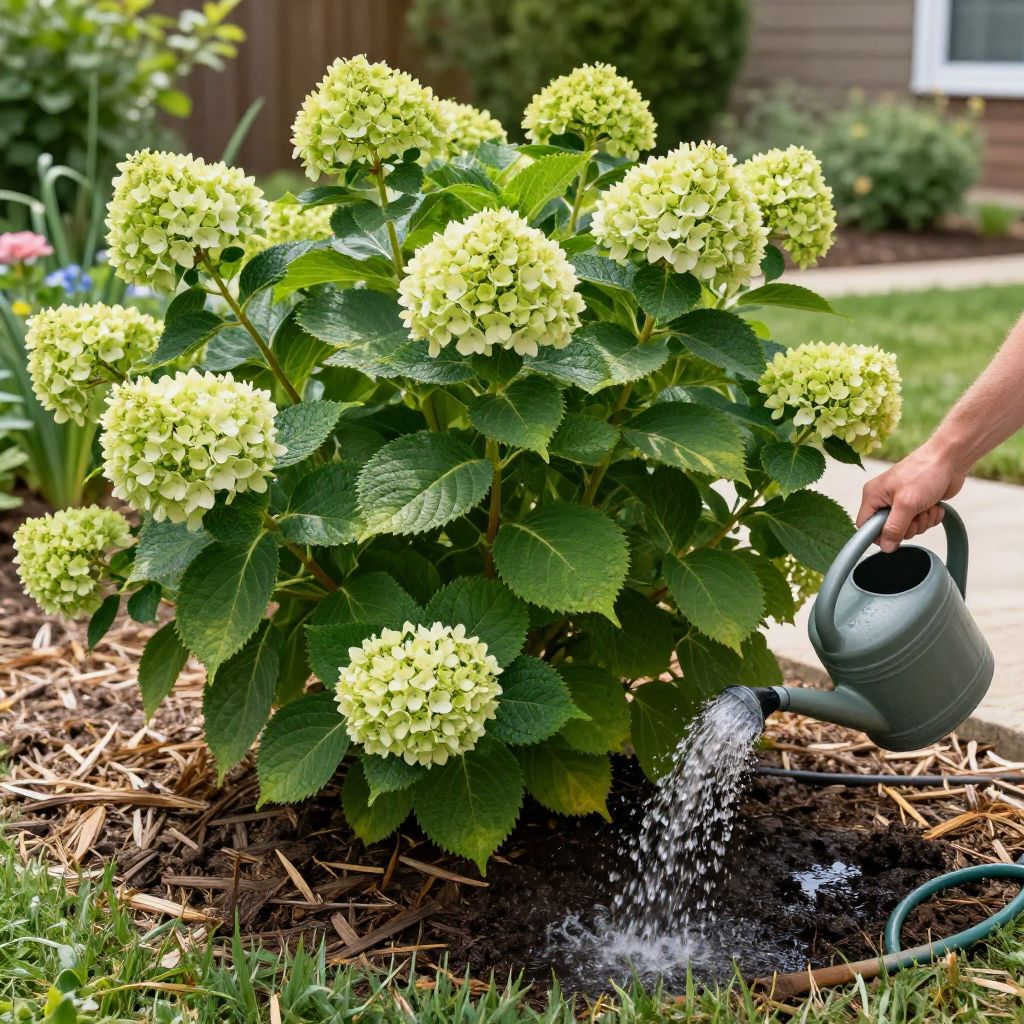
Do hydrangeas need a lot of water? Usually, yes—but not constant soaking. Hydrangeas grow best in evenly moist soil that never stays waterlogged. Their large leaves and flower clusters lose moisture quickly, so they wilt fast in heat or dry weather, but too much water can cause root problems just as easily as drought.
The right amount depends on your soil, sun exposure, plant age, and weather. A newly planted hydrangea needs more frequent watering than an established shrub, and a plant in sandy soil will dry out much faster than one in rich loam.
Do hydrangeas need a lot of water?
Hydrangeas need regular, deep watering, especially while they are establishing and during hot or windy weather. They prefer consistently moist soil, not soggy ground. If the top few inches dry out, leaves may droop quickly, but the plant usually recovers after a thorough watering if the roots have not been stressed for too long.
How much water hydrangeas really need
There is no single schedule that fits every garden. The best approach is to water when the soil starts to dry below the surface, then water deeply so moisture reaches the root zone.
What “deep watering” means
- Water slowly so it soaks into the soil instead of running off.
- Moisten the root area to a depth of about 6 to 8 inches for established shrubs.
- For young plants, keep the root ball and surrounding soil evenly moist while roots spread outward.
In many gardens, that means a thorough watering once or twice a week during dry weather, but hot spells, container planting, or sandy soil may require more frequent attention. Cool, cloudy, or rainy periods may require very little supplemental water.
Best way to check soil moisture
- Insert your finger 2 to 3 inches into the soil near the base of the plant.
- If it feels dry at that depth, water.
- If it feels cool and moist, wait and check again later.
This simple test is more reliable than watering by the calendar. Hydrangeas can look thirsty in the afternoon heat even when the soil still has enough moisture.
Why hydrangeas wilt so quickly
Hydrangeas have broad leaves that lose water fast, especially in sun and heat. Some varieties also droop dramatically during the hottest part of the day, then recover in the evening. That does not always mean the plant is failing; it may simply be reacting to temporary stress.
When wilting is a real problem
Take action if the plant stays limp in the morning, the soil is dry several inches down, or the leaves turn crispy at the edges. Those signs point to true water stress rather than normal midday droop.
- Temporary droop: plant perks up later, soil is still moist.
- Water stress: leaves stay wilted, soil is dry, growth slows.
- Overwatering: leaves may yellow, roots may smell sour, soil stays wet.
Watering hydrangeas by plant age
Newly planted hydrangeas
New shrubs need the most attention because their roots are still limited. Keep the planting area evenly moist for the first growing season, especially during warm weather and while the plant is settling in.
Water deeply after planting, then check the soil often. A young hydrangea may need watering every few days in hot weather, but less often in cool or rainy conditions.
Established hydrangeas
Once rooted in, hydrangeas become more forgiving, but they still dislike prolonged dryness. Established plants usually do best with occasional deep watering rather than frequent light sprinkling.
Light surface watering encourages shallow roots. Deep watering helps roots grow downward, which improves drought tolerance and overall plant health.
Soil, drainage, and why they matter so much
Hydrangeas need moisture, but they also need air around the roots. Heavy clay that stays wet can suffocate roots, while sandy soil may drain so quickly that the plant dries out between waterings.
Ideal soil conditions
- Rich, organic soil that holds moisture without becoming muddy.
- Good drainage so excess water can move away from the roots.
- A 2- to 3-inch mulch layer to slow evaporation.
Adding compost at planting time can improve both moisture retention and drainage. If your soil is very sandy, compost helps it hold water longer. If your soil is heavy clay, organic matter helps it loosen and drain better over time.
Mulch helps more than people realize
A mulch layer is one of the easiest ways to reduce watering needs. Use shredded bark, leaf mold, pine straw, or similar organic mulch, and keep it a few inches away from the stems.
Do not pile mulch against the crown or stems. That traps moisture and can lead to rot or pest problems.
Sun exposure changes watering needs
Hydrangeas in morning sun and afternoon shade usually need less water than plants in full sun. More sun means faster evaporation, more leaf stress, and a greater chance of wilting in dry weather.
How to adjust for light conditions
- Full sun: check moisture more often and water more deeply.
- Part shade: usually the easiest balance for many gardens.
- Hot reflected light: patios, walls, and driveways can dry soil fast.
If your hydrangea is planted in a hot spot, you may need to water more often than a plant growing in cooler shade. Afternoon shade is especially helpful in warm climates.
Container hydrangeas need extra care
Potted hydrangeas dry out much faster than garden-planted shrubs because containers heat up and lose moisture quickly. If you grow hydrangeas in pots, they may need water far more often during summer.
Container watering tips
- Use a large pot with drainage holes.
- Check moisture daily in hot weather.
- Water until excess drains from the bottom.
- Do not let the pot sit in standing water for long periods.
Container plants also benefit from a moisture-retentive potting mix and a layer of mulch on top of the soil. In very hot weather, a potted hydrangea may need morning watering and a second check later in the day.
Common watering mistakes to avoid
1. Watering a little every day
Frequent shallow watering keeps moisture near the surface and encourages weak roots. It is usually better to water deeply, then let the top layer of soil begin to dry before watering again.
2. Letting the plant sit in soggy soil
Hydrangeas like moisture, but they do not like swampy roots. If the soil stays wet for days, check drainage, reduce watering, and consider improving the planting area with organic matter.
3. Relying only on wilted leaves
By the time a hydrangea wilts badly, it may already be stressed. Check the soil first, especially in hot weather, so you can water before the plant suffers.
4. Watering the leaves instead of the roots
Spraying foliage does little for root hydration and can encourage disease if leaves stay wet overnight. Aim water at the base of the plant.
Seasonal watering guidance
Spring
As growth starts, hydrangeas need steady moisture to support new leaves and stems. Spring rain may be enough in some regions, but dry windy periods can quickly dry the soil.
Summer
This is the season when hydrangeas usually need the most water. Heat, sun, and active growth all increase demand. Check soil often, especially after several dry days.
Fall
Watering can often be reduced as growth slows, but do not let the plant dry out completely during warm autumn spells. Consistent moisture helps roots store energy before winter.
Winter
Outdoor hydrangeas usually need far less water when dormant, but newly planted shrubs in mild climates may still need occasional watering during dry spells. Water only when the soil is not frozen and conditions are dry.
Signs your hydrangea is getting too much or too little water
Too little water
- Leaves droop during the day and stay wilted.
- Leaf edges turn brown and crispy.
- Flowers fade or dry quickly.
- Growth slows during warm weather.
Too much water
- Leaves turn yellow or look soft.
- Soil stays wet and may smell sour.
- Stems may weaken.
- Roots can rot if drainage is poor.
If you are unsure, inspect the soil before watering. Hydrangeas recover better from a brief dry spell than from roots that remain waterlogged for too long.
Practical care tips that reduce watering stress
- Plant hydrangeas where they get morning sun and afternoon shade in hot climates.
- Work compost into the planting area before setting the shrub in place.
- Mulch to conserve moisture and moderate soil temperature.
- Water early in the day when possible.
- Use a soaker hose or drip irrigation for slow, even soaking.
These habits help the soil stay evenly moist without constant attention. They also reduce stress that can make hydrangeas more vulnerable to pests and diseases.
Do hydrangeas need a lot of water to bloom well?
Hydrangeas bloom best when they have steady moisture, but more water is not always better. A plant that dries out repeatedly may produce fewer or smaller flowers, while one that sits in wet soil may struggle to grow at all.
The goal is balance: enough water to keep the root zone evenly moist, enough drainage to keep roots healthy, and enough mulch to slow evaporation. That balance supports stronger stems, healthier leaves, and better flowering over time.
Conclusion: the simple rule for watering hydrangeas
Hydrangeas do need regular water, but not a flood. Keep the soil evenly moist, water deeply when the top few inches begin to dry, and adjust for heat, sun, soil type, and plant age. If you want to improve results right away, check the soil today and add mulch if the root zone is bare.
For more practical hydrangea care, you may also want to read about how to prune hydrangeas correctly and the best soil amendments for flowering shrubs.