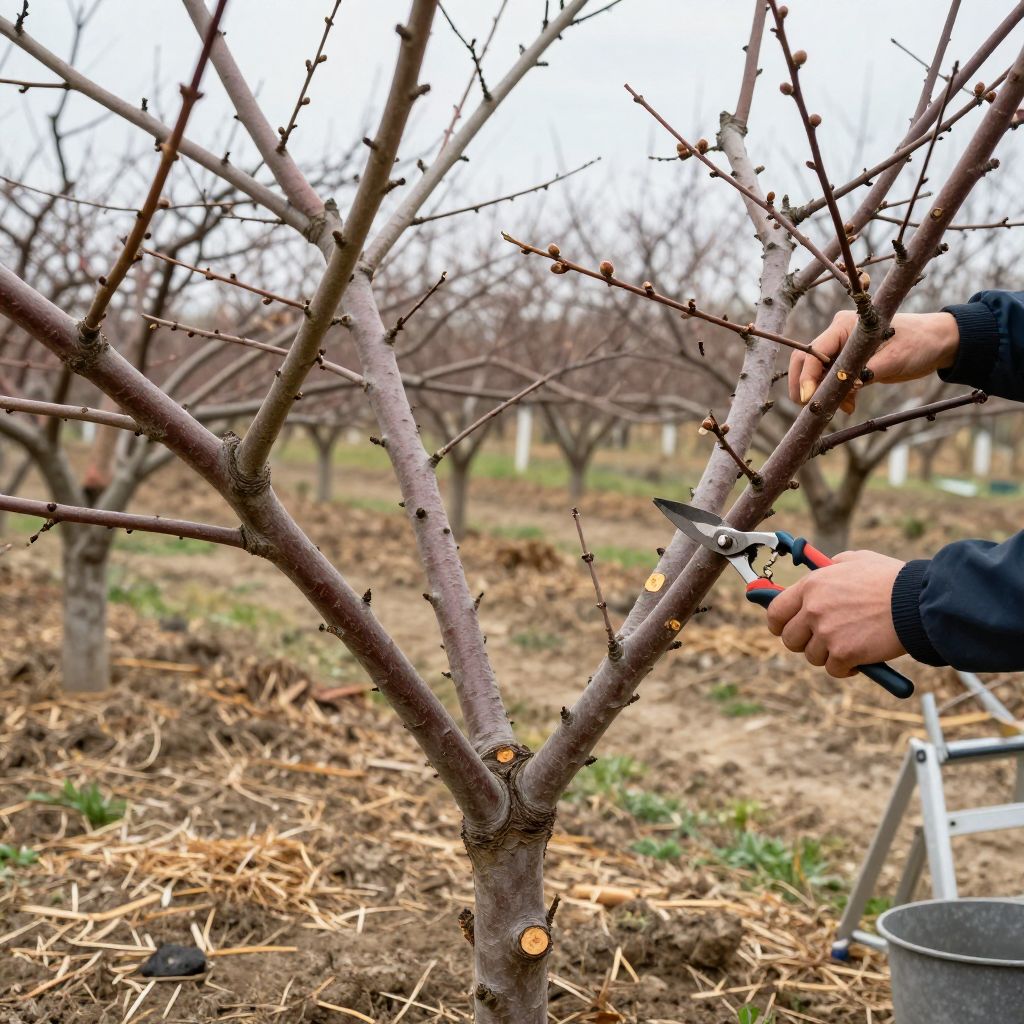
If you’re wondering when to prune peach trees, the short answer is: prune them in late winter to very early spring, just before buds swell, in most climates. That timing helps you shape the tree while it’s dormant and reduces the risk of winter injury to fresh cuts.
For established peach trees, a light summer touch-up can also help control vigor and improve light penetration. The best timing, though, depends on your climate, tree age, and whether you’re doing major shaping or just removing problem growth.
When to prune peach trees?
Prune peach trees in late winter or very early spring, after the coldest weather has passed but before active growth begins. This is the main pruning window because it lets you see the tree’s structure clearly and encourages strong new fruiting wood. In colder climates, wait until the worst freeze risk is over.
Why timing matters for peach tree pruning
Peach trees fruit on one-year-old wood, so pruning is not just about size control. It directly affects how much new growth the tree makes and where next season’s peaches will form.
Pruning at the wrong time can cause problems:
- Too early in winter: fresh cuts may be damaged by severe cold.
- Too late in spring: you may remove buds and reduce the crop.
- During wet weather: disease pressure can be higher, especially if your area has peach leaf curl or bacterial issues.
Done at the right time, pruning helps keep the canopy open, improves sunlight on fruiting wood, and makes harvest easier.
Best season by climate and tree condition
Late winter to early spring
This is the standard time for most home gardeners. Aim for a period when the tree is still dormant or just beginning to wake up, but before buds open widely.
After the last hard freeze in colder areas
If your winters are severe, avoid pruning too early. A late cold snap can damage exposed wood or slow healing. In these regions, a slightly later pruning window is often safer than an early one.
Summer pruning for light correction
After harvest or during active growth, you can remove vigorous upright shoots, water sprouts, and broken branches. Summer pruning should be lighter than dormant pruning and is best used to improve light and keep the tree manageable.
Avoid heavy pruning in autumn
Fall pruning is usually a poor choice for peach trees. It can stimulate tender new growth before winter and leave the tree more vulnerable to cold injury.
How to prune a peach tree step by step
Peach trees are usually trained to an open-center or vase shape because this structure lets sunlight into the middle of the tree. That improves fruit color, size, and overall airflow.
- Start with dead, damaged, or diseased wood. Remove broken branches and anything that looks dead or infected.
- Take out inward-growing branches. Open the center so light and air can move through the canopy.
- Remove crossing or rubbing limbs. These can create wounds and unnecessary crowding.
- Shorten overly long shoots. Cut back vigorous growth to encourage branching and keep the tree balanced.
- Keep the main scaffold branches well spaced. Aim for a strong, open framework rather than a dense thicket.
Make clean cuts just outside the branch collar, using sharp, clean pruners or a pruning saw for larger limbs. Avoid leaving long stubs, which can die back and invite disease.
How much should you prune?
Peach trees usually tolerate fairly strong annual pruning compared with many other fruit trees. The goal is to encourage new fruiting wood, not simply to reduce size.
As a general rule, remove enough growth to keep the tree open and productive, but avoid stripping it back so hard that it sends up a flush of weak, upright shoots. If the tree is very overgrown, spread heavy renovation over more than one season when possible.
Young peach trees
Young trees need training more than severe cutting. Focus on building the open-center shape early so the tree develops a strong structure.
- Select a few well-spaced scaffold branches.
- Remove competing leaders and low, awkward shoots.
- Shorten selected branches to encourage branching and balance.
Mature peach trees
Older trees need annual renewal pruning to keep fruiting wood productive. Peach trees decline in quality when they become too dense and shaded, so consistent pruning matters more than occasional drastic cuts.
Common pruning mistakes to avoid
- Pruning at the wrong time: especially very late in spring or too early before hard freezes are over.
- Leaving the center crowded: this reduces light and can lower fruit quality.
- Over-pruning one year and neglecting the next: peach trees do best with steady yearly maintenance.
- Using dull or dirty tools: ragged cuts heal more slowly and can spread disease.
- Ignoring suckers and water sprouts: these can drain energy from productive wood.
Tools and pruning hygiene
Use bypass hand pruners for small shoots, loppers for medium branches, and a pruning saw for larger limbs. Clean tools make cleaner cuts, which matters for peach trees because they can be prone to canker and other wood problems.
Before you start, wipe blades with rubbing alcohol or another suitable disinfectant, especially if you’ve been cutting diseased wood. If you move from one tree to another and suspect disease, clean tools again.
What to do after pruning
After pruning, step back and look at the tree from a distance. The canopy should feel open, balanced, and easy for sunlight to reach through.
Then do the basics of tree care:
- Remove pruned debris from the area, especially diseased wood.
- Mulch around the root zone, but keep mulch a few inches away from the trunk.
- Water deeply during dry spells, especially for young trees, but avoid waterlogged soil.
- Watch for new shoots that grow straight up and thin them if needed later.
If your tree is in poor soil or drains slowly, fix those conditions first. Peach trees need well-drained soil and full sun to stay vigorous and recover well from pruning.
Special situations: disease, frost, and neglected trees
If your area has peach leaf curl
Pruning alone won’t solve peach leaf curl, but good timing and an open canopy can help reduce humidity in the tree. Remove infected shoots when you see them, and keep the tree well ventilated.
If frost is forecast after pruning
Light pruning usually isn’t a disaster, but avoid major cuts right before a hard freeze if you can. If you’ve already pruned and cold weather returns, there’s usually no need to panic; just avoid adding more stress.
If the tree has been neglected
Don’t try to fix everything in one season. Remove dead wood, improve the structure, and reduce crowding gradually. A very hard cut can trigger excessive water sprouts and weaken fruiting.
How pruning affects fruiting
Peach trees produce best on young, vigorous shoots, so annual pruning helps replace old wood with fresh growth. Without pruning, the tree often becomes shaded and crowded, which can mean smaller fruit and fewer productive branches.
Good pruning also helps:
- Improve fruit size and color
- Reduce branch breakage from heavy crop loads
- Make thinning and harvesting easier
- Lower the chance of disease by improving airflow
Quick pruning checklist
- Choose late winter or very early spring in your climate.
- Remove dead, damaged, and diseased wood first.
- Keep the center open and bright.
- Preserve strong, well-spaced scaffold branches.
- Use clean, sharp tools and make clean cuts.
- Save heavier cleanup for the dormant season and lighter corrections for summer.
If you want to keep your peach tree productive, the most important habit is simple: prune it every year at the right time, before buds open, and keep the canopy open to light. For more fruit tree care, you may also want to read about pruning young trees and maintaining healthy orchard soil.