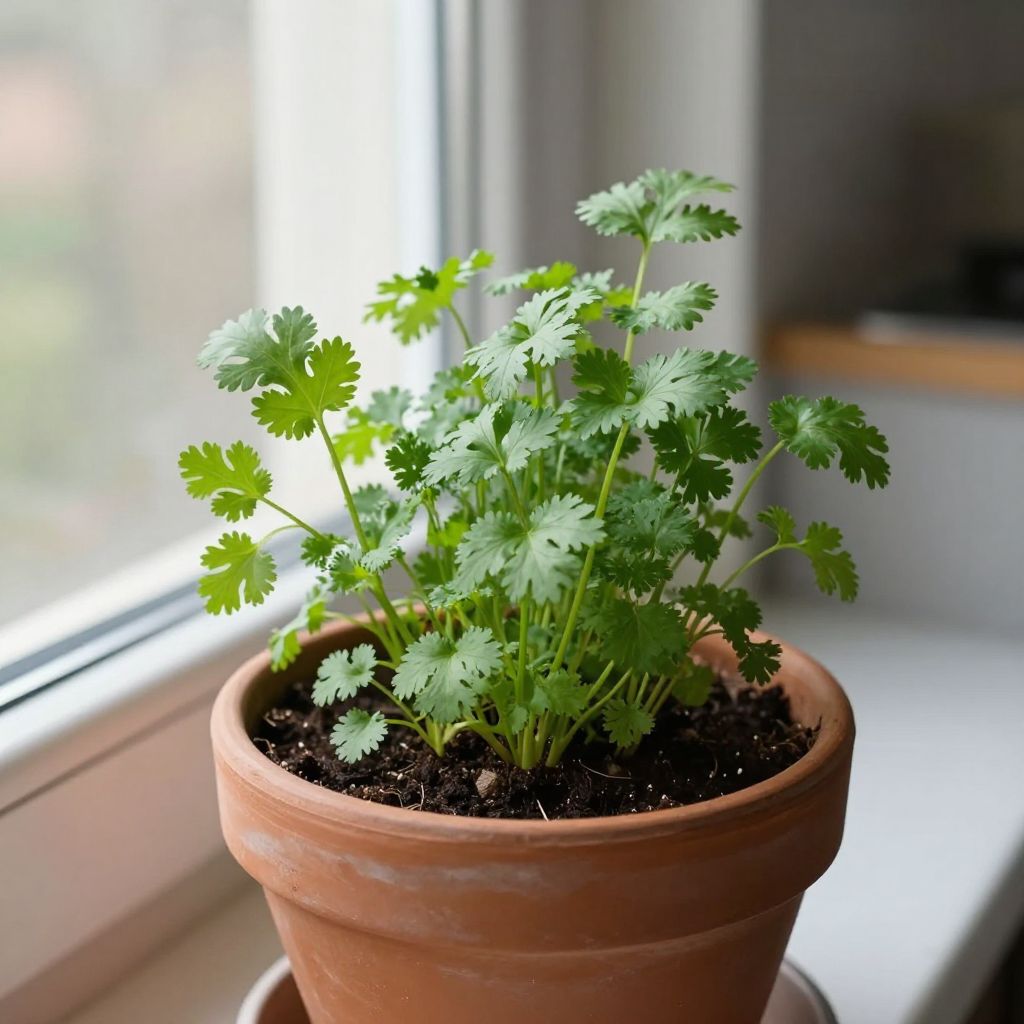
Can you grow cilantro indoors? Yes—you can, and in many homes it’s the easiest way to keep a steady supply of fresh leaves. The key is giving cilantro enough light, cool temperatures, and a pot with excellent drainage.
Indoor cilantro is a little different from outdoor cilantro: it tends to bolt faster in warm, dim rooms, but with the right setup you can harvest usable leaves for weeks. If you match the plant’s needs closely, it can do very well on a sunny windowsill or under grow lights.
Can you grow cilantro indoors?
Yes, cilantro (Coriandrum sativum) grows well indoors if you provide bright light, cool conditions, and evenly moist soil. The biggest challenge is preventing bolting, which happens when the plant gets too warm, too dry, or too crowded. Indoor growers usually have the best results with frequent sowings and regular harvesting.
What cilantro needs to grow well indoors
Light
Cilantro needs strong light to stay compact and leafy. A south- or west-facing window may work, but many homes still need supplemental grow lights, especially in winter or in rooms with filtered sun.
- Best option: 12 to 14 hours of bright light daily
- Window growing: place the pot as close to the glass as possible
- Grow lights: keep them close enough to prevent stretching, but not so close that leaves scorch
If the stems become long and thin, the plant is not getting enough light. That’s one of the most common reasons indoor cilantro becomes weak and bitter.
Temperature
Cilantro prefers cool conditions. Indoors, that usually means a room kept around 60 to 70°F, with good air movement and no hot drafts from vents, radiators, or kitchen appliances.
Warm rooms push cilantro toward flowering. If your home is consistently warm, expect a shorter harvest window and plan to sow new seeds more often.
Container and drainage
Choose a pot with drainage holes. Cilantro has a relatively fine root system and dislikes soggy soil, so a container that drains well is essential.
- Pot depth: at least 8 inches is a good starting point
- Drainage: never let the pot sit in standing water
- Material: plastic, ceramic, or terracotta all work if drainage is good
A wider pot can help if you want to sow several seeds for a fuller harvest. Just avoid overcrowding, which can increase disease and encourage early flowering.
How to plant cilantro indoors
Start from seed for the best results
Cilantro is usually grown from seed rather than transplanted as a mature plant. It forms a long taproot, so direct sowing into the final pot is often the simplest and most reliable method.
- Fill a clean pot with a quality potting mix.
- Moisten the mix lightly before sowing.
- Plant seeds about 1/4 inch deep.
- Space seeds a little apart, then thin seedlings if needed.
- Keep the soil evenly moist until germination.
Seeds usually sprout in about 1 to 3 weeks, depending on temperature and seed freshness. If germination is slow, the mix may be too dry or too cool.
Use a light, well-draining potting mix
Regular garden soil is usually too dense for containers. Use a high-quality indoor potting mix that drains well and still holds some moisture.
If the mix feels heavy, you can improve it with a small amount of perlite or fine compost, but don’t make it so rich that it stays wet for too long. Cilantro grows best in soil that is moist, not muddy.
Watering cilantro indoors
Water cilantro when the top inch of soil begins to dry. The goal is consistent moisture without waterlogging the roots. Letting the plant dry out completely can cause stress, bitterness, and early flowering.
How to tell when to water
- Touch the soil with your finger; if the top inch feels dry, water
- Lift the pot; a very light pot often needs water
- Watch the leaves; limp growth can signal drought stress
Water thoroughly until excess drains from the bottom, then empty the saucer. Frequent shallow watering is less helpful than a good soak followed by proper drainage.
Feeding cilantro indoors
Cilantro does not need heavy feeding. Too much fertilizer can produce lush but weak growth, and in some cases it can reduce flavor.
If your potting mix is fresh and contains compost, you may not need to feed right away. For longer-lived plants, a light application of a balanced liquid fertilizer at a diluted strength can help, but only if growth slows and the plant is otherwise healthy.
As a rule, avoid overfeeding. Indoor herbs usually do better with modest nutrition and strong light than with rich fertilizer and poor light.
Pruning, pinching, and harvesting
Harvest early and often
Regular harvesting helps cilantro stay productive. Snip outer leaves first and leave the center growing point intact so the plant can keep producing.
- Use clean scissors or snips
- Take the outer stems first
- Leave at least one-third of the plant behind
Once cilantro starts sending up a central stalk, leaf production slows. At that stage, you can still harvest some foliage, but the plant is shifting toward flowering and seed production.
Pinching helps, but it won’t stop bolting forever
Pinching young cilantro can encourage a fuller shape for a short time. However, cilantro is naturally fast to flower, especially indoors if conditions are warm or light is insufficient.
The best strategy is to harvest frequently and sow new seeds every few weeks if you want a steady indoor supply.
How to keep indoor cilantro from bolting
Bolting is the main reason indoor cilantro disappoints. Once it flowers, the leaves become smaller and often less tender, so prevention matters more than rescue.
Common causes of bolting
- Too much heat
- Insufficient light
- Dry soil stress
- Overcrowding in the pot
- Planting too late in the plant’s life cycle
To slow bolting, keep the plant cool, harvest regularly, and avoid letting it dry out. If your home is warm, expect a shorter harvest period and plan succession sowings.
Best way to grow cilantro indoors year-round
The most reliable indoor method is succession planting. Instead of depending on one plant for months, sow a small batch of seeds every 2 to 3 weeks so new plants are ready as older ones fade.
This approach works especially well because cilantro naturally has a limited productive window. Fresh seedlings often taste better and stay leafy longer than older plants.
Simple indoor growing routine
- Sow a new pot of seeds regularly.
- Keep the soil evenly moist during germination.
- Move seedlings into the brightest spot you have.
- Thin crowded plants so air can move around them.
- Harvest outer leaves as soon as the plant is big enough.
Common indoor cilantro problems and fixes
Yellowing leaves
Yellow leaves can come from overwatering, poor drainage, low light, or nutrient depletion. Check the soil first. If it stays wet for too long, reduce watering and make sure the pot drains freely.
Leggy, floppy growth
This usually means the plant needs more light. Move it to a brighter window or use a grow light, and rotate the pot every few days so the stems grow more evenly.
Wilting despite moist soil
Wilting can happen when roots are stressed by soggy soil or poor drainage. If the soil feels wet but the plant droops, let it dry slightly and check that the pot is not sitting in water.
Small leaves and early flowering
That’s often a sign of heat stress or a plant that is simply reaching the end of its leafy stage. Harvest what you can, then sow a fresh batch.
Pests and diseases indoors
Indoor cilantro is usually less troubled by pests than outdoor plants, but problems can still appear. Aphids, spider mites, and fungus gnats are the most common issues in home growing conditions.
What to watch for
- Aphids: clusters of tiny insects on new growth
- Spider mites: fine webbing and stippled leaves
- Fungus gnats: small flies around wet potting soil
- Powdery mildew: white film on leaves in stagnant air
Good airflow, clean pots, and careful watering prevent many problems. If pests appear, isolate the plant and remove heavily affected leaves before the issue spreads.
Can you grow cilantro indoors from store-bought stems or roots?
Sometimes you can keep store-bought cilantro alive briefly, but it is not the best way to grow a productive indoor plant. Fresh supermarket herbs are often crowded, harvested young, and stressed from transport.
For the best long-term results, start with seed. Seed-grown cilantro adapts better to your light, pot, and watering routine.
Indoor cilantro care checklist
- Use a pot with drainage holes
- Plant in a light, well-draining potting mix
- Give bright light for 12 to 14 hours daily if possible
- Keep temperatures cool
- Water when the top inch of soil dries
- Harvest often to encourage more leafy growth
- Sow new seeds regularly for a continuous supply
Conclusion
So, can you grow cilantro indoors? Absolutely—and with the right light, cool temperatures, and careful watering, you can keep fresh cilantro growing on a windowsill or under lights. Start with seed, harvest early, and sow a new batch before the old one bolts for the best results.
If you enjoy growing herbs and compact edibles indoors, you may also like reading about growing strawberries indoors for another productive windowsill crop.