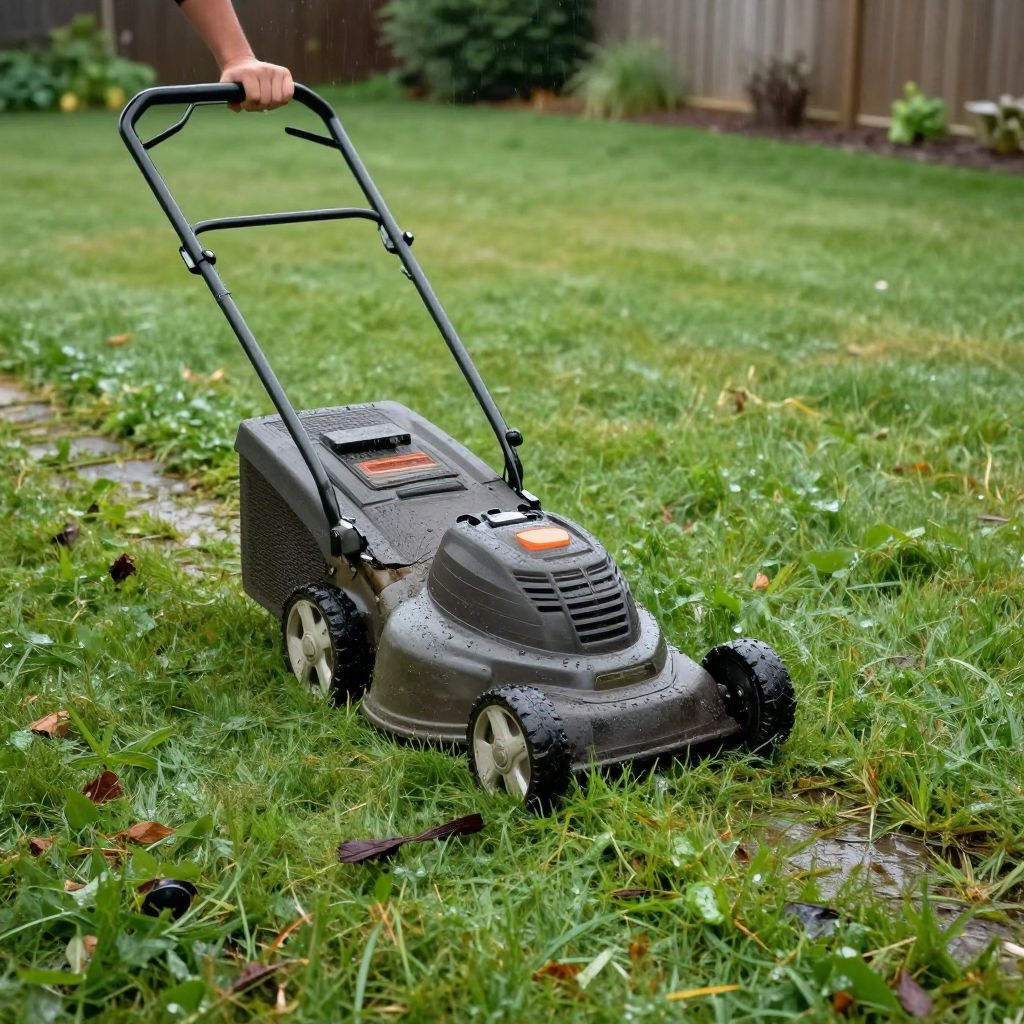
Can you cut grass when wet? Sometimes yes, but it’s usually not the best choice. Wet turf is more likely to tear instead of slice cleanly, clump under the mower, and compact the soil, which can stress your lawn and leave it looking uneven.
If you have to mow after rain or heavy dew, the goal is to protect the grass, the soil, and your mower. A few simple adjustments can help you decide when to wait and when a careful mow is acceptable.
Can you cut grass when wet?
Yes, you can cut grass when wet, but it is generally better to wait until the lawn dries. Wet grass is harder to cut cleanly, can clog the mower deck, and may leave ruts or compacted soil. If mowing is unavoidable, use a sharp blade, raise the cutting height, and mow slowly.
Why wet grass is harder to mow
Wet blades of grass bend under the mower instead of standing upright, so the cut is often uneven. The extra moisture also makes clippings stick together, which can block airflow under the deck and reduce cutting performance.
Common problems caused by mowing wet grass
- Clumping: wet clippings can form mats that smother parts of the lawn.
- Rough cuts: torn grass tips may turn brown and make the lawn look frayed.
- Soil compaction: walking on soft ground can press air out of the soil.
- Wheel ruts: heavy mowers can leave tracks in soggy lawns.
- Slip risk: wet slopes and slick grass are more dangerous to mow.
When it is okay to mow wet grass
There are times when waiting is not practical, such as before a long stretch of rain, when the lawn is getting too tall, or when you need to tidy a small area for access. In those cases, mowing wet grass can be done more safely if you take your time and avoid aggressive cutting.
Better conditions for a wet mow
- The grass is damp from dew, not soaked from recent rain.
- The soil is firm enough that your shoes do not sink in.
- The lawn is level and not slippery.
- You only need to remove a small amount of growth.
Conditions when you should wait
- Water is still standing on the lawn.
- The soil feels spongy or muddy underfoot.
- You can see mower tracks sinking into the turf.
- The grass is so wet that it bends flat before the blade reaches it.
How to mow wet grass safely
If you must mow, focus on reducing stress to the lawn and avoiding mower problems. A careful pass is better than forcing the machine through wet, heavy growth.
- Check the lawn first. Walk the area and look for puddles, soft spots, and hidden debris.
- Raise the mowing height. Cutting less at once reduces strain on both grass and mower.
- Use a sharp blade. A dull blade tears wet grass and leaves ragged edges.
- Mow slowly. Give the blade time to lift and cut the grass cleanly.
- Overlap passes lightly. Avoid forcing the mower into thick, wet clumps.
- Empty the bag or clear clippings often. Wet grass fills collection systems quickly.
Helpful mowing adjustments
- Set the mower to a higher cut than usual, especially during humid or rainy weather.
- Use side discharge only if clippings are not forming thick piles.
- Make one pass, then inspect the lawn before deciding whether a second pass is needed.
- Pause and clean the underside of the deck if buildup starts to slow the blade.
What to avoid when cutting wet grass
Some mistakes can make the job harder and can damage the lawn more than the rain itself. Avoid these common problems whenever possible.
- Do not scalp the lawn. Cutting too short stresses grass and exposes soil.
- Do not mow saturated ground. This increases compaction and rutting.
- Do not use a dull blade. Wet grass needs a clean, sharp cut.
- Do not mow slopes if traction is poor. Wet inclines can be dangerous.
- Do not leave thick clumps on the lawn. They can smother grass underneath.
How wet mowing affects lawn health
One wet mowing session will not ruin a healthy lawn, but repeated mowing in poor conditions can weaken turf over time. Grass that is cut too short, torn repeatedly, or driven over when the soil is soft may thin out and become more vulnerable to weeds, disease, and heat stress.
Signs your lawn was stressed by wet mowing
- Brown or frayed tips after mowing
- Flattened tracks that remain visible for days
- Clumps of cut grass that turn yellow or gray
- Thin patches where the mower wheels passed repeatedly
If you notice these signs, let the lawn recover before mowing again. Keep the grass at a moderate height and water only when the soil actually needs it.
How to clean up after mowing wet grass
Wet mowing often leaves more debris behind than a dry cut. A quick cleanup helps prevent clumps from smothering the lawn and keeps your mower in better shape.
- Rake or mulch small clumps so they do not sit in thick mats.
- Remove heavy piles from walkways, borders, and low spots.
- Brush or scrape wet grass from the mower deck once the machine is off.
- Let the mower dry before storing it to help prevent corrosion.
Composting wet clippings
You can compost wet grass clippings, but mix them with dry, brown materials such as leaves, shredded cardboard, or straw. A pile made mostly of wet clippings can become slimy, compacted, and low in air.
Best tools and mower care for damp conditions
A well-maintained mower handles damp grass better than a neglected one. Sharp blades, clean decks, and proper engine care all make a difference when conditions are less than ideal.
- Keep blades sharpened regularly for a cleaner cut.
- Clean the underside of the deck after use to reduce buildup.
- Check tire traction and tire pressure if your mower tends to slip.
- Follow the manufacturer’s guidance for fuel, oil, and storage.
If your mower is older or struggling in wet grass, maintenance may help more than forcing another pass. For related mower care, you may also want to read what kind of oil a lawn mower takes.
How lawn type and season affect the answer
The best decision depends on your grass type, local weather, and the season. Cool-season lawns often grow quickly in spring and fall, while warm-season lawns may need more careful mowing during humid or rainy periods. In all cases, the wetter and softer the lawn, the more important it is to wait.
Seasonal mowing tips
- Spring: soil may be soft, so avoid mowing right after heavy rain.
- Summer: heat and humidity can make grass stay wet longer in the morning.
- Fall: fallen leaves mixed with wet grass can clog mowers quickly.
- Winter or cool, damp weather: growth may slow, so mowing should be limited to actual need.
Simple rule of thumb
If the grass is only lightly damp and the soil is firm, a careful mow is usually fine. If the lawn is soggy, the mower is clogging, or your footprints leave deep impressions, wait for drier conditions.
Conclusion
So, can you cut grass when wet? Yes, but only when conditions are manageable and you are willing to mow carefully. For the healthiest lawn, wait until the turf dries whenever possible, then mow with a sharp blade and a slightly higher setting.
Before your next cut, check the lawn underfoot, adjust your mower height, and decide whether the grass is merely damp or truly too wet to handle well.