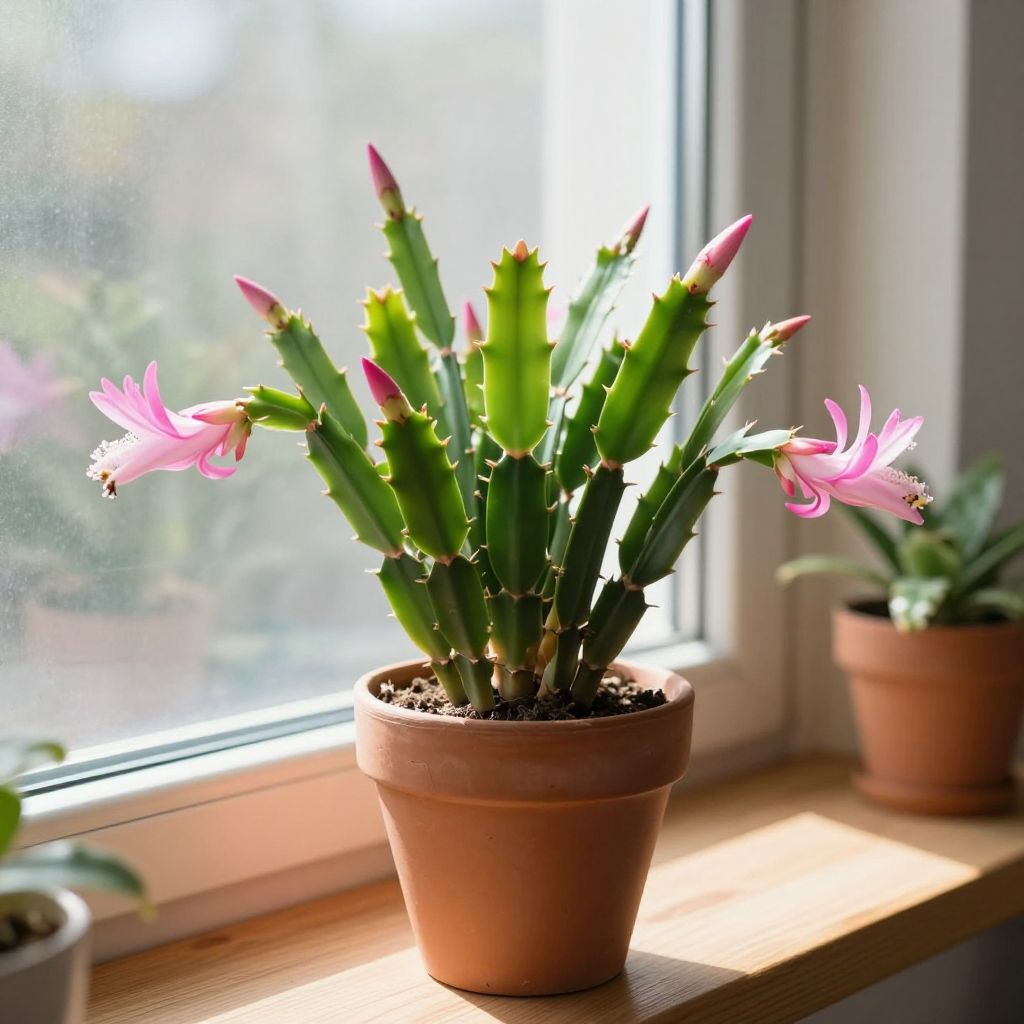
Do Christmas cactus like sun? The short answer is yes, but not harsh direct sun. Christmas cactus (Schlumbergera) grows best in bright, indirect light, with a little gentle morning sun if needed. Too much intense sunlight can scorch the flat stems, while too little light can reduce flowering and make the plant leggy.
If you want more blooms and healthier growth, the trick is matching light to the plant’s natural forest-understory habits. Here’s how to give your Christmas cactus the right amount of sun indoors and outdoors, plus what to do if the stems turn pale, red, or limp.
Do Christmas cactus like sun?
Christmas cactus like bright, indirect light rather than strong direct sun. A few hours of soft morning sun can be helpful, especially in cooler climates or during winter, but hot afternoon sun often causes sunburn. Indoors, an east-facing window is usually ideal; outdoors, filtered shade is best.
How much light a Christmas cactus really needs
Christmas cactus are epiphytic tropical plants that naturally grow under tree canopies, where light is bright but softened. That means they want more light than a dark corner can provide, but less than a sun-loving cactus or succulent.
Best light conditions indoors
- Bright, indirect light for most of the day.
- An east window is often perfect because it gives gentle morning sun.
- A south- or west-facing window can work if the light is filtered by a sheer curtain.
- Rotate the pot occasionally so growth stays even.
Best light conditions outdoors
- Place plants in partial shade or dappled light.
- Protect them from hot midday and afternoon sun.
- Move them to a sheltered spot if temperatures swing sharply or winds are drying.
If you live in a very bright, dry, or hot climate, your plant will usually need more protection than it would in a mild or cloudy region. The same plant that thrives in a sunny room in winter may scorch on a patio in midsummer.
What happens if a Christmas cactus gets too much sun?
Too much direct sun can bleach, redden, or burn the stems. The flat segments may look washed out, develop dry brown patches, or become thin and stressed. Flower buds can also drop if the plant is overheated or suddenly moved into stronger light.
Common signs of sun stress
- Pale yellow-green or reddish stems
- Dry, tan, or bleached patches on the segments
- Wrinkled or limp stems despite moist soil
- Bud drop before blooming
- Stunted growth
Red or reddish-purple stems are not always a problem. Mild reddening can be a signal of strong light or cool temperatures, but if the tissue looks dry, crispy, or bleached, the plant is getting too much sun.
Can a Christmas cactus get too little light?
Yes. In low light, Christmas cactus often survive but grow weakly. Stems may stretch toward the window, become floppy, and produce fewer flowers. The plant may look healthy at first, but it will usually bloom less reliably over time.
Signs of low light
- Long, sparse, stretched stems
- Slow growth
- Poor flowering or no buds
- Leaves/segments that look thin and soft
If your plant is in a dim room, move it gradually to a brighter location. Sudden shifts from very low light to strong sun can shock the plant, so increase brightness over a week or two.
How to give the right sun without burning the plant
The safest approach is to increase light slowly and watch the stems. Christmas cactus can adapt to brighter conditions, but they need a transition period, especially if they have been growing in shade or under indoor lighting.
- Move the plant to a brighter spot for a few hours a day at first.
- Use a sheer curtain if the window gets intense midday sun.
- Check the stems every few days for bleaching or dryness.
- Adjust the position until the plant looks firm, green, and evenly growing.
If the plant is already sunburned, move it out of direct sun immediately. Damaged stem tissue will not turn green again, but new growth can recover if the light is corrected.
Seasonal light needs: spring, summer, fall, and winter
Light needs change through the year because sun angle, day length, and indoor heating all affect the plant. A Christmas cactus may tolerate more light in winter than in summer, especially if it sits near a window with weaker seasonal sun.
Spring and summer
Use bright light with protection from intense midday rays. In many homes, this is the season when a sheer curtain or moved-back position becomes important.
Fall and winter
Bright light remains important, and a little gentle sun can be useful. If you want blooms, remember that flowering is influenced by day length and cooler nights, not just sun exposure.
For bud formation, Christmas cactus usually need a period of longer nights and cooler temperatures. Strong sun is not the goal here; stable light and correct seasonal conditions are more important.
Where to place a Christmas cactus in your home
Placement matters as much as the amount of light. A plant that sits in the “right” window but right against the glass may still get too hot, while one placed too far into a room may not get enough light.
Good indoor spots
- East-facing windowsills or nearby tables
- Bright rooms with filtered light
- South- or west-facing windows with a curtain between plant and glass
- Plant stands that keep the cactus in bright light without direct exposure
Less suitable spots
- Dark corners
- Rooms far from windows
- Hot windowsills with intense afternoon sun
- Drafty spots near heating vents or cold glass in winter
Outdoor growing: when sun is okay and when it is not
Christmas cactus can spend time outdoors in warm weather if conditions are mild and shaded. Outdoors, even “partial sun” can be stronger than it sounds, so choose a protected location rather than exposing the plant to full-day direct light.
Outdoor care tips
- Place the plant under a tree, porch roof, or shade cloth.
- Avoid hot patios that reflect heat and light.
- Bring the plant in if nights become cool or weather becomes extreme.
- Watch the plant closely during the first week outside.
When moving a Christmas cactus outdoors, acclimate it gradually. A plant that has lived indoors for months can burn quickly if placed directly into bright outdoor sun.
Light, watering, and soil work together
Sunlight affects how quickly the potting mix dries, so light and watering are connected. In brighter conditions, the plant may need water a little more often; in lower light, the soil dries more slowly and overwatering becomes a bigger risk.
Use a fast-draining mix
Christmas cactus do best in a loose, airy potting mix that drains well. A mix made for cacti and succulents often works, but many gardeners improve it with extra organic material so it holds a little more moisture than a desert cactus mix.
- Choose a pot with drainage holes.
- Use a light, well-draining mix.
- Do not let the pot sit in standing water.
Water based on soil, not the calendar
Check the top layer of soil before watering. If the top inch or so feels dry and the pot is noticeably lighter, it may be time to water. If the mix is still damp, wait.
Overwatering in low light is one of the most common mistakes with Christmas cactus. The plant may look limp from root stress, which can be mistaken for thirst.
Pruning and shaping for better light exposure
Pruning is not required, but it can help the plant stay compact and evenly lit. A fuller plant also catches light more evenly and is less likely to become thin on one side.
Simple pruning steps
- Wait until the plant has finished flowering.
- Twist off a few stem segments at a joint to encourage branching.
- Remove only what is needed to shape the plant.
- Keep the plant in bright, indirect light so new growth stays sturdy.
If one side of the plant is reaching toward the window, rotate the pot a little every couple of weeks during active growth.
Propagation and light for new cuttings
Christmas cactus are easy to propagate from stem cuttings, and light matters here too. New cuttings root best in bright, indirect light, not direct sun.
Basic propagation approach
- Take a healthy cutting with a few stem segments.
- Let the cut end dry briefly before planting.
- Set it in a lightly moist, well-draining mix.
- Keep it in bright, indirect light while roots form.
Too much sun can dry out cuttings before they root, while too little light can slow rooting and weaken new growth.
Common problems mistaken for sun issues
Not every stem problem comes from light alone. Before moving the plant into stronger sun, check for other issues that can look similar.
- Wrinkled stems: often underwatering, root damage, or very hot conditions.
- Yellowing: may indicate too much water, poor drainage, or nutrient imbalance.
- Bud drop: often caused by sudden temperature changes, dry air, moving the plant, or inconsistent watering.
- Soft, mushy stems: usually overwatering or rot, not lack of sun.
If the plant is in the right light but still declining, inspect the roots, potting mix, and watering habits before changing the light again.
Quick care checklist for the right sun exposure
- Give bright, indirect light most of the time.
- Allow only gentle morning sun if needed.
- Protect from hot afternoon sun.
- Use a pot with drainage holes.
- Water when the mix begins to dry, not on a fixed schedule.
- Rotate the plant for even growth.
- Move it gradually when changing light conditions.
Final thoughts
Christmas cactus like sun in the form of bright, filtered light, not intense direct exposure. If you place yours in a bright window, protect it from harsh afternoon rays, and adjust watering to match the light, you’ll give it the conditions it needs to grow well and bloom more reliably.
If you want to keep improving your plant care, look for more guidance on indoor flowering plants, potting mixes, and how to encourage holiday cactus blooms in your home.