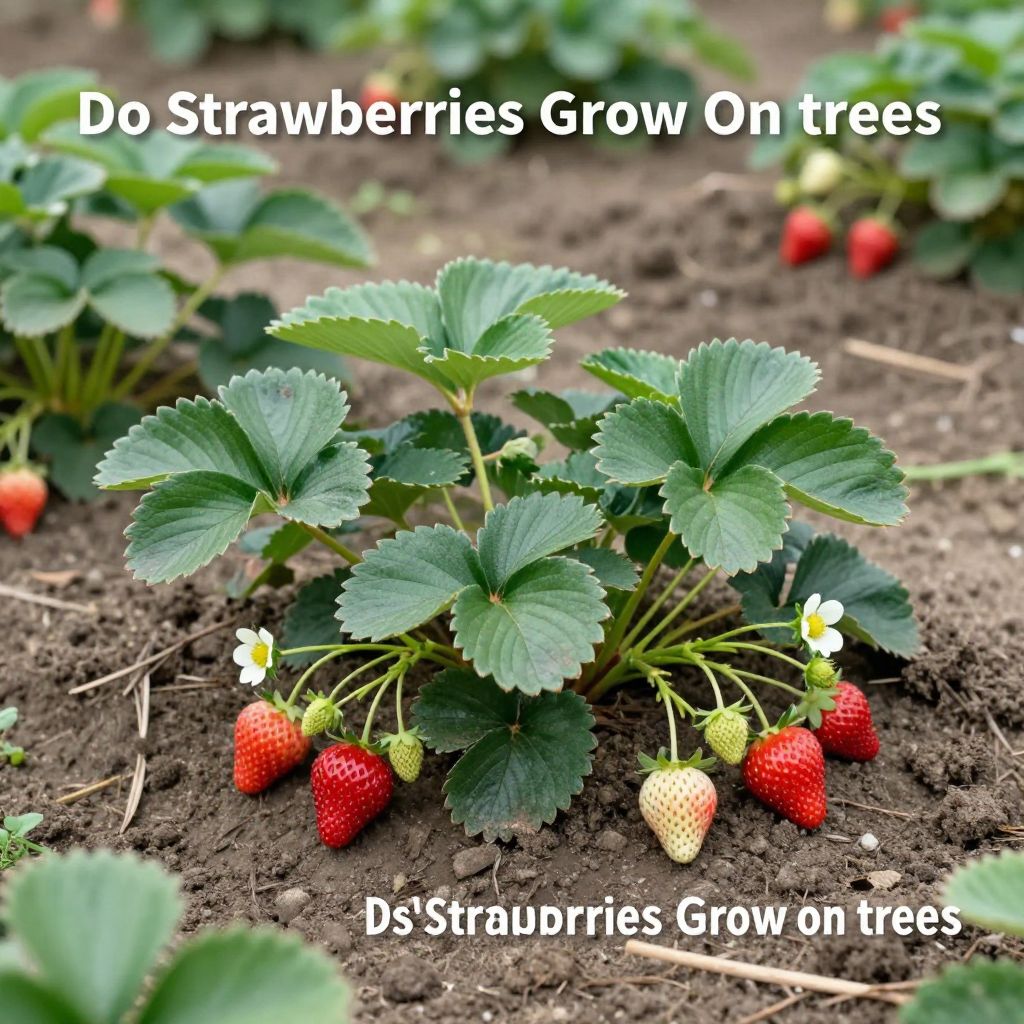
Do strawberries grow on trees? No—strawberries do not grow on trees. Strawberries are low-growing perennial plants that produce runners and fruit close to the ground, not woody trunks or branches.
If you want healthy, sweet berries, the real question is how to grow strawberries well in beds, containers, or hanging baskets. With the right sunlight, soil, and care, these plants are straightforward for home gardeners and rewarding for beginners.
Do strawberries grow on trees?
No. Strawberries grow on compact herbaceous plants, usually Fragaria × ananassa in home gardens, not on trees. The plant forms a crown with leaves, flowers, and runners, and the fruit develops from the flower after pollination. If you see “strawberry trees,” they are either decorative plants with strawberry-shaped fruit or a misunderstanding.
What strawberry plants actually need to grow well
Strawberries perform best in full sun, fertile but well-drained soil, and consistent moisture. They dislike soggy roots, heavy shade, and crowded planting. Good air circulation and a clean bed also help reduce disease and keep fruit cleaner.
Sunlight
Give strawberries at least 6 to 8 hours of direct sun each day. In cooler climates, more sun usually improves yield and sweetness. In very hot regions, a little afternoon shade can reduce stress, but too much shade leads to weak growth and fewer berries.
Soil and drainage
Strawberries need loose, moisture-retentive soil that drains well. A slightly acidic to neutral pH is generally preferred, but the most important factor is drainage. If your soil stays wet after rain, grow strawberries in raised beds or containers instead of planting directly in the ground.
Before planting, work in compost to improve structure and fertility. Avoid fresh manure or overly rich mixes that push leafy growth at the expense of fruit.
Spacing and airflow
Space plants so air can move through the bed. Crowding encourages fungal problems and makes harvesting harder. Good spacing also helps runners root where you want them instead of tangling into a dense mat.
How to plant strawberries the right way
Plant strawberries so the crown sits at soil level. If the crown is buried, it may rot; if it sits too high, the roots dry out. This one detail makes a big difference in whether the plant establishes well.
- Choose a sunny site with well-drained soil or a large container.
- Mix compost into the top layer of soil.
- Set each plant with roots spread out and the crown level with the surface.
- Firm the soil gently around the roots.
- Water thoroughly after planting.
- Add mulch to keep fruit clean and conserve moisture.
Container growing
Strawberries grow well in pots, window boxes, and hanging baskets if the container drains well. Use a quality potting mix rather than garden soil, which can compact in containers. Larger containers are easier to manage because they dry out more slowly and give roots more room.
Watering, mulching, and feeding
Strawberries need even moisture, especially while flowering and fruiting. The soil should stay lightly moist, not waterlogged. Irregular watering can lead to small berries, poor fruit set, or misshapen fruit.
Watering tips
- Water at the base of the plant to keep leaves and fruit drier.
- Check soil moisture with your finger before watering.
- Water more often in containers, hot weather, and windy sites.
- Reduce watering if the soil is staying wet for long periods.
Mulch matters
Mulch helps keep berries off the soil, suppresses weeds, and moderates moisture. Straw is a classic choice, but shredded leaves or clean pine needles can also work in many gardens. Keep mulch a little away from the crown so the plant does not stay too damp.
Feeding without overdoing it
A modest amount of compost at planting time is often enough to start. If your soil is poor, a balanced, gentle feed may help, but too much nitrogen can produce lush leaves and fewer flowers. In established beds, refresh compost lightly rather than overfertilizing.
Pruning, runners, and maintenance
Strawberries need light maintenance rather than heavy pruning. The main tasks are removing damaged leaves, managing runners, and keeping the bed from becoming overcrowded. Regular care improves airflow and fruit quality.
What to do with runners
Runners are long stems that produce new baby plants. If you want a larger patch, let a few runners root in place or in small pots. If you want bigger berries from the parent plant, remove most runners so the plant puts energy into fruiting instead of spreading.
Seasonal cleanup
Remove dead or diseased leaves as needed, especially after fruiting. In very dense plantings, thinning old foliage can improve airflow. Be gentle and avoid cutting into the crown, which is the plant’s growing center.
Common problems when growing strawberries
Most strawberry problems come from too much shade, poor drainage, crowded plants, or inconsistent watering. Catching issues early usually saves the crop and prevents the bed from declining.
Pests
- Slugs and snails: They chew fruit and leaves, especially in damp gardens. Use traps, barriers, hand-picking, and clean mulch management.
- Birds: They can peck ripe berries. Netting is often the most effective protection.
- Aphids: These cluster on tender growth and can distort leaves. A strong spray of water or insecticidal soap may help if needed.
Diseases
- Gray mold: Often appears in cool, damp conditions and can rot fruit. Improve airflow and remove damaged berries promptly.
- Leaf spots: These show as speckled or blotchy leaves. Avoid wetting foliage and clear away infected debris.
- Root problems: Poor drainage can cause weak growth and decline. Raised beds or containers help prevent this.
One of the best disease-prevention steps is simple: keep fruit off wet soil and avoid crowding the plants.
Why berries may be small or misshapen
Small berries often point to too little sun, old crowded plants, drought stress, or too many runners. Misshapen fruit can happen when pollination is incomplete, often during cool, wet weather or when pollinators are scarce. Encourage bees by growing nearby flowers and avoiding unnecessary pesticide use.
How to propagate strawberries
The easiest way to make more strawberry plants is from runners. When a runner forms a small plantlet, pin it onto moist soil or place the plantlet in a small pot while it is still attached to the mother plant. Once it roots well, you can cut the runner.
You can also divide older crowns in some cases, but runner propagation is usually simpler for home gardeners. Start new plants from healthy, vigorous stock and avoid using weak or diseased plants as parent material.
Harvesting strawberries at the right time
Pick strawberries when they are fully colored and fragrant. They do not continue to ripen much after picking, so harvest only berries that are ready. Handle them gently because ripe fruit bruises easily.
- Harvest in the cool part of the day if possible.
- Pinch or snip the stem rather than pulling hard on the berry.
- Check plants every day or two during peak ripening.
- Remove overripe fruit quickly to reduce rot and pest pressure.
For the best flavor, let berries stay on the plant until fully colored. Pale shoulders or white tips usually mean they need more time.
Growing strawberries in different settings
Strawberries can grow in garden beds, raised beds, pots, and hanging planters. The best choice depends on your space, climate, and how much control you want over watering and drainage.
In-ground beds
In-ground planting works well where soil drains properly and the site gets full sun. This is often the easiest option for larger harvests, but beds need regular weeding and renewal over time.
Raised beds
Raised beds are excellent if your native soil is heavy or poorly drained. They warm up faster in spring, drain better after rain, and make it easier to keep fruit clean.
Containers and hanging baskets
Containers are useful for patios and small spaces. They also make it easier to protect plants from slugs and soil-borne problems. Just remember that containers dry out faster, so monitor moisture closely.
Simple mistakes to avoid
- Planting strawberries in deep shade.
- Burying the crown too deeply.
- Letting the soil stay soggy.
- Ignoring runners until the bed becomes overcrowded.
- Leaving rotting fruit on the plant.
- Using heavy, compacted soil without improving drainage.
Conclusion
Strawberries do not grow on trees, but they are easy to grow once you understand their basic needs: sun, drainage, moisture, and space. If you want better berries, start by checking your planting depth and soil drainage, then keep the bed mulched and tidy.
If you want to expand your strawberry growing skills, you may also find this guide useful: can you grow strawberries indoors.