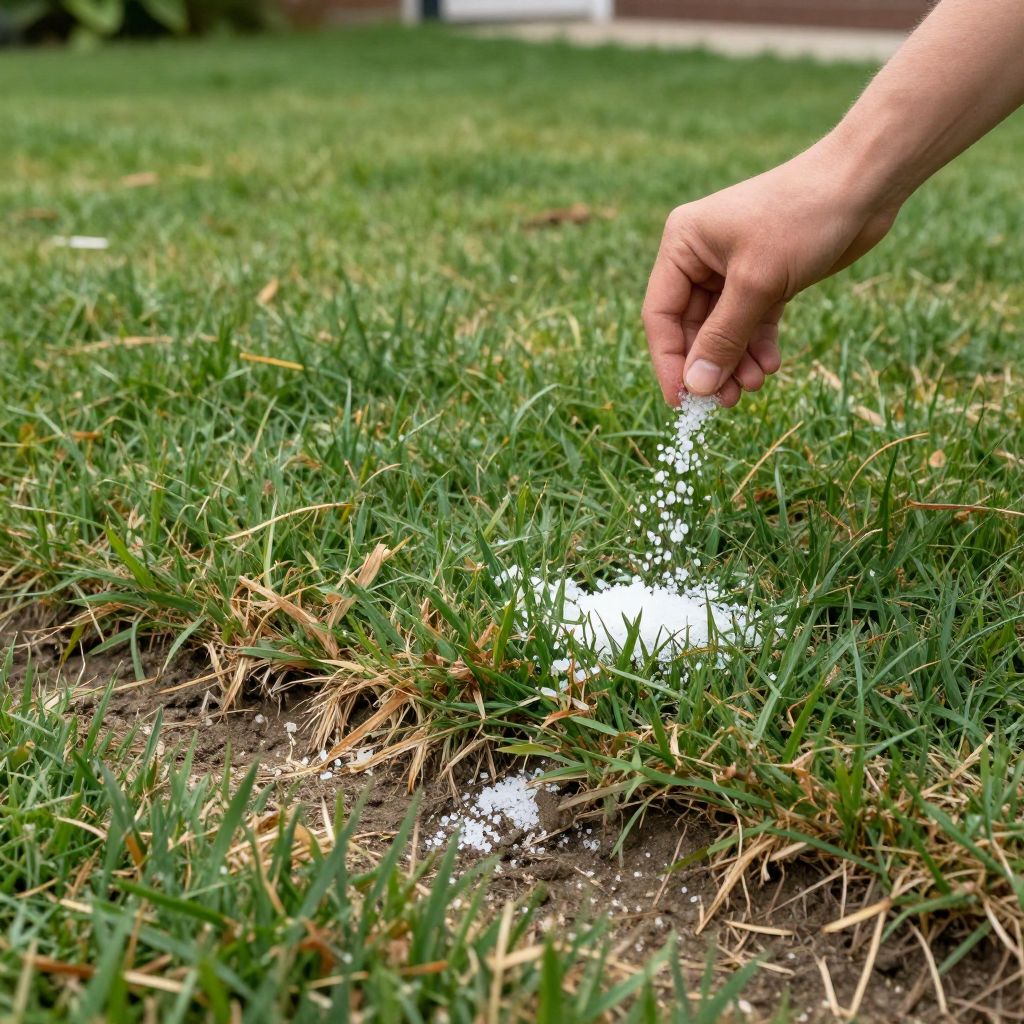
Does salt kill grass? Yes, it can—but not in a helpful way. Salt draws moisture out of plant tissue, disrupts water uptake, and can leave grass brown, patchy, and unable to recover. In small amounts, some turf may survive; in repeated or heavy exposure, the damage often becomes severe and long-lasting.
If you’re dealing with salty soil, road salt, pet urine, or a spill near the lawn, the right response depends on how much salt got there and how quickly you act. The good news is that you can sometimes limit the damage, flush excess salts, and improve the soil so grass has a better chance to regrow.
Does salt kill grass?
Yes. Salt can kill grass by dehydrating roots and leaves, interfering with nutrient uptake, and building up in the soil where roots absorb water. Light exposure may only scorch blades, but higher concentrations can kill turf patches and leave the soil difficult to replant until the salt is diluted or removed.
How salt damages turfgrass
Grass is not usually killed by one dry day or a single splash of salty water. The real problem is salt accumulation, which changes how water moves in the soil and around the roots.
What happens to the plant
- Osmotic stress: Salt makes it harder for roots to absorb water, even when soil looks moist.
- Leaf burn: Salt on blades can cause browning at the tips and edges.
- Root injury: High salt levels can damage roots, reducing growth and recovery.
- Soil imbalance: Excess sodium can worsen soil structure, making drainage and aeration poorer.
Why some lawns are hit harder
Young grass, shallow-rooted turf, compacted soil, and lawns with poor drainage are more vulnerable. Hot, windy weather can also make salt injury worse because the grass is already under moisture stress.
Common sources of lawn salt damage
Salt injury can come from more places than many gardeners expect. Identifying the source helps you prevent repeat damage.
- Road de-icing salt from sidewalks, driveways, and streets.
- Pet urine, which can create concentrated salt and nitrogen burn in small spots.
- Irrigation water with a high salt content, especially in dry regions.
- Salt spills from storage near the lawn or garden beds.
- Coastal spray in windy seaside locations.
How to tell salt damage from drought or disease
Salt injury can look like drought stress, but there are clues. Salt damage often appears first near edges, walkways, or the side of the lawn facing roads, and it may form a distinct pattern rather than affecting the whole yard evenly.
Typical signs of salt injury
- Brown or straw-colored grass near pavement, curbs, or driveways
- Leaf tips that look burned or desiccated
- Patches that stay weak even after watering
- Crusting or white residue on the soil surface in severe cases
- Thin, patchy regrowth after the main growing season begins
If you are unsure, check the soil and location pattern. Disease usually spreads in irregular shapes and may show spots, rings, or fungal growth. Salt injury more often follows a spill line, spray zone, or compacted runoff area.
What to do right away if salt got on the lawn
Fast action can reduce damage, especially if the salt exposure was recent. The goal is to dilute and move salt below the root zone without creating runoff problems.
- Remove dry salt if possible before watering, especially if it is sitting on the surface.
- Water deeply and slowly to help dissolve and flush salts downward.
- Avoid frequent light watering, which can leave salt in the root zone.
- Check drainage so water can move through the soil instead of pooling.
- Wait before fertilizing, since stressed grass can be burned further by added salts or nutrients.
For a small spill, repeated deep watering over several days may be enough. For larger contamination, you may need to improve drainage, remove affected soil, or reseed once the salt level drops.
How to flush salt from soil
Leaching is the main fix when salt has built up in the root zone. This means applying enough water to carry salts below the depth where grass roots are actively growing.
Best conditions for flushing
- Soil should drain freely; otherwise the salt may simply stay in place.
- The lawn should not be waterlogged already.
- The weather should allow water to soak in rather than run off.
If the soil is compacted or clay-heavy, aeration can help water penetrate more evenly. In very poorly drained areas, flushing alone may not solve the problem because the salt has nowhere to go.
Important caution
Do not overwater blindly. If water runs off the surface quickly, it can carry salt into nearby beds, storm drains, or low spots. Water in cycles if needed, allowing the soil to absorb moisture between applications.
When grass can recover on its own
Some turfgrass can recover if the salt exposure was mild and the roots are still alive. New growth from the crown or surrounding healthy grass may fill in thin areas during the active growing season.
Recovery is more likely when:
- The browning is limited to leaf tips or small patches
- The soil was flushed quickly after exposure
- The lawn has good drainage and healthy roots
- Temperatures are moderate and the grass is actively growing
Recovery is less likely when the patch stays brown for weeks, the soil remains crusty or salty, or the same area is exposed every winter or after every storm.
How to repair a salt-damaged lawn
Once the salt source is controlled, you can decide whether to wait, overseed, or replace the damaged section. Choose the lightest repair that fits the level of injury.
For light damage
- Rinse the area thoroughly if the soil drains well.
- Mow at the correct height for your turf type, but do not scalp it.
- Keep foot traffic off stressed areas until regrowth begins.
- Overseed thin spots if the season is suitable for your grass type.
For moderate to severe damage
- Remove dead turf and loosen the top layer of soil.
- Test or evaluate drainage before replanting.
- Amend with compost only if the soil structure needs improvement and the salt issue has been addressed.
- Seed or sod with a grass type suited to your climate and site conditions.
- Keep the area evenly moist during establishment, not soggy.
If the soil remains saline, new seed may fail even when watered correctly. In that case, repeated flushing, drainage improvement, or soil replacement may be needed before replanting.
How to prevent salt damage in the future
Prevention is easier than repair. A few practical changes can protect your lawn from recurring injury.
- Use less de-icer near turf and apply only where needed.
- Choose lower-salt alternatives when appropriate for your climate and safety needs.
- Create barriers between pavement and lawn to reduce spray and runoff.
- Improve drainage in low spots where salt-laden water collects.
- Water after winter storms if salt has been used near the lawn and the soil is not frozen.
- Train pets to use a designated area if urine burn is a recurring issue.
For coastal or salty irrigation areas
In seaside gardens or places with saline irrigation water, choose turf and landscape plants that tolerate salt better than typical lawn grasses. Even then, good soil structure, mulching, and careful watering matter because tolerance does not mean immunity.
Should you add compost or fertilizer after salt injury?
Compost can help improve soil structure over time, but it does not remove salt by itself. Use it after flushing and when the soil is no longer highly saline. A thin topdressing can support recovery if the lawn is otherwise healthy.
Fertilizer is usually not the first fix. Salt-stressed grass often has damaged roots, and extra fertilizer can increase stress or burn the lawn further. Wait until you see active recovery or after reseeding has started to establish.
Tools and materials that help
You do not need specialized equipment for every situation, but a few basic tools make the job easier.
- Garden hose or irrigation system for flushing
- Rake to remove crusted residue or dead thatch
- Core aerator for compacted soil
- Seed spreader for overseeding repaired areas
- Soil test kit or local extension test if salt problems keep returning
When to call a local expert
If large parts of the lawn are dying, the soil stays white or crusted, or the problem keeps coming back each season, a local extension service, lawn professional, or soil lab can help you identify whether sodium, chloride, drainage, or irrigation quality is the real issue.
Bottom line: salt can kill grass, but quick flushing, better drainage, and prevention can often save mild damage and protect the rest of the lawn. If you suspect salt injury, act early, avoid overfertilizing, and replant only after the soil is ready.
If you want to keep improving your lawn care skills, look for related reading on lawn drainage, overseeding, and soil improvement so you can prevent salt stress before it starts.