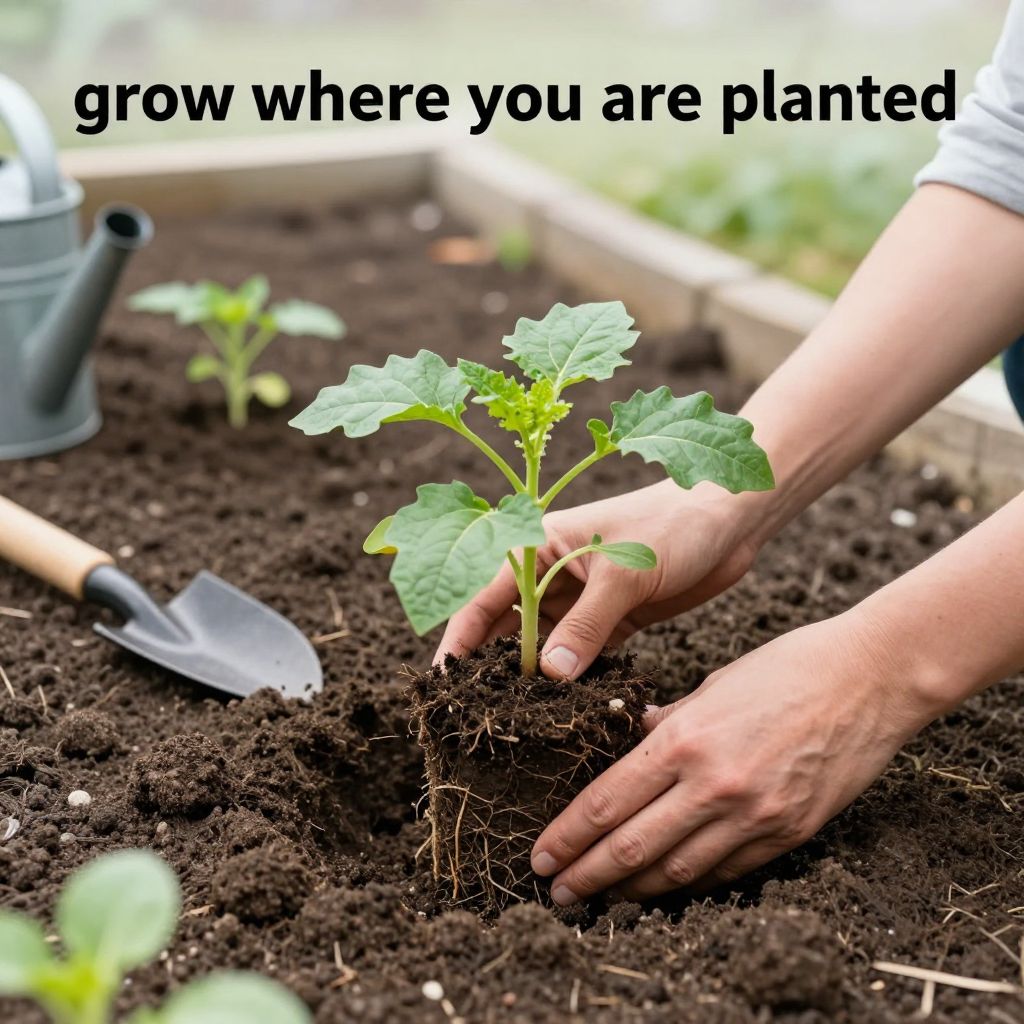
Trying to grow where you are planted in the garden means working with the conditions you actually have, not the ones you wish you had. The right plant in the right place will need less watering, fewer fixes, and far less frustration.
This guide shows you how to match plants to your light, soil, moisture, and space so they settle in and thrive. Whether you are planting in a backyard bed, a container, or a small patio, the goal is the same: choose wisely, plant correctly, and care for what your site can realistically support.
How do you grow where you are planted?
To grow where you are planted, start by observing your site and choosing plants that fit its light, soil, drainage, and climate. Improve the soil where needed, plant at the correct depth, water deeply while roots establish, and maintain the area with mulch, pruning, and pest checks. The best results come from matching the plant to the place, not forcing the place to fit the plant.
Start with your site, not the plant tag
Before buying anything, spend a little time reading your garden like a map. The same plant can flourish in one yard and struggle in another simply because the growing conditions are different.
Check these basics first
- Sunlight: Note where you get full sun, partial shade, and deep shade over the course of the day.
- Drainage: After rain, see whether water disappears within a few hours or sits in puddles.
- Soil texture: Sandy soil drains quickly, clay holds water, and loam usually offers a better balance.
- Wind exposure: Hot, dry, or windy spots can stress tender plants and dry containers fast.
- Space: Measure mature height and spread, not just the size of the plant in the nursery pot.
If you are unsure about your soil, a simple jar test can help you understand whether it leans sandy, silty, or clay-heavy. For more detailed guidance, a local soil test is even better because it can reveal pH and nutrient issues that affect plant performance.
Choose plants that fit your conditions
The easiest way to succeed is to pick plants that naturally suit your site. A sun-loving perennial planted in shade will always struggle, no matter how carefully you water it.
Match plants to light
- Full sun: Usually 6 or more hours of direct sun.
- Part sun or part shade: Roughly 3 to 6 hours of sun, often with afternoon shade.
- Shade: Less than 3 hours of direct sun, or filtered light under trees.
Vegetables, herbs, and many flowering annuals need more sun than many shrubs and woodland perennials. If your garden is shaded, look for plants known for lower-light conditions instead of trying to “make do” with sun-lovers.
Match plants to moisture
Some plants prefer evenly moist soil, while others want fast drainage and drier conditions between waterings. This matters just as much as sun exposure.
- Dry sites: Lavender, sedum, yarrow, and many native prairie plants often cope well.
- Moist sites: Ferns, astilbe, and many moisture-loving ornamentals may be better choices.
- Wet spots: Choose plants suited to rain gardens or consistently damp soil rather than forcing drought-tolerant plants to adapt.
When in doubt, choose plants with a reputation for flexibility. Tougher plants are often the best way to grow where you are planted, especially in new gardens or challenging yards.
Prepare the soil the right way
Healthy soil helps roots anchor, breathe, and absorb water. You do not need perfect soil, but you do need soil that supports root growth instead of smothering it.
Add compost thoughtfully
Mixing compost into the top layer of garden soil can improve structure, water retention, and drainage. A common approach is to work in 2 to 3 inches of compost over the planting area before planting, especially in poor or compacted soil.
Be careful not to overdo it. Too much compost, especially in planting holes, can create a pocket of different texture that roots may not want to leave. Blend amendments broadly into the bed rather than making a tiny “super-soil” hole.
Fix drainage problems first
If water pools after rain, plant roots may rot or stall. In that case, raised beds, berms, or planting on a slight mound can be more effective than adding more fertilizer.
- For heavy clay, loosen the soil and add organic matter over time.
- For containers, use pots with drainage holes and a quality potting mix.
- For low spots, choose plants that tolerate wetter conditions or redirect runoff if possible.
Planting basics that help roots settle in
Correct planting gives your plant the best chance to establish quickly. Many problems blamed on pests or weather actually begin with planting too deep, too shallow, or in poorly prepared soil.
Follow these steps
- Water the plant before planting if the root ball is dry.
- Dig a hole as wide as the root ball, and no deeper than the root ball’s height in most cases.
- Set the plant so the top of the root ball is level with or slightly above the surrounding soil.
- Backfill with native soil unless a specific plant type requires otherwise.
- Firm the soil gently to remove large air pockets, but do not pack it hard.
- Water thoroughly to settle the soil around the roots.
- Mulch lightly, keeping mulch a few inches away from stems or trunks.
One of the most common mistakes is planting too deep. Burying stems or trunks can invite rot and reduce oxygen around the roots. If you are unsure, err on the side of slightly high rather than too low.
Watering: enough to establish, not enough to drown
New plants need consistent moisture while roots spread into the surrounding soil. After establishment, most plants do better with deep, less frequent watering than with shallow daily sprinkles.
How to water newly planted beds
- Water slowly so moisture sinks in rather than running off.
- Check soil with your finger; the top inch may dry faster than the root zone below.
- Adjust for weather, soil type, and plant size instead of following a fixed schedule.
Container plants dry out faster than in-ground plants, especially in sun and wind. Pots may need attention far more often during hot spells, while shaded beds may need less frequent watering than you expect.
Signs of watering trouble
- Too little water: Wilting, curling leaves, dry crumbly soil, slow growth.
- Too much water: Yellowing leaves, soft stems, soggy soil, root decline.
If a plant wilts in hot afternoon sun but recovers by evening, it may simply be heat-stressed. If it stays limp in cool weather or the soil feels wet, drainage may be the real issue.
Mulch, spacing, and maintenance that make a difference
Mulch helps conserve moisture, suppress weeds, and moderate soil temperature. It is one of the simplest ways to help a plant settle into the place where it is growing.
Use mulch correctly
Apply a layer about 2 to 3 inches deep around plants, but keep it pulled back from stems and trunks. Mulch piled against bark can trap moisture and encourage rot or pests.
Organic mulches such as shredded bark, leaf mold, or composted wood chips gradually improve soil as they break down. Reapply as needed, but do not bury the crown of the plant.
Give plants room to mature
Overcrowding creates competition for light, water, and nutrients. It also slows air movement, which can increase disease pressure on leaves and stems.
- Space plants according to their mature spread, not nursery size.
- Thin crowded seedlings early.
- Prune shrubs and perennials to keep air moving through the canopy.
Pruning and feeding without overdoing it
Once a plant is established, light maintenance keeps it healthy. The goal is to support natural growth, not force constant production.
Prune for health and shape
Remove dead, damaged, or crossing stems as needed. For flowering shrubs and perennials, prune according to the plant’s bloom habit so you do not remove next season’s flower buds by accident.
If you are unsure, start with minimal pruning and learn the plant’s response over a season. A cautious approach is safer than cutting heavily without knowing the growth pattern.
Feed based on need
Many established garden plants do not need heavy feeding if the soil is healthy. Too much fertilizer can push weak, leafy growth that attracts pests and breaks easily.
- Use compost as a gentle soil builder.
- Fertilize only if the plant shows a real need or a soil test suggests it.
- Do not fertilize stressed plants until the root problem is solved.
Common problems when you try to grow where you are planted
Some setbacks are really site mismatches. If you solve the environmental problem, the plant often improves without much extra intervention.
Problem: Plant keeps failing in the same spot
Likely causes include poor light, compacted soil, poor drainage, or a plant that simply does not belong there. Replace it with a better-suited species rather than repeating the same mistake.
Problem: Leaves scorch or fade
This can happen in too much sun, reflected heat near walls or pavement, or dry wind. Move container plants if possible, or choose tougher varieties for exposed areas.
Problem: Fungal spots or mildew
Improve air circulation, water at the base instead of overhead, and remove badly affected leaves. Dense plantings and damp foliage often make these issues worse.
Problem: Pests keep returning
Check the plant regularly for aphids, slugs, caterpillars, or scale, depending on the crop. Healthy, well-placed plants usually tolerate minor pest pressure better than stressed ones.
Indoor and container growing: a special case
If you are growing in pots or indoors, the idea of “grow where you are planted” becomes even more literal. Containers and indoor spaces give you more control, but they also demand closer attention.
- Use pots with drainage holes.
- Choose a potting mix made for containers, not garden soil.
- Rotate pots if light is uneven.
- Watch for faster drying in warm rooms, balconies, and sunny windows.
For edible plants indoors, light is usually the limiting factor. If you want to try strawberries inside, this guide may help: can you grow strawberries indoors?
A practical mindset for long-term success
Good gardening is less about forcing a plant to perform and more about learning what your space can support. When you work with your site, you save time, money, and frustration.
Start small, observe what thrives, and adjust one factor at a time. If you want to grow where you are planted, the best next step is simple: assess your light, drainage, and soil this week, then choose one plant that truly fits those conditions.