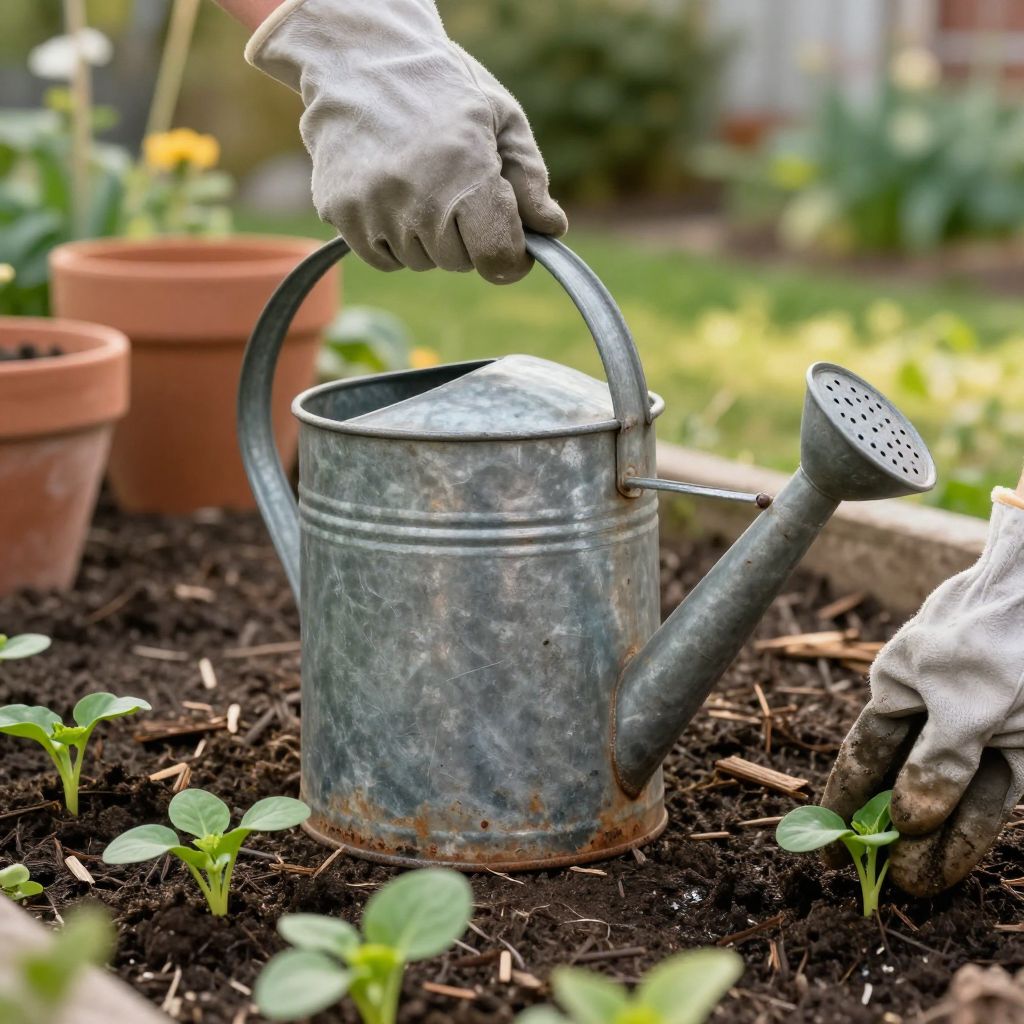
Looking for a vintage watering can that actually helps your plants, not just your shelves? The right one can be both a useful garden tool and a charming piece of décor, but it needs to suit the way you water, the plants you grow, and the conditions in your garden.
Whether you’re using an old metal can, a decorative enamel style, or a restored heirloom piece, the key is choosing one that pours evenly, holds enough water for your routine, and won’t damage tender seedlings or compacted soil.
What is a vintage watering can, and how do you use one well?
A vintage watering can is an older-style watering vessel, often made of galvanized steel, copper, brass, enamel, or painted metal, with a long spout and a detachable rose for gentle watering. Use it for targeted, low-pressure watering at the soil line, especially for seedlings, houseplants, containers, and delicate ornamentals.
Why gardeners still love a vintage watering can
A good watering can gives you control. Unlike a hose, it lets you place water exactly where roots can use it, which helps reduce waste, soil splash, and stress on small plants.
Vintage designs often have a balanced handle, a narrow spout, and a removable rose head that softens the flow. That makes them especially useful for:
- Seed trays and newly transplanted seedlings
- Indoor plants and greenhouse collections
- Patio containers and hanging baskets
- Raised beds where you want to avoid runoff
- Small borders and herb gardens
The best vintage watering can is not just attractive; it pours smoothly, feels comfortable when full, and matches the plants you water most often.
How to choose the right vintage watering can
Check the size and weight
Most gardeners do best with a can they can lift comfortably when full. A large metal can may look beautiful, but if it becomes too heavy, you’ll spill water or strain your wrist and shoulder.
For everyday use, many gardeners prefer a moderate-sized can that is easy to carry from tap to bed to bed. If you water indoors or have limited strength, choose a smaller can and refill more often.
Look at the spout and rose
The spout should be long enough to reach under foliage and direct water to the soil. A detachable rose is useful because it breaks water into fine droplets for seedlings and houseplants.
If the rose holes are too large or uneven, the stream may be harsh. If it’s clogged with mineral deposits, the water may spray sideways or drip unpredictably.
Inspect the material
Different materials suit different uses:
- Galvanized steel: sturdy and classic, but can rust over time if stored wet.
- Enamel-coated metal: attractive, but chips can expose metal underneath.
- Copper or brass: decorative and durable, though often pricier and heavier.
- Plastic vintage-style cans: lighter and practical, though not always truly vintage.
For active garden use, choose the material that fits your climate and storage habits. In damp areas, rust resistance matters more than looks alone.
How to restore and clean an old watering can
If you found a secondhand vintage watering can, clean it before using it on plants. Old cans may contain dirt, algae, rust, or mineral buildup that affects flow.
- Empty the can and rinse it thoroughly with clean water.
- Remove the rose head if possible and soak it in warm water.
- Use a bottle brush or flexible brush to clean the inside.
- Scrub the spout and rose openings gently to clear debris.
- Dry the can fully before storing it to reduce rust.
If there is light rust inside a metal can, it may be manageable. But if the metal is flaking, thin, or leaking, the can may be better suited as décor rather than a working tool.
Avoid using harsh chemicals inside a can that will water edible plants or seedlings. If you need to remove deposits, mild soap, warm water, and careful scrubbing are usually enough.
How to water plants properly with a vintage watering can
The goal is to wet the root zone evenly without washing soil away. Water slowly and keep the spout low, close to the soil surface.
Step-by-step watering method
- Fill the can with clean water at a temperature close to the surrounding air.
- Attach the rose for delicate plants; remove it for established shrubs or larger containers if a gentler stream is not needed.
- Tip the can gradually so the water flow starts smoothly.
- Move around the plant and water the base, not the leaves.
- Stop when the soil is evenly moist and water begins to drain from container holes, if present.
For containers, water until excess drains from the bottom, then empty any saucer after a short wait. For garden beds, water deeply enough to moisten the root zone rather than just the top layer.
How much water should you apply?
There is no single amount that fits every plant. A seed tray needs a light, even misting or gentle shower, while a mature shrub may need a deeper soak. Check the soil with your finger: if the top inch is dry, many plants are ready for watering, but drought-tolerant species may prefer to dry more between waterings.
In hot, windy, or sandy conditions, water may be needed more often. In cool weather, heavy clay soil, or shaded areas, plants may need less.
Best uses for a vintage watering can in the garden
Seedlings and transplants
Young plants have shallow roots and are easily disturbed. A watering can with a fine rose is ideal because it reduces soil displacement and helps settle transplants without compacting the surface.
Water gently after planting, then monitor moisture closely during the first couple of weeks. The soil should stay consistently moist, not soggy.
Indoor plants
Indoors, a vintage watering can is often more practical than a jug because it gives you better control around pots, windowsills, and shelves. Use a narrow spout to avoid splashing floors and furniture.
For houseplants, always check whether the pot has drainage holes. If it doesn’t, water very carefully to avoid waterlogging the roots.
Containers and hanging baskets
Container plants dry out faster than plants in the ground, especially in sun and wind. A smaller watering can is often easier to maneuver between pots and under hanging baskets.
Water until you see a little drainage, then wait and recheck the soil later. Containers can look dry on top while still being wet lower down.
Herbs and edible crops
Herbs such as basil, parsley, and cilantro often prefer consistent moisture, especially in containers. A watering can lets you direct water to the base without wetting foliage more than necessary.
For leafy vegetables, avoid strong streams that splash soil onto leaves. That can increase mess and, in some cases, encourage disease spread.
Common problems with vintage watering cans and how to fix them
Clogged rose holes
Mineral deposits, algae, and grit can block the rose. Soak it in warm water and scrub gently with a small brush or an old toothbrush. If the holes remain clogged, the rose may need replacement or careful cleaning with a fine pin.
Leaking seams or rust holes
Small leaks can sometimes be patched, but a heavily rusted can usually won’t hold up well for regular watering. If the leak is near the bottom or seam, the can may be better used for display or dry storage.
Uneven pouring
If the can gulps air or pours in bursts, the spout may be partially blocked or the rose may not be seated properly. Clean both parts and check that the spout is not bent.
Too much weight when full
If the can feels awkward, don’t overfill it. Fill it halfway and make more trips. That is often safer than trying to carry a heavy can across uneven ground.
How to store a vintage watering can so it lasts
Storage matters, especially for metal cans. Leaving water inside encourages rust, mineral buildup, and unpleasant odors.
- Empty the can after use.
- Rinse it occasionally to remove sediment.
- Dry it upside down or on its side so water can drain away.
- Store it under cover if possible, especially in wet climates.
- Keep the rose separate if it traps moisture.
If you use the can outdoors year-round, check it regularly for corrosion. In freezing weather, never leave water inside a metal can, because expansion can damage seams and fittings.
Using a vintage watering can in different seasons
In spring, a watering can is especially helpful for seedlings, newly divided perennials, and freshly planted containers. The soil is often cool and moisture can linger longer, so water only when needed.
In summer, plants may need deeper and more frequent watering, especially in full sun. Early morning is usually the best time to water so foliage dries quickly and roots can absorb moisture before heat builds.
In autumn, many plants slow down and need less water, but evergreens, newly planted shrubs, and pots in sheltered spots may still need attention during dry spells.
In winter, indoor plants and greenhouse plants may still need periodic watering, though growth is often slower. Outdoor cans should be emptied and stored before hard freezes if they are made of metal.
Practical mistakes to avoid
- Watering only the surface: shallow watering encourages shallow roots.
- Soaking foliage unnecessarily: wet leaves can invite disease in some plants.
- Using a damaged can for seedlings: a harsh stream can flatten young plants.
- Ignoring drainage: no watering can can fix a pot with no drainage holes or compacted soil.
- Leaving water inside the can: this speeds rust and buildup.
If your plants are repeatedly wilting despite regular watering, the problem may not be the can. Check soil structure, drainage, pot size, root crowding, and exposure to sun or wind.
Can a vintage watering can be part of garden design?
Yes. Many gardeners use a vintage watering can as a decorative accent near a potting bench, greenhouse door, or herb border. It can add character while still being functional.
To keep the look tidy, place it where it won’t collect rainwater or become a tripping hazard. If the can is no longer watertight, it can still hold hand tools, plant labels, or dried stems near your workspace.
Final tips for buying or using one
Choose a vintage watering can that fits your plants, your strength, and your storage space. A beautiful can is worth having, but a practical one will be used more often and will help your plants more consistently.
Before your next watering session, inspect the spout, test the flow, and clean the rose if needed. Then use slow, steady watering at the soil line and adjust your routine to the season, the plant, and the weather.
If you’d like to keep improving your garden toolkit, you may also enjoy reading about composting basics for healthier soil and container gardening tips for thriving potted plants.