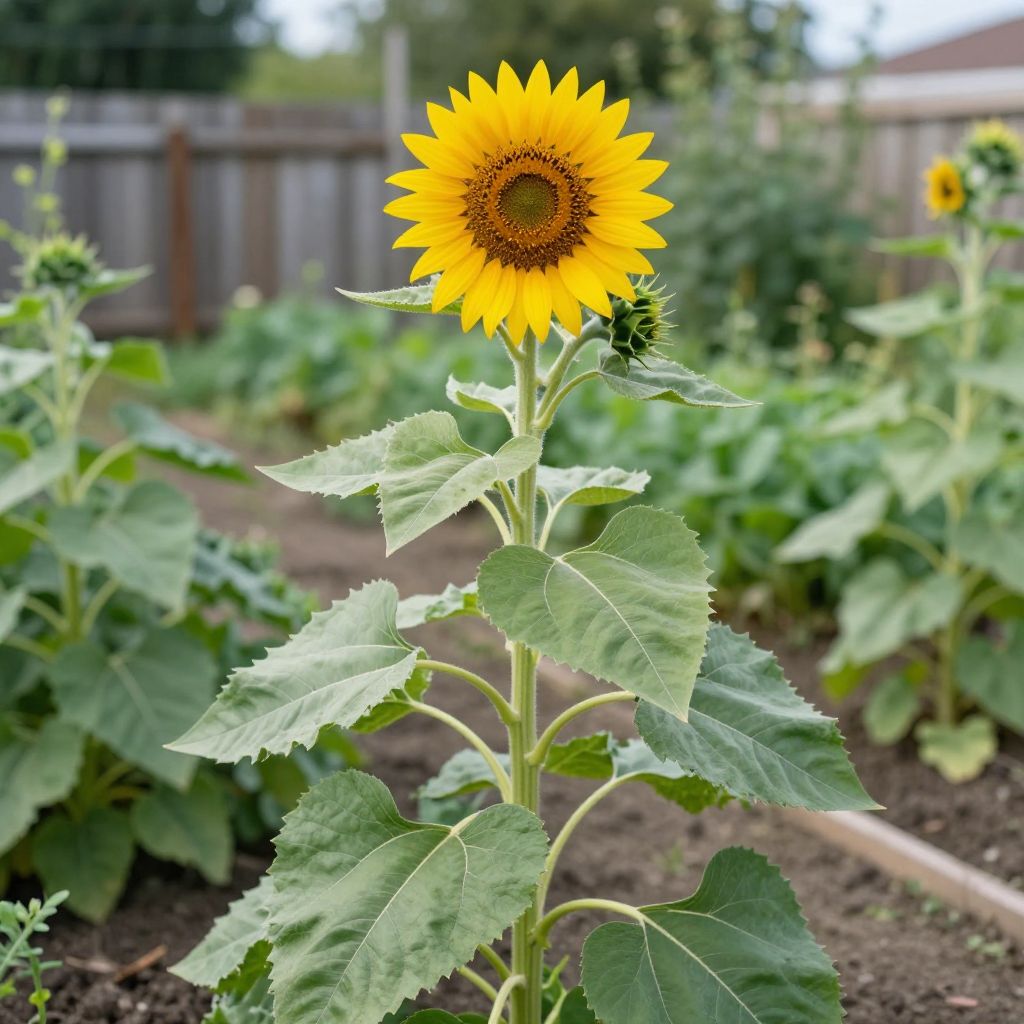
If you’re asking, “What does a sunflower look like?” you’re probably trying to identify one in the garden, compare seedlings, or decide whether a plant is really a sunflower. Sunflowers are easy to recognize once you know the key features: a tall, sturdy stem, large rough leaves, and a single bold flower head made of bright yellow petals around a dark center.
They are also more variable than many gardeners expect. Some sunflowers are dwarf and branching, while others grow towering and produce one huge bloom. Knowing the plant’s shape, leaf pattern, and flower structure helps you tell it apart from lookalikes and grow it successfully.
What does a sunflower look like?
A sunflower typically has a thick, upright stem, broad heart-shaped leaves with a rough texture, and a large daisy-like flower head. The outer petals, called ray florets, usually surround a central disk that later develops seeds. Most garden sunflowers are yellow, but some varieties are orange, red, cream, or bicolored.
Key features that help you identify a sunflower
Stems and overall shape
Sunflowers usually grow upright and straight, with a strong stem that supports the flower head. Many varieties look coarse or sturdy rather than delicate, and taller types may branch near the top or stay mostly single-stemmed.
- Stem texture: Often rough, hairy, or slightly bristly.
- Growth habit: Upright and sun-seeking.
- Height: Can range from compact bedding types to very tall garden varieties.
Leaves
Sunflower leaves are usually large, broad, and rough to the touch. They often have a heart-like or oval shape with pointed tips and toothed edges. Leaves grow alternately along the stem, not in pairs directly opposite each other.
- Texture: Coarse and slightly fuzzy.
- Arrangement: Alternate along the stem.
- Color: Medium to deep green, sometimes with a matte finish.
Flowers
The flower head is the most recognizable part of a sunflower. What looks like one bloom is actually made up of many tiny flowers packed together in the center, surrounded by petal-like rays. The center is often dark brown, black, or greenish when young, then fills with developing seeds.
- Shape: Large round or slightly domed flower head.
- Petals: Usually bright yellow, but not always.
- Center: Dense disk that matures into seeds.
How young sunflowers look at different stages
Seedling stage
Young sunflower seedlings are easy to miss if you do not know what to look for. The first leaves, called cotyledons, are smooth and simple, then the true leaves begin to appear with the rougher, more familiar sunflower shape.
At this stage, the plant may look less impressive than the mature flower you expect. That is normal, so avoid pulling it out too early if you are unsure.
Vegetative growth
As the plant grows, the stem thickens and the leaves become larger and more obvious. You may see a single main stem or several side shoots, depending on the variety. The flower bud often forms at the top long before it opens.
Blooming stage
When the bud opens, the sunflower becomes unmistakable. The flower head turns toward the sun during development, and the petals spread outward around the center. Some varieties bloom for a short period, while branching types may flower over a longer stretch.
Common sunflower lookalikes and how to tell them apart
Several garden plants can resemble sunflowers at first glance, especially when they are young. The easiest way to avoid confusion is to compare leaf texture, stem strength, and flower structure.
- Black-eyed Susan: Smaller blooms, thinner stems, and a more compact habit.
- Jerusalem artichoke: Similar yellow flowers, but often more branched and less ornamental in appearance.
- Coreopsis: Usually smaller and more daisy-like with finer foliage.
- Zinnia: Flower shape can overlap, but leaves are usually smoother and narrower.
If you are identifying a plant before it flowers, focus on the leaves and stem. Sunflowers usually feel rougher and look sturdier than many similar annual flowers.
Growing conditions that help sunflowers look their best
Sunflowers perform best in full sun and well-drained soil. They need enough light to produce strong stems and full blooms, and they dislike soggy ground that can weaken roots or cause rot.
Sunlight
Give sunflowers at least 6 to 8 hours of direct sun daily. In lower light, plants may stretch, lean, and produce smaller flowers. If you are growing them in a container or near a fence, choose the brightest spot available.
Soil and drainage
Sunflowers prefer soil that drains well but still holds some moisture. Heavy clay can be improved with compost to loosen the structure, while very sandy soil may need organic matter to help retain water. Good drainage is especially important for young plants.
Spacing
Space plants according to their mature size so leaves and flowers can develop fully. Crowded sunflowers may grow taller and thinner as they compete for light, which can make them more prone to flopping over in wind or rain.
How to plant sunflowers so they grow straight and healthy
Sunflowers are usually direct-sown outdoors because they dislike root disturbance. If you start them indoors, use deep pots and transplant carefully before roots become crowded.
- Choose a sunny site with loose, well-drained soil.
- Prepare the bed by removing weeds and mixing in compost if needed.
- Sow seeds at the depth recommended on the packet, usually about 1 to 2 inches deep for many garden types.
- Water gently so the soil stays evenly moist during germination.
- Thin seedlings if they are too close together.
Tip: Tall varieties may need support in windy gardens, especially if the soil is rich and encourages rapid growth.
Watering and feeding: what sunflowers need
Sunflowers need regular moisture while they are establishing roots, but they do not like constantly wet soil. Once established, many types tolerate short dry periods better than overly wet conditions.
Watering guidance
Water deeply when the top layer of soil begins to dry, especially during hot weather or when buds are forming. Container-grown sunflowers usually need more frequent watering than those in the ground because pots dry out faster.
Feeding guidance
If your soil is average, too much fertilizer can encourage leafy growth at the expense of flowers. A moderate amount of compost at planting is often enough in fertile garden beds. If growth is weak or soil is poor, use a balanced approach based on your soil conditions rather than overfeeding.
Pruning, staking, and maintenance
Most sunflowers need little pruning. The main maintenance tasks are supporting tall stems, removing spent blooms if you want a tidier look, and keeping weeds from competing for water and nutrients.
- Staking: Useful for tall or exposed plants.
- Deadheading: Can improve appearance and may encourage branching types to keep blooming.
- Weeding: Important while plants are young and roots are still shallow.
Do not overhandle young stems, which can bruise or bend easily before they harden off.
Common problems that change how sunflowers look
Leggy, weak growth
If your sunflower looks thin and stretched, it may not be getting enough light or may be crowded. Move container plants to a sunnier place, and thin crowded seedlings in the garden.
Yellowing leaves
Yellow leaves can signal poor drainage, inconsistent watering, nutrient imbalance, or natural aging of lower leaves. Check the soil before assuming the plant needs more fertilizer.
Chewed leaves or buds
Insects, slugs, birds, and small mammals may damage leaves or flower buds. Inspect plants regularly and use practical controls such as hand-picking pests, barriers, or netting where appropriate.
Fungal diseases
Powdery mildew, rust, and leaf spots can appear in humid or crowded conditions. Improve airflow, avoid wetting foliage late in the day, and remove badly affected leaves when needed.
Harvesting sunflower seeds or cut flowers
If you are growing sunflowers for seeds, wait until the back of the flower head turns yellow-brown and the seeds look plump. Birds may begin feeding before full maturity, so you may need to protect the heads with mesh or paper bags.
For cut flowers, harvest when the petals are just opening or fully open, depending on the look you want. Cut stems early in the day and place them in clean water right away.
Quick checklist: is it really a sunflower?
- Does it have a strong upright stem?
- Are the leaves broad, rough, and alternate on the stem?
- Is the flower a large daisy-like head with a central disk?
- Does it grow best in full sun?
- Does the center later develop seeds?
If you answered yes to most of these, you are probably looking at a sunflower or a close relative.
Once you know what does a sunflower look like, it becomes much easier to identify seedlings, choose the right planting spot, and care for the plant through bloom. If you want to grow your own, start with a sunny site, well-drained soil, and good spacing, then watch the plant’s shape change as it matures.
For more practical help, you may also want to read about how to grow sunflowers from seed and common sunflower pests and diseases.