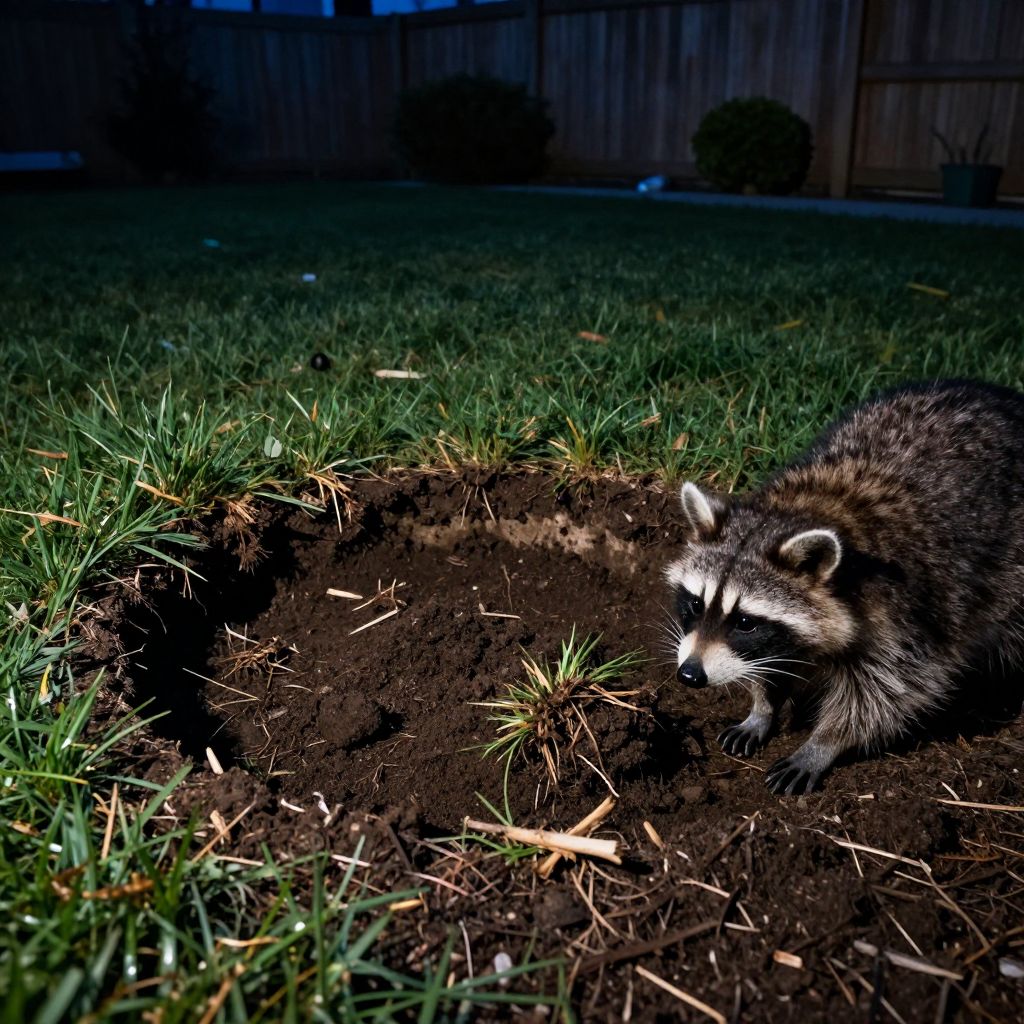
What animal is digging holes in my yard at night? In most gardens, the answer is usually one of a handful of common nighttime visitors: raccoons, skunks, armadillos, opossums, moles, voles, or rodents. The shape, size, depth, and pattern of the holes usually tell you more than the animal itself.
The good news is that you can often narrow it down quickly and choose the right fix. The key is to match the damage pattern to the likely pest, then protect your lawn, beds, and roots without harming beneficial wildlife or your soil.
What animal is digging holes in my yard at night?
Night digging is most often caused by animals searching for grubs, insects, roots, or buried food. Small cone-shaped holes, shallow scrapes, and torn turf usually point to skunks or raccoons, while deeper conical holes may indicate armadillos. Tunnels and raised runs are more typical of moles or voles.
How to identify the digger by the damage
Look closely at the hole itself, the soil around it, and whether the damage is scattered or concentrated. These clues are usually more useful than trying to spot the animal directly.
Common yard-digging patterns
- Small, shallow holes about 1 to 3 inches wide: often skunks foraging for grubs.
- Conical holes 3 to 5 inches wide: often armadillos, especially in warmer regions.
- Uprooted turf or flipped sod: often raccoons searching for insects or grubs.
- Raised tunnels and mounds: more likely moles, which tunnel below the surface rather than make open holes.
- Small openings near plants or edging: often voles, chipmunks, or rats, especially if bulbs or roots are also damaged.
What the timing tells you
If the digging appears overnight and the yard looks mostly normal by morning except for fresh holes, a nocturnal mammal is likely. If you see damage during the day, it may still be from a night feeder, but it can also be from birds, squirrels, or pets.
Most likely animals and what they leave behind
Skunks
Skunks are one of the most common causes of small holes in lawns at night. They dig shallow cone-shaped holes while hunting grubs, beetle larvae, and earthworms.
- Holes are usually shallow and scattered.
- The turf may look pocked, but not heavily torn up.
- You may notice a musky odor if the animal is disturbed.
Raccoons
Raccoons often peel back sod or dig more aggressively than skunks. They are strong, clever, and especially interested in grubs, insects, and sometimes pet food or compost.
- Damage may look like sections of lawn were rolled back.
- They can also raid mulch beds and vegetable gardens.
- Tracks may show hand-like front feet.
Armadillos
In warmer areas, armadillos can leave several cone-shaped holes in a row. They dig for insects and grubs, and their burrows can also appear near foundations, fences, or shrubs.
- Holes are often deeper and more pointed than skunk holes.
- Digging may be concentrated along edges or under cover.
- They can destabilize small plants and newly planted beds.
Moles
Moles do not usually leave open holes in the lawn. Instead, they create raised tunnels and volcano-like mounds as they move through the soil hunting earthworms and insects.
- Look for ridges running under turf.
- Soil mounds are often fresh and loose.
- Plant roots may be disturbed from below.
Voles
Voles are small rodents that can cause subtle but serious garden damage. They make small openings, surface runways, and gnaw roots, bulbs, and stems near the soil line.
- Look for narrow runways in grass or mulch.
- Plants may wilt even when the soil is moist.
- Bulbs and tender roots can disappear underground.
Rats, squirrels, chipmunks, and rabbits
These animals may dig in beds, containers, or loose soil, especially if food is nearby. Their digging is often more localized than skunk or raccoon damage.
- Squirrels often dig to bury or retrieve nuts and bulbs.
- Chipmunks may create small burrow entrances near walls, rocks, or steps.
- Rats are more likely near compost, sheds, or dense cover.
- Rabbits usually do not dig many holes, but they may use existing burrows or disturb loose soil near planting areas.
Why animals dig at night
Most nighttime digging is food-driven. Grubs, earthworms, beetle larvae, bulbs, seeds, and soft roots are easy targets when soil is moist and the ground is cooler.
Animals also dig where cover is available. Dense shrubs, tall grass, brush piles, wood stacks, and cluttered edges make a yard feel safer for foraging.
Garden conditions that attract diggers
- High grub populations in turf.
- Loose mulch or freshly turned soil.
- Overwatered or poorly drained areas.
- Bird seed, pet food, fallen fruit, or compost scraps.
- Dense groundcover, brush, or hidden entry points.
How to confirm the culprit without guessing
Before you treat the problem, identify the pattern as accurately as possible. A little observation can save you from using the wrong control method.
- Measure the holes with a ruler or tape measure.
- Check the depth by gently probing with a stick.
- Look for tracks in soft soil, mulch, or mud.
- Inspect nearby plants for gnawed stems, missing bulbs, or root disturbance.
- Watch for signs at dawn, when fresh damage is easiest to see.
- Use a motion-activated camera if the digging continues.
If you suspect a burrowing pest, look around the yard edges, under decks, behind sheds, and near compost or pet feeding areas. These are common entry and feeding spots.
How to stop nighttime digging in your yard
The best solution depends on the animal, but most successful control plans combine food reduction, habitat cleanup, and physical barriers. Start with the least disruptive option that fits your situation.
1. Reduce the food source
If the animal is digging for grubs, the lawn itself may be the attraction. A healthy turf with fewer grub problems is less inviting.
- Inspect lawn damage in late summer or early fall, when grub feeding is often most noticeable.
- Improve lawn vigor with proper mowing height, aeration if needed, and correct watering for your soil.
- Rake up fallen fruit and remove spilled seed.
- Store pet food indoors and secure compost.
Important: Do not assume every grub problem needs a pesticide. Confirm the pest and follow local guidance, especially if you garden near pollinator plants or waterways.
2. Remove shelter and access
Make your yard less appealing by trimming overgrown edges and reducing hiding places.
- Keep grass trimmed along fences and foundations.
- Move wood piles off the ground and away from structures.
- Clear brush piles, thick weeds, and leaf buildup.
- Seal openings under decks, sheds, and porches with appropriate hardware cloth or other barrier material.
3. Protect vulnerable planting areas
New beds, bulbs, and vegetable plots are especially tempting because the soil is loose and easy to dig. Physical barriers work better than repellents for many gardens.
- Use wire mesh or hardware cloth under raised beds if burrowing is a recurring issue.
- Protect bulbs with wire baskets or a layer of mesh over the planting zone before backfilling.
- Cover newly seeded areas lightly and keep them moist enough to establish, but not soggy.
- Use row cover or fencing where rabbits, chipmunks, or raccoons are entering beds.
4. Address drainage and soil conditions
Wet, soft soil is easier to dig and often attracts worms and insects. If the same spot is repeatedly disturbed, poor drainage may be part of the problem.
- Check whether water pools after rain or irrigation.
- Improve drainage with grading, organic matter, or bed elevation where appropriate.
- Avoid overwatering lawns and beds, especially in cool weather.
5. Use deterrents carefully
Motion lights, noise devices, and scent repellents may help temporarily, but results are often inconsistent. They work best as short-term support while you remove the food source and shelter.
- Change deterrent methods regularly if the animal adapts.
- Use only products labeled for the target pest and your garden setting.
- Do not rely on a single repellent to solve a recurring problem.
What not to do
Some common reactions make the problem worse or create new garden issues. Avoid these mistakes when you are trying to figure out what animal is digging holes in your yard at night.
- Do not fill holes without identifying the cause. The animal may simply dig again.
- Do not overwater the lawn trying to “settle” the soil if drainage is already poor.
- Do not spread random poisons where pets, birds, beneficial wildlife, or children may be exposed.
- Do not ignore bulb and root damage in beds, because the problem can spread below ground.
- Do not prune away all cover at once if it will destabilize the garden or expose roots.
When the damage is likely from a lawn pest, not an animal
Sometimes the yard damage looks like digging, but the real issue is insect activity or root stress. If the turf lifts easily, turns brown in patches, or attracts skunks and raccoons, grubs may be present.
If plants wilt, yellow, or collapse near the soil line, inspect for vole damage, root rot, compacted soil, or poor drainage. In gardens, the “animal problem” may be a symptom of a larger soil or plant health issue.
Signs to inspect more closely
- Thin turf with patchy brown areas.
- Loose soil that feels spongy or tunnels underfoot.
- Plants that lean, wilt, or pull up easily.
- Repeated digging in the same moist corner of the yard.
Seasonal clues that help narrow it down
Animal activity often changes with weather and food availability. In warm months, grubs and insects are close to the surface, so digging may increase. In dry periods, animals may concentrate around irrigated beds, compost, or shaded edges.
After heavy rain, soil is easier to excavate and fresh holes are easier to spot. In cooler seasons, some animals still forage at night, but the pattern may shift toward sheltered areas near buildings, mulch, or evergreen cover.
Quick action plan for gardeners
If you want a simple way to respond tonight, start here:
- Measure the holes and note the pattern.
- Look for tracks, tunnels, torn turf, or gnawed plants.
- Remove food sources like fallen fruit, seed, and pet food.
- Clean up brush, weeds, and clutter near the damage.
- Protect beds and bulbs with mesh or fencing.
- Improve drainage if the area stays wet.
- Use a camera if the culprit is still unclear.
Conclusion
When you ask, “What animal is digging holes in my yard at night,” the answer usually comes down to the hole shape and the surrounding damage. Start with the clues in your lawn, then remove the food source, reduce shelter, and protect vulnerable beds with barriers.
If you want to keep troubleshooting yard damage, you may also find it helpful to read more about how to identify common lawn pests and practical ways to protect raised beds from burrowing animals.