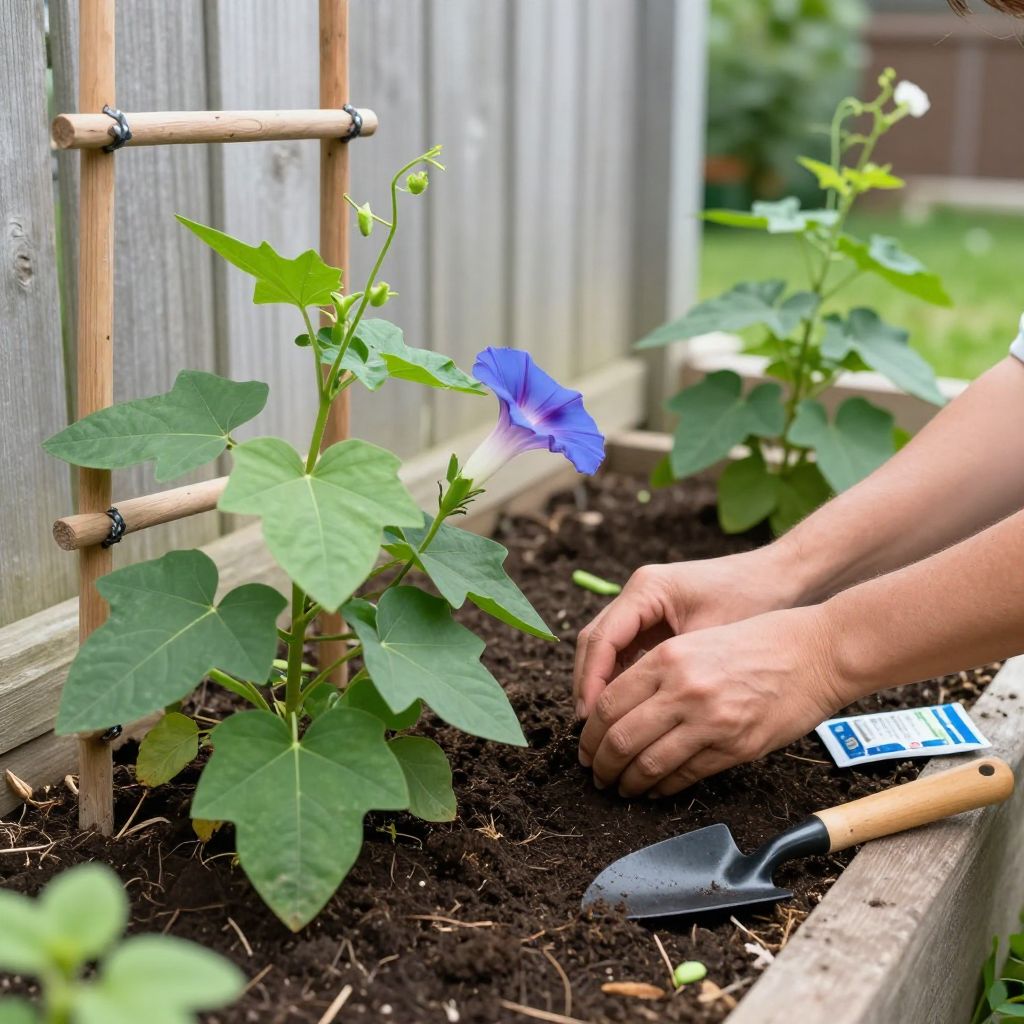
When should you plant morning glories so they bloom well instead of sulking in the soil? Timing matters with these fast-growing vines, especially if you want quick coverage on a trellis, fence, or mailbox post.
The short answer is to plant morning glories after the danger of frost has passed and the soil has warmed. In most climates, that means late spring to early summer outdoors. You can also start seeds indoors a few weeks earlier, but direct sowing is often easiest because morning glories dislike root disturbance.
When to plant morning glories?
Plant morning glories outdoors in spring once frost risk is over and nights are consistently mild. In cool climates, wait until the soil is warm enough to encourage germination; in warm regions, you can sow a little earlier. For the best results, choose a sunny site and plant seeds directly where they will grow.
Best planting time by season
Morning glories are warm-season annual vines in most gardens, so they perform best when the weather is settled and the soil is no longer cold and wet. If you plant too early, seeds may rot or seedlings may stall.
Spring planting
Spring is the main planting window for morning glories. Wait until all frost danger has passed and daytime temperatures are reliably warm. If your soil still feels chilly, hold off a bit longer.
Early summer planting
Early summer is still a good time to sow morning glories, especially in cooler regions. In many areas, seeds planted in early summer catch up quickly because the soil is warm and growth is faster.
Fall planting
Fall planting is generally not recommended for annual morning glories in cold-winter climates. The plants will not have enough time to establish before frost. In mild climates, self-sown seeds may sprout on their own, but that is different from intentional fall planting.
How to plant morning glories from seed
Morning glories are usually grown from seed, and direct sowing is the simplest method. Their hard seed coat often slows germination, so a little preparation helps.
- Choose a sunny location. Morning glories bloom best in full sun, with at least 6 hours of direct light.
- Prepare the soil. Loosen the top few inches and remove weeds. The soil should drain well and not stay soggy.
- Nick or soak the seeds. Gently file or nick the seed coat, or soak seeds in water overnight to speed sprouting.
- Sow shallowly. Plant seeds about 1/4 to 1/2 inch deep.
- Space them properly. Leave several inches between seeds, then thin seedlings if needed after they emerge.
- Water lightly. Keep the soil evenly moist until germination, but not waterlogged.
Most morning glories germinate best when the soil is warm. If the weather is still cool, patience is important; cold soil can delay sprouting for weeks.
Should you start morning glories indoors?
You can start morning glories indoors, but many gardeners prefer direct sowing because the vines grow quickly and do not like having their roots disturbed. If you do start them indoors, use biodegradable pots or containers that let you transplant with minimal root damage.
Indoor starting tips
- Sow seeds 4 to 6 weeks before your last expected frost date.
- Use a clean seed-starting mix with good drainage.
- Keep seedlings in bright light to prevent weak, leggy growth.
- Harden off plants gradually before moving them outside.
- Transplant carefully once nights are warm and frost has passed.
Important: If you transplant morning glories from regular pots, try not to disturb the roots. Root shock can slow growth and reduce blooming.
Growing conditions morning glories prefer
Morning glories are not fussy, but they bloom best when their basic needs are met. Too much rich soil or too much shade often leads to lush leaves and fewer flowers.
Sunlight
Full sun is best. In partial shade, morning glories may still grow, but flowering is often reduced and the vines can become thin or stretched.
Soil
Average, well-drained soil is usually ideal. Morning glories do not need highly fertile soil, and overly rich soil can encourage leafy growth at the expense of blooms.
Water
Water newly planted seeds and seedlings regularly until established. After that, morning glories are fairly drought-tolerant, though they will bloom better with consistent moisture during hot, dry spells.
Support
Give the vines something to climb early, such as a trellis, string, fence, arbor, or netting. Morning glories twine naturally, so they need a structure they can wrap around.
Common mistakes to avoid
A few simple mistakes can delay germination or reduce flowering. Avoiding them makes a big difference.
- Planting too early: Cold soil and frost can stop growth or damage seedlings.
- Overwatering: Wet, poorly drained soil can rot seeds and roots.
- Too much fertilizer: High-nitrogen feeding can produce lots of leaves and fewer flowers.
- Too little sun: Shade often leads to weak vines and poor blooming.
- Skipping support: Vines left on the ground are more likely to tangle, suffer pests, and bloom poorly.
How long morning glories take to bloom
Bloom time depends on planting date, warmth, and variety, but morning glories usually begin flowering after they have had time to establish and climb. If planted too early in cold conditions, they may grow slowly at first. Once heat arrives, they often take off quickly.
For faster flowering, sow seeds in warm soil, keep them in full sun, and avoid overfeeding. Healthy vines that are not forced to struggle in cold, wet soil usually start blooming more reliably.
Pests and problems to watch for
Morning glories are generally easy to grow, but a few issues can appear, especially on stressed plants.
Common pests
- Aphids: Small insects that cluster on new growth and buds. Rinse them off with water or use insecticidal soap if needed.
- Spider mites: More common in hot, dry weather. Leaves may look speckled or dusty.
- Leaf-chewing insects: Occasional damage is usually minor unless populations are high.
Common diseases
- Root rot: Usually caused by soggy soil or poor drainage.
- Powdery mildew: A white coating on leaves, more likely in crowded, humid conditions with poor airflow.
If disease shows up, improve spacing, reduce overhead watering, and remove badly affected leaves. Healthy air circulation and proper drainage prevent many problems before they start.
How to encourage more blooms
If your vines are growing well but not flowering much, the issue is often light, soil, or timing rather than a serious problem.
- Make sure the plant gets full sun.
- Keep fertilizer light or skip it if the soil is already rich.
- Do not overwater once plants are established.
- Give the vine time; young plants often focus on roots and stems first.
- Trim back overly tangled growth if the vine becomes dense and shaded inside.
Tip: Morning glories often bloom better when they are slightly less pampered. Strong sun, moderate moisture, and average soil are usually enough.
Can morning glories self-seed?
Yes, many morning glories self-seed readily if seed pods are allowed to mature. This can be helpful if you want them to return next year, but it can also make them spread where you do not want them.
If you want to control reseeding, remove spent flowers before seed pods form. If you want volunteers, let some pods dry on the vine and drop seed naturally.
Simple planting checklist
Before you sow, use this quick checklist to set your morning glories up for success.
- Wait until frost danger is past.
- Choose a sunny, well-drained spot.
- Prepare a trellis or other support.
- Nick or soak seeds before planting.
- Sow seeds 1/4 to 1/2 inch deep.
- Water lightly until seedlings emerge.
- Keep fertilizer modest and sun exposure high.
Conclusion
The best time to plant morning glories is after the last frost, when the soil has warmed and the weather is settled. If you give them sun, support, and well-drained soil, they usually grow quickly and reward you with a long season of color. Start by sowing seeds in the right spot, then let the vines do the rest.
If you want to plan more seasonal flower planting, it also helps to read about how to start annual flowers from seed and choosing the best trellis for climbing vines.