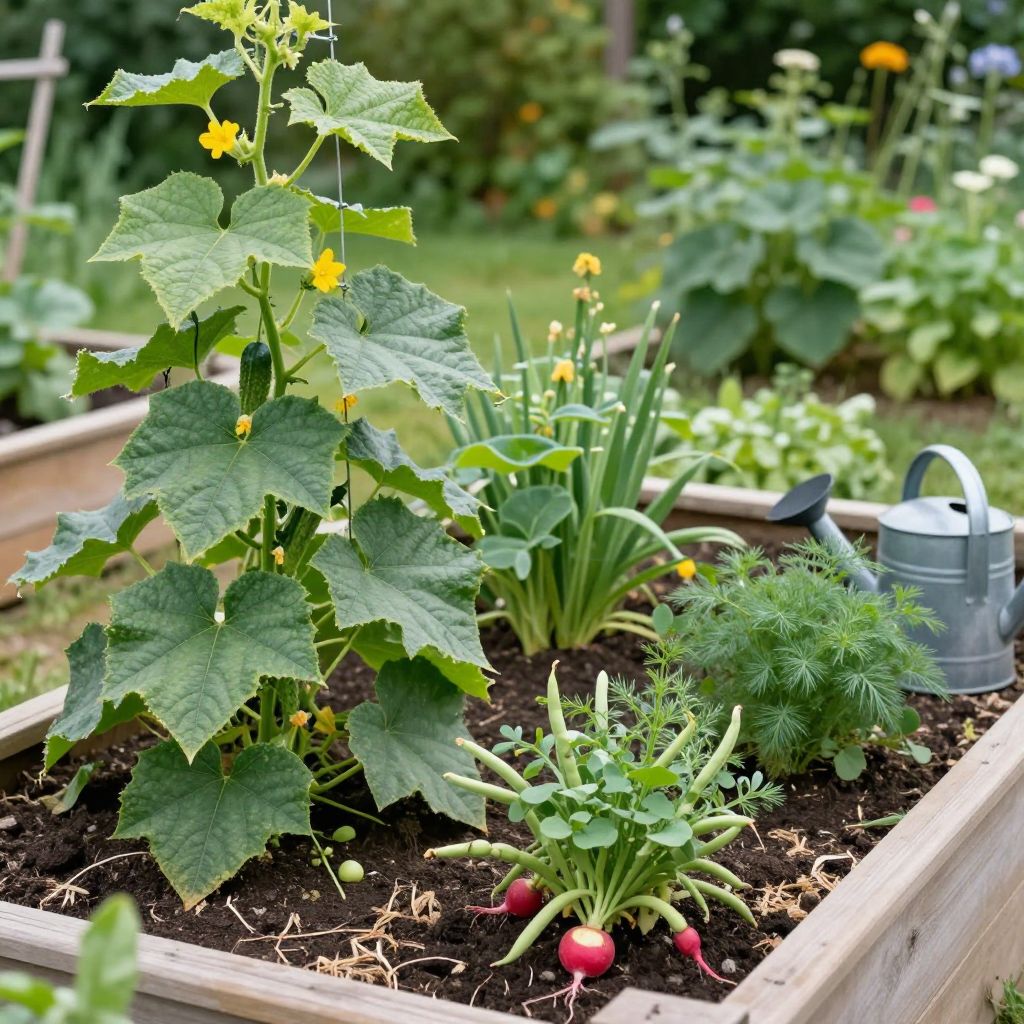
What can I plant with cucumbers? The best companions are plants that share similar sun, water, and soil needs without crowding the vines. Good choices can help attract pollinators, deter some pests, make better use of space, and simplify harvests.
The key is to pair cucumbers with crops that stay relatively low, mature quickly, or support beneficial insects. Avoid plants that compete heavily for light, water, or root space, and give cucumbers enough room for airflow to reduce disease.
What can I plant with cucumbers?
Plant cucumbers with beans, peas, lettuce, radishes, dill, nasturtiums, marigolds, and other compact, quick-growing crops that won’t smother the vines. These companions can improve garden efficiency, support pollinators, and help you use the space around trellised cucumbers wisely. Keep aggressive or shade-casting plants a safe distance away.
Best companion plants for cucumbers
Beans and peas
Beans and peas are classic companions because they fit well in a productive garden bed and can be grown nearby without competing too much for the same space. Bush beans are usually easier to manage beside cucumbers than sprawling pole beans.
These legumes also make sense in a rotation plan because they are not the same crop family as cucumbers, which can help you avoid building up pests and diseases in one area.
Lettuce and leafy greens
Lettuce, spinach, and other quick leafy greens are useful under or beside young cucumber plants. They finish before cucumber vines become large, so you can harvest them early and free up space.
If you trellis cucumbers, the light shade from the vines can help keep greens from bolting too quickly in warm weather. In hot climates, that partial shade can be a real advantage.
Radishes
Radishes are one of the easiest “fill-in” crops for cucumber beds. They germinate quickly, mature fast, and help you make use of open soil while cucumbers are still small.
Because they are shallow-rooted and short-lived, they usually do not interfere much with cucumber roots. Sow them around the edge of the bed or between young transplants.
Dill and other beneficial insect plants
Dill is often planted near cucumbers because its flowers attract beneficial insects such as hoverflies and parasitic wasps. Those insects can help keep aphids and other soft-bodied pests in check.
Be careful not to let dill crowd the cucumbers. A few plants are helpful; too many can compete for light and make the bed feel crowded.
Nasturtiums
Nasturtiums are popular companion plants because they trail attractively and can act as a trap crop for aphids in some gardens. They also bring pollinators into the area.
Use them at the edge of the bed or near a trellis, not right in the cucumber crown. They should support the planting, not tangle through it.
Marigolds
Marigolds are a common companion choice for vegetable beds because they are easy to tuck into borders and can help create a more diverse planting area. Their bright flowers also draw pollinators.
They are not a cure-all for pest problems, but they can be a useful part of a mixed planting. Choose compact types so they do not shade the cucumbers.
Sunflowers, if placed carefully
Sunflowers can work near cucumbers if you place them far enough away that they do not block sunlight. Their flowers can attract pollinators, but their height and strong root systems mean they should not be packed tightly beside cucumber rows.
If you use sunflowers, think of them as a border or background plant rather than a bedmate.
Plants to avoid near cucumbers
Some plants are poor neighbors because they compete too much, shade cucumbers, or share similar disease pressure. Avoid pairing cucumbers too closely with plants that will overwhelm the vines or create a damp, crowded canopy.
- Potatoes and other heavy feeders that can intensify competition for nutrients and water.
- Strongly sprawling squash and melons if space is limited, since they can quickly tangle and crowd each other.
- Very tall, dense crops that block sunlight from cucumber leaves.
- Plants with very different water needs that make irrigation harder to manage.
Also avoid planting cucumbers repeatedly in the same spot year after year. Rotating them helps reduce disease buildup in the soil and gives the bed a better chance to recover.
How to design a cucumber companion planting bed
Use a trellis when possible
A trellis is one of the best ways to make companion planting work with cucumbers. Vertical growth improves airflow, keeps fruit cleaner, and leaves room at the base for low-growing companions like lettuce or radishes.
It also makes harvesting easier because you can see the fruit instead of digging through a tangle of vines.
Give each plant enough room
Spacing matters more than most gardeners expect. Cucumbers need room for roots, leaves, and airflow, and companion plants should fit around that need rather than squeeze into every gap.
As a general rule, leave enough space so you can reach the base of the plants without stepping into the bed. If the planting starts to feel crowded, thin the companions first.
Match growth speed to cucumber growth
The best companions are often fast growers or short-season crops. That way, they mature before the cucumber canopy becomes dense.
Think of the bed in layers: cucumbers on a trellis, low greens beneath, and flowering herbs or annuals at the edges.
Soil, compost, and watering for mixed cucumber plantings
Cucumbers grow best in fertile, well-drained soil that holds moisture without staying soggy. A mixed planting bed should still prioritize the cucumber’s needs, because stressed plants are more likely to suffer from bitter fruit, poor growth, or disease.
- Work in compost before planting to improve soil structure and moisture retention.
- Make sure drainage is good; cucumbers dislike waterlogged roots.
- Use mulch to reduce evaporation and keep the soil more even.
- Water at the base of the plants rather than soaking leaves whenever possible.
When you combine cucumbers with other crops, watering can become tricky. Shallow-rooted companions may dry out faster than the cucumber roots, so check the soil with your finger instead of relying on a fixed schedule.
Watch for uneven moisture
Inconsistent watering can cause misshapen or bitter cucumbers and can also stress nearby companions. Try to keep the root zone evenly moist, especially when plants are flowering and setting fruit.
If your bed dries quickly, a thicker mulch layer and a drip line or soaker hose can make a big difference.
Pollinators and pest management in companion plantings
Cucumbers need pollination for good fruit set, so companion plants that attract bees and other pollinators can be very helpful. Flowers such as dill, nasturtiums, and marigolds can bring more insect activity into the garden.
At the same time, crowded plantings can hide pests. Check the undersides of leaves for aphids, cucumber beetles, and signs of mildew or leaf spotting.
Common cucumber problems to watch for
- Cucumber beetles chewing leaves and spreading disease.
- Aphids clustering on tender growth and flower stems.
- Powdery mildew appearing as a white coating on leaves in humid or crowded beds.
- Poor fruit set when pollinators are scarce or flowers are hidden in dense foliage.
If pests appear, start with simple fixes: remove badly affected leaves, improve airflow, and avoid overhead watering late in the day. Companion plants can support a healthier garden, but they do not replace regular monitoring.
What to plant with cucumbers in containers
Container gardening requires a lighter touch because cucumbers are already demanding plants. Choose compact companions that will not steal too much water or root space from the main crop.
- Small lettuce or salad greens
- Radishes
- Compact marigolds
- Small nasturtiums, if the container is large enough
Use a large enough pot for the cucumber itself first. If the container is too small, companion planting will make the problem worse, not better. In containers, fewer companions are usually better than too many.
Step-by-step: how to plant cucumbers with companions
- Choose a sunny site with at least part of the bed reserved for cucumber vines.
- Prepare soil with compost and make sure drainage is good.
- Install a trellis if you want to save space and improve airflow.
- Plant cucumbers after local frost danger has passed and soil is warm enough for growth.
- Sow quick crops like radishes or lettuce around the edges or in open gaps.
- Add flowers such as marigolds or nasturtiums at the border, not in the middle of the cucumber row.
- Mulch lightly and water consistently at the base.
- Check weekly for pests, disease, and overcrowding.
Common mistakes to avoid
One of the biggest mistakes is overcrowding. A bed that looks efficient in spring can become a tangled, shaded mass by midsummer.
- Planting too many companions too close to the cucumber crown
- Letting vines sprawl over low crops and block light
- Using thirsty or aggressive plants that compete heavily
- Ignoring airflow, which increases mildew risk
- Skipping rotation and replanting cucumbers in the same spot too often
Another common error is choosing companion plants for appearance alone. A good companion should fit the garden’s spacing, moisture, and harvest pattern, not just look attractive.
Final thoughts
If you are wondering what can I plant with cucumbers, focus on low, fast, and helpful companions: beans, peas, lettuce, radishes, dill, nasturtiums, and compact marigolds are all solid choices. Keep the bed airy, fertile, and easy to water, and your cucumbers will have a much better chance to thrive.
For more practical garden planning ideas, you may also want to read about vegetable garden spacing and how to trellis vining crops.